NBA Legacy Earthquake: Why Stephen Curry Quietly Passing Kobe Bryant Is No Longer a Hot Take but an Inevitable Reality
For years, comparing Stephen Curry and Kobe Bryant felt almost disrespectful to many basketball fans. Kobe Bryant represented grit, obsession, defensive dominance, and a relentless will that defined an entire generation of NBA basketball. Stephen Curry, meanwhile, was once seen as a revolutionary shooter, a system player, a superstar whose greatness depended heavily on spacing, teammates, and a perfect organizational environment That framing no longer holds.
As the league evolves and the distance from Kobe’s final seasons grows wider, the NBA’s collective memory is shifting. Legacy conversations that once felt frozen in time are suddenly fluid again. Analysts, former players, and fans alike are beginning to reassess how greatness is defined, how influence is measured, and how longevity reshapes narratives long after careers end.
Nick Wright’s recent comments did not start this debate, but they crystallized it. His argument wasn’t that Kobe Bryant wasn’t great. It was something far more uncomfortable for traditionalists: that Stephen Curry’s résumé, impact, and sustained excellence now place him in legitimate contention to surpass Kobe Bryant on the all-time list. And once that door opens, it becomes impossible to close.
Stephen Curry’s Late-Career Surge Is Rewriting the History Books
Stephen Curry’s post-30 career has quietly become one of the most dominant stretches the league has ever seen. While most superstars decline, adapt, or slowly fade into complementary roles, Curry has done the opposite. He has expanded his range, improved his conditioning, sharpened his off-ball movement, and maintained efficiency at levels that defy age-related decline.
Breaking Michael Jordan’s record for most 35-point games after age 30 was not just a trivia note. It was a flashing warning sign that Curry’s greatness isn’t confined to a single era or roster construction. It spans multiple iterations of the Warriors, multiple coaching adjustments, and multiple league-wide defensive responses designed explicitly to stop him.
Unlike many stars whose late-career success is padded by lower expectations or reduced responsibilities, Curry remains the gravitational center of everything Golden State does offensively. Defenses still trap him near half court. Coaches still build entire schemes around preventing him from getting clean looks. Teammates still benefit disproportionately from the chaos his movement creates.
This matters in legacy discussions because dominance sustained over time carries a different weight than dominance concentrated in shorter bursts. Curry’s excellence hasn’t just lasted; it has aged gracefully, efficiently, and historically.
Why Nick Wright Used Kobe Bryant as the Measuring Stick
Nick Wright didn’t randomly choose Kobe Bryant as Curry’s comparison point. He chose Kobe because Kobe represents the highest tier of post-Jordan greatness without being untouchable. LeBron James sits in a category so rarefied that comparisons often feel unfair. Kobe, however, occupies that difficult middle ground: revered, mythologized, and fiercely defended, yet statistically and contextually open to debate.
Wright’s argument focuses on totality, not mythology. Kobe Bryant’s career included extraordinary peaks, unforgettable moments, and five championship rings. But it also included significant blemishes that are often glossed over in legacy conversations. The failed post-Shaq years, the early playoff exits, the infamous 2004 Finals collapse against Detroit, and the inefficient volume scoring seasons during non-contending stretches all exist alongside the greatness.
Stephen Curry’s résumé, by contrast, is remarkably clean. His teams were almost always contenders when healthy. His impact translated directly to wins. His offensive efficiency reshaped defensive priorities across the league. And his influence extended far beyond box scores into the very geometry of basketball itself.
Nick Wright’s point isn’t that Curry is perfect. It’s that when both careers are viewed honestly, without emotional attachment, the gap between them shrinks dramatically.
Changing the Game Matters More Than Perfecting It
Perhaps the most compelling argument in Curry’s favor is one that legacy debates historically struggled to quantify: influence.
Kobe Bryant perfected an archetype. He refined the Jordan mold, modernized it, and executed it with obsessive intensity. He became the ultimate version of a style that already existed.
Stephen Curry created something entirely new.
Before Curry, shooting from 30 feet was a mistake. After Curry, it became a weapon. Before Curry, off-ball gravity was secondary to isolation scoring. After Curry, it became the foundation of modern offense. Before Curry, three-point shooting was a skill. After Curry, it became a requirement.
Entire generations of players now enter the league modeling their games around principles Curry normalized. Big men shoot threes because Curry made spacing essential. Guards train relocation shooting because Curry made movement deadly. Coaches build offenses around pace, space, and read-and-react principles because Curry proved they could dominate at the highest level. Kobe inspired work ethic. Curry redefined possibility.
And when influence becomes part of the equation, Curry’s case strengthens dramatically.
Defense, Finals MVPs, and the Arguments That Still Favor Kobe
The strongest arguments for Kobe Bryant remain valid and significant. His defensive résumé dwarfs Curry’s. Twelve All-Defensive Team selections reflect years of elite perimeter defense, competitive fire, and two-way responsibility that Curry has never claimed.
Finals MVPs also loom large. Kobe won two. Curry won one. That disparity fuels the argument that Curry benefited from teammates receiving credit on the biggest stage, particularly during the Kevin Durant years. But even these arguments require nuance.
Defensive accolades during Kobe’s era were often influenced by reputation as much as performance. Late-career selections, in particular, reflected legacy more than nightly impact. Meanwhile, Curry’s defensive limitations have been mitigated by team schemes that consistently ranked among the league’s best when it mattered most.
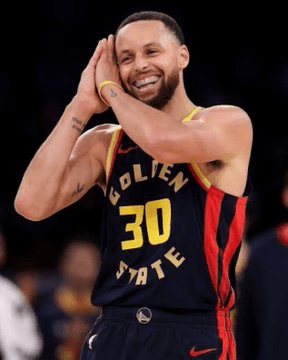
As for Finals MVPs, context matters. Curry’s value often manifested in ways not captured by voting metrics. Defensive attention shifted entire series, allowing teammates to thrive. That doesn’t show up in individual awards, but it shows up in championships.
Legacy debates become complicated when traditional measurements fail to capture non-traditional impact.
Longevity, Consistency, and the Absence of Lost Years
One of the most under-discussed aspects of Curry’s legacy is how few wasted seasons exist on his résumé. Injuries delayed his rise early, but once established, his teams almost always competed at the highest level.
Kobe, by contrast, experienced extended stretches where brilliance existed without relevance. His peak scoring years often coincided with lottery finishes or early exits. While individual excellence remained undeniable, team success lagged significantly.
This matters because legacy is not just about how great a player was at their best. It’s about how often that greatness translated into meaningful basketball.
Curry’s prime aligned almost perfectly with contention. When healthy, his presence alone elevated teams into championship conversations. That reliability adds weight to his career in ways that raw totals cannot fully express.
Why This Debate Feels Uncomfortable but Necessary
For many fans, Kobe Bryant represents something sacred. He symbolizes an era, an attitude, a philosophy of basketball that feels increasingly rare. Questioning his place feels like questioning the values he embodied.
But legacy debates are not moral judgments. They are analytical exercises shaped by evolving understanding.
Stephen Curry’s rise doesn’t diminish Kobe Bryant’s greatness. It reframes it. It places it within a broader context where influence, efficiency, longevity, and adaptability matter as much as toughness and volume.
The discomfort comes from change. And change is the constant that defines basketball history.
The Verdict: Closer Than Anyone Wants to Admit
Stephen Curry passing Kobe Bryant is no longer a fringe opinion reserved for analytics-driven corners of NBA discourse. It is a mainstream conversation supported by evidence, context, and historical impact.
Whether one ultimately ranks Curry ahead of Kobe or not, the fact that the debate exists at all signals a shift. Curry is no longer chasing legacy. He is shaping it in real time.
And as his career continues to age gracefully, the question is no longer if this conversation will intensify.
It’s how far it will go