Victor Wembanyama Lost Someone Close Just Hours Before the NBA Cup Final And What He Did Next Changed How the Basketball World Sees Him Forever
The Morning That Changed Everything for Victor Wembanyama
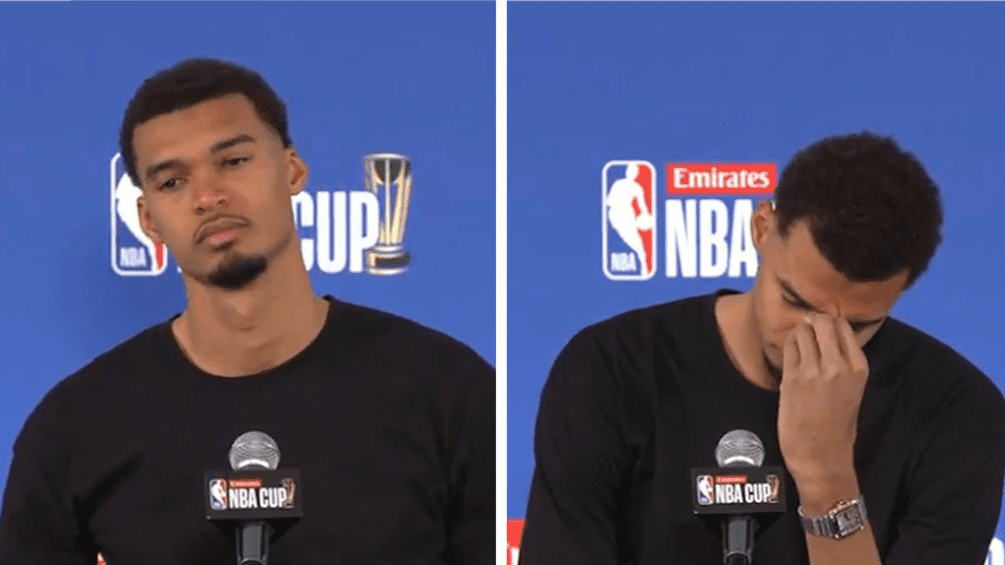
The NBA Cup Finals were supposed to be another milestone moment in Victor Wembanyama’s rapidly accelerating rise from generational prospect to full-blown global superstar. The lights were brighter than usual, the stakes heavier, the eyes of the basketball world locked in. But long before the arena filled, before the national anthems, before the tip off rituals, Wembanyama’s world had already shattered. On that Tuesday morning, just hours before the biggest game of the young NBA season, Victor Wembanyama lost his grandmother a woman who had played a foundational role not just in his life, but in the person he has become.
For most people, grief is private. For professional athletes, grief is cruelly public. There is no pause button. There is no space to retreat. Instead, there is a locker room, a schedule, a responsibility to teammates, fans, and an unforgiving spotlight that demands performance even when the soul is fractured. For Wembanyama, this was not just another emotional hurdle. It was the first truly human test of superstardom.
What followed was not just a basketball story. It was a moment that reframed how fans, critics, and even rivals understand Victor Wembanyama not as a highlight machine, not as a statistical anomaly, but as a young man navigating grief on the largest stage imaginable.
A Grandmother’s Role in the Making of a Phenomenon
To understand why this loss hit so deeply, one must understand Wembanyama’s roots. Raised in France, Victor grew up in a family where discipline, humility, and emotional grounding were emphasized just as strongly as athletic excellence. His grandmother was not a background figure. She was part of the emotional architecture that allowed a shy, unusually tall child to grow into someone capable of carrying enormous expectations without collapsing under them.
Family members have often spoken about how Wembanyama’s grandmother helped keep him grounded when attention began arriving far too early. As European scouts whispered, then shouted, about a teenager who moved like a guard in a center’s body, she remained a stabilizing presence. She reminded him that basketball was what he did, not who he was. That distinction, so simple in theory and so rare in practice, is often what separates prodigies who burn out from those who endure.
Her passing, then, was not merely the loss of a loved one. It was the removal of a quiet anchor the kind that holds steady even when storms gather.

Playing Through Grief in a League That Never Stops
When news of the loss quietly circulated, many expected Wembanyama to sit. No one would have questioned it. In fact, most would have applauded the decision. The NBA, despite its marketing language about brotherhood and family, is still a business driven by entertainment and results. Stepping away is allowed, but it is rarely normalized.
Wembanyama chose to play.
That decision alone speaks volumes. Not because playing made him brave or heroic, but because it revealed the internal conflict so many athletes face. There is comfort in routine when grief overwhelms. There is structure in competition when emotions spiral. For some, the court becomes the only place where pain temporarily quiets.
Yet grief does not disappear when the ball goes up. It lingers in moments between whistles. It creeps into free throws, timeouts, and the spaces where thoughts wander. Watching Wembanyama that night, there was a noticeable difference. Not weakness, not distraction but weight. His movements carried intention rather than flair. His expressions were muted. The usual flashes of youthful joy were replaced by something heavier, something more adult.

The Performance That Meant More Than Numbers
Stat lines never tell the full story, but on nights like this, they tell almost nothing at all. Whether Wembanyama scored efficiently or struggled in stretches was ultimately irrelevant. What mattered was presence. What mattered was resilience.
There were moments when the game slowed, when the noise faded, when it became clear that basketball was no longer the primary battle. Every screen set, every defensive rotation, every contested rebound carried a quiet defiance against the reality waiting once the final buzzer sounded.
Teammates noticed. Coaches noticed. Opponents noticed. There is a difference between intensity and gravity, and Wembanyama played with the latter. This was not about proving toughness. It was about honoring something deeper about showing up when absence would have been easier.
In the aftermath, fans flooded social media not with highlight clips, but with messages of respect. For the first time since his NBA arrival, the discourse shifted away from ceilings and comparisons. It became human.
How Loss Shapes Greatness in the NBA
The history of the NBA is filled with moments where personal tragedy intersected with professional obligation. Legends have carried grief onto the court long before Wembanyama arrived. What separates those moments is not the pain itself, but how it reshapes perspective.
Loss accelerates maturity. It strips away illusions of control. For young stars especially, it can become a turning point the moment when basketball stops being everything and becomes something that must coexist with life’s deeper truths.
For Wembanyama, this experience may quietly redefine his career trajectory. Not statistically, but emotionally. Players who endure profound loss early often develop an internal compass that no scouting report can measure. They understand impermanence. They understand responsibility. They understand that greatness is not guaranteed, only pursued.
This is how leaders are formed. Not through awards, but through moments where continuing feels almost impossible and is done anyway.
More Than a Prospect, Now a Symbol
Victor Wembanyama entered the NBA labeled as a once in a generation talent. After this moment, he emerges as something more complex. He is still evolving, still learning, still flawed. But he is no longer just potential.
He is proof that humanity and excellence are not opposites. That vulnerability does not negate strength. That grief does not disqualify greatness.
As the season continues, highlights will return. Debates will resume. Comparisons will intensify. But this moment will remain quietly, permanently as part of who Victor Wembanyama is becoming.
Not just a star.
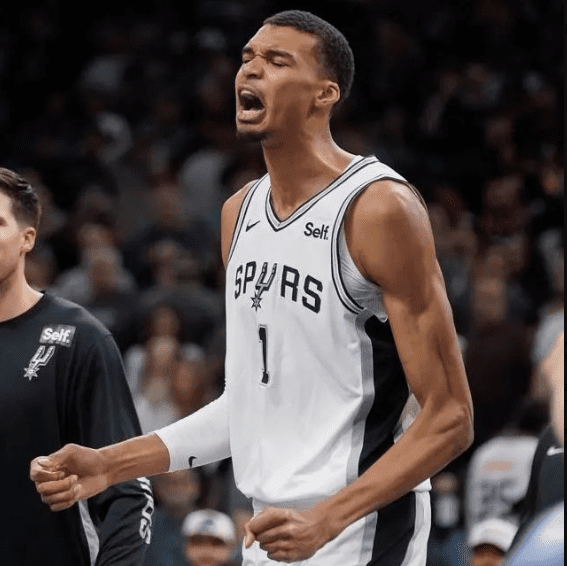
But a man learning to carry loss while carrying expectations.