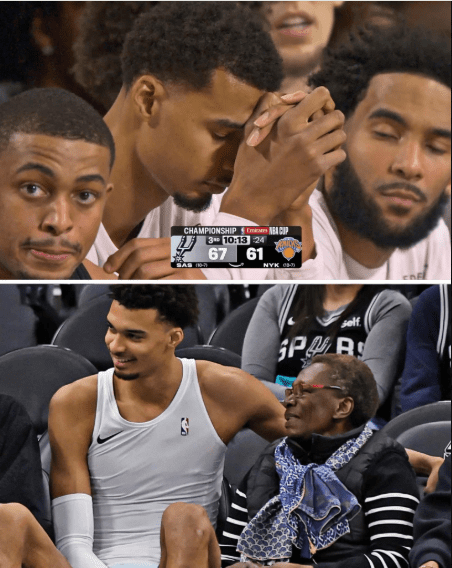
The Algorithm’s Frankenstein: How a Viral “Science Experiment” to Create Basketball’s Ultimate Giant Duo Exposed the Bizarre, Dehumanizing Core of Modern Sports Fandom and Why Victor Wembanyama Had to Pull the Plug
The proposition was delivered not in a scouting report or a GM’s war room, but in the chaotic, reactionary arena of social media. It arrived as a tweet, a TikTok stitch, an Instagram edit: a fever dream of scale and speculation. What if we paired Victor Wembanyama, the 7 foot 5 French phenom, the most anticipated NBA prospect in a generation, with Zhang Ziyu, the 7-foot-3 Chinese teenage sensation dominating women’s basketball? The graphics were slick. Side-by-side silhouettes stretched toward the rim. Mock-ups of them in identical jerseys. The caption was always some variation of: “The ultimate science experiment.” The engagement was instantaneous. The likes poured in. The comments sections became laboratories of absurdist fantasy, debating who would be the point guard, how many blocks per game they’d combine for, what their children might look like.
It was treated as a thrilling thought experiment, a harmless bit of fun in the long NBA offseason. Until the subject of the experiment himself was asked about it. Victor Wembanyama’s response was not a playful chuckle or an amused speculation. It was a quiet, definitive shutdown. A refusal to play along. In that moment, the most uniquely physical talent in the world drew a line in the digital sand, exposing the viral idea for what it truly was: not a celebration of basketball, but a dehumanizing reduction of two young athletes into mere data points of height and viral potential. The internet wanted to run its experiment. Wembanyama, with the weary clarity of a person who has been viewed as a specimen his entire life, decided he would not be its lab rat.
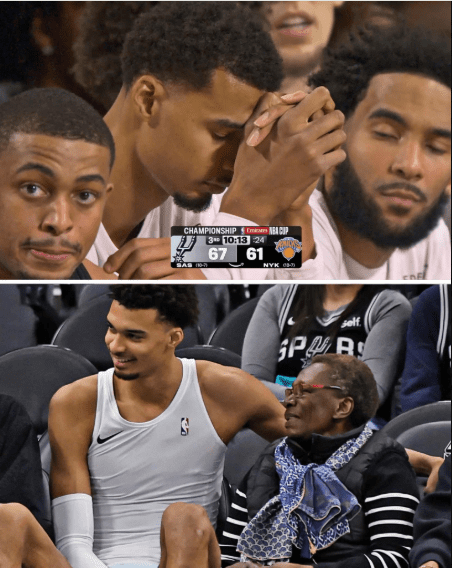
This episode is far more significant than a star dismissing a silly meme. It is a cultural flashpoint. It represents the collision between two powerful, often opposing forces: the objectifying gaze of the online sports machine, which views athletes as content to be spliced, edited, and speculated upon for clicks, and the agency of the individual athlete, who insists on being seen as a complete person, not a collection of physical attributes. For Wembanyama, the “science experiment” framing is the latest, most extreme iteration of a lifetime of being stared at, measured, and discussed primarily as a wonder of nature. His entire basketball life has been a narrative of unprecedented dimensions. The discourse around Zhang Ziyu, a 17-year-old girl, follows a similar, perhaps even more invasive, path her height making her a global curiosity before her game has fully matured.
The internet’s proposal to digitally marry their genomes for the amusement of a timeline is the logical, grotesque endpoint of this kind of reductive fascination. Wembanyama’s dismissal is a reclaiming of narrative. It is a statement that his value, and the value of any athlete, is not found in a hypothetical, genetically engineered basketball utopia, but in the sweat, skill, intelligence, and relentless work he pours into his actual craft, for his actual team, in the actual reality of the NBA. The “science experiment” is fun for those typing behind screens. For the subjects, it is a reminder that, in the eyes of many, they are first and foremost freaks of nature, not artists of the game.
The Anatomy of a Viral Idea: From Speculation to Spectacle
The birth of the “Wemby-Ziyu Science Experiment” meme is a textbook case of modern digital mythmaking. It did not emerge from analysis; it emerged from aesthetics.
The core fuel was pure, visceral visual shock. Victor Wembanyama, at 7-foot-5 with an 8-foot wingspan, already exists at the furthest edge of human athletic architecture. Zhang Ziyu, at 7-foot-3 as a teenage girl, shatters every existing frame for women’s basketball.
Placing them side-by-side in an edit triggers a cognitive short circuit. The brain struggles to process the scale. It looks impossible, like a Photoshop job. That inherent “unreal” quality is catnip for social media algorithms.
The second ingredient was low-stakes, high-reward speculation. This was not a debate about real trade assets or salary caps. It was a pure fantasy, unburdened by reality. Could they play together? In what league? Could they be a couple?
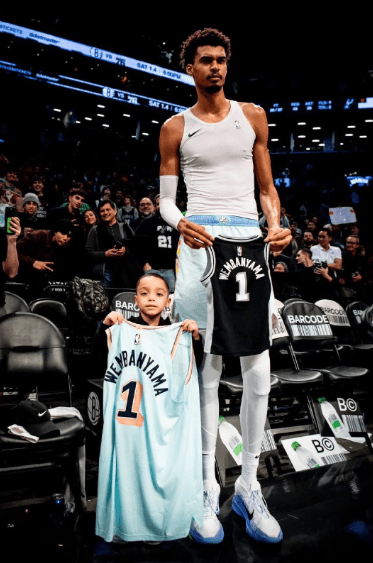
This freed commenters to engage in the most outlandish, consequence-free banter. The discourse was never about feasibility; it was about fueling the absurdist engine of the thread itself.
The language of “science experiment” was the crucial branding. It framed the athletes not as people, but as specimens. It invoked a sense of detached, clinical curiosity. It gave permission to discuss them as one would discuss breeding rare animals or cross-pollinating plants.
This framing removed agency, morality, and context. It was a rhetorical sleight of hand that turned a deeply personal and human topic the physicality and potential relationships of two young people into a cool, intellectual puzzle for the masses.
The idea spread not because it was smart, but because it was easily replicable. Anyone could make the edit. Anyone could tweet the hypothetical. It was a participatory meme, and participation required no knowledge of basketball, only an understanding of the joke’s simple premise: Look how tall. What if?
The Subject Pushes Back: Wembanyama’s Inherent Burden
For Victor Wembanyama, the “science experiment” is not a new joke. It is the oldest story of his life, simply repackaged. His entire existence has been a public experiment in human potential.
Since his early teens, he has been dubbed “The Alien,” “The Cheat Code,” and “The Science Experiment.” Media profiles have relentlessly focused on his sleep schedule, his diet, his limb length, his growth plates the biology of Victor, often before the basketball of Victor.
He has been a prospect longer than he has been a pro. His physical uniqueness has always been the headline, sometimes to the exclusion of his profound skill, his guard-like handle, his visionary passing, and his defensive genius.
This constant framing as a biological marvel rather than a dedicated craftsman creates a unique psychological burden. It can feel as though your humanity is conditional, granted only insofar as you continue to perform unprecedented physical feats.

When the internet then pairs him with another ultra-tall prospect in a context utterly divorced from sport reducing their potential pairing to a genetic meme it doubles down on this reduction. It says, “You are not Victor, the San Antonio Spurs’ cornerstone. You are Unit A, of exceptional height. We are considering pairing you with Unit B.”
Wembanyama’s shutdown, therefore, is an act of self-preservation. It is a boundary. He is saying, “You may discuss my game. You may critique my performance. But you do not get to play god with my personhood. You do not get to draft me into your fictional narratives for likes.”
His response carries the quiet frustration of someone who has spent a lifetime screaming into a pillow about being seen only for his height, only to have the entire internet shout the same reductive observation back at him, thinking it’s a brand-new joke.
The Other Subject: Zhang Ziyu and the Gaze Upon Her
The meme is arguably more invasive and problematic for Zhang Ziyu. A 17-year-old girl, she is at the very beginning of her journey, both as an athlete and as a young woman navigating public life.
Her dominance at the FIBA U18 Women’s Asia Cup, where she was an unstoppable force, rightly made her a global story. But the international discourse immediately latched onto her height as her sole defining characteristic.
The “science experiment” meme sexualizes this fascination in a thinly veiled way. The subtext of countless “what if they were a couple?” comments is a grotesque speculation about the bodies of two young people, one of whom is a minor.
It places Ziyu, without her consent, into a hypothetical romantic narrative with a famous male athlete she has likely never met. This is a profound violation of her privacy and an imposition of a narrative she may want no part of.
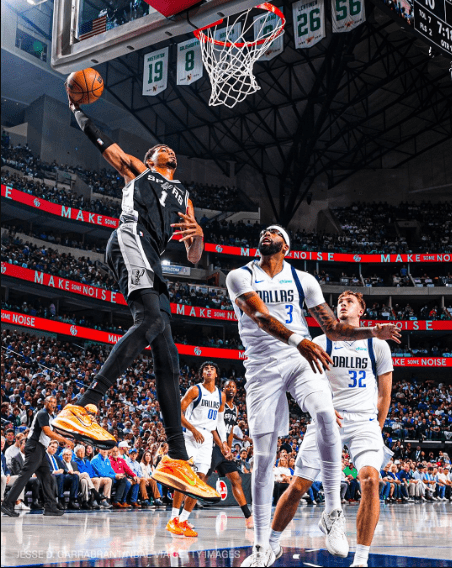
For a young female athlete, the fight to be seen for her skill, footwork, touch, and basketball IQ is hard enough. This meme actively works against that, reinforcing the idea that her most notable, discussable feature is her physical anomaly.
Wembanyama, as a 20-year-old man and established NBA star, has a platform and agency to push back. Ziyu, as a teenage girl in a different sporting system, may not have that same immediate power to control the narrative. This makes the meme’s propagation around her not just silly, but potentially harmful.
It turns her potential, her future, and her person into a punchline for a global audience that knows nothing about her beyond her height. Wembanyama’s rejection of the meme is, in a way, a protective act for her as well, refusing to legitimize a discourse that objectifies them both.
The Deeper Dysfunction: What the Meme Reveals About Sports Discourse
The “science experiment” phenomenon is a symptom of a deeper sickness in how we consume sports. It highlights the commodification of athletes as content.
In the engagement economy, athletes are not humans with careers; they are assets in the content portfolio of fans and pundits. Their narratives exist to be manipulated, their images to be edited, their lives to be speculated upon for the purpose of generating content.
This leads to a priority of novelty over nuance. A thoughtful analysis of Wembanyama’s defensive positioning or Ziyu’s post development is hard work. A meme about their combined height is easy, shareable, and generates the same, if not more, engagement.
It fosters a detached, almost clinical fandom. The meme encourages viewers to look at the athletes, not with them. It prioritizes the viewer’s amusement over the subject’s experience. The athlete’s comfort, privacy, or consent is irrelevant to the joke’s function.
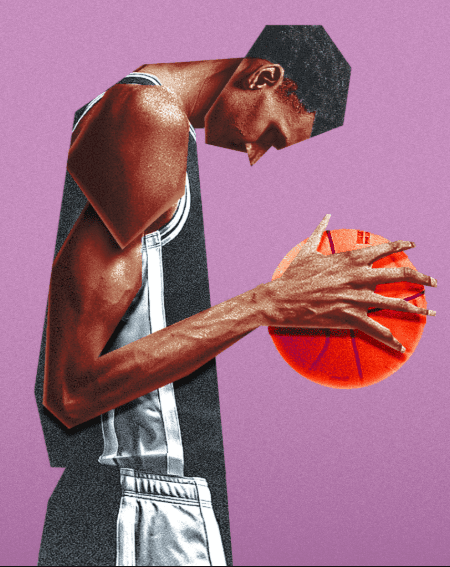
This is the culture that produces not just this meme, but the endless barrage of trade machine fantasies, video game roster builds, and AI-generated deepfakes. The real human being at the center of the transaction—their desires, their relationships, their mental health is the least important variable.
Wembanyama’s refusal is a rejection of this entire ecosystem. He is insisting that his reality—his work with the Spurs, his development goals, his actual life is more important than his utility as a prop in the internet’s never-ending content carnival.
The Legacy of the “Freak”: A Historical Lineage of Objectification
Wembanyama and Ziyu stand at the end of a long, often uncomfortable lineage of athletes whose physical uniqueness preceded their personhood.
Think of Manute Bol and Gheorghe Muresan, who were consistently framed as carnival attractions before being respected as skilled shot-blockers. Remember the discourse around Yao Ming and Shaquille O’Neal, which often began and ended with their sheer size.
The term “freak athlete” itself, while often meant as a compliment, carries this baggage. It celebrates the anomaly, not the artisan.
The internet meme is the 21st-century, democratized version of the carnival barker pointing at the “World’s Tallest Man.” The platform is different, but the act of gathering a crowd to gawk at physical difference is the same.

Wembanyama’s entire career is an attempt to transcend this lineage. He is not Manute Bol. He is a player who happens to be Bol’s height but with the skills of Kevin Durant. The meme tries to drag him back into the “freak” category, making height the primary, shared trait with Ziyu.
His shutdown is a declaration of independence from this historical trap. He is saying, “I will not be the next in your line of tall curiosities. I am my own category.” To pair him reductively with another tall person is to miss the entire point of what makes him revolutionary.
The Line in the Sand: Why This Moment Matters
Victor Wembanyama drawing this line is a minor but potent cultural moment. It signals a shift in power between the athlete and the amorphous, demanding entity of “the internet.”
It is a statement that viral narratives require consent. The athlete is not a passive vessel for whatever story the crowd wants to tell. They have the right to opt out, to say, “This is not my story. Do not write it for me.”
It reinforces that athletes are whole people. They are not just avatars in a sports simulation. They have romantic lives, private thoughts, and boundaries that exist entirely separate from their public performance. The meme violated that separation gleefully.
For fans and media, it is a call for more responsible engagement. It asks us to consider the human on the other side of the screen before we hit “post” on the next wild, dehumanizing hypothetical. Are we discussing basketball, or are we playing with human dolls?
Ultimately, Wembanyama’s quiet “no” is a defense of his own sanity and legacy. He is fighting to ensure that when the history of his career is written, it is not a footnote in a joke about a viral “science experiment,” but a chapter about one of the most skilled and transformative players to ever touch a basketball.
The internet wanted to fantasize about a genetic basketball future. Wembanyama is too busy building his actual, legendary present. And he has made it clear: those two projects will not be merging.