The Draft Pick Diss: How Jeff Teague’s Seemingly Simple Question About Dalton Knecht and Bronny James Exposes the Lakers’ Most Explosive, Unspoken Roster Dilemma and the Hypocrisy of Modern Player Development
The question is posed with the casual, needling precision of a former All-Star who knows how locker rooms work. Jeff Teague, on his podcast, looks at the Los Angeles Lakers’ roster sheet and sees a paradox he can’t ignore. “I have a real question, and this is no hate: Why he in the G and Bronny not in the G?” The “he” is Dalton Knecht, the 17th overall pick in the 2024 draft, a 24-year-old sophomore wing with a proven NBA skill: he can shoot. The other is Bronny James, the 55th overall pick in the same draft, a 21-year-old guard whose primary, unspoken credential is the last name he shares with the greatest Laker of his generation. Teague frames it as a matter of draft capital and basic fairness: “No disrespect to Bronny, but it’s like, ‘I was the first round pick, right?’” The query hangs in the air, less a critique and more a spotlight on the elephant in the room.
It is a question that cuts to the heart of meritocracy, nepotism, asset management, and the unyielding gravitational pull of LeBron James’s legacy. The Lakers’ decision to assign Knecht to the G League while keeping Bronny on the main roster is not just a rotational tweak; it is a cultural Rorschach test. To some, it’s a sensible developmental move. To others, like Teague, it’s a violation of the sport’s foundational “draft pick hierarchy”a system where first-round investment is supposed to be prioritized over second-round afterthoughts, regardless of surname. But this situation exists in the blinding glare of the James family orbit, where normal rules of basketball logic are bent, if not broken. Teague’s question isn’t really about minutes; it’s about principles. It forces the Lakers, and the watching basketball world, to answer: In the pursuit of honoring a king’s final wish, have they willingly compromised the very competitive integrity that crowns kings in the first place?
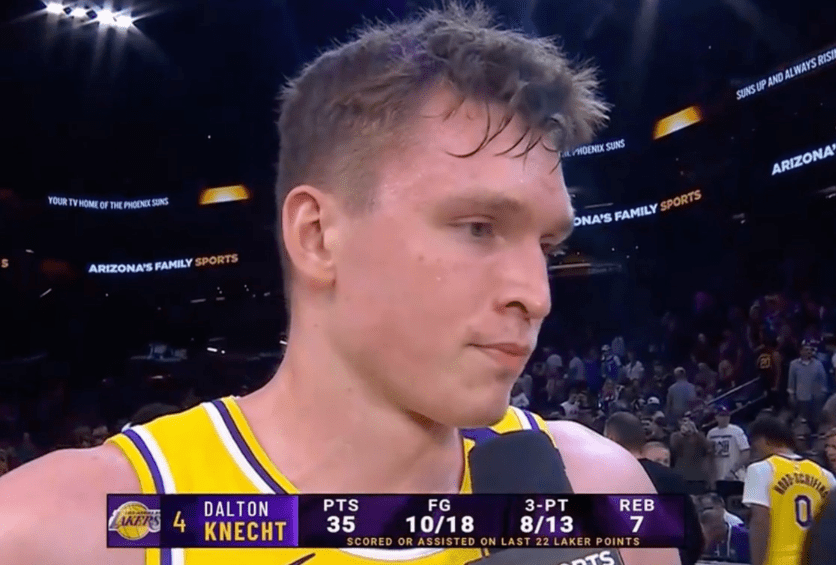
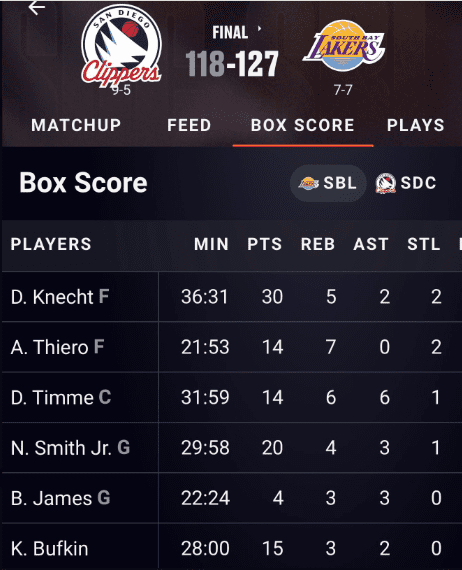
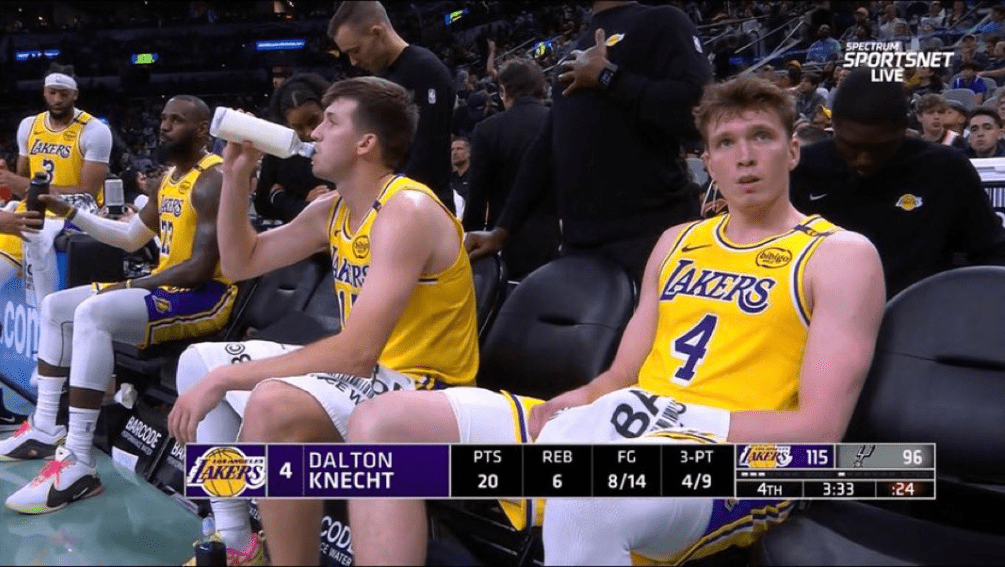
The raw numbers make Teague’s case seem open-and-shut. Dalton Knecht, despite a sophomore slump that has seen his averages dip to 6.4 points per game, is a known commodity: a career 37.4% three-point shooter who averaged 9.1 points as a rookie. In his first G League assignment, he dropped 30 points on 10-of-17 shooting, a thunderous reminder of the scoring talent that made him a lottery-level prospect. Bronny James, by contrast, has career averages of 2.1 points on 31.6% shooting in the NBA. In his concurrent G League stint, he’s averaging 9.5 points on 35.6% shooting, struggling with confidence and efficiency. On a pure production basis, Knecht’s demotion is puzzling. But the NBA is not played on a spreadsheet. It is played within ecosystems of power, narrative, and long-term planning.
The Lakers are not managing two anonymous rookies; they are managing one asset and one symbol. Knecht is an asset a trade chip mentioned in rumors since a rescinded deal for Mark Williams, a player whose $4 million contract is useful for salary-matching in a potential deadline deal. Bronny is a symbol a living, breathing piece of the franchise’s strategy to ensure the contentment and, perhaps, the extended tenure of LeBron James. Teague’s question ignores this symbolic weight. He is applying the cold logic of the basketball purist to a situation governed by the warm, messy politics of legacy. The Lakers’ front office isn’t just evaluating players; it’s navigating a dynasty’s sunset. And in that twilight, the rules are written in invisible ink.
The Hierarchy of Draft Capital: Teague’s Purist Argument
Jeff Teague’s core contention is rooted in a traditional, almost feudal understanding of NBA roster construction. The draft order is not just a sequence; it is a caste system.
First-round picks, especially lottery selections like Knecht at 17th, represent significant organizational investment. They come with higher salaries, guaranteed contracts, and the implicit promise of developmental patience and rotational priority. They are the blue-chips.
Second-round picks, particularly those at the very end like Bronny at 55th, are lottery tickets. They fight for two-way contracts, non-guaranteed money, and must often prove they belong in the league through sheer force of will in practices, summer leagues, and G League stints. They are the underdogs.
In Teague’s worldview, this hierarchy must be respected for the system to have integrity. Demoting the first-rounder while rostering the second-rounder inverts the natural order. It sends a confusing message to the locker room and to future draftees: your draft slot, your perceived value, is meaningless if a higher, non-basketball priority intervenes.
His point is underscored by the financial and contractual reality. The Lakers picked up Knecht’s $4.2 million team option just two months ago, a clear signal they valued his future. To then exile him to the G League while a player on a cheaper, less guaranteed deal remains up reads, to a purist, as asset mismanagement.
Teague is essentially asking the Lakers to honor their own draft board. By selecting Knecht in the first round, they declared him a foundational piece. By keeping Bronny, a project by any objective measure, on the main roster, they are prioritizing a narrative over their own declared talent evaluation. This, to him, is the heart of the “inauthenticity” he perceives.
The LeBron Variable: The Unseen Architecture of Roster Decisions
Any analysis of Lakers personnel moves that does not account for LeBron James is an analysis conducted in a fantasy land. He is not just a player; he is the organizational center of gravity.
The decision to draft Bronny was never purely a basketball evaluation. It was a goodwill gesture, a legacy play, and a potential retention strategy for LeBron. Keeping Bronny on the main roster, even as a deep reserve, serves multiple purposes in this context.
It is a public symbol of commitment to the James family. It allows for the historic father-son on-court pairing, a marketing dream and a sentimental storyline of immense value. It also, theoretically, makes Los Angeles a more attractive place for LeBron to finish his career.
From a pure basketball development standpoint, however, the move is questionable. Bronny’s stated need is for reps and confidence. The G League, where he can handle the ball and play through mistakes, is the ideal environment for that. The NBA bench, where he might play 14 minutes across three games as he did in December, is where development goes to die.
The Lakers are thus caught in a development paradox. The best thing for Bronny-the-prospect is G League burn. The most important thing for Bronny-the-symbol is NBA proximity. The franchise has chosen symbolism, betting that having him around the main team, practicing with his father and absorbing NBA habits, outweighs the benefit of actual game experience.

This creates the perverse situation Teague highlights: a player who needs development (Bronny) is denied the primary tool for it, while a player who has shown more NBA-ready skill (Knecht) is sent to the place designed for development. It’s a logic that only makes sense when viewed through the distorting lens of LeBron’s unparalleled influence.
The “True” Reason: Rotation Logjams, Defense, and Trade Winds
While the Bronny of it all dominates the narrative, there are legitimate basketball reasons for the Lakers’ decision that exist independently of nepotism.
The Lakers’ roster is currently healthy and deep on the wing. The return of defensive stalwart Jarred Vanderbilt and the emergence of Jake LaRavia have created a minutes crunch. Coach JJ Redick, overseeing a team with championship aspirations, has shown a preference for veterans and defenders.
This exposes Knecht’s fatal flaw: defense. On a Lakers team that already struggles defensively, Knecht is a significant liability. His scoring punch is valuable, but not if it comes at the cost of points on the other end. In a tight rotation, Redick may see him as unplayable in high-leverage moments.
Furthermore, the timing of the assignment is suspicious. December 15 marked the date when most offseason signees became trade-eligible. Knecht, earning a tradable $4 million, has been in constant trade rumors. Sending him to the G League can be seen as a dual-purpose move: giving him reps to regain confidence, while also showcasing him for a potential deal. His 30-point explosion serves as a perfect highlight reel for other GMs.

In this light, Knecht’s assignment isn’t a demotion; it’s a strategic relocation. He’s not being punished; he’s being warehoused either to develop out of the spotlight or to be polished as an asset for barter. This is a cold, transactional reality of the NBA that Teague’s “draft pick honor” argument doesn’t fully capture.
The Developmental Double Standard: What Is The G League For?
The controversy exposes a fundamental hypocrisy in how the G League is perceived and used.
In theory, the G League is a neutral developmental platform. It’s where young players go to get reps, work on their games, and build confidence away from the pressures of the NBA spotlight. There should be no stigma.
In practice, the G League is often viewed as a punitive demotion or a sign that a player is not in the team’s plans. This is the perception Teague is tapping into. By sending Knecht down, the Lakers are signaling intentionally or not that he has fallen out of favor.
For Bronny, however, his prior G League assignment was framed as a positive opportunity. He spoke of going down with an “open mind” to work on his game. The narrative was about growth, not failure.
This is the double standard. For the first-round pick with a clear NBA skill, the G League is a purgatory. For the second-round project, it’s a helpful workshop. This inconsistency undermines the very purpose of the development league and reinforces the idea that roster decisions are not based on a uniform standard of player growth.
It asks: is the G League a tool for making players better, or is it a parking garage for players the coach doesn’t trust? The Lakers’ handling of Knecht and Bronny suggests it can be both, depending on the narrative one needs to protect.
The Asset vs. The Symbol: Rob Pelinka’s Impossible Calculus
Lakers GM Rob Pelinka is not managing a simple basketball team; he is conducting a high-wire act of competing priorities. On one side, he has the asset: Dalton Knecht, a depreciating but still valuable trade chip who could help fetch a rotational upgrade for a title run. On the other, he has the symbol: Bronny James, the key to maintaining harmony with the franchise’s centerpiece and a walking piece of NBA history.
Knecht’s assignment is a move that services the asset. It either increases his value through strong play or prevents it from cratering further on an NBA bench where his weaknesses are exposed. It keeps him in the shop window.
Keeping Bronny up services the symbol. It keeps LeBron happy, fuels the family narrative, and avoids the potential media firestorm of “Lakers banish LeBron’s son to minors.”
Pelinka’s calculus is not about who is the better player right now. It’s about maximizing utility. Knecht’s utility is highest as a trade piece or a reclamation project away from the team. Bronny’s utility is highest as a satisfied son on the end of the bench. This is cynical, pragmatic, and utterly real.
Teague’s question challenges this calculus by appealing to a simpler time when the best 15 players made the roster, period. But Pelinka isn’t building a roster; he’s managing a empire’s soft landing. In that mission, sentiment and symbolism carry a weight that box scores cannot measure.

The Verdict: Teague Is Right, But The Lakers Aren’t Wrong
Jeff Teague’s question is morally and logically correct within the idealized framework of how a sports team should operate. Draft capital should matter. Production should be rewarded. Development should be equitable.
But the Lakers do not operate in an idealized framework. They operate in the real world of LeBron James, where different physics apply. In that world, Teague’s question, while valid, is also naive.
The Lakers are not wrong from the perspective of corporate management. They are prioritizing franchise stability, superstar satisfaction, and asset optimization over rigid adherence to draft pick hierarchy. They are playing the long, multidimensional game of legacy, optics, and championship contention simultaneously.
The tragedy, if there is one, falls on Dalton Knecht. He is caught in the crossfire of forces he cannot control. He is the human cost of the calculus, a talented shooter whose career arc is being bent by a narrative that has nothing to do with him.
Ultimately, this episode proves that in the modern NBA, there are two drafts. The first is the one on television, where names are called and hats are donned. The second, far more powerful draft, is the one conducted by surname, narrative, and leverage. Bronny James was the runaway first overall pick in that second draft. And until his father retires, that will be the only draft order that truly matters for the Los Angeles Lakers. Jeff Teague can question it all he wants. The Lakers have already cast their vote.