The Prophet in the Machine: How Kevin Durant’s Stark, Contradictory Vision of the NBAA League of Unprecedented Genius Suffocated by Regimented Soullessness Perfectly Captures the Spiritual Civil War of Modern Basketball
The statement is delivered not with bombast, but with the calm, weary certainty of a man who has seen the game evolve from the inside for nearly two decades. Kevin Durant, one of the purest scoring talents in basketball history, sits across from Fred VanVleet on the “Unguarded” podcast and delivers a verdict that is both a coronation and a eulogy. “I love where the league is. I think the talent and skill level is at a point that we’ve never seen before,” he says, his voice flat, analytical. He cites the mathematical brilliance of Shai Gilgeous-Alexander, the orchestral genius of Luka Doncic, the deceptively simple mastery of Nikola Jokic. This is the zenith, he argues. The evolutionary peak. Then, without a hint of irony, he pivots to the disease festering within this golden age. “I just feel like the soul of the game, where we’re not thinking too much about none of this st, I feel like that’s gone. Like, I feel like it’s too regimented. It’s too routine.
” In the span of minutes, Durant has performed a perfect autopsy on the modern NBA, declaring the patient both the healthiest and the most spiritually deceased it has ever been. This is not a contradiction; it is a diagnosis. Durant, the ultimate basketball cyborg a 7 foot marksman engineered in a lab for optimal efficiency is also the game’s last true purist hooper, a man who famously doesn’t care about haircuts or, by his own admission, sometimes even showers. His conflict is the league’s conflict. He is praising the unprecedented output of the machine while mourning the loss of its input: the chaotic, joyful, unthinking love of the game. He is celebrating the cathedral while pointing out that the faith that built it has evaporated. Durant’s comments are not a hot take; they are a sacred text for understanding basketball in the 2020s. He is telling us that the NBA has never been more skilled, and that it has never felt less like basketball.
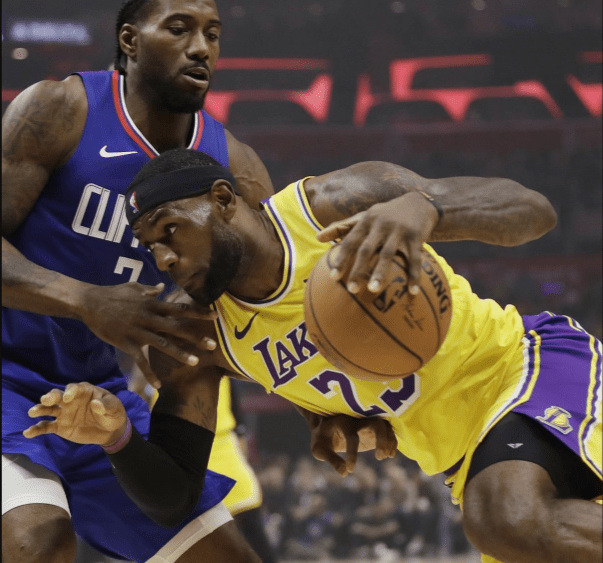
To grasp the full weight of Durant’s paradox, one must view the NBA as two parallel, often opposing, leagues. League A is the Product: a globally consumed entertainment spectacle of impossible skill. This is the league of the 7 foot point center (Jokic), the 6’6” guard shooting 55% from the field (SGA), and the 6’7” forward averaging a 35-point triple-double (Doncic). This league is a marvel of human specialization, where players are optimized like algorithms, their games stripped of weakness through decades of focused, year round training. The skill floor has risen so high that a “role player” today would be a star in 1995. This is the league Durant praises. League B is the Culture: the hidden world of practices, bus rides, trash talk, and pure, unregulated competition. This is the league where the “soul” resides. Durant laments its passing: “We don’t practice a lot at all. We definitely not getting after it in practice.
” The game has become a corporate performance. Players are assets to be managed, protected from wear and tear. Scrimmages are controlled. Load management is doctrine. The raw, unfiltered testosterone fueled battles that forged the identities of 90s teams have been replaced by scheduled rest and mutual preservation. The problem, as Durant keenly identifies, is that League A’s brilliance is killing League B. The very optimization that creates historic skill sets the obsessive film study, the biomechanical shooting drills, the nutritional protocols also drains the spontaneity and passion from the ecosystem. Players aren’t playing; they are executing a pre programmed routine. The joy is in the result (the win, the stat line), not in the messy, beautiful process. Durant, a product and a critic of this system, stands at the crossroads, loving what his eyes see but aching for what his heart remembers.
1. The Empirical Argument: Why Durant’s Skill Claim Is Objectively True
When Durant says the talent and skill level is at a historic peak, he is not offering an opinion; he is stating a quantifiable, empirical fact. The evidence is in the league’s very architecture.
Look at the archetypes. The traditional positional boxes have been obliterated. Nikola Jokic is a center who operates as his team’s primary playmaker, orchestrating an offense with the vision of Magic Johnson and the touch of Larry Bird. He is an anomaly that has become a blueprint.
Victor Wembanyama is a 7’5” guard trapped in a center’s body, blocking shots on one end and hitting step-back threes on the other. Luka Doncic, at 6’7”, uses the physicality of a power forward and the craft of a 15 year EuroLeague veteran to dominate at point guard.
The skill floor has been universally elevated. It is no longer extraordinary for a 6’9” power forward to be a 38% three-point shooter (see: every team’s stretch-four). Ball handling, once the domain of guards, is now a prerequisite for forwards. The “three and D” wing is not a specialist; he is the baseline NBA employee.
This is a product of globalized pipelines and year-round skill acquisition. Players are identified and specialized earlier. They have access to elite trainers, sports science, and film of every great player who ever lived from childhood. They are not just learning the game; they are reverse engineering greatness.
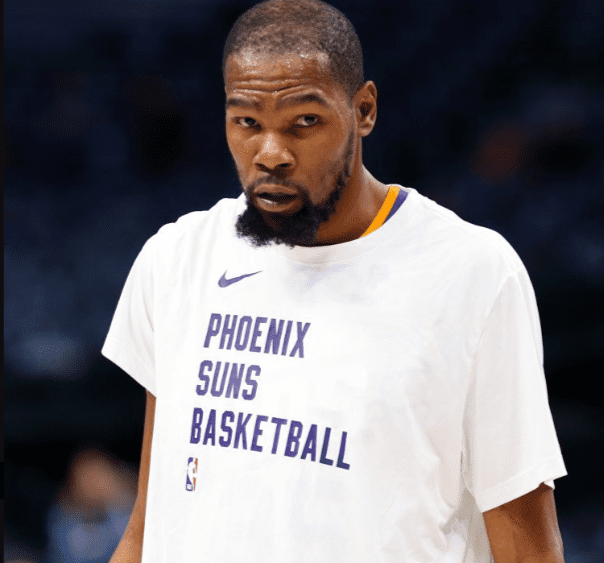
Durant himself is the prototype for this evolution a 7 foot “small forward” with the handles of a guard and the shooting stroke of a specialist. The players he praises (SGA, Luka, Jokic) are the next iteration: players who have taken that positional freedom and fused it with otherworldly basketball IQ. The game hasn’t just gotten more skilled; it has gotten more intelligent. The players are solving more complex problems, with more tools, at a faster speed, than any generation before them.
2. The Soul in Crisis: The “Regimented, Routine” Death of Spontaneity
Durant’s critique of the lost “soul” is a direct indictment of the industrial complex that has grown up around the sport to cultivate that very skill.
The NBA season is no longer a journey; it is a corporate calendar. Practices are not for competition; they are for “walk throughs” and “scheme installation.” The physical “getting after it” that forged rivalries and hardened teams is seen as a reckless risk to the multimillion dollar assets.
“Load management” is the most visible symptom. While medically prudent, it has commodified the game. Fans don’t buy tickets to see a team; they buy tickets to see stars. When stars sit, the transaction feels fraudulent. The game becomes a product to be consumed, not an event to be experienced.
The financialization of performance has altered player psychology. Durant notes the focus on “the next big contract, endorsement deals, or looking fly for the ‘Gram.” Player legacies are now debated in real time on social media through the lens of statistics and accolades. The pure, intrinsic motivation of “let’s roll the ball out and see who’s best” is subsumed by extrinsic pressures.
This creates the “regimented, routine” hell Durant describes. Every action is calculated for its impact on brand value, future earnings, or legacy narrative. The joy of play the childish, competitive fire that is the soul of any sport is suffocated under a mountain of analytics, marketing obligations, and career management.
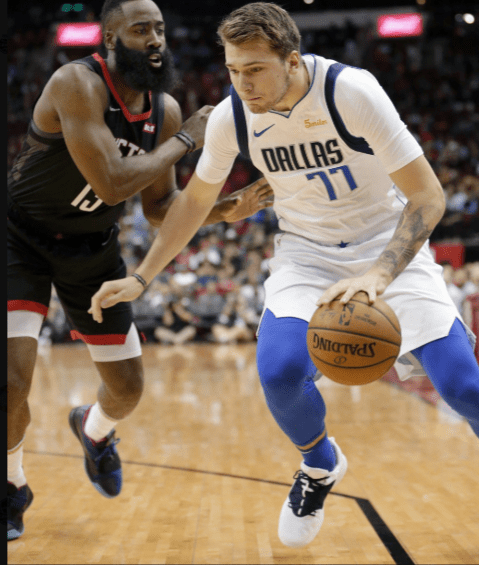
The players are not to blame; they are rational actors in a system they did not create. But the outcome is a league that sometimes feels like a beautiful, sterile simulation rather than a raw, emotional competition. You can see the genius, but you can no longer feel the heart.
3. The Durant Duality: The Cyborg Who Longs for the Playground
No player embodies this internal conflict more than Kevin Durant himself. He is the walking contradiction that makes his analysis so piercingly authentic.
On one hand, he is the ultimate product of the machine. His game is a clinically efficient killing machine. He is perhaps the greatest pure scorer ever not because of overwhelming athleticism, but because of unbreakable, repeatable technique. He is the algorithm.
On the other hand, he is the eternal gym rat. His infamous burner account scandals revealed a man obsessed with the pure, discursive debate about basketball. He doesn’t care about fashion or celebrity. He cares about the craft. He is, as he says, “nothing hoops on his mind, all day, every day.”
This duality is why his words carry weight. He is not an old timer yelling at clouds about “softness.” He is the system’s greatest beneficiary telling us the system has a fatal flaw. He helped build the cathedral of skill, and now he’s pointing out that it’s cold and empty inside.

His gripe isn’t with the players’ ability; it’s with the environment that shapes their relationship to the game. He misses the days when basketball was a passion, not a profession. He is a billionaire who would trade it all for one more summer of unchecked, meaningless runs at Seat Pleasant or Rucker Park, where the only stakes were pride and the only audience was the concrete.
4. The Generational Bridge: What Durant Sees That the “OGs” Miss
Durant’s perspective is uniquely valuable because he is a generational bridge. He entered the league in 2007, closer to the “down and dirty” 90s era than today’s stars. He has played against Kobe, Duncan, and Garnett, and now against Doncic, Wembanyama, and Holmgren.
When “OGs” criticize the modern game as “soft,” they are usually lamenting the lack of physical, hand checking defense and the perceived floppiness of players. This is a superficial critique focused on style.
Durant’s critique is deeper. He agrees the skill is higher, but he’s pointing to a spiritual malaise. The old heads miss the violence; Durant misses the vitality. They miss the fights; he misses the freedom.
He understands that you can’t have the 90s physicality with today’s player speed and skill. The game would be unplayable; fouls would be constant. The evolution away from brute force was necessary to unlock the dazzling skill we see today.
His point is that in shedding the brutality, the NBA also shed its soulful, chaotic heart. The league traded fistfights for flowchart offenses, and practice battles for load management spreadsheets. The trade off, in his view, has created a more beautiful but less alive sport.
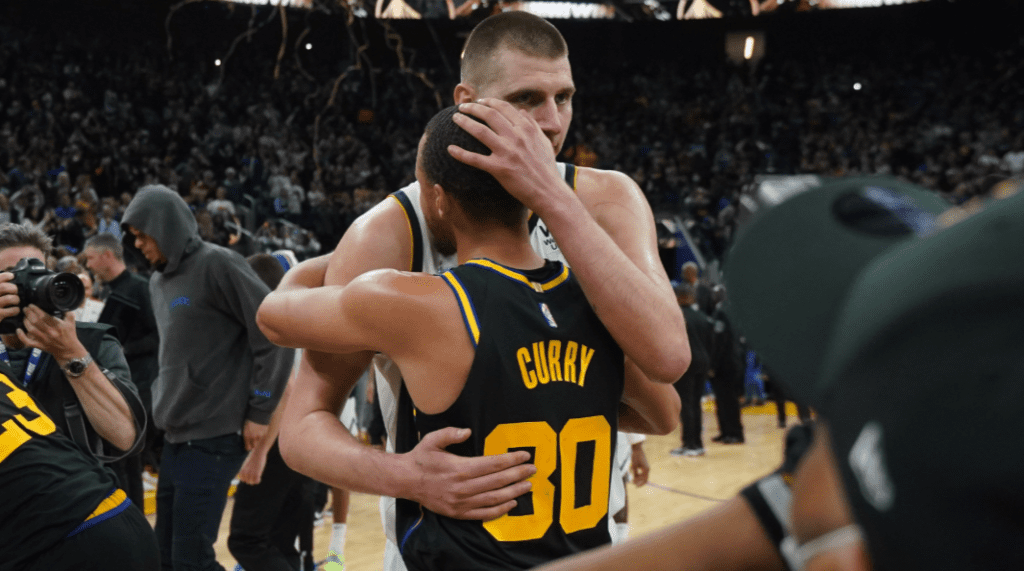
He is essentially telling the OGs: “You’re right that something is missing, but you’re identifying the wrong thing. It’s not the hardness that’s gone; it’s the joy.”
5. The Unanswerable Question: Can Genius and Soul Coexist?
The evidence suggests it may be a zero sum game. The factors that create the historic skill level are the same factors that kill the soul:
- Global Scouting & Early Specialization creates better players but turns childhood into a high stakes career path, burning out pure joy early.
- Sports Science & Load Management prolongs careers and elevates peak performance but turns athletes into preserved assets, afraid of the very competition that defines them.
- The 24/7 Media & Social Landscape grows the game’s popularity but forces players to constantly manage their brand, making authentic, unguarded moments nearly impossible.
Durant’s nostalgia for just “rolling the ball out and play” is a fantasy in a $10+ billion industry. The soul he misses thrived in an era of relative obscurity, smaller paychecks, and fewer cameras. It was a cottage industry. The NBA is now a multinational tech and media conglomerate.
The soul may not be gone, but it has gone underground. It exists in private summer runs, in hidden gym sessions, in the moments before the cameras roll. It is now a private luxury for the players, not a public feature of the game.
6. The Verdict: Durant as the Melancholy Prophet of a Beautiful Dystopia
In the end, Kevin Durant has not given us an opinion. He has given us a prophecy and a eulogy, delivered in the same breath.
He is the prophet of the basketball singularity, a point where skill and intelligence converge to create a form of the game so advanced it becomes almost unrecognizable to its forebears. He celebrates this.
He is also the deliverer of the eulogy for the sport’s heart, mourning the loss of the unthinking, passionate, chaotic culture that gave the game its meaning for generations. He regrets this.
His lasting legacy may not be his scoring titles or his MVPs, but his role as the definitive philosopher king of this era. He is the one who looked out from the pinnacle of the mountain his generation built and realized, with clear eyed sadness, that in climbing it, they left the most valuable part of themselves in the valley below.
The NBA has never been more spectacular to watch. And according to one of its greatest spectacles, it has never been emptier to feel. Durant’s conflict is our conflict. We marvel at the machine, even as we yearn for the ghost in it. The future he describes is one of breathtaking genius, played out in a cathedral of skill that echoes with the silence of a soul that has departed. The game is heading in the right direction. It just depends on what you think the destination is supposed to be.