The Last Purist’s Stand: How Byron Scott’s Loyalty-Based Ranking of Stephen Curry Over LeBron and Durant Is a Final, Desperate Battle Cry for a Dying NBA Value System in the Face of Player Empowerment’s Total Victory
The statement is a relic, a beautifully preserved fossil from a long-extinct era of basketball values. Byron Scott, a Los Angeles Lakers legend forged in the fires of the “Showtime” dynasty and a career spent entirely with one franchise, is asked to rank the three defining superstars of the modern age: LeBron James, Kevin Durant, Stephen Curry. His answer defies analytics, championships, and even peak on-court dominance. It is rooted in something far more ancient and, to him, sacred: loyalty. “That’s why I love Steph so much,” Scott says. “Steph has stayed in Golden State no matter what. The good times and the bad times.” With that simple, emotional calculus, he places Curry above the itinerant genius of LeBron and the migratory mastery of Durant.
He frames himself as a “basketball purist,” a guardian of a covenant where a player’s greatness is measured not just by where he takes his team, but by whether he stays with them through the journey. This is not a ranking; it is a moral judgment. It is a declaration that the foundational virtue of the old NBA monogamous commitment to a city and a fanbase still holds enough weight to tip the scales against statistical mountains and championship rings accumulated across multiple zip codes. Scott’s take is immediately controversial, easily dismissed as nostalgic nonsense in an era of player agency and superteams.
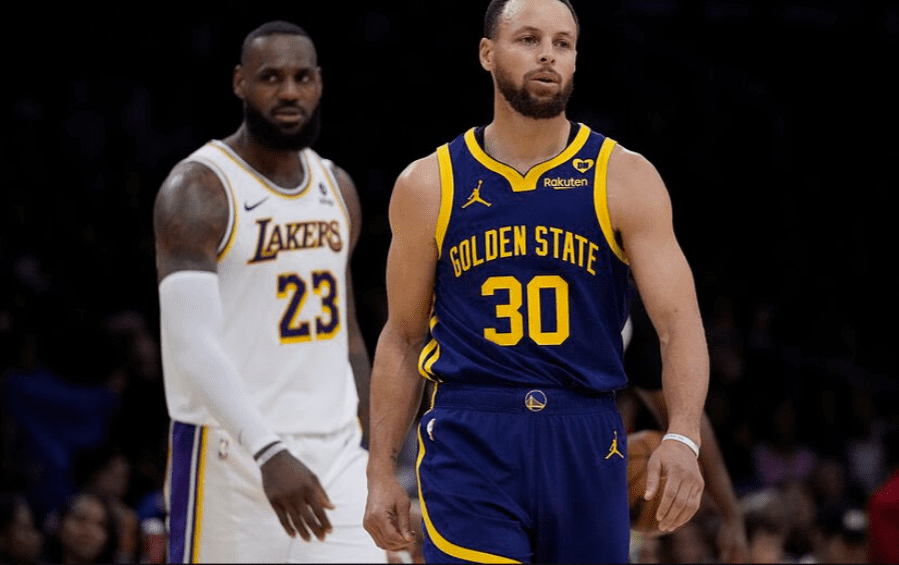
But to dismiss it is to miss its profound significance. Byron Scott is not making an argument about basketball; he is delivering a eulogy for a specific kind of heroism. He is looking at the player-empowered landscape crafted by LeBron’s “Decision” and Durant’s move to the 73-win Warriors, and he is pointing to Stephen Curry as the last, shining bastion of the world he once knew. In ranking Curry first, he is not saying Curry is a better basketball player than LeBron. He is saying that Curry’s choice to be a Warrior for life is a greater, more noble basketball achievement than any of LeBron’s rings or Durant’s scoring titles. This is the last stand of the old guard, a final attempt to assert that how you win still matters as much as if you win.
To understand the thermonuclear cultural weight of Scott’s opinion, one must first grasp the two opposing cosmologies he is arbitrating. On one side is the “Laker Dynasty” cosmology that birthed him: Jerry West, Magic Johnson, Kobe Bryant. In this world, the player and the franchise are symbiotic organisms. The player’s identity is inseparable from the city’s identity. You draft a star, you build around him, you win together, you grow old together, you become statues together.
Loyalty is not a bonus; it is the currency of legacy. On the other side is the “Player Empire” cosmology pioneered by LeBron and perfected by Durant. In this world, the player is a sovereign nation-state. The franchise is a temporary territory to be conquered, a resource to be leveraged in the larger project of building a global brand and a self-determined historical narrative. Loyalty is a negotiable sentiment, often subordinate to legacy optimization, business opportunities, and personal comfort.
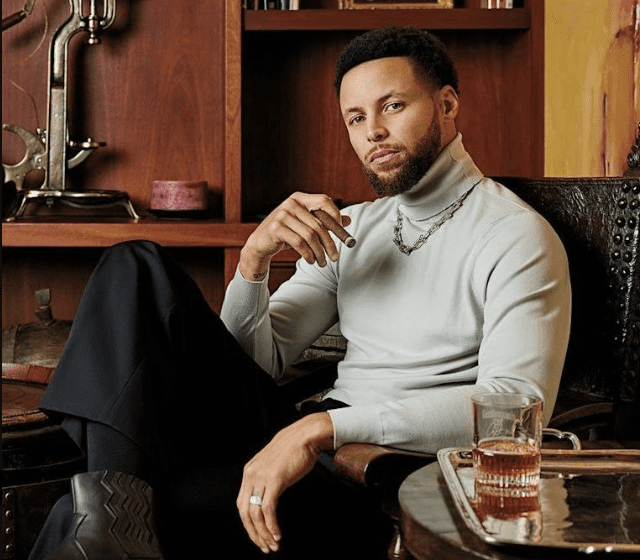
Stephen Curry exists in the miraculous, narrowing space between these two worlds. He is the accidental traditionalist. He never had to leave because his organization, through a combination of visionary drafting (Klay, Draymond) and strategic aggression (signing Durant), built a dynasty around him. His loyalty was never tested by prolonged failure. But the result is the same: he becomes the perfect avatar for Byron Scott’s values. He is the superstar who stayed, who fought through the bad years (early career ankle injuries, playoff heartbreaks) and reaped the rewards of the good, all while wearing one jersey.
In Curry, Scott sees the ghost of Magic, the spirit of Kobe. In LeBron and KD, he sees brilliant mercenaries who changed the rules of the game forever—rules Scott’s generation never agreed to play by. His ranking is an act of historical resistance. It is an attempt to use the last remaining loyal superstar as a lever to pry open a door to the past, to prove that the old virtues still have power. He is fighting for the soul of the sport, and Stephen Curry, perhaps unwittingly, is his champion.
The Theology of Loyalty: Why It’s Not Just a “Bonus Trait”
For Byron Scott and the generation he represents, loyalty is not a soft, sentimental add-on to a resume. It is the hard, foundational pillar upon which all other achievements are built.
In their theology, true greatness is contextual. Magic Johnson’s magic was inseparable from the “Showtime” fast break and the Forum’s gold. Larry Bird’s grit was meaningless without the parquet floor and the Celtics’ green. The struggle within a specific environment, against its unique challenges, is what forges a legend’s identity.
When a player like LeBron changes teams, he is not just changing employers; he is changing the narrative conditions of his own story. His Cleveland title is a redemption saga. His Miami titles are a “superteam” manifesto. His Lakers title is a late-career masterstroke. Each is a brilliant chapter, but they are separate books.
Steph Curry’s story is one book. His entire narrative the underrated draft pick, the fragile ankles, the “splash brothers” emergence, the 73-win season, the heartbreak, the Durant era, the return to glory is a single, continuous saga set in Oakland and San Francisco. There is no reboot, no sequel, no spin-off.
This uninterrupted narrative allows for a purity of legacy that Scott cherishes. Curry’s failures are the Warriors’ failures. His triumphs are the Warriors’ triumphs. There is no ambiguity, no debate about what he needed to win. He is the constant variable. This, to a purist, is the ultimate test: can you be the solution to every problem your franchise faces, for two decades?
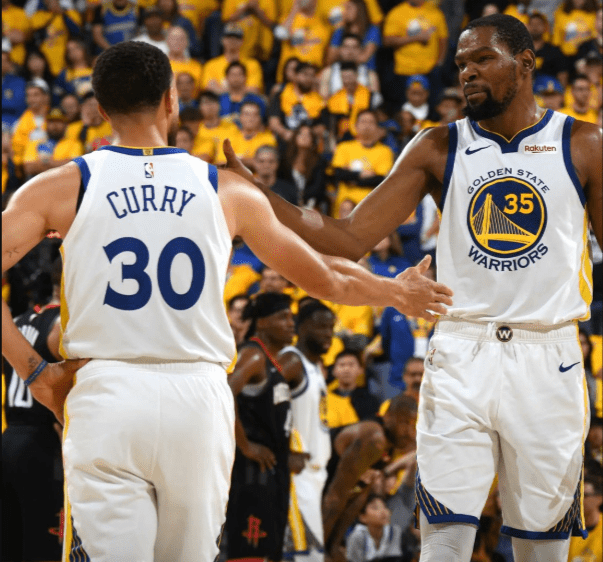
Loyalty, in this view, is the ultimate difficulty modifier. It means you cannot draft your way out of a bad roster (LeBron to Miami) or join a ready-made champion to solve your problems (Durant to GSW). You must solve them in situ, with the hand you’re dealt. That Curry did this turning a moribund franchise into a dynasty is, to Scott, a greater feat of basketball will than compiling rings across different contexts.
The “Purist” vs. The “Mercenary”: A Clash of Heroic Archetypes
Scott’s ranking hinges on a fundamental distinction between two heroic archetypes that have always existed in sports but are now in open conflict.
The Purist’s Hero (Curry): The King Who Builds the Kingdom.
- Origin: Drafted by the kingdom. Grows with it.
- Quest: To defend and elevate the homeland through thick and thin.
- Weapon: Homegrown power (his shooting, the system built around him).
- Virtue: Steadfastness, patience, identification with the people.
- Legacy: A monument. A statue outside the castle he never left.
The Modern Hero (LeBron/Durant): The Emperor Who Conquers Kingdoms.
- Origin: A prodigy whose talent belongs to the world.
- Quest: To expand his empire, acquire new territories, and secure his legacy.
- Weapon: Strategic alliances (superteams), tactical movement (free agency).
- Virtue: Agency, ambition, strategic brilliance.
- Legacy: A map. A series of conquered lands marked with his banner.
Scott, as a “purist,” is genetically programmed to venerate the King, not the Emperor. The King’s story is a classic epic linear, morally clear, rooted in place. The Emperor’s story is a modern, globalized saga complex, morally ambiguous, rooted in power.
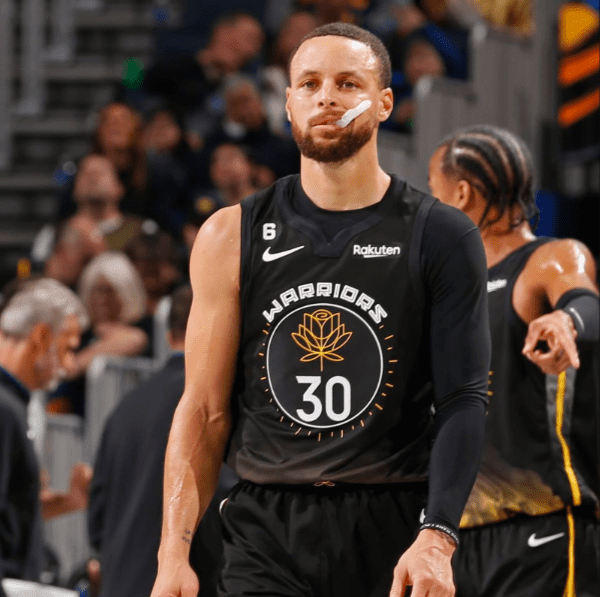
He is not saying the Emperor isn’t powerful; he’s saying the Emperor’s power is of a different, less noble kind. Curry’s loyalty makes him the hero of a sports story. LeBron’s journey makes him the hero of a business and legacy story. To Scott, the former will always be purer, and thus, in the realm of basketball evaluation, greater.
The Flaw in the Argument: Curry’s “Loyalty” Was Never Tested
The most potent counterargument to Scott’s thesis is a simple one: Stephen Curry’s loyalty was never forced to confront true, prolonged despair.
The Warriors’ front office, led by Bob Myers, executed one of the greatest team-building stretches in sports history. They drafted Klay Thompson and Draymond Green. They hired Steve Kerr. They capitalized on a unique cap spike to sign Kevin Durant. Curry never faced a situation where his front office failed him for years on end, wasting his prime.
Contrast this with LeBron’s first stint in Cleveland, where he dragged a woefully inadequate roster to the Finals, only to be consistently outgunned. Or Durant in Oklahoma City, who saw his front office trade James Harden and fail to build a competent supporting cast around him and Russell Westbrook.
Curry’s loyalty is blissful and rewarded. LeBron and Durant’s disloyalty was, in their eyes, necessary and pragmatic. They left because staying meant accepting organizational mediocrity. Curry stayed because staying meant presiding over a dynasty.
Scott’s argument implicitly assumes all organizational contexts are equal, and that staying is always a virtuous choice. But in the modern NBA, staying with a poorly run franchise is not loyalty; it is career malpractice. Curry was fortunate to be drafted by a franchise that became brilliantly run. His virtue was in not getting bored or deciding he needed a new challenge after the success, which is its own form of loyalty. But it is loyalty of a different, less fire-tested kind.
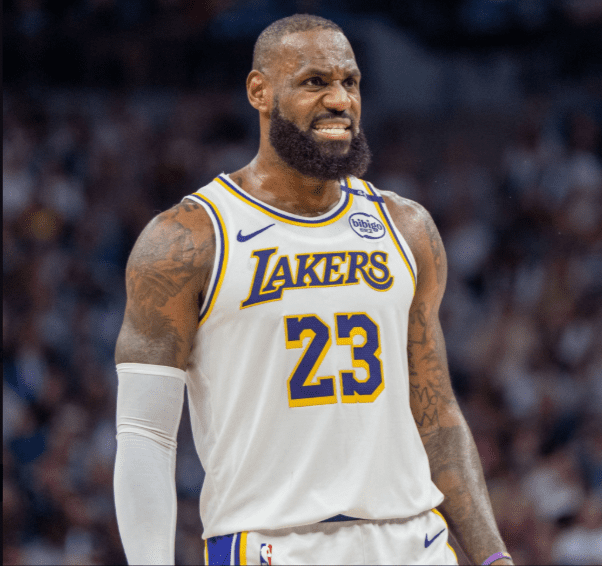
The Paul Pierce Corroboration: The Rival’s Perspective
The article brings in Paul Pierce’s supporting argument, which is crucial because it comes from a contemporary rival, not an old-school legend. Pierce’s reasoning is different but complementary.
Pierce focuses on direct competition and on-court humiliation: “How many times has Curry beat Bron in the Finals? He beat him three times. The man has a unanimous MVP while Bron was in his prime.”
This is the performance-based counterpoint to Scott’s values-based argument. Pierce is saying: Forget loyalty. On the court, at the peak of their powers, Curry’s team beat LeBron’s team, and Curry himself achieved something (a unanimous MVP) that LeBron, in his own prime, could not.
Together, Scott and Pierce form a pincer movement on LeBron’s legacy. Scott attacks from the flank of traditional values (loyalty). Pierce attacks from the front of head-to-head results (3-1 Finals record, unanimous MVP). Their combined case is powerful: Curry beat him where it matters (the Finals) and surpasses him in what matters to purists (franchise devotion).
This alliance between an old-school Laker and a bitter Celtic rival in praise of a Warrior shows how Curry’s legacy has become a unifying force for a certain basketball ideology. He is the player both the traditionalist and the stats-based rival can agree upon as a weapon against the LeBron/Durant model of player empowerment.
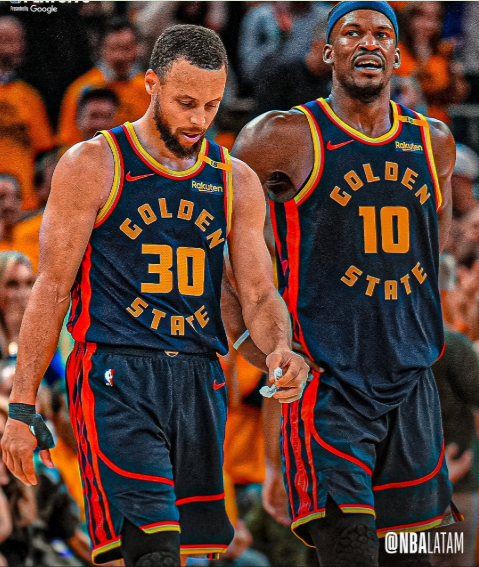
The Shifting GOAT Narrative: Is the Crown Truly in Play?
The article posits a seismic question: “All of this genuinely raises the question of whether James’ once undisputed crown as the best player of his generation is being seriously challenged.”
Byron Scott’s ranking is a symptom of this challenge, not its cause. The cause is the natural narrative shift that occurs as careers conclude. While active, LeBron’s sheer longevity and sustained excellence made the debate seem closed. In retirement, legacies are frozen and compared in totality.
Scott’s loyalty argument provides a philosophical framework for dethroning LeBron without disputing his statistical or athletic supremacy. It says: “Yes, LeBron may be the more physically dominant and statistically accumulative player. But Curry’s achievement building a single-franchise dynasty in the modern era is a rarer, purer form of basketball greatness.”
This is how the crown is challenged. Not by claiming Curry is better one-on-one, but by redefining the criteria for the crown itself. If legacy is about impact on a single franchise, about changing the very DNA of a team and a city, then Curry’s case is overpowering. If legacy is about individual dominance across multiple contexts and eras, LeBron’s is.
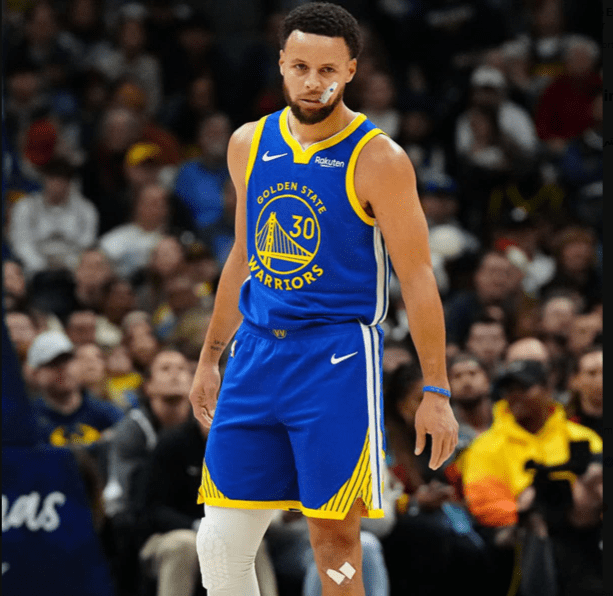
Scott is voting for the former definition. In doing so, he is trying to steer the entire legacy conversation back to a time when that was the only definition that mattered.
The Verdict: A Beautiful, Lost Cause
In the final analysis, Byron Scott’s ranking of Stephen Curry above LeBron James and Kevin Durant is a beautiful, heartfelt, and utterly lost cause.
It is a last, poetic stand for a set of values that the NBA, and its players, have consciously left behind. The league is now a player’s league. Loyalty is to one’s craft, one’s brand, and one’s family not necessarily to a franchise owned by a billionaire. LeBron and Durant didn’t break the system; they built a new one on its ashes.
Scott is like a master painter who only works in oils, looking at digital art and declaring it inferior because it lacks the texture of brushstrokes. He’s not wrong about what he values, but he’s evaluating a different medium.
His perspective is invaluable because it preserves the memory of what the sport once was. It reminds us that fandom was once a marriage, not a series of thrilling affairs. That a player could be the physical embodiment of a city’s pride for 20 years.
Stephen Curry is the bridge. He is the last superstar who fits the old template, allowing traditionalists like Scott to point and say, “See? It can still be done. This is still better.” But Curry is the exception that proves the rule. For every Curry, there are a dozen stars who will follow the LeBron/Durant blueprint.
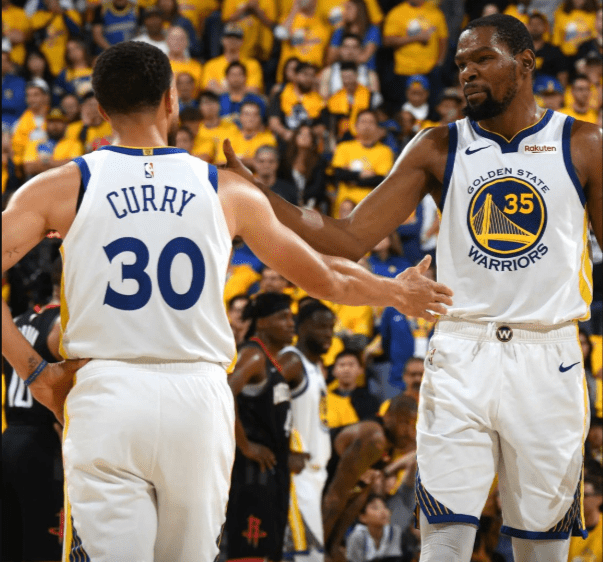
Byron Scott has looked at the modern NBA, seen its greatest players, and ranked them according to a code they do not live by. In doing so, he hasn’t told us who the best player is. He has told us what kind of basketball he still believes in, and he has given that belief a name: Stephen Curry. It is a ranking that will be debated, dismissed, and derided. But it will also be remembered, because it is the sound of a dying era speaking its final, principled truth.