The Birth of a Cold-Blooded Icon: How Anthony Edwards’s Game-Winning Shot and the Ruthless, Unfiltered Mentality Behind It Proves the NBA’s Next Apex Predator Has Finally Arrived and the League Will Never Be the Sam
The moment itself was a masterpiece of pressure, a fractal of chaos resolved into a singular, elegant solution. With seconds bleeding off the clock and the game hanging in the balance, Anthony Edwards caught the ball on the left wing. The defense, a writhing hydra of limbs and desperation, converged. There was no clear path, no schematic perfection.
There was only the moment, the ball, and the man. What happened next wasn’t just a basketball play; it was a philosophical statement made with muscle memory and supreme arrogance. A hard dribble right, a gather into the body, a rise into a fading, contested jumper from the mid-range the shot basketball’s analytics revolution tried to erase. Swish. Game. The arena detonated. But the true revelation, the moment that will echo longer than the final score, came before the shot. In the post-game glare, when asked to describe the mentality heading into that crucible, Edwards didn’t speak of drawn-up plays, of gratitude, or of team effort
His answer was a short, brutal, and breathtakingly honest manifesto: “Kill. That’s it. Just kill.” Three words. In them, Anthony Edwards didn’t just describe a shot; he issued a declaration of war on the very idea of NBA pressure. He revealed the operating system of the league’s next undeniable alpha: a mindset not of hope, but of conquest; not of execution, but of annihilation. This was not a player surviving a clutch moment. This was a predator recognizing his natural habitat. The shot won the game. The mentality won the future. And in that split-second, the tectonic plates of the NBA’s hierarchy shifted, because the scariest young force in basketball just proved he isn’t scared of anything especially the parts of the game designed to scare everyone else.
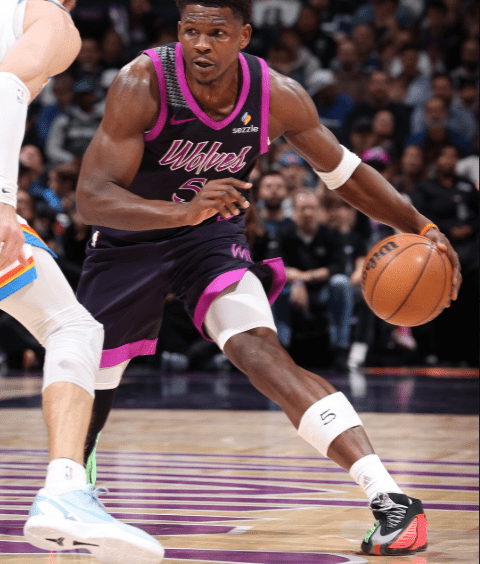
To understand the seismic weight of Edwards’s “Kill” mentality, one must first understand the ecosystem of modern NBA clutch play, an environment that has become increasingly sanitized, analytical, and risk averse. The orthodoxy of the last decade has been clear: in late game situations, you hunt for a three-pointer or a drive to the rim. The mid-range jumper, the “inefficient” shot, is the last resort of the foolish or the desperate. It is the basketball equivalent of a duel with pistols archaic, romanticized, and statistically unsound. Coaches draw up plays to generate the “right” look. Superstars often speak in the corporate, team first platitudes of “trusting my teammates” and “making the right read.” Pressure is a variable to be managed, a demon to be quieted with routine. Anthony Edwards looked at this sterile, optimized landscape and brought a flamethrower.
1. Deconstructing “Kill”: The Three Layers of Edwards’s Mantra
Anthony Edwards’s one-word answer is a Russian nesting doll of competitive psychology. Peeling it back reveals the core of a burgeoning legend.
Layer 1: The Literal Instinct (The Hunter). At its most basic, “Kill” is the language of sports Darwinism. It removes all abstraction. The objective is not to “win,” “score,” or “execute.” It is to terminate the opponent’s hope. This frames the defender not as an obstacle, but as prey. It reduces the complex chess match of an NBA possession to its elemental truth: you or me. This mindset eliminates hesitation, the clutch performer’s true enemy. Doubt cannot exist in a brain that has already committed to a terminal outcome.
Layer 2: The Historical Echo (The Heir). “Kill” is not a new word in the NBA lexicon. It is the direct descendant of the “Mamba Mentality,” Kobe Bryant’s famed philosophy of obsessive, ruthless competitiveness. When Edwards says it, he is consciously or unconsciously placing himself in that lineage. He is speaking the language of the gods he watched on YouTube highlights. This is not imitation; it’s adoption. He is claiming the mantle of the cold-blooded closer, stating that the tradition of Jordan and Kobe the tradition of taking and making the hardest shot with the game on the line, efficiency be damned is not dead. It has a new, explosive vessel.
Layer 3: The Psychological Armor (The Performer). “Kill” is also a psychological tool of immense power. By adopting this ultra aggressive, singular focus, Edwards builds an impenetrable mental fortress. The noise of the crowd, the magnitude of the game, the weight of expectations all of it is reframed as fuel for the “kill.” Pressure isn’t pressure; it’s the signal that it’s time to hunt. This mindset transforms anxiety into aggression, fear into focus. It allows him to live in the moment with a clarity that seems superhuman because, for those seconds, his humanity is entirely channeled into one animalistic purpose.
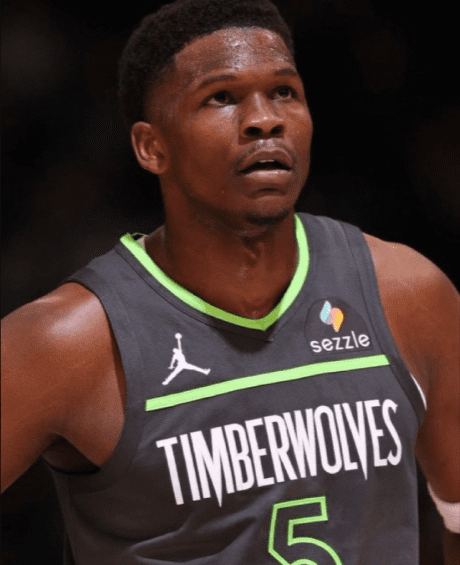
2. The Shot as Manifesto: Why the Mid-Range Fadeaway Is a Revolutionary Act
The specific shot Edwards made is as important as the mentality that produced it. In today’s NBA, a contested, fading mid-range jumper in a clutch situation is more than a shot; it’s a rebellion.
For over a decade, the league’s intelligence has been clear: the mid-range is the “no man’s land” of inefficiency. Analytics gurus and forward thinking coaches have systematically devalued it, preaching a gospel of “threes and layups.” The result has been a generation of stars who are often system dependent in clutch moments, reliant on a screen to get a step for a drive or a kick out to an open shooter.
Edwards’s shot was a rejection of that dogma. By rising and firing from the “inefficient” zone, he was making a bold statement: “Your rules do not apply to me. My talent transcends your analytics.” This is the hallmark of the true alpha superstar the ability to create a quality shot out of nothing, in the exact spot the defense is designed to protect. It requires not just skill, but an almost delusional self belief. Kobe had it. Jordan had it. Durant has it. It is the belief that your touch, your balance, and your will can bend the percentages to your liking.
Furthermore, the fadeaway is the ultimate “un helpable” shot. It is a declaration of independence from the team construct in the game’s ultimate moment. It says, “The play broke down. The scheme failed. Now, it’s just me and my skill against the world, and I like those odds.” This is why those shots forge legends. They are pure, unadulterated displays of individual greatness, the kind that wins playoff series and defines eras. Edwards, by taking and making it, didn’t just score two points; he planted a flag on the territory reserved for basketball’s pantheon.
3. The Ant Man Persona: Authenticity as a Superpower
What makes Edwards’s “Kill” mentality so potent and believable is that it is not a performance. It is the flawless integration of his on court persona with his off court personality.
Anthony Edwards is perhaps the most authentically himself superstar the league has seen in years. He is unfiltered, humorous, and possesses a contagious joy for the game. He famously said he’d choose football over basketball if he were taller, talks about watching SpongeBob before games, and gives interviews that feel like conversations with a supremely confident friend. There is no corporate media training veneer.
This authenticity makes his transition into “Kill” mode so terrifyingly credible. It isn’t a switch he flips; it’s a gear he engages. The same youthful exuberance that leads him to laugh during a blowout becomes the fuel for a terrifying competitive fire. Fans and opponents sense this. They know the smile isn’t a mask for weakness; it’s the calm before the storm. When he says “Kill,” you believe him because everything about him is genuine. He’s not trying to sound tough; he’s simply stating his operational truth.

This creates a unique and powerful brand of leadership for the Timberwolves. His teammates don’t follow a calculated robot; they follow a charismatic, fearless force of nature who is at his absolute best when everything is at its absolute worst. That is the most inspiring leadership there is.
4. The Minnesota Effect: Transforming a Franchise’s DNA
The impact of this mentality extends far beyond a single game winner. It is actively rewriting the cultural DNA of the Minnesota Timberwolves, a franchise with a long history of playoff disappointment and a perceived “soft” identity.
For years, the Wolves were defined by what they couldn’t do in the clutch, by the weight of their own history. They were a team of talent that seemed to shrink when the lights were brightest. Edwards’s arrival, and particularly the maturation of this clutch persona, has inverted that narrative. He brings a swagger and a fearlessness that is infectious. He is not haunted by the franchise’s past failures; he is oblivious to them. He plays as if history begins with him.
This mentality gives the entire team a psychological edge. In close games, they now have a cardinal truth: Get the ball to Ant, and he will handle it. This simplifies everything. It reduces late-game anxiety to a single, actionable plan. The confidence he has in himself bleeds into the roster, creating a collective belief that no deficit is insurmountable and no moment is too big. He isn’t just scoring points; he is giving an entire organization a spine.
5. The League Wide Warning Shot: The New Apex Predator
Edwards’s shot and his explanation for it were a warning flare shot across the bow of the entire NBA. The message was clear: The hierarchy is changing.
For years, the mantle of “most fearsome clutch player” has been debated among veterans like Stephen Curry, Kevin Durant, and the aging LeBron James. The next generation, for all its talent, has often been criticized for a lack of this specific, merciless late game gene. Edwards has now forcefully injected himself into that conversation. He is announcing that he not only belongs in the league’s elite but that he possesses the one trait that separates the great from the legendary: the instinct to not just participate in the fight, but to end it.
For other young stars, it’s a challenge. For established veterans, it’s a notice. For the Western Conference, it’s a problem. A player with Edwards’s physical gifts (explosive athleticism, a powerful frame, improving shot-making) was already a nightmare. A player with those gifts and a verified “Kill” switch is a potential dynasty engine. The league now has to contend with the fact that its most exciting young star might also be its most cold-blooded.
6. The Verdict: Not a Moment, But the Foundation of a Legend
In the end, the shot against the Timberwolves’ opponent will be a highlight, a data point in a long season. But the mentality the “Kill” mantra is something far more significant. It is the cornerstone of a legend in the making.
Anthony Edwards demonstrated that he possesses the rarest combination in sports: transcendent talent welded to an unshakeable, predatory mindset. He has the skill to take the hardest shot and the psyche to demand it. In an era of load management, calculated rest, and often sanitized player expression, Edwards is a throwback and a revolution all at once a player of pure, uncompromising will.
The shot won a game in December. The mentality won the faith of a franchise, announced his arrival to the league’s upper echelon, and laid the groundwork for a career defined not by avoiding pressure, but by devouring it whole. Anthony Edwards didn’t just make a game winner. He issued a thesis statement for his career, written in three letters: KILL. And the NBA, whether it realizes it yet or not, is now living in his world.