The Code of the Killer: How Anthony Edwards’s Three-Word “Kill” Mantra After His Game-Winning Shot Unlocks the DNA of the NBA’s Next Unstoppable Force and Redefines Clutch for a New Generation
The arena was a tempest of noise and nerve, the final seconds of a tied game condensing a season’s worth of pressure into one possession. On the left wing, Anthony Edwards caught the inbound pass, the basketball feeling less like a tool and more like a detonator in his hands. The defense swarmed, a coordinated effort to suffocate the moment. What happened next was not drawn up in a timeout huddle; it was authored in a mindset.
A hard dribble, a gather into his body, a rise into a contested, fading mid-range jumper the kind of shot the modern NBA’s analytics gospel has spent a decade trying to exorcise. Swish. Game. The explosion of sound that followed was pure catharsis. Yet, the true seismic event, the moment that will reverberate longer than any single victory, occurred in the quiet aftermath under the glare of cameras. Asked to describe the mentality fueling that ice-cold sequence, Edwards didn’t offer a platitude about teamwork or execution.
He leaned into the microphone, his face a mask of tranquil intensity, and delivered a three-word manifesto that cut to the primal core of competition: “Kill. That’s it. Just kill.” In that instant, Anthony Edwards did more than describe a game-winner; he unlocked a philosophical blueprint for the next decade of NBA alpha dominance. He revealed that the scariest young force in basketball isn’t just unafraid of the clutch he has built an entire psychological fortress around craving it, reducing its immense pressure to a simple, animalistic directive. The shot won the night. The mentality announced an era. And with it, the league’s established order received its most credible and charismatic threat, a predator who doesn’t just play the game but approaches its most critical moments with the chilling clarity of an apex hunter.
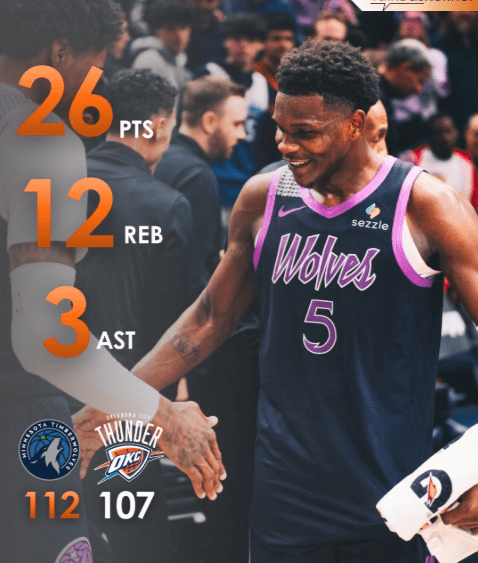
To grasp the revolutionary weight of Edwards’s “Kill” ethos, one must first diagnose the ailment it cures: the modern NBA’s often-sanitized relationship with clutch pressure. The league has become a masterpiece of optimization. Late-game situations are frequently managed through timeouts, set plays, and a relentless pursuit of the “right” shot typically a three-pointer or a drive, ruthlessly expunging the “inefficient” mid-range. Superstars, media-trained to perfection, often speak in the safe, corporatized language of “trusting the process” and “making the right read.” Pressure is treated as a variable to be controlled, a demon to be quieted with routine and analytics. Anthony Edwards looked at this sterile, hyper-calculated landscape and introduced a flamethrower. His mentality is the antithesis of management; it is the embrace of annihilation.
It rejects the spreadsheet in favor of the sword. When he rose for that fading jumper, he wasn’t making a calculated choice from a menu of options; he was asserting a fundamental truth: This is my moment, my shot, and my will against yours. The percentages are irrelevant because my demand to succeed overrides them. This “Kill” code connects him directly to a near-extinct lineage the Michael Jordans, the Kobe Bryants players who viewed clutch moments not as complex problems to solve, but as sacred arenas to validate their singular supremacy.
Edwards’s genius is the fusion of this atavistic killer instinct with a 21st-century athletic freak’s body and the unshakeable, main-character confidence of his generation. He doesn’t navigate pressure; he harnesses it as his primary fuel source. The chaos of the final minute isn’t a threat to his success; it is the only environment where his truest self can fully emerge.
1. Deconstructing “Kill”: The Three Layers of a Predator’s Mindset
Anthony Edwards’s one-word answer is a Russian nesting doll of competitive psychology. To unpack it is to understand the engine of a future legend.
Layer 1: The Literal Instinct (The Hunter’s Clarity). At its most visceral, “Kill” is the language of sports Darwinism. It strips away all abstraction, all secondary objectives. The goal is not to “win,” “score,” or “execute a play.” It is to terminate the opponent’s hope, to deliver the final blow. This framing is psychologically transformative. The defender is no longer a strategic obstacle; he is prey. The complex chess match of an NBA possession collapses into an elemental truth: you or me. This mindset is the ultimate hesitation-killer. Doubt, the clutch performer’s true nemesis, cannot coexist in a mind that has already committed to a singular, terminal outcome.
Layer 2: The Historical Echo (The Heir’s Claim). “Kill” is not a new term in the NBA lexicon. It is the direct, unmistakable descendant of the “Mamba Mentality,” Kobe Bryant’s famed philosophy of obsessive, ruthless competitiveness. When Edwards utters it, he is consciously or not planting his flag in that sacred ground. He is speaking the language of the gods he studied on YouTube highlights, claiming his place in the lineage of players who defined greatness by their cold-bloodedness in the game’s hottest moments. This is not mere imitation; it is adoption. He is declaring that the tradition of Jordan and Kobe the tradition of demanding the hardest shot and silencing a crowd with it is not a relic. It has a new, explosive, and charismatic vessel.
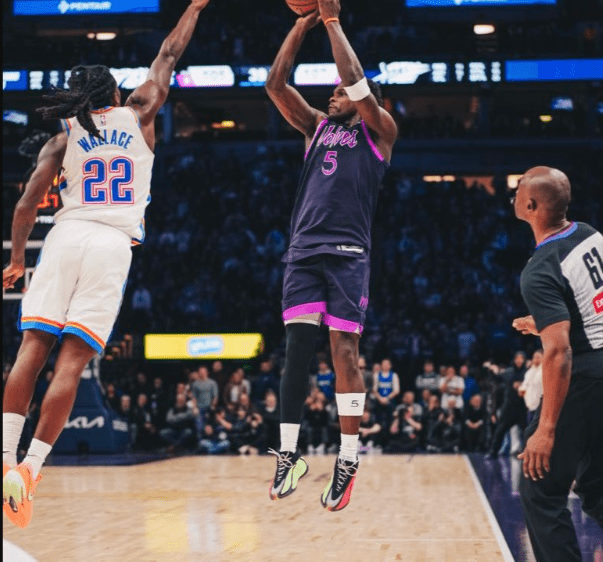
Layer 3: The Psychological Armor (The Performer’s Fortress). On a practical level, “Kill” is a brutally effective psychological tool. By adopting this ultra-aggressive, singular focus, Edwards constructs an impenetrable mental fortress. The deafening roar of the crowd, the magnitude of the game, the weight of his franchise’s expectations all of it is filtered and reframed as fuel for the “kill.” In his mind, pressure ceases to be pressure; it becomes the signal that it’s time to hunt. This alchemy transforms communal anxiety into personal aggression, paralyzing fear into laser focus. It allows him to inhabit the moment with a clarity that seems superhuman because, for those decisive seconds, every ounce of his humanity is channeled into one pure, animalistic purpose.
The Shot as a Rebellious Manifeston
The specific shot Edwards made is as critical to his statement as the mentality that produced it. In today’s NBA, a contested, fading mid-range jumper in a clutch situation is more than a basket; it is an act of rebellion.
For over a decade, league orthodoxy has been clear: the mid-range is the “no man’s land” of inefficiency. A symphony of analytics and progressive coaching has devalued it, preaching a gospel of “threes, layups, and free throws.” The result is a generation of stars who can sometimes appear system-dependent in clutch moments, reliant on a perfect screen or a defensive breakdown to generate their preferred, “efficient” look.
Edwards’s shot was a rejection of that dogma. By rising and firing from the analytical dead zone, he made a bold declaration: “Your rules do not apply to me. My talent and my will transcend your spreadsheets.” This belief is the exclusive hallmark of the true alpha superstar the ability to conjure a quality shot from the void, in the exact spot the defense is designed to protect. It requires not only otherworldly skill but an almost delusional level of self-belief.

Furthermore, the fadeaway is the ultimate “un-helpable” shot. It is a declaration of independence from the team construct at the game’s most critical juncture. It announces, “The play is over. The scheme has failed. Now, it’s just me and my skill against the world, and I am supremely comfortable in that solitude.” This is why such shots forge legends. They are pure, unadulterated exhibitions of individual greatness, the kind that wins playoff series and defines careers. Edwards, by taking and making it, didn’t just score two points; he planted his flag on the territory reserved for basketball’s pantheon and declared it his new home.
The Ant-Man Persona: Authenticity as the Ultimate Weapon
What makes Edwards’s “Kill” mentality so potent and believable is its seamless integration with his off-court persona. He is perhaps the most authentically himself superstar the league has seen in years.
Edwards is unfiltered, joyously humorous, and radiates a pure love for the game. He’s the player who famously said he’d choose football over basketball if he were taller, who talks about watching cartoons before games, and whose interviews feel less like press conferences and more like conversations with a supremely confident friend. There is no corporate veneer, no media-trained robot behind the eyes.
This profound authenticity makes his transition into “Kill” mode so terrifyingly credible. It isn’t a mask he puts on; it’s a gear within the same authentic machine. The same youthful exuberance that leads him to celebrate a teammate’s three-pointer in a blowout becomes the combustible fuel for a terrifying competitive fire. Fans and opponents alike sense this. They know his easy smile isn’t a cover for weakness; it’s the calm before the storm. When he says “Kill,” you believe him implicitly because everything about Anthony Edwards is genuine. He’s not trying to sound tough; he is simply stating his operational truth.

This forges a uniquely powerful brand of leadership for the Timberwolves. His teammates aren’t following a calculated, emotionless automaton; they are rallying behind a charismatic, fearless force of nature who is demonstrably at his absolute best when everything is at its absolute worst. That is the most inspiring and contagious form of leadership imaginable.
Transforming a Franchise’s DNA
The impact of this mentality radiates far beyond a single game-winning basket. It is actively rewriting the cultural DNA of the Minnesota Timberwolves, a franchise long haunted by a narrative of playoff disappointment and a perceived “soft” underbelly.
For years, the Wolves were subconsciously defined by what they couldn’t do in the clutch, burdened by the ghosts of past failures. They were a collection of talent that often seemed to shrink when the lights burned brightest. Edwards’s arrival, and the crystallization of this clutch persona, has inverted that narrative. He injects a swagger and a fearless arrogance that is viral. He is not haunted by the franchise’s past; he is gloriously oblivious to it. He plays as if the franchise’s history begins with his first dunk.
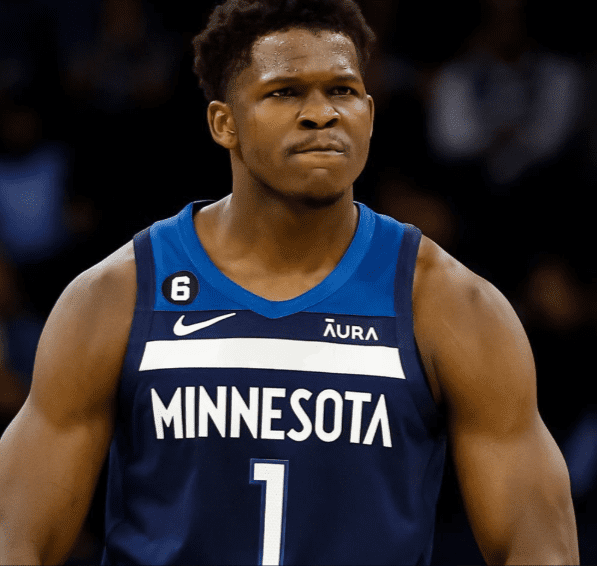
This mentality provides the entire organization with a psychological skeleton key. In close games, they now possess a cardinal, simplifying truth: Get the ball to Ant, and clear the deck. This reduces late-game anxiety from a complex strategic puzzle to a single, empowering act of trust. The monumental confidence he has in himself bleeds into the entire roster, fostering a collective belief that no deficit is insurmountable and no moment is too grandiose for them. Anthony Edwards isn’t just scoring points; he is giving an entire franchise a backbone of titanium.
The Verdict: The Foundation of a Legend
The shot against the Timberwolves’ opponent will reside in season highlight reels. But the mentality the “Kill” mantra is something far more permanent. It is the cornerstone of a legend-in-the-making.
Anthony Edwards has demonstrated he possesses the rarest alchemy in professional sports: transcendent physical talent fused with an unshakeable, predatory psyche. He has the skill to make the hardest shot and the mentality to not only demand it but to crave the solitude of that demand. In an era often characterized by load management, calculated messaging, and risk-averse play, Edwards is a throwback and a revolution—a prophet of pure, uncompromising will.