The Island Nation’s Sneaker Coronation: How Jordan Clarkson’s Groundbreaking Nike Deal Transcends Basketball to Become a Cultural Earthquake for 110 Million Filipinos and a Strategic Masterstroke for the Swoosh’s Global Empire
The transaction appears, on its surface, as a standard piece of sports commerce: a talented NBA guard finalizing a footwear and apparel endorsement contract with the industry’s monolithic leader. Jordan Clarkson, the former Sixth Man of the Year and dynamic guard for the New York Knicks, will now have his name and likeness tethered to the iconic Swoosh. But to view this deal through the narrow lens of athletic sponsorship is to profoundly misunderstand its seismic weight. This is not merely a contract; it is a cultural coronation. Clarkson is reported to become the first athlete of full Filipino descent to sign a major endorsement deal with Nike, the most recognizable sports brand on the planet. In that distinction lies a historic rupture.
For decades, the global marketing pantheon of American sport has been a fortress with limited gates, its ambassadors predominantly reflecting a narrow demographic lineage. Clarkson’s deal shatters a specific, unspoken barrier. It places a Filipino face his mother is from Angeles City, Pampanga at the zenith of global sports branding.
This signature does more than outfit a player; it outfits an entire nation of 110 million people with a long, fervent, yet often peripherally acknowledged love for basketball, in a mantle of unprecedented validation. Nike is not just signing a scorer; it is formally recognizing, investing in, and harnessing the collective identity of the most basketball-obsessed nation outside the United States.
The implications ripple far beyond the hardwood, speaking to the tectonic shifts in how global brands calculate value, the evolving power of diaspora communities, and the long-awaited arrival of a specific Asian identity into the mainstream of sports iconography. Jordan Clarkson’s Nike contract is a business decision that doubles as a cultural earthquake, proving that in the modern economy, the most valuable asset an athlete can possess is not just a jump shot, but an entire people’s dream.
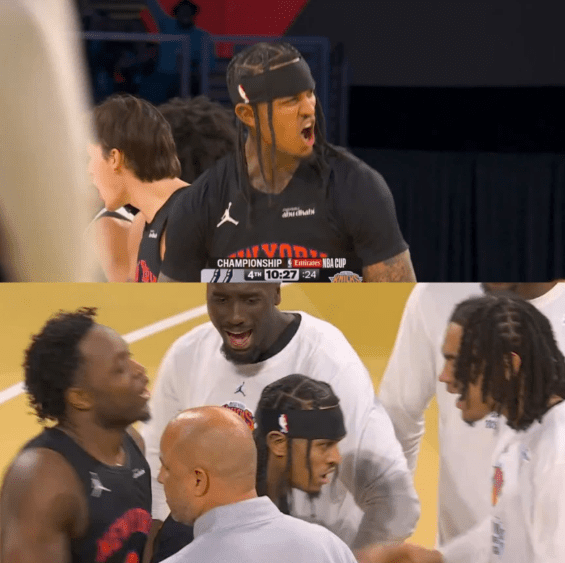
To grasp the magnitude of this moment, one must first diagnose the historical void it fills. The Philippines’ relationship with basketball is not a pastime; it is a national pathology of passion. The game is woven into the physical and social fabric of the islands played on makeshift courts in every barangay, dominating television ratings, and serving as the nation’s primary cultural conduit to America. Filipino fans are among the world’s most knowledgeable and devout. Yet, for generations, this passion existed in a state of aspirational dissonance. They worshipped a game whose highest altar, the NBA, offered few reflections of themselves. While players of various Asian heritages have found NBA success, a singular, marketable star proudly and prominently waving the Filipino flag at the league’s zenith remained elusive.
Clarkson, with his flamboyant scoring bursts, his trademark celebration, and his vocal, active embrace of his Filipino identity playing for the national team, visiting regularly, immersing himself in the culture became that singular figure. He was not a player who happened to be Filipino; he was the Filipino Player. Nike’s decision to formalize a partnership with him is an act of profound market intelligence. It acknowledges that Clarkson’s value cannot be measured by his points-per-game average alone. His true metric is the emotional GDP of a nation. He represents access to a fanbase with an almost religious devotion to both basketball and brand loyalty, a market where sneakers are not just footwear but cultural currency.
In signing Clarkson, Nike is not acquiring an endorser; it is acquiring a sovereign ambassador to a basketball kingdom it has yet to fully conquer. The deal signals a move from seeing the Philippines as a mere consumption market to recognizing it as a center of cultural gravity, worthy of representation at the brand’s highest level. This is a pivot from selling to a community to being represented by it a distinction that marks a new era in global sports marketing.
1. The Breach in the Citadel: The Historic Weight of “First Filipino Descent”
The phrase “first ever Filipino descent” in the context of a major Nike contract is not a footnote; it is the headline. It represents the breaching of a final, symbolic citadel in the architecture of global sports marketing.
For decades, the face of basketball by extension, its premier brand endorsements has been dominated by a relatively monolithic aesthetic. While international stars like Yao Ming and Dirk Nowitzki broke geographic barriers, the representation of Southeast Asian, and specifically Filipino, identity in the upper echelon of shoe deals remained nonexistent. This absence created a representational vacuum. Millions of young Filipino athletes laced up Nikes, LeBrons, and Kobes, seeing in them unparalleled performance and style, but never seeing their own story reflected in the athlete wearing them. The hero on the poster could never be mistaken for a cousin from Cebu or an uncle from Manila.
Clarkson’s deal collapses this vacuum. It declares that a Filipino surname and identity are not just compatible with peak athletic performance and marketable cool, but are assets. Nike, the ultimate arbiter of “cool” in sports, is stamping this with its iconic Swoosh. This has a normalizing power that decades of grassroots play could not achieve. It moves Filipino identity from the periphery of the sports world to its promotional center. For the Filipino diaspora spanning the globe from the Middle East to North America to Europe this provides a shared point of pride, a tangible symbol that their heritage has a placed, honored seat at the biggest table in sports.
The psychological impact is immeasurable. It transforms Clarkson from a basketball player into a cultural landmark, a living, breathing proof that the ceiling is not just breakable but has been officially shattered. Every young Filipino baller can now look at a Nike billboard and, potentially, see a version of themselves. This shifts the internal narrative from “We can make it to the league” to “We can own the conversation around the league.” It is a transfer of symbolic power that resonates far deeper than any championship ring.
2. The Calculus of the Swoosh: Why Clarkson is Nike’s Perfect Strategic Asset
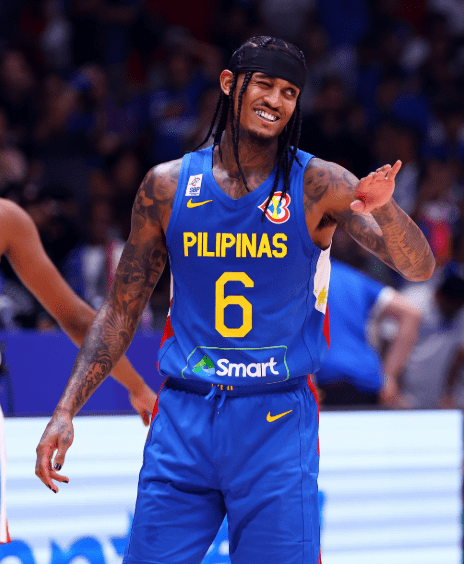
Nike’s decision is rarely based on sentiment; it is a cold, precise calculus of brand expansion, market capture, and cultural relevance. Jordan Clarkson, in this equation, presents a uniquely potent set of variables that make him an ideal strategic asset in the post-Jordan, post LeBron landscape.
First, he provides authentic access to an undervalued megamarket. The Philippines is not an emerging basketball market; it is a fully matured, insatiable one that has been historically underserved by direct, top-down endorsement. By aligning with Clarkson, Nike plants its flag not just as a seller, but as a patron of the nation’s basketball soul. This can lock in generational loyalty, driving sales across all product categories and creating a halo effect for Nike Basketball throughout Southeast Asia.
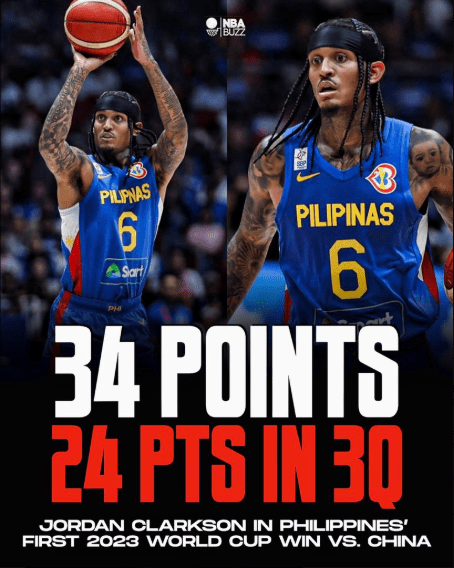
Second, Clarkson embodies the “heritage plus performance” archetype that Nike covets. He is not a niche, regional star. He is a proven, high level NBA performer with a Sixth Man of the Year award, capable of explosive 40-point games on the league’s brightest stages in Madison Square Garden. His game is flashy, confident, and entertaining perfect for highlight reels and marketing campaigns. This allows Nike to market him globally as a serious athlete first, whose heritage adds a rich layer of story, not defines his entire appeal. He is a dual citizen of both the NBA elite and a specific cultural nation, making him viable in mainstream and diaspora campaigns simultaneously.
Third, at 31, Clarkson is in a phase of veteran refinement. His game is established, his personality is known, and his role as a leader for the Philippine national team (Gilas Pilipinas) is secure. This offers stability. Nike is investing in a narrative that is already being written, not speculating on a prospect. His journey from NBA role player to focal point of a nation’s sporting hopes is a compelling story of growth and embrace, which provides rich fodder for narrative driven marketing that Nike excels at. He represents not just the pinnacle, but the fulfilling of a promise, a story arc that resonates deeply in the collectivist culture of the Philippines.
3. The Ripple Effect: Reshaping the Asian Representation Landscape
Clarkson’s deal does not exist in isolation. It lands within a slow but perceptible shift in the representation of Asian athletes in Western sports marketing. For too long, the narrative around Asian athletes, when it existed, was often confined to stereotypes of quiet diligence, technical precision, or was funneled through the singular, colossal figure of Yao Ming.
Clarkson breaks this mold entirely. His game and persona are flamboyant, confident, and emotionally expressive traits not traditionally marketed in association with his heritage. His signature celebration, the “JC Wave,” is an act of pure, unadulterated showmanship. By placing a Filipino athlete who embodies this style at the forefront, Nike is actively participating in the diversification of the Asian image in global pop culture. It expands the palette from which young Asian athletes can draw their own self-concept.
Furthermore, this deal puts direct, corporate pressure on other brands and leagues. It raises a critical question: if Nike, the market leader, sees unequivocal value in a Filipino heritage star, who else is overlooking similar opportunities? It could catalyze a broader rush to identify and sign athletes from the Filipino diaspora and other Southeast Asian communities, not as token gestures, but as central pillars of growth strategy. Clarkson becomes the proof of concept, making it easier for the next athlete with a similar background to secure serious consideration. His success could open the floodgates, forcing the entire endorsement ecosystem to re-evaluate its blind spots and recognize that the future of global fandom is irrevocably tied to authentic representation.
4. The Inevitable Next Chapter: The Path to a Signature Shoe
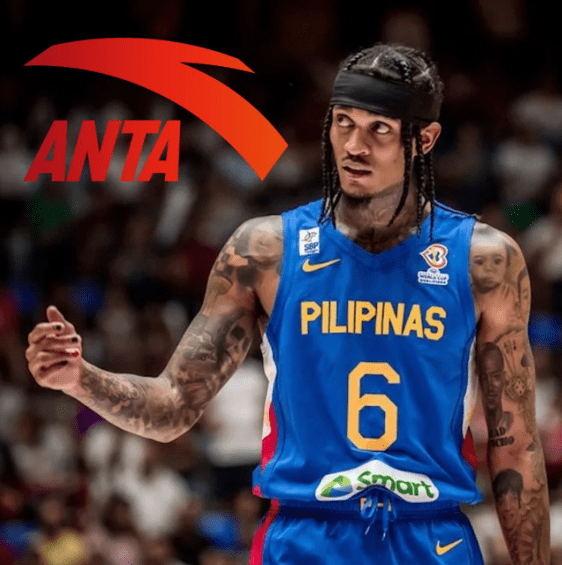
No major Nike basketball deal exists in a vacuum without the whispered potential of the ultimate honor: a signature shoe line. While reserved for the game’s true icons, the cultural weight of Clarkson’s deal inherently accelerates this conversation.
For Nike, a “JC” signature line would be a unprecedented venture. It would be the first signature shoe primarily inspired by and marketed to the Southeast Asian market and its global diaspora. The design language could move beyond standard performance aesthetics to incorporate visual narratives of Philippine culture patterns from indigenous textiles, colorways reflecting the national flag or iconic jeepneys, storytelling that weaves in his mother’s journey from Angeles City to the NBA. This would transform a performance product into a cultural artifact, a wearable piece of national pride.
The commercial case is potent. The Philippine market’s fervent loyalty could guarantee a strong initial sell through, creating a sustainable model even if the shoe doesn’t top U.S. sales charts. It would be a statement of deep, localized commitment, telling Filipino consumers that they are not just buyers, but muses. For Clarkson, a signature shoe would cement his legacy far beyond his playing years.
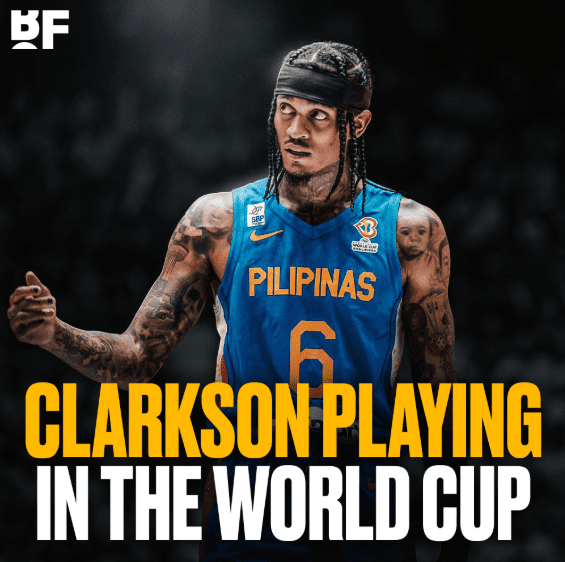
5. The Burden and the Badge: Clarkson’s New Duality
With this historic deal comes a weight that Clarkson’s predecessors in Nike’s stable may not have fully carried. He is no longer just playing for the Knicks or for Gilas Pilipinas; he is now the standard bearer for an entire demographic’s commercial viability. Every slump will be scrutinized not just for its impact on the court, but for its potential impact on the perception of his marketability. Every public appearance is now an extension of a brand that has staked a claim on his heritage.
This transforms his career into a high-stakes dual performance. On one hand, he must maintain the level of NBA excellence that justified the deal. On the other, he must authentically nurture his connection to the Philippines, ensuring the cultural authenticity that is the core of his unique value proposition does not become a hollow marketing tactic. He must walk a tightrope, being a global NBA star while remaining the “Pambansang Manok” (National Rooster). It is a burden, but also the ultimate badge of honor. The pressure is immense, but it is the pressure that comes from making history, from carrying the hopes of millions who see in him a validation of their own place in the basketball world. How he navigates this duality leveraging the platform without being crushed by its expectations will define the legacy of this deal far more than any financial figure.
6. The Verdict: A New Map for the Game’s Geography
Jordan Clarkson’s Nike contract is a landmark that redraws the map of basketball’s cultural and commercial geography. It proves that the centers of power in the sport are no longer confined to the traditional axes of American cities. A new axis now runs directly from Beaverton, Oregon, to Metro Manila.
This deal is a masterclass in modern brand strategy, demonstrating that in a saturated market, the deepest connection is not to a player’s stats, but to his story and the community he embodies. Nike has not simply added an athlete; it has integrated a nation’s narrative into its own. For the Philippines, it is a moment of profound recognition, a signal that their lifelong love affair with basketball is finally being reciprocated by the object of their affection at the highest level.
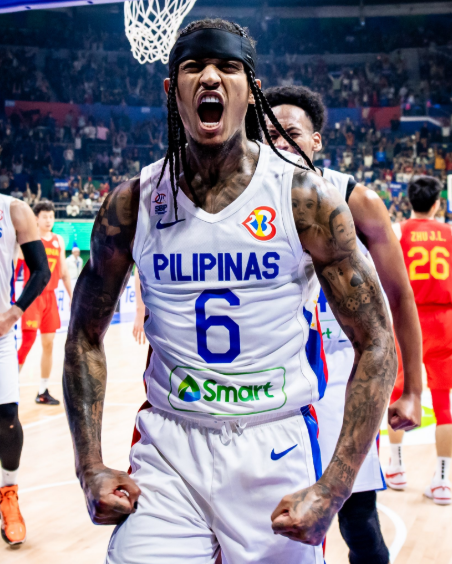
The true victory is not Clarkson’s alone. It is a victory for every Filipino child who has ever dreamed in basketball. That dream now has a logo, and it is a Swoosh. The era of aspiration has evolved into the era of representation. Jordan Clarkson’s signature on that Nike contract is, in effect, a signature for 110 million people, a long awaited endorsement of their rightful place in the story of the game they have always owned in their hearts. The journey from the barangay court to the Nike boardroom is now a validated path. The game, and the business that surrounds it, will never be the same.