How LeBron James’s Relentless Engagement with NBA Officiating Is Not Weakness, But a Weaponized Strategy of Psychological Warfare and Narrative Control
The image is a staple of the modern NBA broadcast, as familiar as a three-pointer or a timeout: LeBron James, having driven through a forest of limbs, misses a contested shot at the rim. He doesn’t sprint back on defense. Instead, he remains in the offensive end, his arms outstretched in a theatrical “Where was the foul?” pose, his head whipping toward the nearest official, his face a mask of exasperated, disbelieving injustice. To a legion of detractors, this is the defining snapshot of his competitive character: the greatest player of his generation, also its premier “crybaby.”
The label is wielded as a cudgel, a shorthand for perceived softness, entitlement, and a failure to “just play through it.” It frames his incessant dialogues with referees as a childish whine, a sign of mental fragility. But this interpretation is a profound, surface-level misreading. To dismiss LeBron James’s behavior as mere complaint is to miss the intricate, high-stakes game unfolding within the game. His engagement with officials is not a lapse in composure; it is the central pillar of his competitive operating system.
It is a deliberate, calculated, and weaponized strategy that blends real-time game theory, psychological pressure, and long-term narrative shaping. LeBron James is not crying; he is negotiating. He is not breaking down; he is building a case. In every outstretched arm and vocalized grievance, he is prosecuting a continuous trial where the jury is the officiating crew, the precedent is the next possession, and the ultimate verdict is the championship. To call him a crybaby is to fundamentally misunderstand the modern economics of NBA superstardom, where points are not only scored with the ball but also earned through the meticulous, relentless management of perception.
To categorize LeBron’s behavior as simple complaining is to apply the logic of a pickup game to a multibillion-dollar corporate enterprise where infinitesimal edges decide fortunes. The NBA is not a pure athletic contest; it is a complex ecosystem of rules, interpretations, and human judgment. Officiating is not an objective science but a subjective, real-time art form influenced by countless variables momentum, crowd noise, player reputation, and yes, persistent lobbying. LeBron James, perhaps more than any athlete in history, approaches this ecosystem with the mind of a CEO and a litigator.
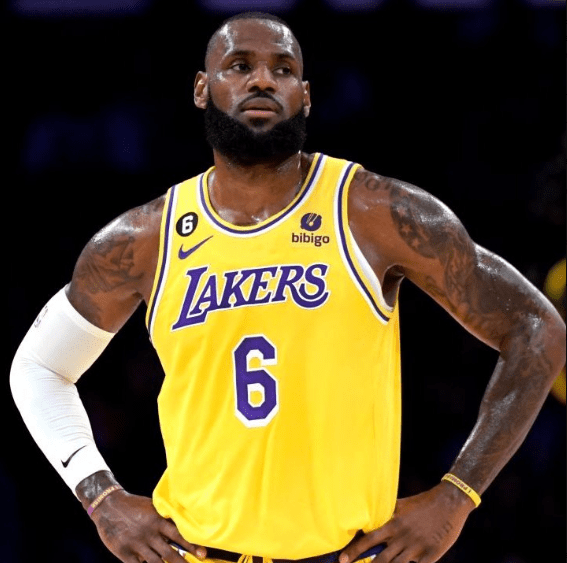
He understands that his value on the court is not merely a function of his scoring, rebounding, and passing. It is a function of his ability to manipulate the environment in which those skills are deployed. His “complaints” are, in fact, strategic investments. Each argument, each demonstrative gesture, is a deposit into a psychological bank account with the officials. He is not seeking sympathy; he is seeking a recalibration of the foul threshold. By protesting a non-call on drive number seven, he is not necessarily expecting a make-up call on drive number eight. He is working to lower the threshold for contact required to earn a whistle on drive number fifteen, or in the fourth quarter, or in Game 7 of a playoff series.
He is playing the long game, understanding that referees are human and susceptible to the cumulative weight of perceived injustice. His behavior is a form of continuous, low-grade pressure, designed to bend the game’s invisible framework ever so slightly in his and his team’s favor. It is the basketball equivalent of a master poker player needling an opponent, not to win a single hand, but to tilt their decision-making process for the entire tournament. The fan sees a whine. The strategist sees a soft-power maneuver.
1. The Psychology of the “Foul Baiter”: Beyond Theatrics to Tactical Data Harvesting
LeBron’s on-court demonstrations are often dismissed as mere theatrics, an excessive performance meant for the cameras. This view ignores their function as a critical data-gathering and pressure-applying mechanism.
When LeBron stops to engage an official after a no-call, he is accomplishing several objectives simultaneously. First, he is establishing a personal ledger. He is creating a visible, memorable event “the time I got hit on the arm with no call” that becomes a reference point in his ongoing dialogue with that official. He is building a case file.
Second, he is conducting a public perception audit. By showcasing his frustration to 20,000 fans and millions of viewers, he shapes the narrative of the game. If the broadcast replays show even marginal contact, his protest is validated in the court of public opinion, which subconsciously pressures the officiating crew. The crowd’s subsequent roar on his next drive adds another layer of psychological pressure on the referees, making them more likely to blow the whistle to avoid the appearance of inconsistency or bias.
Third, and most critically, he is testing boundaries. His complaints are probes. He is learning, in real-time, what level of contact this particular crew is willing to allow on him. Is it a “play-on” night? Is the standard tighter? By reacting visibly, he gathers immediate feedback. A referee who explains the no-call gives him intelligence. A referee who turns away signals something else. This constant feedback loop allows him to adjust his aggression and his selling of contact accordingly. He is not complaining about the past play; he is calibrating his approach for the next fifty. This transforms his behavior from reactive emotion to proactive, iterative strategy.
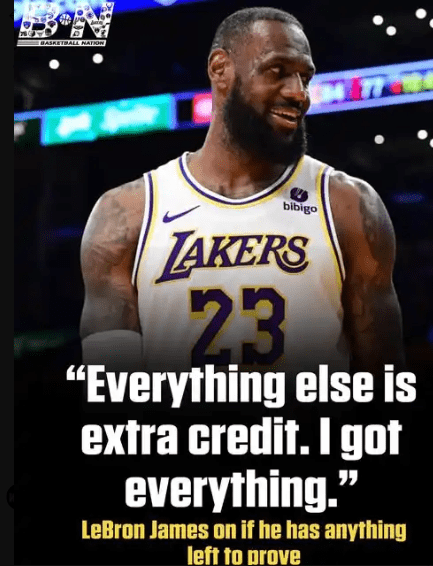
2. The Legacy of the “Superstar Call”: LeBron as Both Product and Architect of the System
The accusation that LeBron benefits from preferential treatment the infamous “superstar call” is often used to undermine his achievements. His detractors argue he complains to enforce this unfair privilege. The reality is more symbiotic: LeBron is both the ultimate beneficiary and the primary enforcer of a system that has existed long before him.
The NBA has always operated with an implicit, unofficial hierarchy. Star players drive ratings, narrative, and revenue. The league has a vested, though unstated, interest in their success and visibility. Referees, as stewards of the game within this commercial entity, are not immune to this reality. They know who LeBron James is. They know the scrutiny applied to calls against him. LeBron’s genius lies in his hyper-awareness and exploitation of this systemic reality. His constant engagement is a way of reminding the officials of his place in that hierarchy, not through words, but through the relentless assertion of his expectation of fairness a fairness that, in his view, must account for the disproportionate physical punishment he absorbs.
He is not inventing the superstar call; he is industrializing its procurement. Where Michael Jordan would shoot a lethal glare and Kobe Bryant would seethe in silent fury, LeBron employs a verbose, lawyerly, and persistent approach. He formalizes the informal. He turns the unwritten rule into a continuous negotiation. In doing so, he maximizes the yield from a system that was always tilted in favor of stars, extracting every possible advantage in a way that is both calculated and, to many, aesthetically grating. He makes the implicit explicit, and in doing so, draws ire for exposing the machinery of the league itself.
3. The Comparison Point: Why LeBron’s “Complaining” Feels Different
The “crybaby” label sticks to LeBron in a way it did not to other all-time greats, and this dissonance is key to understanding the modern reaction. Comparing his behavior to predecessors reveals a shift in style that is often misread as a shift in substance.
Michael Jordan and Kobe Bryant were warriors of stoic, internalized fury. Their protests were often non-verbal: a sharp clap, a cold stare, a muttered word to themselves. Their grievance was channeled into the next play, often a vengeful, brutal scoring burst. Their communication with refs, while constant, was more truncated, more intense, and less demonstrative. It fit the “killer assassin” archetype.
LeBron James is a CEO of demonstrative, externalized advocacy. His style is verbose, gestural, and collaborative (he often pulls teammates into the discussion with officials). It is less about internal vengeance and more about external rectification. This difference is cultural and generational. LeBron came of age in the era of player empowerment, advanced analytics, and constant media magnification. He treats the court as a boardroom where terms must be debated. His approach feels less like a warrior’s code and more like a labor negotiation, which many traditionalists find off putting. It’s not that he complains more than Jordan or Kobe did; it’s that he complains differently more publicly, more persistently, and with a different emotional timbre that reads as “complaining” rather than “competing.”
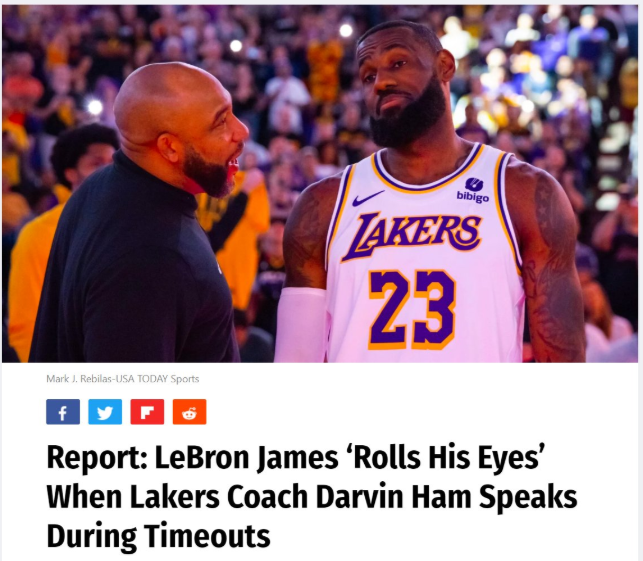
4. The Strategic Cost-Benefit Analysis: Flopping, Transition Defense, and the Calculated Trade-Off
The most tangible criticism of LeBron’s behavior is its tangible, immediate cost: defensive transitions. When he remains behind to argue a call, his team often plays 4-on-5 on defense. Critics point to this as incontrovertible proof of selfish, poor sportsmanship.
LeBron’s calculus, however, accounts for this. He is engaging in a ruthless cost-benefit analysis. In his valuation, the potential long-term gain of influencing the officiating standard outweighs the immediate risk of a single transition basket allowed. He is betting that by securing one extra foul call per half a call that leads to two free throws, fouls out an opponent, or changes the defensive scheme he generates more points than his team surrenders in those compromised defensive possessions.
Furthermore, the act of complaining itself can serve as a momentum disruptor. When an opponent secures a stop and looks to run, LeBron’s engagement with the official can slow the game’s pace, halt the opponent’s rhythm, and allow his older, sometimes less athletic teammates to get set defensively. It functions as an unofficial, argument-induced timeout. What looks like a defensive lapse can sometimes be a deliberate, if risky, tempo-control mechanism. The key is understanding that for LeBron, no action on the court is merely emotional; every second is a strategic variable to be manipulated.
5. The Evolution of a Narrative: From “The Chosen One” to “The Whining One”
LeBron’s relationship with the “crybaby” narrative is not static; it has evolved alongside his career and public persona, becoming intertwined with broader themes of his legacy.
In his first Cleveland stint, his frustrations were often framed as the struggles of a young savior carrying an unbearable load. The complaints were part of his “carry job” narrative. In Miami, as a villain, they became evidence of entitled arrogance. In his second Cleveland chapter, as the returning king, they were recast as the justified frustrations of a champion dealing with incompetent officiating. Now, with the Lakers in the latter stages of his career, the behavior is viewed through a dual lens: as the weariness of an aging legend still expecting a standard of respect, and as the excuse-making of a player whose powers are diminishing.
The narrative is flexible because the behavior is constant. It serves as a Rorschach test for how one views LeBron James overall. Those who admire him see a shrewd tactician fighting for every edge. Those who disdain him see a privileged superstar unable to handle adversity. The behavior itself doesn’t change; the story told about it does, revealing more about the teller and the era than about LeBron’s immutable competitive strategy.
6. The Verdict: The Necessary Nuisance of Genius
Labeling LeBron James “the biggest crybaby in professional sports” is a satisfyingly simple critique that fails the complexity test. It is an emotional reaction to a deeply intellectual approach to competition. LeBron is not complaining; he is engaged in sustained, high-stakes litigation over the terms of engagement.
He has weaponized every tool at his disposal his intellect, his stature, his understanding of systemic bias, and his mastery of optics to sculpt the game in real-time. The outstretched arms, the exasperated looks, the conferences with referees are not signs of weakness; they are the levers he pulls to control an environment where control is otherwise fleeting. He has traded the aesthetic of stoic fury for the efficacy of persistent advocacy. It is often ugly, frequently frustrating to watch, and eternally debate-provoking.