DRAYMOND’S CHRISTMAS REBELLION
The image is iconic: NBA superstars battling under the bright lights on Christmas Day, families in the stands, a global audience watching. It’s marketed as the ultimate honor, a privilege reserved for the league’s biggest stars and most compelling teams. For fans, it’s a holiday tradition as cherished as eggnog or unwrapping gifts.
But what if the entire narrative is a lie? What if, for the players creating that spectacle, the day is less about honor and more about heartache?
Golden State Warriors forward Draymond Green just detonated that festive facade with the blunt force of a trademark defensive stop. In a viral online rant, the four-time champion dismissed the league’s cherished talking point, arguing that playing on Christmas comes at a profound personal cost that fans never see.
“Shut up with the ‘it’s an honor’ talk,” Green declared, cutting to the core of the issue. “It fing sucks. You miss your kids opening gifts. You miss making those memories with your family.”*

With those unfiltered words, Green pulled back the curtain on the hidden human toll of the NBA’s marquee holiday event. He reframed the conversation from one of sporting prestige to one of personal sacrifice, challenging the very foundation of how the league sells its December 25th product. This isn’t a Grinch-like complaint; it’s a raw, emotional admission from one of the game’s most respected veterans about the price of the spotlight.
IS DRAYMOND GREEN SPOILED AND OUT OF TOUCH, OR IS HE THE ONLY ONE BRAVE ENOUGH TO TELL THE UNCOMFORTABLE TRUTH ABOUT THE NBA’S HOLIDAY GRIND? The debate is now open, and it forces us to look beyond the glitter of the Christmas uniforms to the real people wearing them.
BEHIND THE GLITZ: THE GRUELING REALITY OF AN NBA CHRISTMAS
For fans, Christmas Day is a leisurely marathon of basketball. For players on the schedule, it’s a disruptive, logistical nightmare that robs the day of its magic.
The timeline for a Christmas player is the antithesis of holiday cheer. There is no sleeping in, no leisurely breakfast, no watching the kids’ faces light up as they come down the stairs. Instead, it’s an alarm clock, a mandatory team shootaround, followed by hours of killing time in a hotel room or at the arena before a nationally televised night game. For road teams, like Green’s Warriors who played in Denver this year, it means being in a hotel in a different city, far from their own tree and their own home.
“There’s a price to pay when you miss those moments,” Green emphasized. He’s talking about the irreplaceable memories: the chaos of wrapping paper flying, the shared laughter over a toy assembly, the simple act of being present. For NBA players, whose offseason is short and whose in-season time at home is precious, Christmas is a guaranteed family day except when it’s not.
The emotional weight is compounded by physical exhaustion. The Christmas Day games are not cupcake matchups. They are highly competitive, intense battles against other elite teams, played under a microscope. The pressure is immense. To perform at that level while internally wrestling with the feeling of missing out at home requires a mental compartmentalization that Green argues isn’t worth the supposed “honor.”
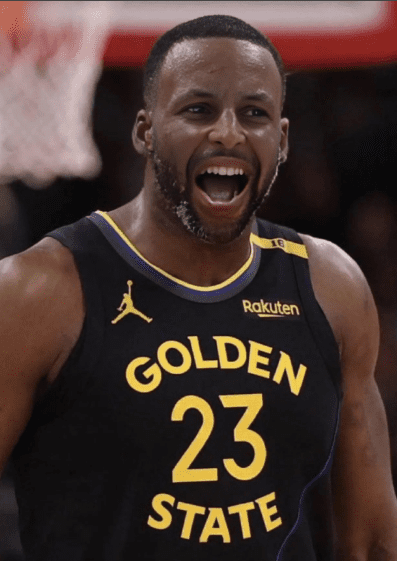
Green’s stance isn’t about being anti-work; it’s about cost benefit analysis on a human level. He acknowledges the privilege of his job but refuses to pretend the sacrifice doesn’t sting. “We all love this game, and we’re blessed to play it,” he might concede, “but don’t tell me I should be grateful to give this up.” It’s a pushback against a league and media culture that often demands athletes be perpetually grateful, silencing any expression of personal sacrifice.
THE HONOR VS. THE HASSLE: A DIVIDE BETWEEN LEGENDS AND A NEW GENERATION
Draymond Green is not the first player to voice this sentiment, but he is arguably the highest profile current star to say it this forcefully. His comments expose a generational and philosophical divide in how players view the tradition.
For older legends, the Christmas Day game was the ultimate sign you had “made it.” Michael Jordan, Kobe Bryant, and LeBron James have all spoken about the pride of being featured on that stage. It was a badge of relevance, a confirmation of star power in a pre social media era where national TV slots were scarce. The sacrifice was seen as part of the gig, the price of superstardom.
A new generation, led by voices like Green’s, is challenging that orthodoxy. This generation prioritizes mental health, family time, and personal branding control. They have more avenues (social media, podcasts) to build their brand beyond just national TV games. The “honor” of a Christmas game feels less like a unique privilege and more like a demanding obligation that interrupts core family values.
The financial reality also undercuts the “honor” argument. Players are not paid extra for playing on Christmas. It’s simply another regular season game in the 82 game grind. While the league and networks reap hundreds of millions in advertising revenue from the holiday slate, the players’ compensation doesn’t spike. They are asked to make the supreme family sacrifice for the same game check as a Tuesday night in Sacramento.

Green’s rant resonates because it vocalizes a quiet frustration many players feel. They show up and compete brilliantly as Nikola Jokic did with his historic 56 point triple double this year because they are professionals. But the idea that they should be thankful for the schedule disruption is what Green is rejecting. It’s a demand for authenticity over PR speak.
COULD THE NBA CHANGE? THE IMPOSSIBLE LOGISTICS OF A CHRISTMAS BREAK
The obvious solution fans propose is simple: just don’t schedule games on Christmas. Give the players the day off. But the financial and traditional machinery of the NBA makes this virtually impossible.
Christmas Day is a ratings and cash cow for the league and its broadcast partners (ABC/ESPN). It faces little sporting competition and commands premium advertising rates. It is a cornerstone of the NBA’s seasonal marketing, embedding the sport into a global holiday tradition. Giving that up would mean leaving tens, if not hundreds, of millions of dollars on the table.
There is also a competitive fairness issue. If you cancel Christmas games, you lengthen an already dense schedule. Would you start the season earlier? End later? Cut games? Each option has major repercussions. Furthermore, not every player agrees with Green. Some young players or those on smaller-market teams still covet the Christmas spotlight as a career milestone.
A potential compromise, rarely discussed, could be a radical scheduling shift: make ALL Christmas Day games hosted by warm weather or dome teams (Phoenix, LA, Miami, Dallas, etc.), and require all participating players to fly their immediate families to the game location for a full holiday celebration after the final buzzer. The league or teams could subsidize this. It wouldn’t replace being home, but it would integrate family into the day rather than excluding it.
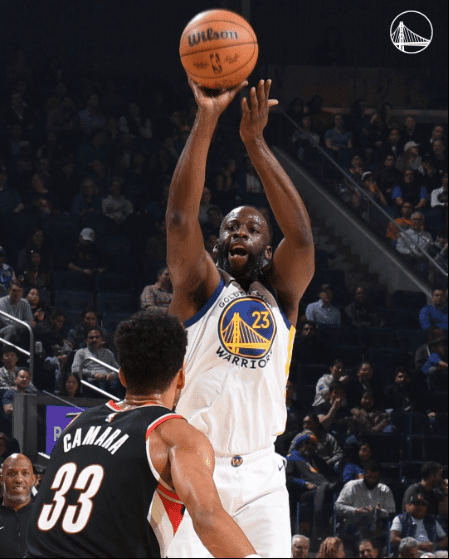
This, however, is a logistical fantasy. The NBA’s schedule is a complex algorithm balancing travel, arena availability, and TV desires. A family centric overhaul for one day is unlikely.
So, the league is stuck. It needs the glamour and revenue of Christmas games. The players, increasingly, are voicing the human cost. Draymond Green has simply become the loudest megaphone for that conflict.
THE FINAL BUZZER: A CALL FOR HONESTY OVER HYPE
Draymond Green’s value has always been his unwillingness to follow the script. He is the league’s premier truth teller, for better or worse. In this case, he’s holding up a mirror to a beloved tradition and asking if the reflection is still accurate.
He is not asking for pity. He is asking for a more honest conversation. He’s demanding that the league and media stop packaging a significant personal sacrifice as nothing but an unadulterated privilege. It can be both an honor and a sacrifice, and acknowledging the latter doesn’t diminish the former.
For fans, it’s a reminder that the athletes we watch are not just entertainers. They are parents, partners, and sons. The Christmas game we enjoy is built on their missed moments. Knowing that doesn’t have to ruin the tradition, but it should deepen our understanding of what we’re asking of them.
The next time you settle in to watch a Christmas Day thriller, you’ll hear the announcers talk about the “honor.” But thanks to Draymond Green, you’ll also know the other side of the story: for the men on the court, it’s a complicated day where professional glory and personal absence collide.
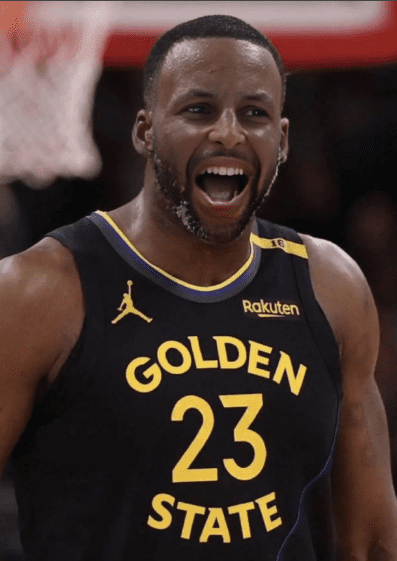
Should the NBA consider a major scheduling shift to protect Christmas for players, or is playing on the holiday an irreplaceable part of the league’s identity that stars must accept?