THE QUOTE THAT IGNITED A GENERATIONAL FIRE
The words landed not with a whisper, but with the force of a two-decade career’s worth of frustration. Diana Taurasi, the WNBA’s all time leading scorer, a living legend who announced her retirement just months ago, sat down for an interview that would detonate across the sports world. Her target wasn’t an opponent or a referee. It was the entire financial structure that defined her career.
“I always thought about I should’ve get paid for being the best basketball player in the world, not for doing social media or doing commercials,” Taurasi stated, her voice carrying the weight of history. “That was one of my biggest anguishes.”
Then, she drew the line in the sand that would set social media ablaze. “When I think of the NBA, Kobe got paid to be the best basketball player in the world. Jokic got paid to be the best basketball player in the world. I think we need to change that, shift into women’s basketball.”
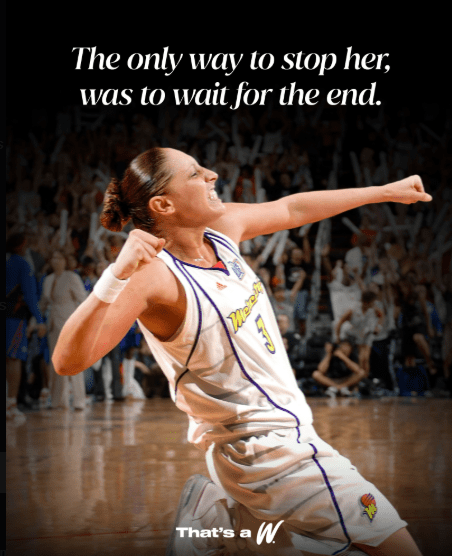
Let that sink in. Diana Taurasi, the White Mamba, a player with three championships, an MVP, and a scoring title that may never be broken, just said she was never compensated for being the literal best at her job. She didn’t compare herself to a role player. She invoked Kobe Bryant and Nikola Jokic icons whose salaries are monuments to their supremacy. In one interview, Taurasi transformed from a retiring superstar into the vengeful ghost of pay gaps past, and the reaction was instantaneous and volcanic.
Comments sections split into warring factions: those who saw a righteous truth-teller and those who saw an ungrateful athlete ignoring “market realities.” This wasn’t just a retirement reflection; it was a declaration of war on the old way of thinking, and Taurasi, even in her exit, just threw the grenade that will define the WNBA’s future.
THE STAGGERING MATH: $150,000 VS. $10 MILLION (AND THE JANITOR WHO MADE MORE)
To understand the scale of Taurasi’s anger, you have to look at the numbers. They’re not just unequal; they’re from different universes. During her prime, Taurasi’s maximum WNBA salary was a fraction of what NBA stars earned. The context is brutal: The average WNBA player makes about $150,000 per year.
The average NBA player? Nearly $10 million. That’s a multiplier of roughly 67. Let that number, 67, bounce around your head. For every dollar the average WNBA player earns for being a world-class athlete, her NBA counterpart earns sixty-seven.
But Taurasi provided an even more visceral, humiliating comparison. She once famously and infuriatingly lamented that the janitors at the arena made more money than she did. Think about the mental calculus there. You are Diana Taurasi.

You are performing feats of athletic genius in front of thousands, carrying an entire league on your back, and you realize the person cleaning the floors after you leave takes home a bigger paycheck. That’s not just a pay gap; it’s a spiritual insult. It reduces “best in the world” to a side hustle.
Now, layer on the Kobe comparison. In the 2013-14 season, Kobe Bryant became the first NBA player to earn a $30 million salary for a single season. That season, Taurasi was the undisputed best player in her sport, leading the league, defining an era. Kobe’s $30 million wasn’t for commercials (though he did plenty).
It was, as Taurasi pointed out, for being Kobe Bryant, the best. Her salary? A sliver of that. Nikola Jokic, the current “best in the world,” will earn over $55 million in the 2025-26 season. The dissonance Taurasi describes isn’t about jealousy; it’s about the fundamental principle of value.
“I DON’T WANNA DO COMMERCIALS”: THE BATTLE FOR “PAY FOR PLAY”
This is the most revolutionary part of Taurasi’s stance, and the part that breaks the old model over its knee. For decades, the tired excuse for underpaying women athletes was, “Well, they need to build their brand! Do endorsements!” Taurasi took that lazy argument and set it on fire.
“I don’t wanna do commercials, I don’t wanna be a spokeswoman for every product in the world,” she stated. Her desire was pure, almost radical in its simplicity: I want to be paid for the basketball.
This reframes the entire debate. It rejects the notion that a female athlete’s financial survival should depend on her marketability, her smile, or her willingness to hawk products. It demands that the value be placed on the court, in the game, in the artistry and competition that is the actual product. Kobe’s $30 million wasn’t a payment for his sneaker line; it was a payment for his game.
LeBron’s salaries are monuments to his on-court dominance first, business empire second. Taurasi is saying the WNBA’s economic model has it backwards. It asks its stars to go be influencers to make up for the league’s failure to pay them for their sport.
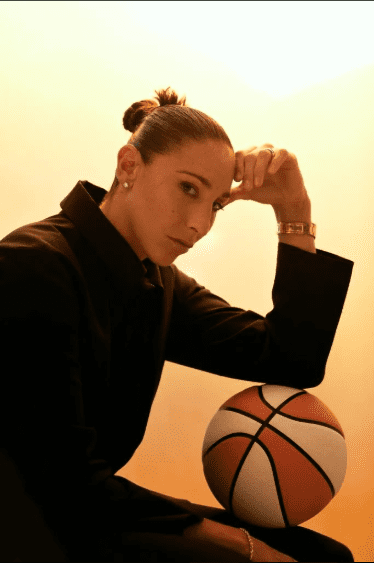
This connects directly to the most painful part of a WNBA legend’s career: the overseas grind. Taurasi, like virtually every star of her generation, spent her off-seasons not resting, but flying to Russia, Turkey, or China to play another full season just to make ends meet.
This wasn’t for “extra” money; it was for necessary money. It was for a living wage. The physical and mental toll is incalculable it shortens careers, increases injury risk, and burns out the very icons the league needs
THE REVENUE SHARE WAR: 10% VS. 50% THE ROOT OF ALL EVIL
The pay gap isn’t magic; it’s math. And the math is dictated by one thing: the revenue share. This is the core, unsexy engine that drives everything, and it’s where Taurasi’s frustration finds its concrete cause. For years, the WNBA’s collective bargaining agreement (CBA) gave players only about 10% of the league’s shared revenue. Let’s sit with that number. One dime of every dollar. The players, the product, the reason anyone tunes in, got a 10% slice.
Now, look at the NBA. The current CBA guarantees players roughly 50% of basketball-related income. Half. This isn’t charity; it’s a recognition that the players are the product. No LeBron, no Steph, no Jokic, no league. The NBA’s players’ union fought for decades to get to that 50-50 split, understanding it as the non-negotiable foundation of fair pay.
This 10% vs. 50% chasm explains everything. It explains why a WNBA superstar’s max salary was a rounding error in an NBA star’s contract. It explains why the league couldn’t pay Taurasi for being Taurasi. The money simply wasn’t allocated to the players. The league kept it for operations, ownership, and expansion. Taurasi’s career, and the careers of her peers, were lived inside this structurally small pie.

Her fight was never just for a bigger piece; it was to bake a whole new, much larger pie and then demand her fair share of it. The upcoming CBA negotiations aren’t about tweaks; they are, as Taurasi hopes, about a fundamental reset of this equation.
THE CAITLIN CLARK EFFECT: WHY TAURASI’S TIMING IS PERFECT
Taurasi is retiring, but her grenade is landing at the most explosive possible moment. The WNBA is experiencing a cultural and financial renaissance unlike anything in its history, driven by a transcendent 2024 rookie class. Caitlin Clark, Angel Reese, Cameron Brink. These aren’t just new players; they are economic events.
Jerseys are selling out. Games are setting viewership records. Airlines are adding direct flights to Indianapolis for Fever games. The league’s media rights deals are up for negotiation, with projections skyrocketing.
The league’s revenue, once a niche number, is now projected to approach $1 billion. The old excuses “no one watches,” “there’s no market” are shattering in real time. Taurasi’s comments are the bridge between the generation that built the league in obscurity and the generation that is poised to cash in.
She is essentially saying: “I paved the road. I played for janitor wages. I went to Russia in the winter. Do not let these new stars have to do the same. The money is here now. Pay them for the game.”
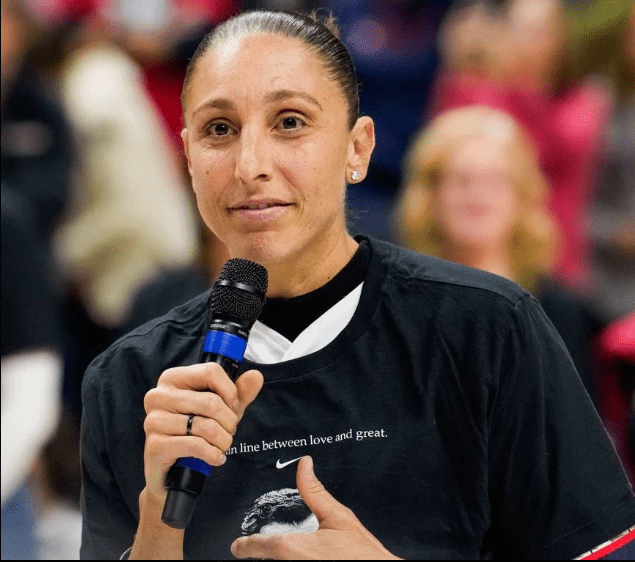
Her statement is a warning and a blueprint. It’s a warning to the league not to repeat the sins of the past with Clark, Reese, and others. It’s a blueprint for the WNBPA (the players’ union) entering negotiations: fight for the revenue share that makes “pay for play” a reality. Taurasi won’t be at the table, but her words will be etched above it. She is the ghost of pay disparities past, ensuring the league doesn’t screw up its prosperous future.
THE NEGOTIATION BATTLEGROUND: $1.3 MILLION MAX VS. THE 30% DEMAND
So, what does “getting paid for being the best” actually look like in numbers? The battlefield for the next CBA is already drawn, and the proposals reveal how far apart the two sides are and how far the league has to go.
The WNBA’s Offer: The league has proposed raising the maximum salary to above $1.3 million (from about $250,000) and the average salary to above $530,000 (from $120,000). On its face, this seems huge! A max salary over a million dollars! But context is key. Compared to NBA averages, it’s still a fraction. More importantly, it’s tied to a revenue-sharing model the players hate.
The WNBPA’s Demand: The players’ union is fighting for something much more radical: a share of 30% of the league’s gross revenue. Not net, not some fuzzy profit number, but gross the total money coming in. The league is reportedly countering with an offer linked to about 15% of gross revenue (roughly half of net).
This is the heart of the fight. The players, armed with Taurasi’s moral authority and the Clark generation’s market proof, are saying: “We are the product. We want a real, uncapped stake in the growth we are creating.”
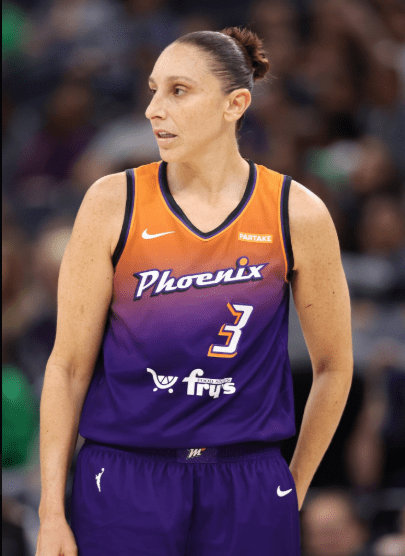
They don’t want the league to “give” them raises; they want a system where their pay is intrinsically linked to the league’s success, just like in the NBA. Taurasi’s quote is the emotional weapon for this very technical, multibillion-dollar fight. She is the human cost of the old 10% model.
The new generation doesn’t want to be the next Taurasi, giving interviews in retirement about the money they never got.
THE LEGACY: TAURASI’S FINAL ASSIST
Diana Taurasi’s career was built on iconic moments: deep threes, defiant scowls, championship daggers. But her final, most important play might be this interview. By framing the pay issue not as a grievance, but as a simple matter of principle the best should be paid like the best she changed the language of the debate. She moved it away from “market size” and “revenue” and into the realm of respect, value, and legacy.
She connected her struggle directly to the icons everyone respects: Kobe and Jokic. She rejected the ancillary hustle (commercials, social media) as a prerequisite for fair pay. She exposed the physical and emotional toll of the overseas double-life. In doing so, she didn’t just speak for herself. She spoke for Sue Bird, for Sylvia Fowles, for all the legends of her era who carried the bags through airports to play in cold Russian gyms for a paycheck.
Now, she passes the baton. The “Caitlin Clark era” is also the “Post-Taurasi Principle” era. Every negotiation, every new media deal, every discussion about a player’s value will happen in the shadow of Taurasi’s stark question: Are you paying her to be the best, or are you paying her to be a brand ambassador who also plays basketball?
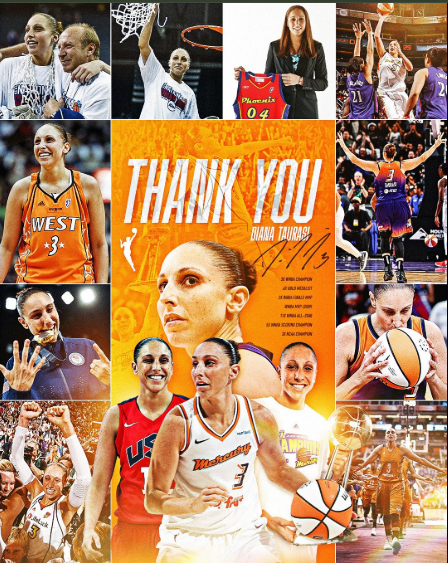
The fight isn’t over. The numbers are still far apart. But because of Diana Taurasi, retiring not with a gentle goodbye but with a roar of injustice, the players walking into that negotiation room aren’t just asking for more. They are demanding what she never got: to be paid, first and foremost, for the basketball. And that changes everything.