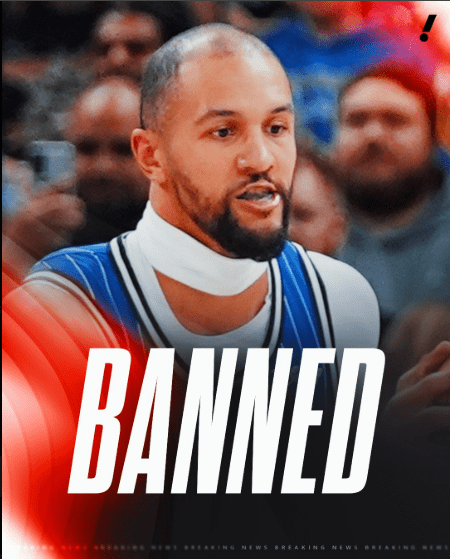
THE RULING THAT NO ONE ASKED FOR
It happened without fanfare. There was no press release, no league memo sent to newsrooms. It was a quiet, bureaucratic correction, the kind that usually deals with salary cap minutiae or the precise wording of a tampering charge. But this one was different. This one was visible.
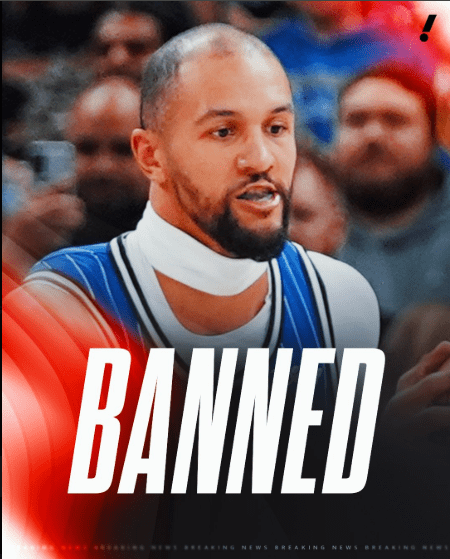
The word came down to the Orlando Magic: Tell Jalen Suggs he can no longer wear his headband like that. The “that” is important. It wasn’t that he couldn’t wear a headband. Headbands are legal, standard-issue NBA equipment. It was the way he was wearing it. The style. The slant. The aesthetic choice that made it his. The league deemed it non-compliant. A uniform violation. In that moment, a simple piece of sweat-absorbing cloth was transformed from athletic gear into a symbol.
It became a flag in a silent war between player expression and league control, between personal identity and corporate uniformity. And the reaction from fans was immediate and unified in its eye-rolling disbelief: “This is what they’re worried about?”
The social media response was a festival of sarcasm and memes. “Finally, the headband menace has been stopped.” “The game is saved.” “What’s next, banning sleeves? Oh wait…” “Let the man live!” The outrage wasn’t about the headband itself; it was about the principle of the pettiness.
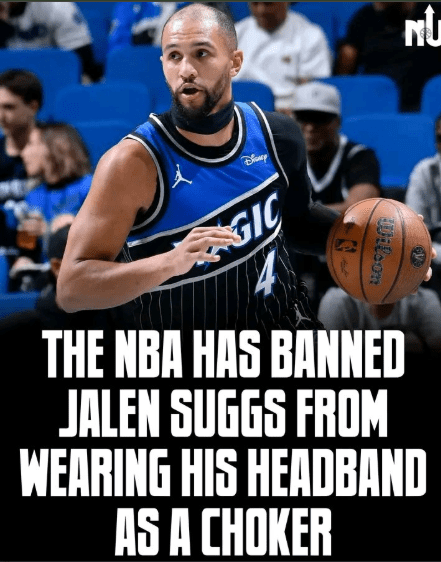
In a league dealing with load management controversies, refereeing conspiracies, and superteam drama, the fact that the league office had time and willpower to police the angle of Jalen Suggs’s forehead fabric felt like a parody of itself. It was the ultimate “old man yells at cloud” moment, institutionalized. This wasn’t about protecting the integrity of the game.
This was about enforcing an unspoken, ever-shifting code of what the NBA thinks its product should look like. And Jalen Suggs, by simply wanting to wear his gear his way, had become a accidental revolutionary in the silliest possible crusade.
A HISTORY OF HEMLINES: THE NBA’S LONG WAR ON STYLE
To understand why a headband is a battlefront, you have to understand that the NBA has always been a fashion police state. The league’s relationship with player expression is a long, fraught history of push-and-pull, of players seeking individuality and the league seeking a clean, marketable, “professional” product. This war has been fought on many fronts.
The Dawn of the Dress Code (2005): The nuclear option. In the post-“Malice at the Palace” era, then-Commissioner David Stern instituted a sweeping dress code, banning the hip-hop inspired “baggy” looks favored by stars like Allen Iverson.
No throwback jerseys, no do-rags, no chains over clothes, no sunglasses indoors. It was a direct, cultural shot across the bow. The message was clear: the league’s “thug” image was bad for business. Players like Iverson saw it as a racist attack on their identity. Stern saw it as necessary brand management. The dress code war set the tone for decades to come: the league holds ultimate power over the player’s image the moment they step into the building.
The Sleeve Jerseys and Compression Leggings Debate: The league is happy to sell expression, but only on its terms. The introduction of sleeved jerseys was a commercial ploy that many players hated, complaining they restricted movement. They were eventually phased out after widespread ridicule.
The “Mickey Mouse” Hoodie and the Bubble: Even in the isolated 2020 NBA Bubble, the fashion police were active. Players like Jamal Murray wore customized, non-NBA-licensed hoodies on the bench and were quickly told to remove them. The league’s licensing agreements are sacrosanct; no outside logos can intrude, even in a global pandemic lockdown.
Against this historical backdrop, the Jalen Suggs Headband Edict is not an anomaly. It is a continuation of a century-long campaign. It’s a skirmish in the same war. The league’s stance is consistent: you are a walking billboard for our product.
THE UNWRITTEN RULEBOOK: WHERE DOES “LIKE THAT” EVEN COME FROM?
Here lies the core of the absurdity. The NBA rulebook is thousands of pages long, covering everything from the definition of a travel to the revenue split of luxury suite sales. But the rules about how to wear your uniform are often vague, unwritten, and enforced with the capriciousness of a substitute teacher.
There is likely no rule that states: “Headbands must be worn horizontally, centered on the forehead, with no more than a 5-degree tilt.” The rule is something fuzzier, buried in the league’s constitution or a memo from the Basketball Operations department about “maintaining a professional appearance.” It’s a subjective standard. What looks “sloppy” to a 65-year-old executive might look “cool” to a 22-year-old player and his millions of fans. The enforcement is therefore selective and often feels personal.
Why was Suggs’s style targeted now? Perhaps it was a new, more stringent interpretation from a specific game official. Perhaps another team complained (a classic, petty move in the NBA). Perhaps the league simply decided his particular look had crossed an invisible line from “player style” into “unprofessional disarray.” The “why” is almost irrelevant. The power dynamic is what matters.
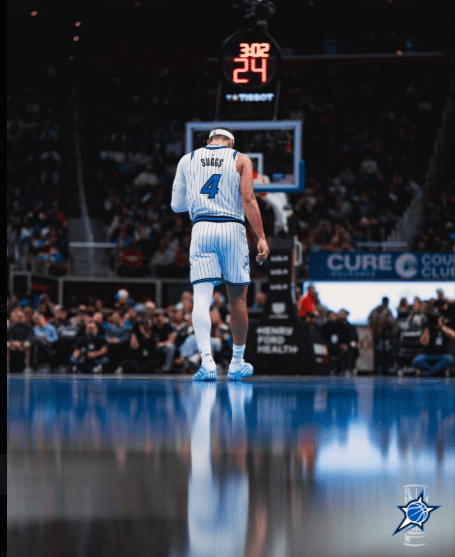
The league can point to an amorphous standard and say, “Fix it.” The player has no recourse. He can’t appeal to a “Headband Grievance Committee.” He must comply or face a fine. This unchecked, subjective authority over personal aesthetic is what galls fans. It feels less like governance and more like institutionalized nagging.
JALEN SUGGS AS AN ACCIDENTAL ICON: THE PERSONALITY IN THE PIXEL
Who is Jalen Suggs in this drama? He’s not a flamboyant fashion icon like Russell Westbrook. He’s not a veteran pushing boundaries like Iverson. He’s a young, tough, defensive-minded guard known for his hustle and intensity. His headband wasn’t a fashion statement meant to grab headlines; it was likely just his thing.
A part of his game-day ritual, his personal uniform, a piece of gear that made him feel like himself on the court. For many players, these small rituals are sacred. The precise way they tape their wrists, the socks they wear, the way they wear their headband these are the tiny, controllable elements of preparation in an uncontrollable game.
By telling him to change it, the league wasn’t just correcting a uniform violation. It was disrupting a personal ritual. It was saying, “Your personal comfort and identity within this framework is less important than our desire for visual conformity.” For a player like Suggs, whose game is all about relentless, authentic energy, being forced to alter a part of his authentic presentation is a small psychic insult.
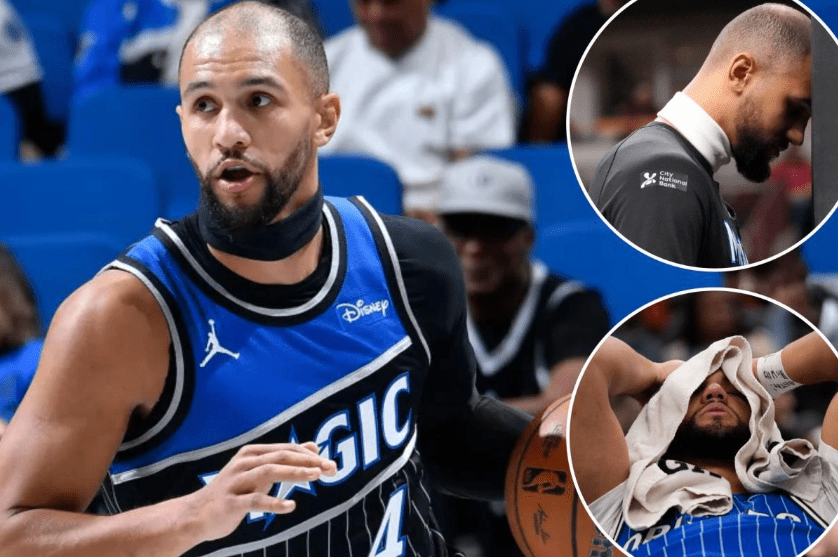
It reinforces that on the NBA stage, you are not fully yourself; you are a performer in a league-approved costume. Suggs likely put on a compliant headband and went out and played his heart out. But in that small act of compliance, the league won a tiny victory in its endless war to sand down the rough, interesting edges of its own stars.
FAN REACTION: WHY WE CARE ABOUT A STRIP OF FABRIC
The universal derision from fans wasn’t really about headbands. It was about priority and hypocrisy. In the grand ecosystem of NBA problems, “Jalen Suggs’s headband angle” ranks somewhere below “arena nacho cheese quality” and above literally nothing. For the league to expend energy on it feels like a profound misallocation of moral and bureaucratic authority.
Fans see the hypocrisy clearly. The league will fine a player $25,000 for a slightly off-center headband but often issues lighter punishments for on-court acts of genuine poor sportsmanship or dangerous play. It will ruthlessly enforce its uniform code while allowing jersey ads and court-side crypto logos to proliferate, commercializing the very visual space it claims to protect. The message is clear: Corporate branding is sacred. Individual expression is suspect.
The fan backlash is a defense of the player’s humanity against the corporate machine. It’s a recognition that what makes the NBA compelling isn’t robotic perfection, but the personalities. The swagger, the style, the quirks. Allen Iverson’s cornrows and tattoos. Dennis Rodman’s hair color. Even James Harden’s beard.
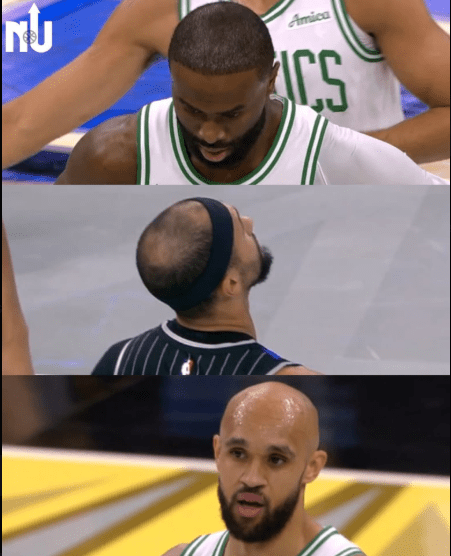
These expressions become part of the player’s legend, part of the story fans buy into. By sanitizing the small things like a headband, the league subtly flattens those personalities. Fans rebel because they feel the league is sterilizing the very product they love, micromanaging the soul out of the game in the name of a bland, inoffensive “professionalism” that nobody asked for.
THE BIGGER PICTURE: CONTROL IN THE “PLAYER EMPOWERMENT” ERA
This headband saga is especially poignant because it exists in the so-called “Player Empowerment” era. Stars have more power than ever: they force trades, shape superteams, and build business empires independent of their teams. They have voices on social media that dwarf team accounts.
They are brands unto themselves. Yet, in the middle of this power shift, the league still fiercely clings to control over the most mundane, personal aspects of their workplace presentation. It’s a fascinating contradiction.
It suggests that while the NBA has ceded ground on macro issues of labor and movement, it is digging in its heels on the micro issues of image. It’s a way for the institution to say, “You may have the power, but you still work for us, and in our house, you follow our decorum rules.” It’s a last bastion of old-school authority. The uniform code is one of the few levers the league can pull without triggering a massive labor battle.
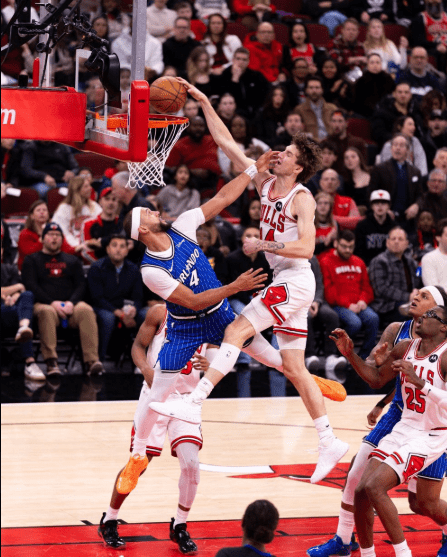
They can’t stop a player from requesting a trade, but they can absolutely fine him for wearing the wrong color sneakers on a given night. The headband rule is a petty, but potent, reminder of the underlying power structure. In the grand narrative of player freedom, it’s a stubborn, annoying footnote that says, “Not so fast.”
FINAL VERDICT: A TILTED HEADBAND AND A CROOKED PRIORITY
In the end, the Jalen Suggs Headband Affair will be forgotten. It won’t change wins and losses. It won’t affect his contract. But as a cultural snapshot, it’s perfect. It captures the enduring, often ridiculous, tension at the heart of professional sports.
The NBA is a league of sublime athleticism and billion-dollar business. It’s a stage for incredible human stories and a machine for selling sneakers and subscriptions. In that machine, Jalen Suggs is both a cherished asset and a replaceable part. The league wants his intensity, his defense, his highlights. But it also wants his forehead to look a certain way. It cannot help itself. The instinct to control, to standardize, to sanitize, is baked into its corporate DNA.
When the directive came down to change the headband, it wasn’t about Suggs. It was about the league’s own immutable need for order. The tragedy is that in its pursuit of a perfectly orderly product, it often misses the point. The magic isn’t in the uniformity. It’s in the quirks.