The Accusation That Quietly Changed the Conversation
The words hung in the air, not as a scream but as a clinical diagnosis. “He doesn’t play defense in the regular season. He’s saving his defense for high-leverage moments, right?” Veteran analyst Max Kellerman did not deliver this as a rant, but as a statement of observable fact, a cold calculus applied to the game’s warmest icon, LeBron James. In that single sentence, Kellerman reframed the entire narrative around the 41-year-old legend.
This was not about a decline. This was about a choice. A strategic, deliberate, and deeply controversial choice to ration the most precious resource a 21-year veteran has left: his energy. The implication was profound, cutting to the core of modern fandom’s contract with its superstars. LeBron James, the player who once defined two-way, all-consuming dominance, was now accused of being a part-time participant in half the game.
The debate it sparked was not about effort, but about philosophy. Is LeBron James managing his greatness with genius-level foresight, or is he quietly normalizing a standard that undermines the very team success he chases? The question forces us to dissect not just a player’s habits, but the evolving nature of athletic prime, the economics of legacy, and what we, as an audience, are willing to accept from our icons in exchange for their twilight brilliance.
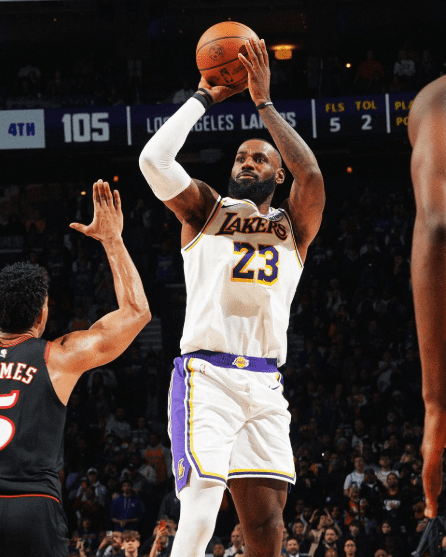
This is not a simple critique of a aging legend. It is a referendum on a new model of super-stardom, one pioneered by LeBron himself. He is not coasting out of laziness; he is conducting a high-wire act of conservation, attempting to preserve a vintage engine for the moments that define history.
The Lakers’ anemic 24th-ranked defense is the collateral damage of this experiment. Each blown rotation, each un-boxed-out opponent, each moment where LeBron’s attention drifts from his man to the offensive play developing in his mind, is a data point in Kellerman’s argument. Yet, to reduce it to “LeBron doesn’t try” is to miss the terrifying complexity of the situation.
This is about a man whose basketball IQ is so advanced, he has begun to play a meta-game that exists above the 48 minutes on the clock. He is managing a season, a career, a legacy, in real-time. The problem is that basketball is not played in the abstract; it is played on the court, with four other teammates who do not have the privilege of a selective switch.
The Ghost of the Two Way Titan: The Shadow LeBron Casts
To understand the weight of Kellerman’s claim, one must first remember the ghost that haunts every LeBron defensive lapse: the player he used to be. A decade ago, LeBron James was not just an offensive force; he was arguably the most versatile and devastating defensive weapon in the NBA.
His six All-Defensive Team selections, including five First-Team nods, were testaments to a terrifying physicality and intellect. He could, and would, guard all five positions in a single playoff series. He was the Heat’s defensive eraser in their small-ball “death lineups,” a free safety with the strength of a linebacker and the anticipation of a grandmaster.
That version of LeBron played defense with a consuming fury. It was non-negotiable, a pillar of his identity as the best player in the world. The contrast with the present could not be starker. Today, we see a player who often conserves energy in off-ball actions, who at times appears disengaged in rotations, and whose defensive box score numbers have dipped precipitously.
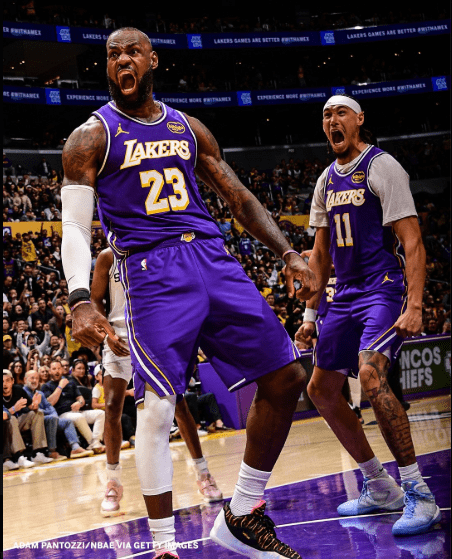
The ghost of that two-way titan makes every present-day lapse feel like a betrayal of a former self. But this is not a moral failing; it is a biological and strategic inevitability. The man is 41 years old, playing in his 23rd season, with over 66,000 combined regular season and playoff minutes on his odometer a total no other player in history has even approached.
His agent and friend, Rich Paul, tacitly acknowledged the trade-off when he agreed with Kellerman’s premise, even admitting he gets on LeBron for not boxing out. This is the uncomfortable truth: The LeBron who could dominate both ends for 48 minutes no longer exists. The question becomes, what has he chosen to build in its place?
The High Leverage Hypothesis: Playoff Mode as a Conscious Strategy
Kellerman’s analysis pivots on a key phrase: “high-leverage moments.” This is the core of LeBron’s purported strategy a belief that he can compartmentalize his defensive intensity like a relief pitcher saving his best fastball for the ninth inning. The regular season, in this view, is an 82-game marathon to be managed, not a series of sprints to be won. The playoffs are the destination.
We have seen evidence to support this. Throughout his Lakers tenure, there are unmistakable shifts in his defensive engagement come postseason time. The closeouts become sharper. The communication intensifies. The effort on key possessions, especially in closing moments, resurfaces. He becomes, if not the All-Defensive force of old, a significantly more impactful and aware defender.
This “Playoff LeBron” switch is not a myth; it is a documented phenomenon. The hypothesis is that by strategically conserving physical and mental energy from October to April, LeBron can access a deeper reservoir in May and June.
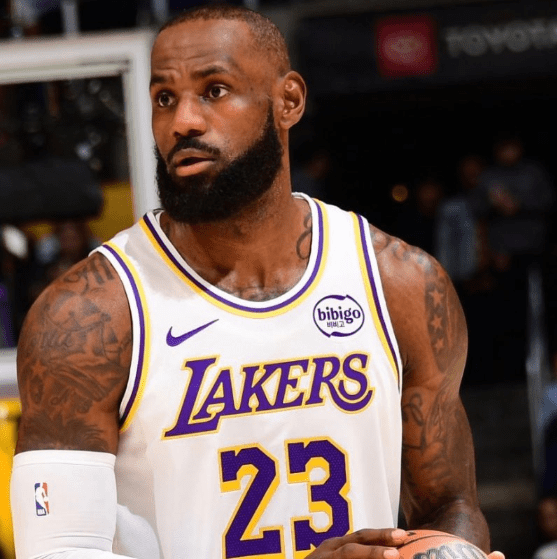
It is an application of load management to a single player’s effort level within games. In a league that increasingly views the regular season as a protracted qualifying tournament, this logic has a cold merit. Why risk injury or exhaustion battling over a screen in a January game against Charlotte when that energy could be the difference in a Game 7 against Denver?
The calculus is rational, but its execution is messy. Basketball is a sport of rhythm and habit. Defensive cohesion is built through thousands of repetitions of trust and communication. Can a player, even one of preternatural genius, truly flip a switch and re-engage habits he has allowed to lie dormant for months?
The Lakers’ persistent defensive woes suggest the answer is complicated. A system is only as strong as its weakest link, and when that link is occasionally the most experienced player on the floor, it creates fissures that role players cannot always patch. Opposing teams actively game-plan to attack LeBron in off-ball actions, knowing his focus may drift.
The New Normal: Superstar Prerogative or Competitive Cancer?
LeBron James is not alone in this approach. He is merely its most visible and consequential practitioner. The modern NBA has seen the rise of the “offensive engine” superstar players like Luka Dončić, Trae Young, and even a younger James Harden whose defensive limitations or inconsistent effort are tolerated because of their transcendent offensive burdens.
The cultural acceptance of this model asks a fundamental question: Have we redefined what it means to be a franchise player? Is it enough to be a historically great offensive force who competes defensively only when the stakes are absolute highest?
This new normal creates a stark tension within team construction. It demands front offices surround these offensive titans with “3-and-D” role players who must compensate on defense without needing the ball on offense. It places immense strain on coaching staffs to design schemes that hide the superstar’s defensive lapses.
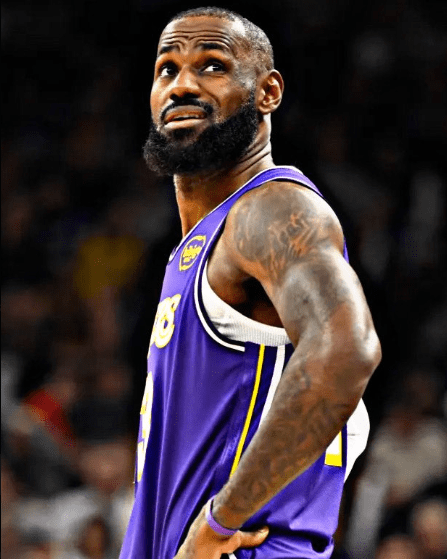
For the Lakers, this challenge is magnified because they have two such players in LeBron and Luka Dončić. The result, as their defensive rating shows, is often a team whose whole is less than the sum of its parts. The superstar prerogative to conserve energy disrupts the egalitarian, all-for-one ethos required for elite team defense.
Yet, to label this a “competitive cancer” is to ignore the reality of the NBA’s grueling calendar and the insane offensive load these players carry. LeBron, at 41, is still averaging over 25 points, 7 rebounds, and 7 assists per game. He remains the Lakers’ primary offensive initiator and decision-maker.
The cognitive and physical toll of orchestrating an offense at that level is immense. Perhaps in 2026, asking for 100% engagement on both ends for 82 games is not just unrealistic, but physically impossible. The model may be flawed, but it could also be the only sustainable model for extending the career of a player who refuses to accept a diminished offensive role.
The Legacy Calculus: Preservation vs. Perception
Underpinning every discussion of LeBron James is the mammoth subject of his legacy. He is in a direct, if often unspoken, conversation with Michael Jordan for the title of Greatest of All Time. Every season, every stat, every championship ring is weighed on this eternal scale.
LeBron’s strategic approach to defense is, at its heart, a legacy-preservation strategy. He understands that his place in history will be judged by championships and longevity his ability to dominate across eras. To achieve that, he must prioritize longevity and playoff viability over regular-season aesthetics.
This calculus, however, risks a perception problem. Jordan’s legend is built on a mythology of relentless, obsessive competitiveness that knew no regular-season off-switch. The narrative of “Playoff LeBron” can, to some, feel like a justification for a regular-season compromise that the GOAT would never have made.
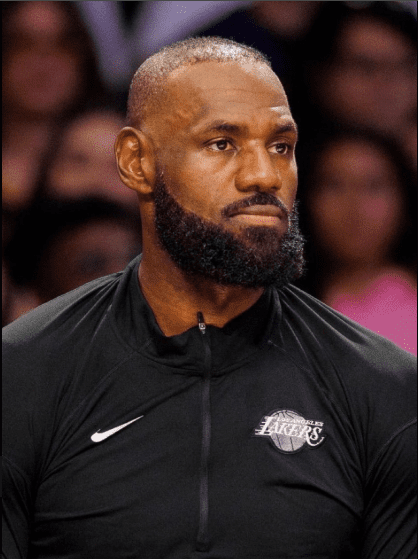
It opens LeBron to critiques about his fundamental competitive nature, however unfair those may be given his sustained excellence. Furthermore, it creates a potential paradox: by conserving energy to chase rings, he may be weakening his team’s ability to secure the high playoff seeding that makes a title run easier, thereby undermining the very goal he is trying to achieve.
LeBron is betting that his basketball IQ and elevated playoff performance will override these concerns. He is betting that when the dust settles, history will remember the conference finals and NBA Finals performances, not the January defensive lapses in Sacramento.
It is a high-stakes gamble. It assumes he can continue to “flip the switch” successfully as he moves deeper into his forties. It also assumes his teams can navigate the regular season well enough to give him that postseason platform.
The Unanswerable Question: Genius or Gamble?
So, is Max Kellerman right? Is LeBron James “saving his defense,” and is that a defensible strategy for a 41-year-old legend? The answer is both yes and no, which is what makes the debate so enduring. Kellerman is correct in his observation the film and the metrics overwhelmingly support the claim of selective regular-season engagement. Where the analysis splits is in the judgment of that choice.
From a pure basketball purist’s perspective, it is a failing. The game is played on two ends. Greatness, especially for someone in the GOAT conversation, should be measured by a commitment to winning every possession, not just managing a campaign for the possessions deemed most important. It sets a troubling precedent for younger stars and makes the task of building a cohesive team defense exponentially harder.
From a pragmatic, career-management perspective, it is genius. LeBron James is performing an unprecedented act of athletic endurance. To ask him to carry an historic offensive load while playing All-Defense is to ask the impossible. His strategy is a rational adaptation to biological reality. It is the application of a supreme intellect to the problem of his own mortality. He is writing the manual on how to extend prime years deep into an athlete’s fifth decade.
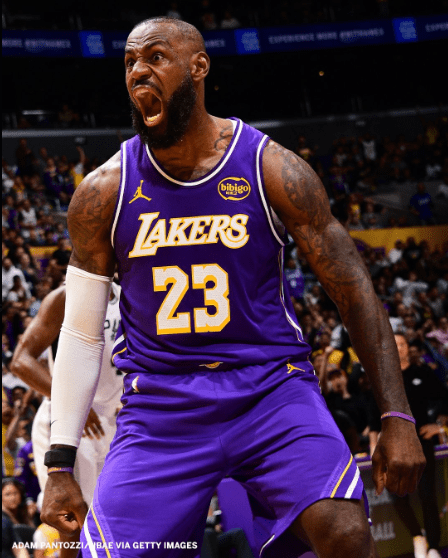
The final verdict will not come from talk shows or articles like this one. It will come from the only court that matters: the playoffs. If LeBron James can continue to elevate his game, “flip the switch,” and lead the Lakers or another team on a deep playoff run.
Perhaps the most profound truth is that we are witnessing something entirely new. We are watching the greatest all-around force the game has ever seen slowly, deliberately, and intelligently deconstruct his own game to preserve its core. He is sacrificing a part of his greatness to prolong its existence. Whether that is an act of weakness or the ultimate demonstration of strength is a question history will answer.