He told them to go home.
The shot fell, and for a moment, the arena became a museum of silence. The ball snapped the net, the clock bled to zeros, and twenty thousand people exhaled a single, soundless breath. Then, the pivot. Kevin Durant turned from the rim, not to his celebrating teammates, but to the heart of the storm he had just quieted.
His eyes, usually unreadable pools of detached focus, locked onto a section of seats behind the visiting bench. His right arm, the instrument of the kill, rose. Not in triumph, not in defiance, but in a slow, deliberate point. The gesture was ancient, simple, devastating.
His lips moved, forming words swallowed by the rising groan of the crowd. But on the court, in the intimate space between him and the players in different-colored jerseys, the message was teleported by sight alone: Go home.

In the breathless chaos of a game-winner, this is the ritual: the leap, the roar, the dogpile. This was not that. This was stillness after the earthquake. This was a man delivering a verdict, then immediately studying the faces of the jury to see if they understood it was a confession, too.
Chapter 1: The Echo in the Silence “I Love Houston. I Love Texas…”
The press conference after the storm is where athletes build their monuments or dig their graves. Surrounded by microphones, the raw nerve of the court-walking moment is usually bandaged with cliché. “Just wanted to get a good shot.” “My teammates trusted me.”
“I love Houston. I love Texas…” he began, his voice flat, drained of the adrenaline that had powered the shot. The statement hung in the sterile room, a non-sequitur. He had just ended their season, told their fans to leave, and now he was professing love? This was the central, wrenching contradiction.
It wasn’t PR. It was emotional honesty delivered without a safety net. The love was real. The act of expulsion was real. The human mind struggles to hold two opposing truths, yet Durant presented them, side-by-side, and walked away from the podium leaving the contradiction unresolved.
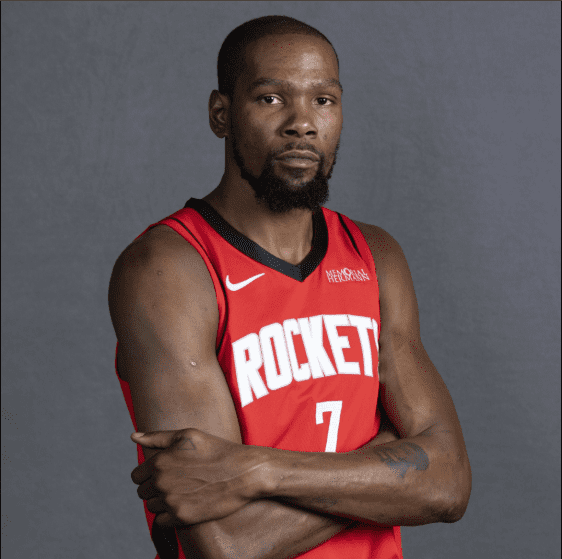
The love wasn’t for the franchise that traded him, nor for the uniform he once wore. It was for the place. The sweltering Houston gyms where his game was forged as a rookie. The specific, heavy Texas air. The unspoken bond with a city that values quiet toughness, a trait he shares and often mistakes for aloofness.
In telling them to go home, he wasn’t banishing them from the NBA; he was, in his own tortured way, asserting a territorial claim. This is my home, too. And tonight, I decide who stays.
Chapter 2: The Ghost in the Shot What (and Who) the Ball Carried
To view the game-winner as an isolated basketball play is to miss the story. The shot was a vessel, and it was overloaded with cargo.
First, the literal history: Every minute Durant spent in a Rockets uniform, every playoff battle against them as a Warrior, every narrative of “what if” he had stayed all of it was compressed into the leather of that ball. When he rose for the jumper, he wasn’t just elevating over a defender
Second, the personal dynamics: The men guarding him, closing out on him, were not just opponents. They were former teammates, friends, guys he’d shared flights and meals and frustrations with. The pass may have come from a Suns teammate,
but the shot was aimed, in a psychic sense, at every shared memory, every inside joke, every moment of unspoken understanding that now had to be renegotiated across a competitive divide. The brilliance of the shot was a form of communication: See what you lost. See what I still am.
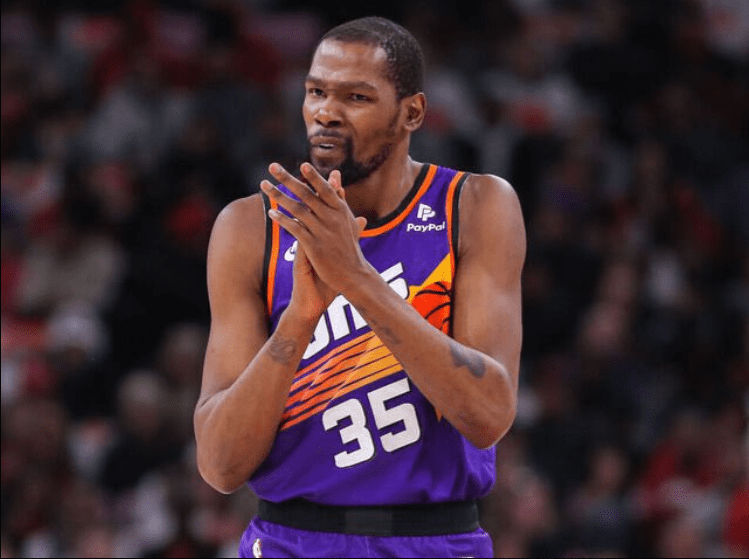
His body language in the aftermath was the key. There was no chest-thumping, no scream to the heavens. It was a quiet usurpation. The point, the stare, the words—they were the actions of a man settling a deeply personal account, not winning a game. The celebration was internal, a cold, private satisfaction that the record was now straight, even if the emotions were permanently crooked.
Table: The Dueling Narratives in Durant’s Moment
| The Surface Narrative (The Competitor) | The Subsurface Narrative (The Former Part) |
|---|---|
| Clutch game-winner | A message to a specific past |
| “Go home” as trash talk | “Go home” as a boundary set |
| Loving a place as PR | Loving a place as painful authenticity |
| Celebration with new team | A silent, solitary confrontation with the old one |
Chapter 3: The Unfinished Business of Belonging
This moment was never about closure. Closure is clean. This was messy. If anything, the shot and its aftermath proved the business was profoundly unfinished.
The core tension of Kevin Durant’s career is the search for a definitive home for a basketball identity that is inseparable from a place, like Duncan in San Antonio or Nowitzki in Dallas. He left Oklahoma City for a crafted legacy in Golden State, only to find his championships viewed as rentals.
He left Golden State to build his own story in Brooklyn, which crumbled under the weight of unrealized plans. Phoenix is the latest chapter. Each move is an attempt to write a perfect ending, yet each ending seems to spawn more questions about where he truly belongs.
The Houston game-winner was a fractal of this entire journey. In microcosm, it was the same story: a breathtaking act of basketball excellence (the new team, the new chapter) directly aimed at resolving a personal history (the old team, the old questions).
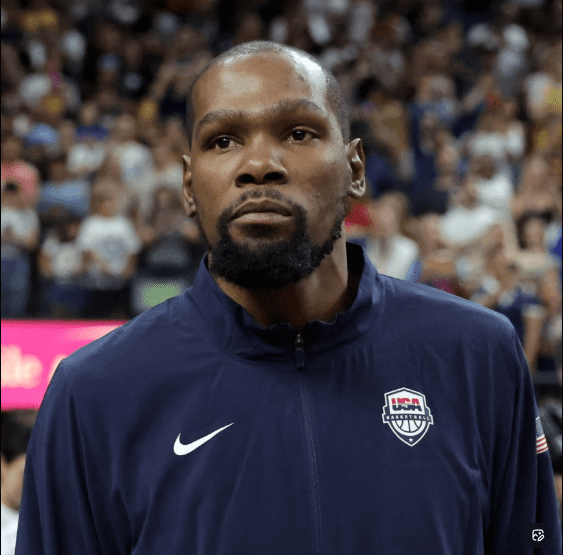
By telling Houston to “go home,” he was, ironically, trying to cement his own sense of being home in Phoenix. He was using the past as a foundation to stand on in the present. But you cannot build a stable home on the ghost of a previous one.
The emotional ambiguity of his love proclamation is the tell. It was an apology wrapped in a victory cigar. It said, “I had to destroy you to prove I’m alive elsewhere, and I’m sorry for that, but I’m not sorry I did it.
Epilogue: The Message That Echoes Back
In the end, the lasting image isn’t the swish. It’s the turn. The pivot from the basket to the people he knew best in the crowd. The shot was the period at the end of a basketball sentence. The stare was the beginning of a much longer, much more personal paragraph that may never end.
Kevin Durant didn’t just hit a game-winner against a former team. He staged a public reckoning with a piece of his own soul. He told Houston to go home, but the phrase echoes back as a question he has spent his career trying to answer: Where is his home? The love he professed was real.
The need to vanquish the symbol of that love was equally real. And in that impossible space between affection and annihilation, between “I love you” and “Get out,” resides the unresolved, endlessly compelling tension of one of the game’s most brilliant, complicated stars.
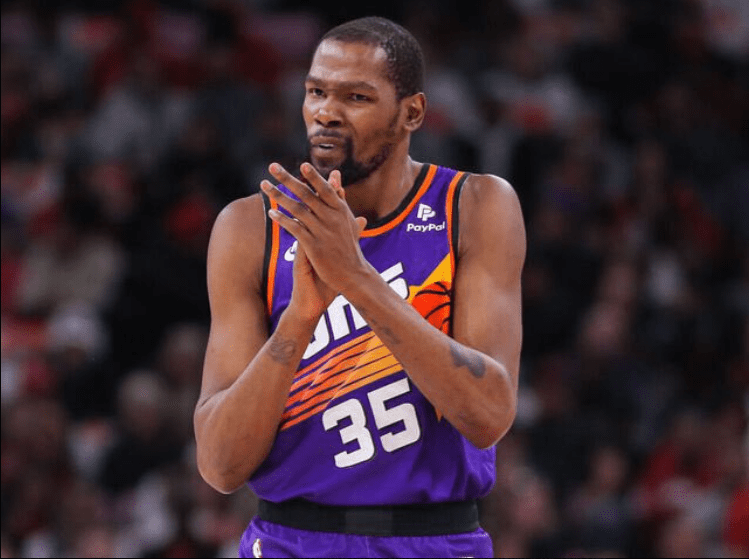
He didn’t settle a score that night. He simply proved that some scores, the deepest ones, can never truly be settled—only acknowledged with a cold, perfect shot, and a wave goodbye that feels, forever, like it’s also meant for himself.