What happens when the face of the league isn’t there?
It is a late January ritual as predictable as the calendar turning. The All-Star starters are announced, and the first name called is LeBron James. The arena roars, the cameras find him, the broadcast cuts to his reaction a nod, a smile, the quiet acknowledgment of a king secure on his throne.
Except this year, the ritual stutters. The pause after “from the Western Conference…” stretches a beat too long. His name is not first. It is not second. It is somewhere down the list, a detail in the middle of the announcement, not the headline.
In living rooms and on social media, a flicker of cognitive dissonance passes through the audience. The stage was built around him. The league’s marketing machinery for two decades has run on his image. The All-Star Game, for a generation of fans, is LeBron’s stage.
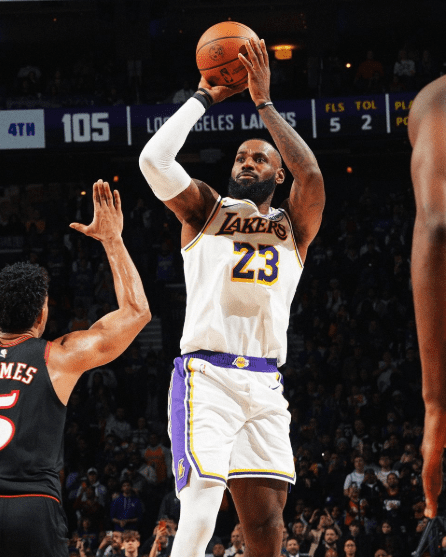
This isn’t about statistics or voter fatigue. It’s about the unsettling feeling of watching a fundamental pillar of the basketball universe begin, almost imperceptibly, to shift.
Part I: The Stage and Its Architect
For 20 consecutive years, LeBron James has been an All-Star. This isn’t merely a statistic; it’s a psychological reality. His presence has been as intrinsic to the event as the logo on the midcourt. He arrived as a teenage phenom and evolved into the event’s elder statesman, its de facto captain, the gravitational center around which teams were drafted and narratives were built.
His influence transcends the game itself. As a piece in Sports Illustrated once noted, James changed the game regarding player agency and used his platform to speak freely on social and political issues, crafting a public persona of conscious leadership.
He didn’t just play in the All-Star Game; he helped define its modern context. The event became a platform where his alliances were displayed, where his mentorship of younger stars was visible, and where his enduring relevance was certified annually.
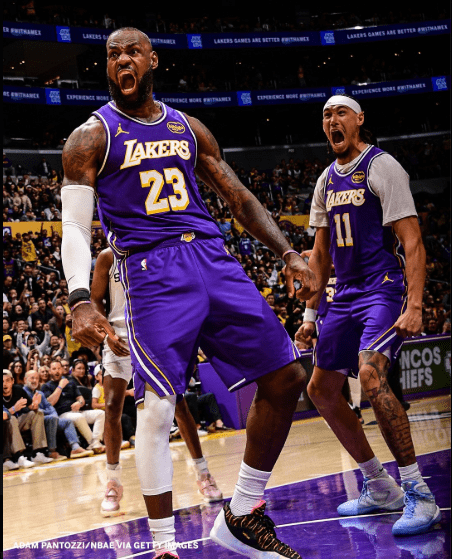
The stage was not just where he played; it was where he held court. To imagine the All-Star Weekend without LeBron is not to imagine a missing player; it is to imagine a theater without its lead actor, a ceremony without its presiding figure. The vacancy would be felt before it was seen.
Part II: The Murmur and the Meritocracy
The questioning of his automatic inclusion is the murmur that has grown into a conversation. It is fueled not by malice, but by the natural entropy of time and the rise of a new generation. Analysts point to early fan voting returns that show him ranked lower than ever before, a tangible signal of shifting tides.
The arguments are familiar: his team’s standing, the preservation of his health through “load management,” the undeniable explosion of young talents like Luka Dončić, Shai Gilgeous-Alexander, and Anthony Edwards, who are not just stars but MVP candidates.
This is where the emotional conflict crystallizes. On one side is the argument of legacy and meaning. Former players and commentators like Gilbert Arenas have engaged in debates about what truly builds a legacy, often focusing on tangible, present-day contributions as a top option on a contender.
Brendan Haywood’s implied argument that the league owes its iconic figures for their service poses a profound question: Is the All-Star Game a pure meritocracy of the current season, or is it, in part, a living museum and a thank you to the architects of the modern NBA?
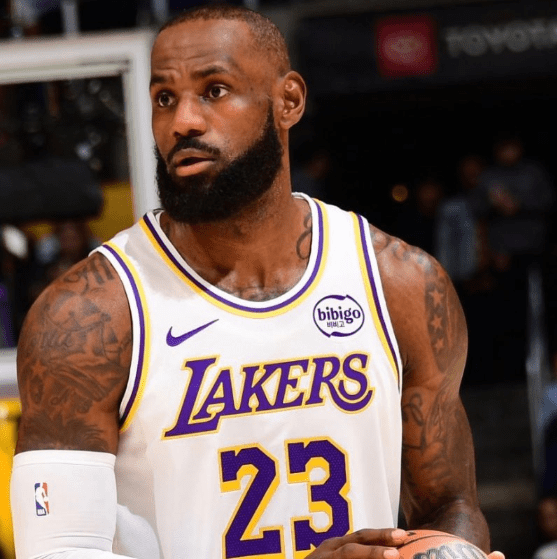
LeBron didn’t just play; he carried the league’s relevance for years. His very presence drives ratings and defines eras. Does that accrued cultural capital not count for a final seat at the table he helped build?
On the other side is the demand of the moment. The All-Star Game, for all its flaws, is supposed to spotlight the league’s current best. If the selection becomes a lifetime achievement award, it risks stagnancy and fails its core promise to fans.
This tension mirrors the broader, often-toxic “GOAT” debates that plague online discourse, where facts battle emotions and narratives often trump nuanced analysis. The question for voters fans, players, and media becomes a personal referendum: Are you voting for the story, or for the season?
Table: The Dueling Logics of the All-Star Selection
| The Logic of Legacy & Meaning | The Logic of Present Merit |
|---|---|
| Rewards 20+ years of cultural and economic impact. | Rewards the best performance of the current season. |
| Acknowledges his role as the league’s defining figure for a generation. | Creates room for new, defining stars to claim the spotlight. |
| Treats the ASG as a celebration of basketball history in real-time. | Treats the ASG as a snapshot of the league’s present hierarchy. |
| Asks: “What does the game mean without its central character?” | Asks: “Is the game honest if it ignores current production?” |
Part III: The Larger Void An Identity Crisis in Microcosm
LeBron’s potential absence is a symptom of a larger ailment plaguing the All-Star Game itself: a profound identity crisis. For years, the event has been criticized as a meaningless exhibition, a “glorified layup line” where players avoid defense and competition.
The league has tried gimmicks Elam endings, captain drafts, multi-team tournaments to inject stakes, with limited success. When a legend like LeBron treats the game cautiously, prioritizing playoff health over exhibition intensity, it underscores the event’s diminished competitive value.
This context makes the debate about LeBron more poignant. If the game itself is struggling for meaning, does excluding its most meaningful modern figure solve anything, or does it merely hollow out the event further? His presence guarantees a baseline of audience interest and narrative weight.
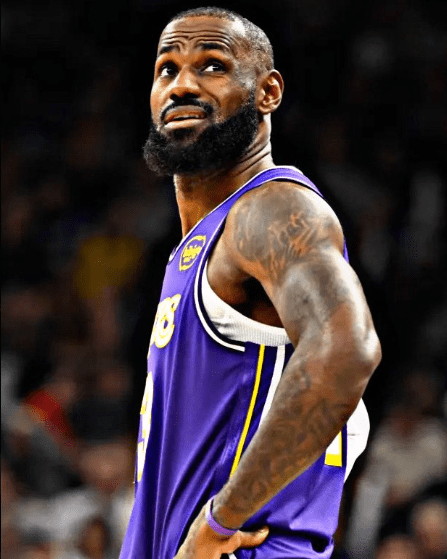
Without him, the spotlight falls entirely on a game that many feel has lost its way. The league is thus caught in a paradox: it needs the competitive vigor of the young stars to save the game, but it may need the iconic weight of LeBron to make anyone care about the game in the first place.
The emotional ambiguity here is thick. There is a respectful, almost melancholic desire to see him honored. Yet, there is also a restless urge to move forward, to see the next chapter written without the shadow of the previous one dominating the page. This is not a clean, binary choice. It is a messy negotiation between gratitude and progress, between what we owe the past and what we demand of the present.
Part IV: The Unanswered Question
So, should LeBron James be an All-Star?
The search results do not provide a clear answer, and rightly so. They provide evidence of the unresolved tension. We see the declining vote totals, the discussions of legacy versus current contribution, and the broader crisis of the event itself. The emotional clarity that emerges is not an answer, but a recognition of the question’s weight.
Selecting LeBron is an act of narrative continuity. It says the story isn’t over, that the king, even in his twilight, still belongs on his throne. It is a choice that values meaning, resonance, and the emotional connective tissue he provides for millions of fans.
Not selecting LeBron is an act of narrative transition. It says the story must evolve, that merit must be ruthlessly current, and that the future cannot be postponed. It is a choice that values the purity of competition and the anointing of new heroes.
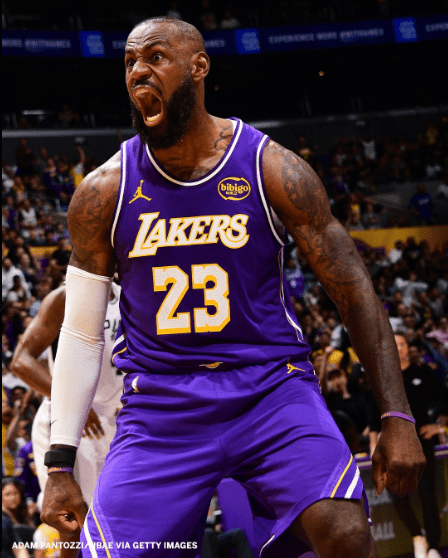
The true cost of his absence would not be measured in missing points or assists, but in a subtle dimming of the stage’s light. The All-Star Game would become a slightly stranger, less familiar place. The cameras would search for a new focal point. The narrative would lack its longest-running thread.
The ending is not written. Whether he is selected by the coaches as a reserve or misses entirely, the debate itself is the signature of his impact. It proves that his place in the game is still a central question worth asking. The uncertainty itself is a tribute.
It means his presence still matters enough that its potential absence creates a void we are forced to contemplate. And in that contemplation, we understand precisely how much space he still occupies, not just on a roster, but in the imagination of the sport.