“NOT TOP 5 ANYMORE.” – STEPHEN JACKSON
The statement landed not with a whisper, but with the force of a hammer striking stone. In the churn of daily sports debate, where hot takes are currency and opinions blur into noise, Stephen Jackson’s words cut through with startling, surgical clarity. “I know five guys who should start before him.”
The “him” needed no introduction. It was LeBron James. The subject was the 2026 NBA All-Star Game, and with one declarative sentence, Jackson did more than offer an opinion; he issued a formal challenge to one of the most unassailable records in professional sports.
For 22 consecutive seasons, LeBron James has been named an NBA All-Star. For over two decades, his presence on that stage has been as reliable as the midwinter date on the calendar. It is a streak woven into the fabric of the league itself, a monument to unprecedented longevity.
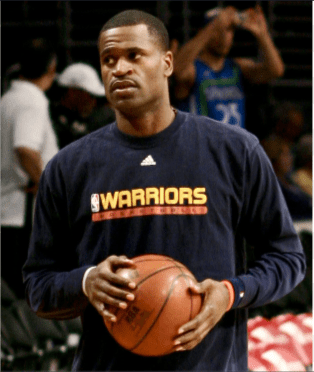
But now, a former champion, a player who shared the court with legends, stood before the monument and pointed out the cracks. This wasn’t just analysis. This was an act of symbolic demolition, forcing a brutal, public question into the light: Is the greatest streak in NBA history being sustained by legacy, not by the present-day reality of the game?
The Anatomy of a Streak Under Siege
To understand the seismic weight of Jackson’s statement, you must first appreciate the altar at which he is swinging. LeBron James’s All-Star streak is not merely a statistic; it is a psychological landmark. It has survived eras, rule changes, team changes, and the entire rise of the social media age.
It has been a constant. When fans think “All-Star,” they instinctively think “LeBron.” The annual announcement of his selection has been a ritual of confirmation, a reaffirmation of his enduring place at the sport’s pinnacle. It is a streak built on three pillars: sustained elite production, global cultural relevance, and a narrative of timelessness that the league and its fans have been all too happy to perpetuate.
But in the 2025-26 season, those pillars are visibly shaking. The early fan voting returns, once a coronation, now tell a story of erosion. For the first time in nearly two decades, LeBron’s name is not comfortably atop the Western Conference guard/forward list.
He is trailing, significantly, behind a new vanguard: the explosive scoring of Luka Dončić, the two-way dominance of Shai Gilgeous-Alexander, the revolutionary force of Victor Wembanyama. The numbers are no longer mythic; they are merely very good. His team, the Los Angeles Lakers, is locked in a desperate struggle just to remain in the Play-In Tournament picture.
The context that once elevated him carrying teams to contention has evaporated. The “King” is still playing like a star, but the kingdom is fraying at the edges. Stephen Jackson didn’t create this reality; he merely became the first prominent voice with the courage to state its consequence aloud: that in the hierarchy of right now, LeBron James may no longer reside in the top five.
Jackson’s Five: The New Pantheon Versus The Living Legend
When Jackson says “five guys,” he is drawing a bright, controversial line. While he didn’t name them explicitly, the league’s current hierarchy makes the list agonizingly clear. It is a roll call of the new era:
- Luka Dončić (Dallas Mavericks): The offensive engine who has already surpassed LeBron in statistical wizardry and is a perennial MVP frontrunner, carrying his own team with a usage and creativity that defines the modern game.
- Shai Gilgeous-Alexander (Oklahoma City Thunder): The league’s premier two-way guard, a scoring champion and Defensive Player of the Year candidate leading the best young team in basketball to the top of the brutal Western Conference.
- Victor Wembanyama (San Antonio Spurs): A defensive and offensive phenomenon who is redefining what is possible on a basketball court, putting up numbers not seen since the primes of the all-time greats.
- Jayson Tatum (Boston Celtics): The best player on the league’s best team, a Finals MVP, and the face of the franchise most synonymous with consistent, elite success over the last half-decade.
- Giannis Antetokounmpo (Milwaukee Bucks) or Nikola Jokić (Denver Nuggets): The other former MVPs and champions whose teams are built around them as undisputed, dominant #1 options, a status LeBron can no longer claim.
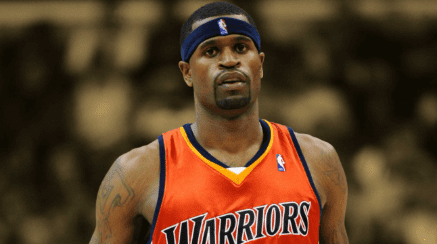
This is the core of Jackson’s argument: the All-Star starter spots are for the undisputed titans of the current season. It is a meritocracy of the moment. LeBron’s résumé the four championships, the four MVPs, the all-time scoring record is immortal. But it belongs in a museum, not on an All-Star ballot.
The Backlash and the Divide: Disrespect or Necessary Truth?
The reaction to Jackson’s declaration was instantaneous and violently polarized, cleaving the basketball world into two warring camps.
Camp One: The Traditionalists (Crying Disrespect). This camp views Jackson’s comments as heresy. Their argument is built on deference to legacy. LeBron built the modern NBA. He has carried its ratings, defined its narratives, and expanded its global reach for a generation. The All-Star Game is not just a game; it is a celebration of basketball.
How can you celebrate the sport without its greatest active icon? To them, benching LeBron is an unthinkable act of ingratitude. It’s “what have you done for me lately?” rhetoric applied to a living legend. They point to his still-impressive per-game averages (25/7/7 on good efficiency) and argue that even at 80%, LeBron James is better than 100% of most other players.
Camp Two: The Progressives (Applauding Honesty). This camp applauds Jackson for having the nerve to say what many analysts and fans are thinking privately. Their argument is built on the sanctity of the current season.
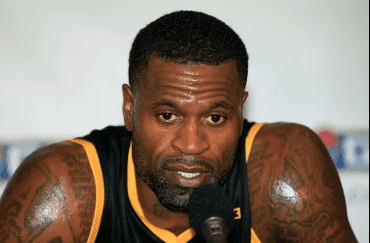
The All-Star Game, for all its flaws, must reflect the league’s present, not its past. Starting a player based on career achievement corrupts the honor and turns the event into a lifetime achievement award. They argue that true respect for LeBron is to judge him by the impossible standard he set for himself, not to lower the bar because of his age and past glory.
To them, starting him over a more deserving young star is the real disrespect—to the young star who earned it, and to LeBron himself, by suggesting he needs charity.
This divide is more than a sports debate; it is a philosophical clash about how we measure greatness. Is it cumulative, an Everest of accrued accomplishment that you forever stand upon? Or is it perpetually current, a peak you must re-summit each and every year?
The Weight of the Streak: What Truly Ends If the Vote Says “No”?
This is the haunting, unspoken question at the heart of the controversy. If the fan and player votes align in a way that excludes LeBron James from the All-Star starting lineup, what actually ends?
It would not end his career. It would not erase his legacy. It would not make his statues disappear. But it would sever a temporal thread that has connected the NBA across three distinct decades. It would be the most powerful symbolic signal imaginable that the league’s operational center of gravity has irrevocably shifted
For LeBron, a man whose entire existence has been built on defying timelines and expectations, it would be the ultimate, externally imposed acknowledgement of a limit. Not a limit of skill or will, but of time itself. It would mark the moment the basketball world, which he has commanded for so long, collectively decided it was looking elsewhere for its present-day definition of greatness.
The emotional charge of this moment is not about a single exhibition game in February. It is about the collective act of turning the page. Stephen Jackson, whether motivated by blunt honesty or calculated provocation, has grabbed the corner of that page and lifted it.
He has forced every fan, every player, and every executive to stare at the possibility of a league without LeBron James at its ceremonial forefront. Is it the natural, respectful passing of a torch? Or is it a cold, premature snuffing of a flame that still burns bright? The vote will be more than a selection.