Anthony Edwards found the lighter side of things after being guarded by Victor Wembanyama in the Timberwolves’ victor
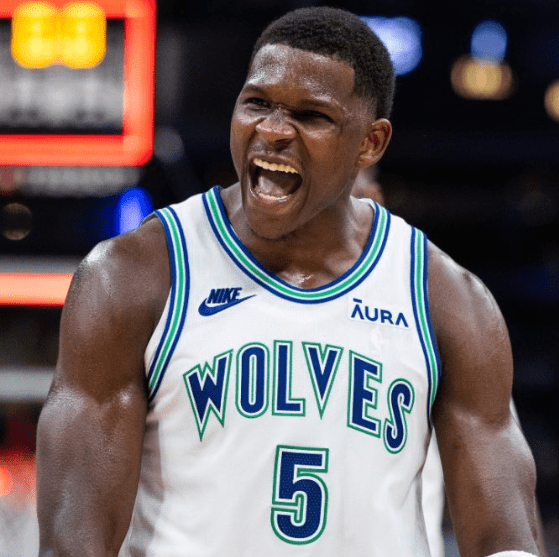
Minnesota Timberwolves guard Anthony Edwards (5) reacts in the second half against the Denver Nuggets at Ball Arena.Anthony Edwards sank a late jumper to lead the Minnesota Timberwolves to a 104-103 victory over the San Antonio Spurs. Playing at Target Center against Victor Wembanyama and co., ANT delivered 23 points and three assists to rally his team from a 19-point deficit.
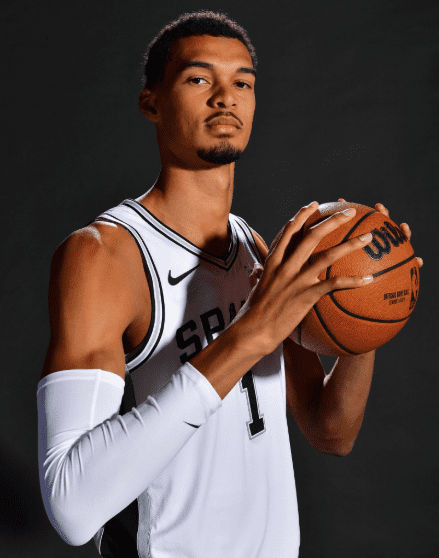
“I was lost, I didn’t know what to do right now. Him so tall, bruh. Like, he can take away everything. He can take away the layup, jumpshot, he got good feet, he can move. So, he is one of a kind,” Edwards said, revealing the limited options he found against Wembanyama.
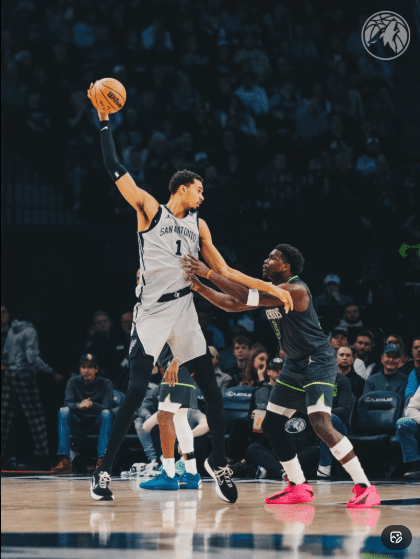
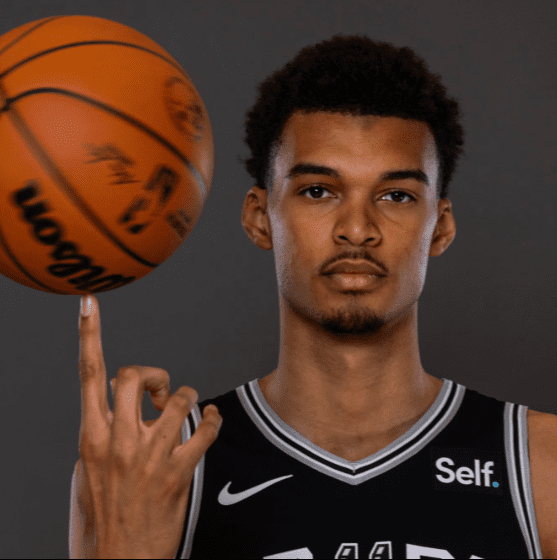
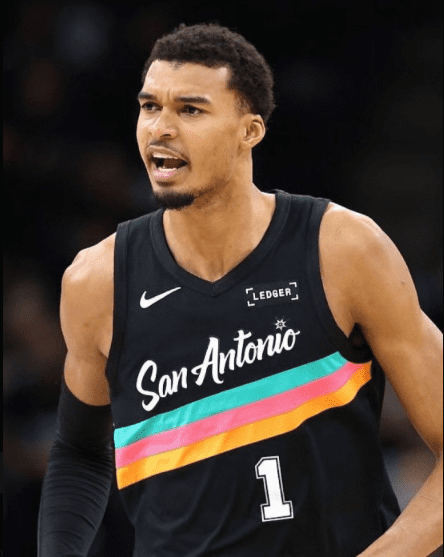
Wembanyama, in his first start since New Year’s Eve, finished with a game-high 29 points and seven rebounds. He produced a strong start, including two lob steals that helped San Antonio surge to the early 16-0 lead, and remained a focal point on offense.
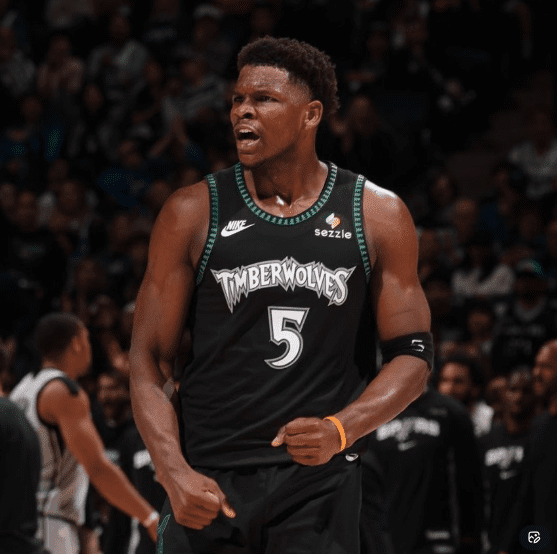
Wemby produced 16 points and six rebounds in the first half. Minnesota employed a strategy of crowding and defending him with Rudy Gobert and Julius Randle, limiting him to just 13 points after intermission and drawing a Flagrant 1 foul on Gobert late in the game, which also resulted in Gobert’s one-game suspension.
Edwards’ Confusion Highlights Wembanyama’s Unique Skill Set
Anthony Edwards’ candid admission of being “lost” on the court is more than just a funny quote; it’s the ultimate testament to Victor Wembanyama’s defensive genius. Most elite defenders specialize in shutting down one aspect of a player’s game driving lanes or perimeter shooting. Wembanyama, with his alien combination of 7-foot-4 height, an 8-foot wingspan, and guard-like agility, erases the entire offensive playbook.
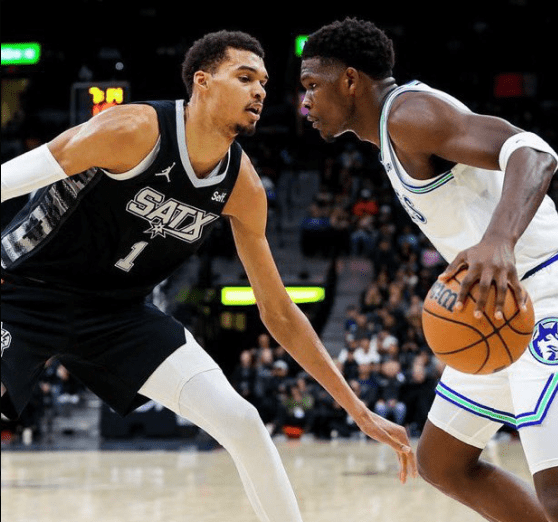
Think about it from Edwards’ perspective. Driving to the rim against a shot-blocker like Rudy Gobert is a challenge, but it’s a known equation: use speed and crafty finishes. Pulling up for a jumper against a quick guard requires creating space. Against Wembanyama, both options feel futile in the moment.
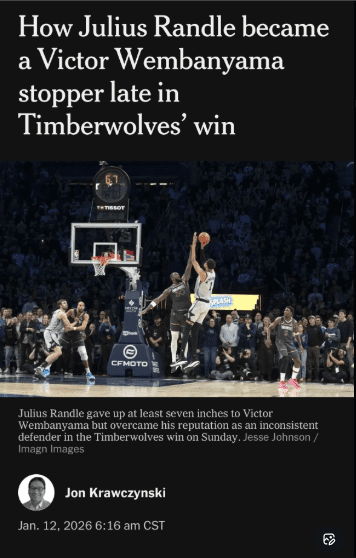
A drive invites a contest that starts at the apex of the backboard. A jumper, even with a few feet of separation, is released into the path of those impossibly long arms. Edwards, one of the most explosive and confident scorers in the league, was reduced to a state of genuine indecision a rare and powerful victory for any defender.
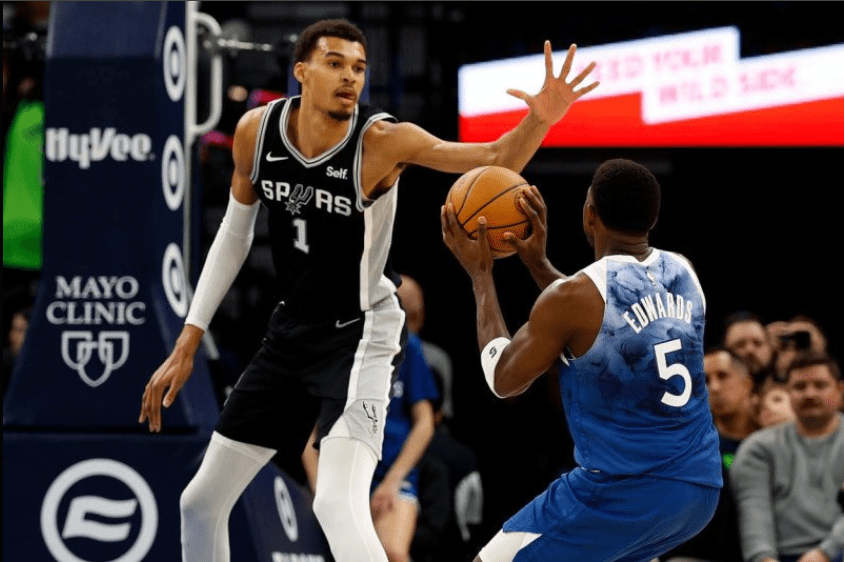
This is the unique psychological impact Wemby has. It’s not just about the blocks or altered shots that show up on the stat sheet. It’s about planting a seed of doubt before the offensive player even makes his move. For a split second, the game slows down for the opponent as they run through a mental checklist of normally reliable options, only to find each one marked “denied.”
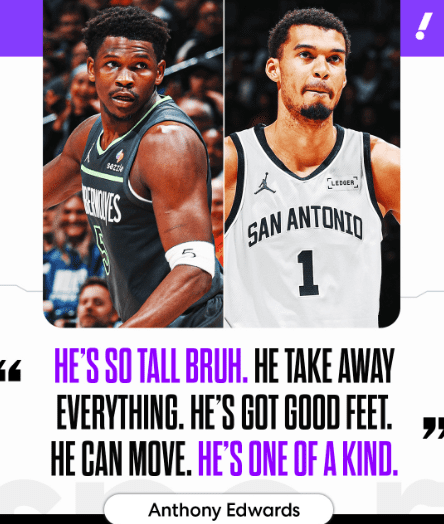
That hesitation is often all the defense needs. While Edwards ultimately won the game, his post-game comments reveal that on an individual level, he felt he lost the battle to Wembanyama’s sheer presence.
The Broader Context: A League Adjusting to a New Defensive Paradigm
Edwards’ experience is not an isolated incident; it’s a microcosm of what the entire NBA is grappling with in Wembanyama’s third season. Teams are spending entire film sessions devising schemes to simply get a clean look against him. The Spurs’ defensive rating with Wemby on the court is among the league’s best, and it’s built on this foundation of induced confusion.

What makes him truly “one of a kind,” as Edwards put it, is the mobility. Traditional rim-protecting giants could be pulled away from the basket and exploited in space. Wembanyama comfortably switches onto players like Edwards on the perimeter, taking away the initial screen action.
The Timberwolves’ strategy of throwing multiple bodies at him, including the Defensive Player of the Year in Gobert, underscores this league-wide respect. It’s no longer a one-on-one assignment; it’s a committee project.
The physicality that led to Gobert’s Flagrant foul and suspension is a sign of the frustration and extraordinary effort required to merely contain him. Teams are realizing that “beating” Wembanyama defensively might not mean scoring easily on him, but rather working relentlessly to get a marginally better shot than the one he’s designed to take away.
The Silver Lining: Edwards’ Maturity and Clutch Gene Shine Through
What makes this story so compelling is the contrast between the mid-game confusion and the fourth-quarter brilliance. Anthony Edwards could have let his early struggles against Wembanyama define his night. He started 0-for-5, visibly frustrated by the Spurs’ defensive anchor. The old narrative about ANT might have focused on that frustration boiling over.
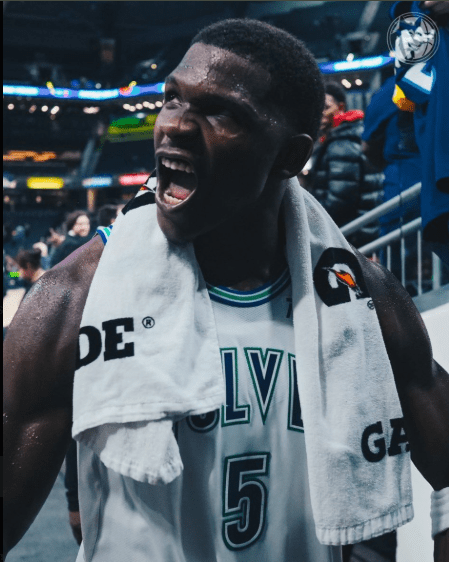
Instead, this game showcased his dramatic maturation. He adjusted. He didn’t force the same actions that weren’t working. He used Wembanyama’s aggressive defense against the Spurs by becoming a more willing and effective passer, forcing San Antonio’s other defenders to scramble. He picked his moments, attacking when Wemby was briefly on the bench or when he could use a screen to create a sliver of separation.
Then, with the game on the line, all the confusion melted away. The final play wasn’t about overthinking; it was about instinct and supreme talent. Isolated on the wing, Edwards used a hesitation dribble, created just enough space, and rose up for a flawless jumper to win the game.
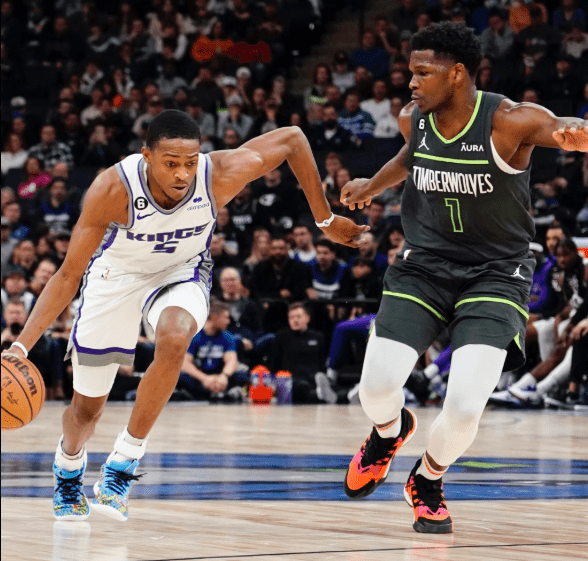
The player who was “lost” for stretches had the ultimate clarity when it mattered most. This ability to navigate adversity, process the unique challenge in front of him, and still deliver a victory is the mark of a true superstar. It proves that while Wembanyama can dominate possessions, he can’t yet dominate the will of the league’s very best.
Looking Ahead: The Future of a Legendary Rivalry
This January night at Target Center might be remembered as the first iconic chapter in what promises to be a decade-long rivalry between two of the NBA’s brightest lights. Edwards, the explosive, alpha-dog scoring guard representing the now. Wembanyama, the revolutionary two-way force representing the future of basketball’s geometry.
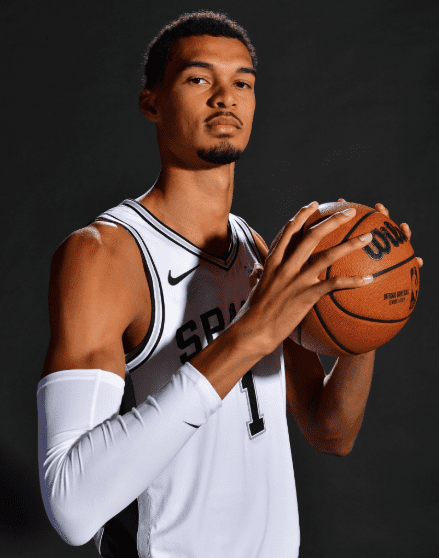
Their skill sets are a perfect foil for one another. Edwards’ offensive arsenal is the ultimate test for Wembanyama’s defensive versatility. Conversely, Wemby’s ability to score from anywhere as evidenced by his game-high 29 points forces Edwards and the Timberwolves’ elite defense to be perfect. For the league and fans, it’s a dream matchup that will headline schedules for years to come.
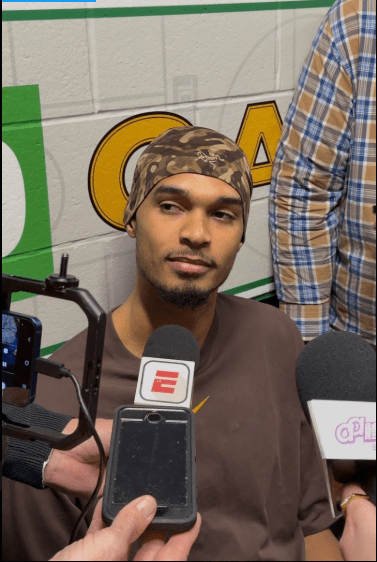
The takeaway from this game is dual-sided. Victor Wembanyama is a defensive phenomenon so unique that he can momentarily baffle even an All-NBA scorer, reshaping how teams must plan their entire offensive game plan. Yet, Anthony Edwards demonstrated that elite talent, combined with poise and resilience, can still find a way to win. It sets the stage beautifully.
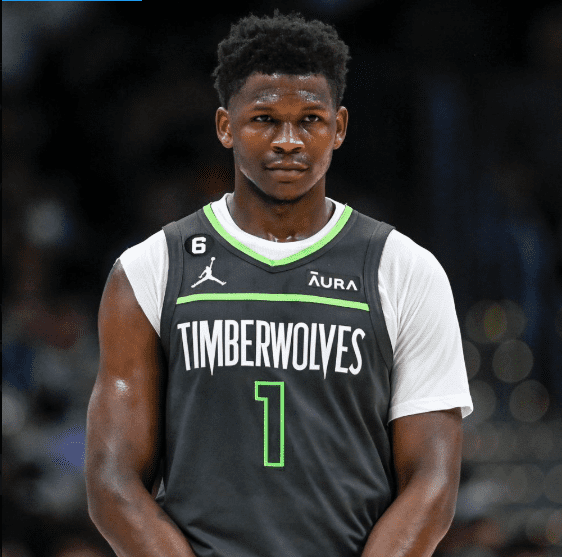
Wembanyama will undoubtedly spend the next week studying how Edwards adjusted and sealed the game. Edwards will remember the feeling of being “lost.” Their next matchup won’t feature the same element of surprise, but it will feature two brilliant players, better prepared, and even more determined to claim the upper hand. The confusion of tonight is just the beginning of a much clearer, and fiercely competitive, story.