A Rift Goes Global
The Memphis Grizzlies traveled to Berlin this week for the NBA’s Global Games series, an event designed to showcase the league’s best to an international audience. Instead, the spotlight found a crumbling foundation.
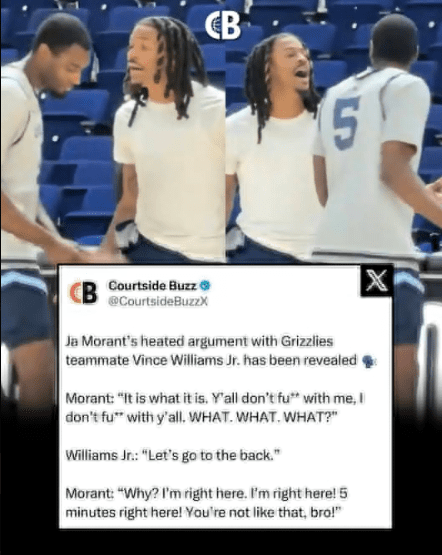
During a team shootaround at the Mercedes-Benz Arena, cameras captured franchise cornerstone Ja Morant in a heated, finger-pointing argument with teammate Vince Williams Jr. The viral video, devoid of audio but overflowing with tense body language, became the perfect, silent metaphor for a partnership that has turned toxic.

This Berlin blowup did not happen in a vacuum. It is the latest and loudest crack in a dam that has been straining for months, if not years.

With trade rumors swirling at a deafening volume and Morant’s production at a career low, the incident in Germany feels less like an isolated conflict and more like the final, public unraveling of the Ja Morant era in Memphis.
The Video and The Context: More Than Just Practice
The clip, shared widely by ClutchPoints and journalist Songul Soysal, shows Morant and Williams engaged in an intense exchange. Morant gesticulates emphatically, his expression a mix of frustration and confrontation.
Williams stands his ground, responding in kind before teammates and staff eventually step in to separate them. While the specific subject of the argument remains unknown, its timing and visibility are everything.

The Berlin argument is the visceral, on-court manifestation of that reported front-office calculus. It is the sound of a relationship breaking, even if the video itself has none.

This is not Morant’s first brush with internal discipline this season. Just weeks into the campaign, he was suspended for one game by the team for publicly criticizing the coaching staff after a loss to the Los Angeles Lakers.

That pattern of friction between star and system, between player and institution has defined a miserable 2025-26 season. Morant’s statistical decline has been stark.
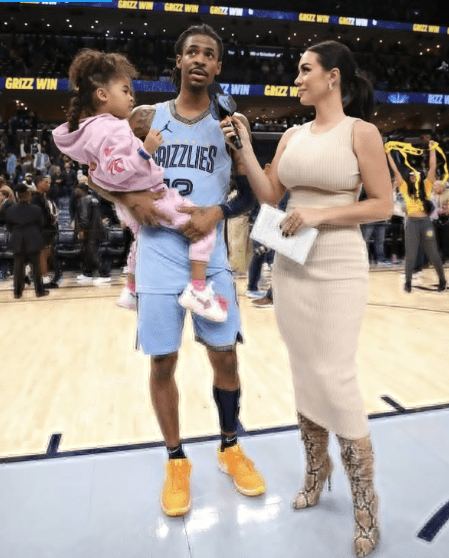
Through 18 games, he is averaging 19.0 points and 7.6 assists on a career-worst 40.0% shooting from the field and an almost unplayable 20.8% from three-point range. The explosive athleticism and gravitational pull that once made him must-see TV have vanished, replaced by inefficiency and visible frustration.
A Market in Crisis: What Is Ja Morant Worth Now?
As the Grizzlies reluctantly prepare to shop their former superstar, they are confronting a brutal new reality: Ja Morant’s trade value has cratered. The league-wide market for star players, particularly ball-dominant guards, has undergone a seismic shift, largely signaled by the Atlanta Hawks’ recent trade of Trae Young.
The Trae Young Precedent: A Warning Sign
In a move that stunned the league, the Hawks traded four-time All-Star Trae Young to the Washington Wizards. The return was shockingly meager: veterans CJ McCollum and Corey Kispert, with zero first-round draft picks included.
analysts immediately labeled it a “salary dump,” a desperate move to reset the books. This trade became the new benchmark, signaling to the entire NBA that the era of massive hauls for non-superstar guards is over.
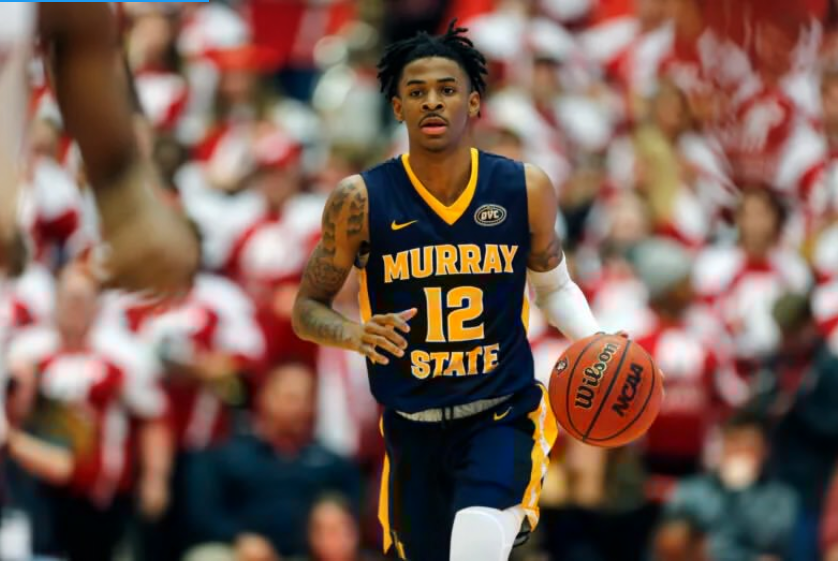
For Memphis, the parallels are terrifying. Like Young, Morant is a high-usage, defensively-limited guard on a super-max contract whose team has failed to contend. Like Young, his efficiency has waned. And like Atlanta, Memphis may find the offers for their star to be insultingly thin.

NBA insider Chris Mannix explicitly linked the two situations: “Just like the marketplace for Trae Young dried up… I don’t think the market for Ja Morant is anything beyond matching salary and maybe some filler.”
The reasons for this depressed market are structural and work heavily against the Grizzlies:
- Saturated Guard Market: The league is overflowing with elite, high-paid point guards. From Luka Dončić and Stephen Curry to Tyrese Haliburton and Shai Gilgeous-Alexander, nearly half the league has its franchise guard. The demand for another, especially one with Morant’s baggage, is minimal.

- Drained Assets: The frenzied trading of recent years (Donovan Mitchell, Rudy Gobert, Kevin Durant) has left most contender-level teams without the draft capital or blue-chip young players needed to make a compelling offer.

- The Reliability Factor: Teams are increasingly risk-averse. Investing in a player with Morant’s combination of a significant injury history (a season-ending shoulder surgery in 2024), off-court incidents, and current poor performance is seen as a prohibitive gamble. One Eastern Conference executive brutally summarized the feeling: “You’re talking about a max contract player shooting 40% from the field and 20% from three. What are we even discussing here?”
Potential Destinations: A Short and Complicated List
Given these constraints, the list of realistic suitors is short. The teams mentioned most frequently are the Brooklyn Nets, Chicago Bulls, and Miami Heat.

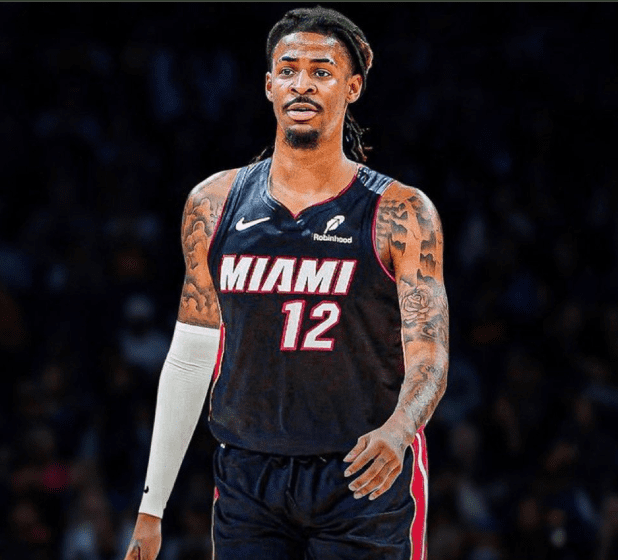
- Miami Heat: The Heat, perpetually in “win-now” mode, could see Morant as a high-risk, high-reward gamble to pair with Jimmy Butler and Bam Adebayo. Their culture is famously strong, and the belief is that Pat Riley and Erik Spoelstra could harness his talent. However, they lack the appealing young assets Memphis would crave.

- Brooklyn Nets & Chicago Bulls: Both are teams stuck in the middle, needing a star to build around but not presenting an immediate path to contention. A trade to either might feel like a lateral move for Morant, not the fresh start to a contender he likely desires.

- The Dark Horse: The Dallas Mavericks have been mentioned as a sleeper, with the idea of pairing Morant with Luka Dončić in a hyper-athletic backcourt. However, the fit is questionable, and the Mavericks have been burned by backcourt experiments before.
Other teams, like the Sacramento Kings and Minnesota Timberwolves, have shown “lukewarm interest” but are hamstrung by salary cap mechanics that make a deal nearly impossible to construct. The overarching theme is that no team is willing to give up core pieces for Morant.
The Memphis Perspective: Forced to Pivot
The Grizzlies’ hand has been forced by a confluence of factors beyond Morant’s control. The decision to explore trading him is a cold, pragmatic assessment of a broken asset and a shifting team timeline.

- The Desmond Bane Trade: Last summer, Memphis signaled a new direction by trading All-Star wing Desmond Bane to the Orlando Magic for a package centered on future draft picks. This was a clear step toward asset accumulation and long-term flexibility, moving a win-now player for future currency.

- Jaren Jackson Jr. as the New Cornerstone: The Bane trade was part of a financial maneuver to facilitate a massive renegotiation and extension for big man Jaren Jackson Jr. There is a growing belief within the league that Memphis now views “Trip” as the centerpiece of its next contending team. Jackson’s two-way impact and durability have made him a more reliable building block in the eyes of the new front office.

- A Dismal Present Reality: With Morant in and out of the lineup and struggling, the Grizzlies are a 16-22 team, clinging to the 10th spot in the West. The experiment of building around Morant’s explosiveness has hit a hard ceiling, and the partnership has become unproductive for both sides.

The painful truth for the Grizzlies is that the optimal time to trade Morant for maximum value after his 2022-23 MVP-caliber season has long passed. They are now operating in a buyer’s market with a damaged commodity.
Conclusion: The End of an Era, Forged in Frustration
The video from Berlin is the epitaph for the Ja Morant Grizzlies. It is a story that began with breathtaking highlights, “Grind City” swagger, and the promise of a new era, but is ending in whispered trade rumors, statistical decline, and a heated argument on a practice court thousands of miles from home.
For Ja Morant, the coming trade will represent a desperately needed fresh start, albeit with his value at an all-time low. He will have to rebuild his game, his reputation, and his relationship with the sport on a new team.
Availability, maturity, and consistent performance are the currencies of sustained success and legacy. Without them, even the most dazzling stars can see their value vanish, leaving behind nothing but the echo of an argument in an empty Berlin arena.