He Lost His Arm at Age 6. Now Hansel Emmanuel Is Inspiring the World With One-Handed Dunks, Viral Highlights, and a Dream No One Can Take
Sometimes, the most unforgettable stories aren’t about championships, buzzer-beaters, or gold medals. Sometimes, the most powerful stories are about quiet resilience—the kind that builds brick by brick through struggle, heartbreak, and the refusal to give up. Hansel Emmanuel doesn’t have an NBA contract (not yet, anyway), and he’s not a household name in the same way as LeBron or Steph. But if you’ve seen even five seconds of his highlights, you know one thing: he shouldn’t be able to do what he’s doing. And yet, he does it anyway—with one arm, endless fire, and a story that feels too surreal to be true.
Hansel Emmanuel was just six years old when everything changed. He was living in the Dominican Republic, just a regular kid playing outside when a concrete wall collapsed on him. His left arm was trapped. His father, a former pro basketball player himself, tried to free him. But by the time Hansel was pulled out and rushed to the hospital, it was too late. The damage was done. His left arm had to be amputated.

It’s a moment that would’ve broken most people. And how could it not? At six, you’re not thinking about surgeries or rehabilitation—you’re thinking about playing, laughing, living. Suddenly, all of that was clouded by trauma, by loss, and by learning to exist in a world built for two-handed people.
What followed wasn’t a quick comeback story. It was years of adjustment. Learning how to do basic tasks all over again. Finding new ways to button shirts, open doors, carry bags. For a kid who had once dreamed of basketball like his father, it must’ve felt like that door was closed for good.
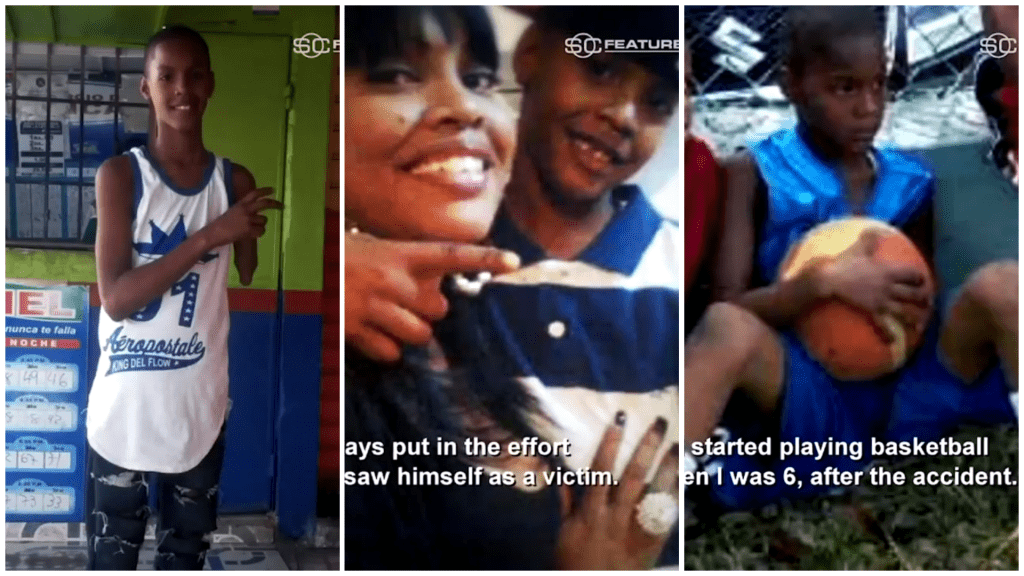
But there’s something strange about dreams—they don’t always listen to logic. Even when they get knocked down, they stay alive in quiet corners of your heart. And for Hansel, that dream of basketball didn’t die. In fact, it grew.
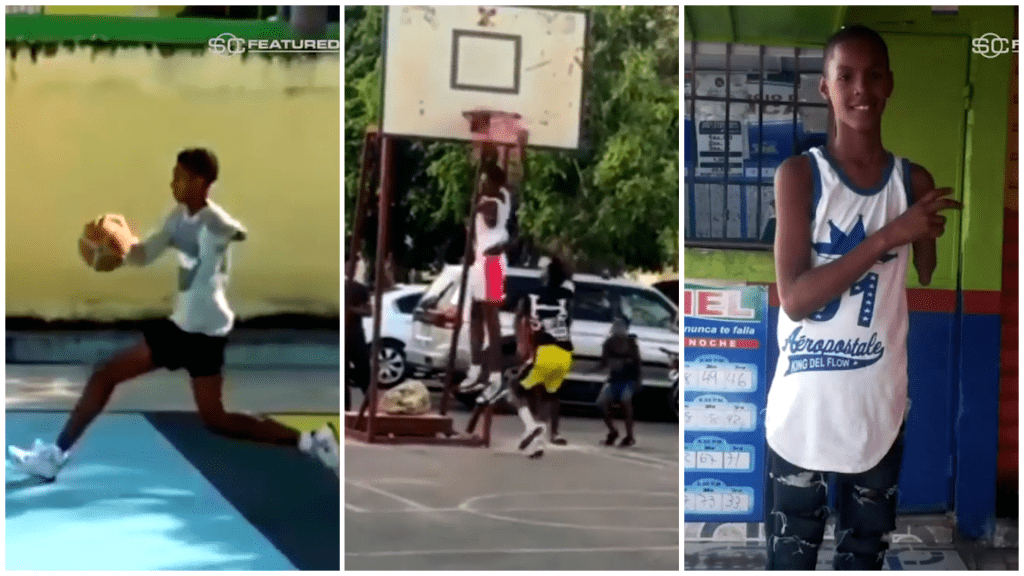
He started playing again, slowly at first, then with more boldness. By his early teens, he was doing things that didn’t seem possible. Crossover dribbles, sharp passes, high-flying dunks—all with one arm. Friends would film him. The videos would get passed around. Then they went viral.
One clip in particular—Hansel catching an alley-oop and dunking with force—blew up across basketball pages online. The comments were filled with disbelief, awe, and support. Most people had never seen anything like it.
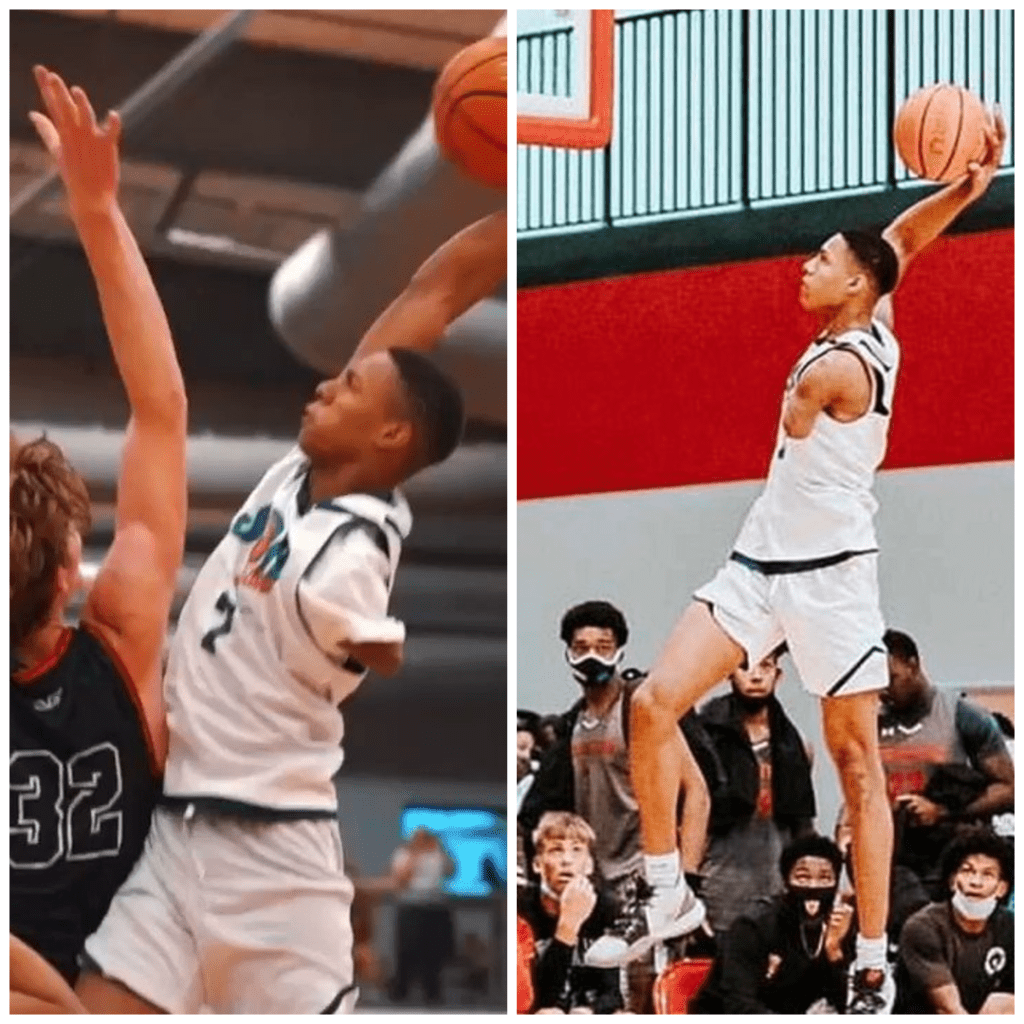
Eventually, those viral videos opened doors. Hansel was offered a scholarship to Life Christian Academy in Kissimmee, Florida. Leaving behind his home in the Dominican Republic, he moved to the U.S. and joined a basketball team where no one treated him like a sideshow. They saw his skills. His grit. His ability to keep up—and dominate—in real games.
It wasn’t easy. Opponents didn’t always go easy on him. Fans sometimes stared. But Hansel’s mentality was simple: prove them wrong. Every game, every possession, he played with the same edge—like someone who knew the world had counted him out and didn’t care.
His stats weren’t just good—they were standout. Double-digit points, rebounds, steals. But it wasn’t about the box score. It was the presence. The energy. The way he inspired people in the stands just by showing up, lacing up, and going all out.
Then came the college offers. Yes, actual Division I schools. Hansel committed to play for Northwestern State University before eventually transferring to Austin Peay State University. That’s where he made history. One of the only one-armed players to ever suit up in Division I men’s basketball.
There were moments on that court—moments when the crowd would go quiet just to see what he’d do. A fast break dunk. A slick behind-the-back dribble. A mid-air block. And every time, the arena would erupt. Because people weren’t just cheering the play—they were cheering the story behind it.
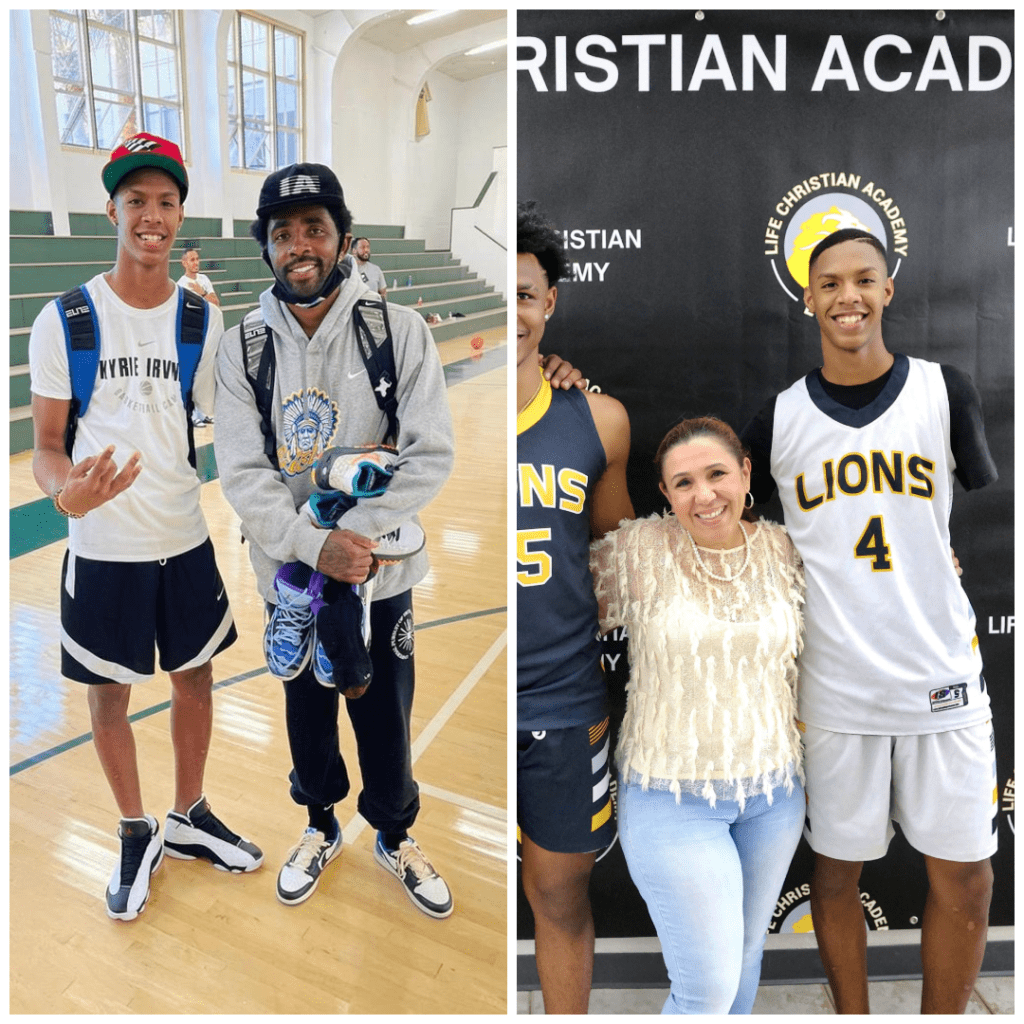
Hansel Emmanuel isn’t just playing basketball. He’s doing something bigger. He’s showing that limitations—whether physical, emotional, or imagined—don’t define what’s possible.
You can talk all you want about stats, rankings, draft boards. But no number will ever capture what it’s like to watch him play in person. There’s something magnetic about him. Something that makes you sit up straighter and rethink everything you thought you knew about resilience.
And now, even though he hasn’t officially been signed by an NBA team, that conversation is heating up. A recent viral rumor falsely claimed that the Houston Rockets had given Hansel a two-way contract. It wasn’t true—but the fact that so many people believed it without question says everything.
People believed it because they want it to be true. Because deep down, we all want to see stories like Hansel’s rise to the highest stage. We want to see the guy who never gave up finally get his shot.
But Hansel isn’t rushing it. He’s still working. Training. Developing. Focused not on clicks or sympathy, but on mastery. He’s played in the Drew League. He’s faced real competition. And he’s held his own.
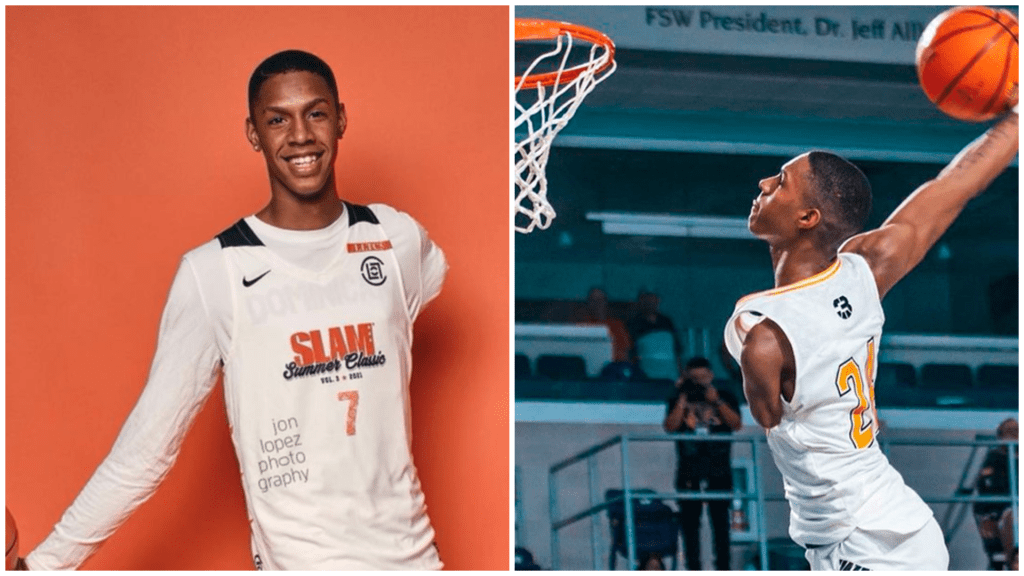
There’s a quiet confidence about him. He doesn’t beg for the spotlight. He just shows up and lets his game speak. And maybe that’s what makes this story even more powerful—it’s not polished. It’s not scripted. It’s real.
He represents every kid who was told “you can’t.” Every athlete who was doubted. Every dreamer who felt like their dream had an expiration date.
Watching Hansel Emmanuel isn’t about seeing a novelty. It’s about seeing hope in motion. It’s about remembering that determination doesn’t always shout. Sometimes, it just keeps dribbling.
He has plans. Big ones. He wants to play in the NBA. And he should. Because he’s earned it. Not because of his backstory, but because of his work ethic. His discipline. His obsession with getting better.
You can’t fake what Hansel has. That fire. That grace under pressure. That joy he plays with. Every bucket he scores, every pass he throws—it’s a message. Not just to scouts or coaches, but to anyone watching: no matter what you’ve lost, you still have something to give.
In the end, maybe the world is slowly catching up to the truth that Hansel Emmanuel already knows. That greatness doesn’t always look the way we expect. That you don’t need both hands to lift others. That sometimes, a single arm can carry the weight of an entire movement.
So whenever that real NBA offer comes—and make no mistake, it will—it won’t be a miracle. It will be justice. It will be the natural result of unnatural work. And it will be a day not just for Hansel, but for every person who’s ever had to fight a little harder, dig a little deeper, or believe in something no one else could see.
Hansel Emmanuel isn’t a storybook hero. He’s not a viral gimmick. He’s a real one. And whether the NBA is ready or not, he’s coming.