Ex Bulls Scout Reveals Michael Jordan Demanded Scottie Pippen Be Traded Before Chicago Bulls’ First NBA Title
Michael Jordan’s Frustration and the Pressure to Win
The late 1980s and early 1990s were defining years for Michael Jordan and the Chicago Bulls. Despite Jordan’s dominance as the league’s most explosive scorer, the Bulls repeatedly failed to advance past the Eastern Conference powerhouse, the Detroit Pistons. Known for their physicality and “Bad Boys” mentality, the Pistons presented a unique challenge. Each playoff loss intensified Jordan’s desire to make the team championship ready, not only through his own elite play but also through strategic roster enhancements.
During the 1989-90 season, after yet another heartbreaking playoff exit, Jordan became vocal about the need for roster improvements. According to Jim Stack, Krause’s longtime assistant and Bulls scout, Jordan’s frustration reached a peak: he suggested trading Scottie Pippen for a veteran scorer, believing Pippen lacked consistency on offense. Jordan wanted a proven scorer who could complement his game in high pressure playoff scenarios. This recommendation reflected Jordan’s intense competitive mindset and willingness to influence team building decisions, even if it meant challenging the front office’s philosophy.
Walter Davis: The Player Jordan Wanted
The focus of Jordan’s trade request was Walter Davis, a multi time NBA All Star. Davis had once been known as one of the league’s smoothest scorers, celebrated for his mid range shooting and basketball IQ. Jordan idolized him and believed Davis could provide immediate scoring help, easing the offensive burden and increasing the Bulls’ chances of finally defeating the Pistons.

Stack recalled, “Michael railed so hard to get Walter Davis because he felt we needed another scorer. Scottie wasn’t a consistent scorer in his eyes, and Davis had the experience and pedigree to help us.” On paper, Davis seemed like a logical acquisition: a veteran scorer capable of stepping into the spotlight. However, there were significant risks associated with trading for a player in the later stages of his career.
By 1990, Davis was approaching 37 years old. His defensive skills had declined, a major concern in the Eastern Conference, where the physicality of teams like Detroit could exploit weaknesses. Additionally, his role would have to be carefully integrated alongside Jordan’s playing style. While Jordan’s vision focused on immediate scoring impact, Krause considered the broader implications of defensive balance, team chemistry, and long term player development.
Jerry Krause’s Strategic Patience
Jerry Krause, Chicago’s front office mastermind, had a clear vision for the Bulls. Unlike Jordan, Krause prioritized sustainable team building over short term fixes. His focus was on maximizing the potential of young players like Scottie Pippen and creating a team capable of sustained success. Krause recognized Pippen’s unique skill set: defensive versatility, athleticism, and the potential to grow into a reliable secondary scorer and playmaker.
Krause’s approach required patience, often in direct conflict with Jordan’s immediate desire for a veteran scoring solution. When the Bulls missed out on Davis, Jordan expressed his frustration vocally, even contacting owner Jerry Reinsdorf to demand action. Jordan’s reaction illustrates the tension between a superstar player’s competitive drive and the front office’s long term vision.
Despite Jordan’s anger, Krause resisted pressure to make the trade. His decision to retain Pippen would later prove crucial to the Bulls’ eventual success. This episode demonstrates that while superstar influence is powerful, strategic foresight and organizational patience often dictate long term success in professional sports.
Scottie Pippen’s Development and Breakout
Instead of trading Pippen, the Bulls committed to his development. The 1990-91 season marked a turning point in Pippen’s career. Playing all 82 games, he posted career best averages: 17.8 points, 7.3 rebounds, and 6.2 assists per game. His growth was not limited to statistics; he became a defensive anchor, a versatile playmaker, and an indispensable part of the Bulls’ system.

During the playoffs, Pippen’s transformation was undeniable. Against the Pistons, he averaged 22 points, 7.8 rebounds, 5.3 assists, and three steals per game. He became a player who could not only complement Jordan but also take over critical moments when needed. This leap in performance vindicated Krause’s patience and illustrated the importance of nurturing young talent rather than relying solely on established veterans.
Pippen’s development also highlighted the Bulls’ organizational culture, emphasizing mentorship, discipline, and structured growth. Phil Jackson’s coaching, combined with Krause’s strategic oversight, created an environment where young players like Pippen could flourish.
The Bulls’ Journey to Their First Championship
The 1990-91 season was historic for the Bulls. Jordan’s relentless scoring, combined with Pippen’s emergence, formed a dominant duo. Under Phil Jackson’s leadership and the implementation of the triangle offense, the team leveraged both stars’ strengths while maintaining balance and cohesion.
Overcoming the Pistons, who had long blocked their path to the Finals, was a defining moment. Pippen’s contributions scoring, defense, and playmaking were critical in this breakthrough. The Bulls advanced to the NBA Finals, defeating the Los Angeles Lakers to capture their first championship. This moment not only validated Krause’s strategic patience but also solidified the foundation of the Bulls’ dynasty that would dominate the NBA throughout the 1990s.
The championship also reshaped the perception of Pippen’s role. From a young player considered inconsistent by Jordan, he evolved into a multi dimensional star capable of impacting every facet of the game. This transformation demonstrated the value of long term planning and highlighted the risks of succumbing to immediate superstar pressure.
The Jordan Krause Dynamic: Lessons in Leadership and Team Building
The tension between Michael Jordan and Jerry Krause offers enduring lessons about leadership, management, and team building in professional sports. Jordan, with his unparalleled talent and competitive fire, naturally sought control over roster decisions. Krause, focused on long term strategy, emphasized patience and development.
This dynamic highlights a fundamental challenge in sports organizations: balancing the influence of elite players with the front office’s vision. While Jordan’s instincts were rooted in a desire to win immediately, Krause’s perspective considered the sustainability of team success. The decision to retain Pippen ultimately illustrates how patience, strategic foresight, and trust in player development can outweigh short term impulses, even from the league’s most dominant player.
The story also emphasizes the importance of complementarity in team construction. Jordan’s scoring brilliance required a versatile partner, and Pippen’s eventual emergence as a defensive and offensive threat created the perfect synergy. This illustrates that dynasties are not built on individual talent alone but on strategic assembly of complementary pieces.
Historical Impact and Legacy
The decision to keep Scottie Pippen rather than trade for Walter Davis has had profound historical implications. Pippen’s development alongside Jordan resulted in six championships, two three peats, and a dynasty that set the standard for excellence in professional basketball.
This moment serves as a case study in sports management. It underscores the value of player development, the risks of reactive decision making, and the importance of balancing superstar influence with organizational strategy. Modern teams continue to reference this episode when navigating superstar demands, trades, and roster construction.
Furthermore, Pippen’s rise demonstrates the impact of patience and structured mentorship. By resisting the immediate desire to acquire a veteran, the Bulls allowed a young talent to flourish into a Hall of Fame career. This lesson resonates beyond basketball, offering insights into leadership, talent management, and strategic planning in any competitive field.
Behind the Scenes: Media and Fan Reactions
At the time, the media speculated heavily about the potential trade of Pippen. Sports journalists debated whether retaining a young, inconsistent player was wise compared to acquiring a veteran scorer. Fans, too, were divided: some supported Jordan’s instincts, while others trusted Krause’s long term vision.
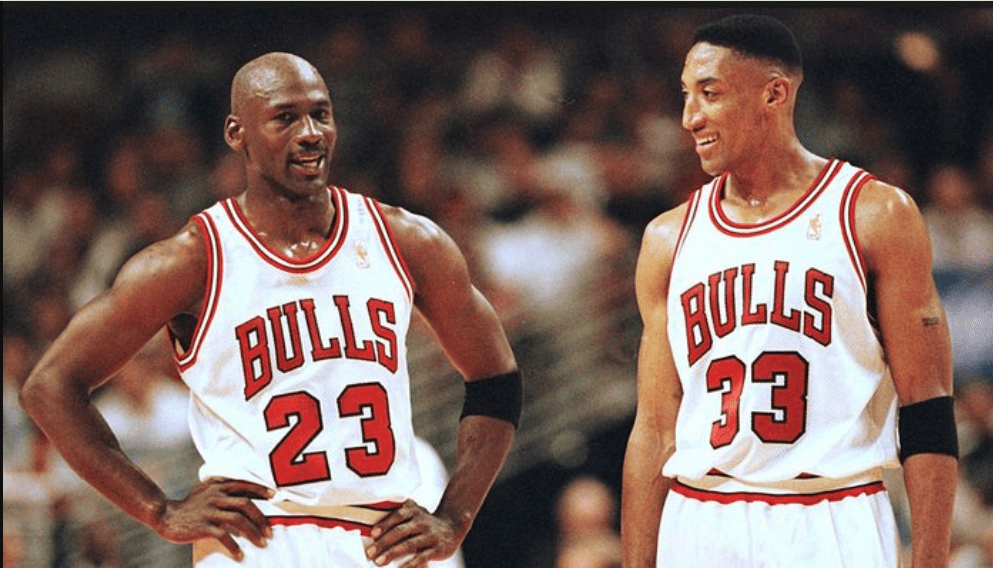
Retrospective analyses consistently praise Krause’s patience and foresight. Pippen’s eventual rise validates the decision, reinforcing the idea that elite talent requires strategic nurturing to reach its full potential. These narratives continue to influence how franchises approach player development and roster decisions, proving the lasting relevance of this 1990 episode.
Conclusion: The Importance of Patience, Strategy, and Complementary Talent
The story of Michael Jordan’s push to trade Scottie Pippen, and the Bulls’ decision to resist, remains a defining chapter in NBA history. It highlights the tension between superstar influence and front office strategy, the critical role of patience in player development, and the importance of building complementary talent around elite performers.
Scottie Pippen’s eventual rise validated Krause’s vision, contributing to a dynasty that shaped professional basketball for decades. This story underscores that championships are not won on individual talent alone they are built through foresight, disciplined player development, and strategic organizational decision making.
The Jordan Pippen episode remains a timeless lesson in leadership, vision, and the delicate balance between immediate desires and long term success. It is a testament to the importance of trust, patience, and strategic decision making in creating a legacy that endures across generations.