How a Simple Defensive Suggestion Became the Spark That Exposed the Clippers’ Deepest Cracks
The Los Angeles Clippers have dealt with pressure before, but nothing prepared fans for the stunning avalanche of reports surrounding Chris Paul and his abrupt separation from the team. What began as a seemingly standard in game defensive adjustment spiraled into one of the most complicated and revealing internal controversies the Clippers have faced since the Kawhi Paul George era began. According to Chris Haynes of NBA on Prime, the chaos began when Chris Paul reportedly told Kawhi Leonard to switch off Klay Thompson because Kawhi was struggling to keep up with the Warriors sharpshooter. What should have been a small moment between teammates turned into a chain reaction that exposed deeper frustrations, fragile egos, and an environment where leadership had become blurred, challenged, and ultimately broken.
For years, Chris Paul has been respected as one of the most cerebral players in NBA history a floor general with unmatched instincts and a deep understanding of defensive structure. But every locker room is different, and every hierarchy comes with its own politics. In Los Angeles, with Kawhi Leonard as the franchise cornerstone and Tyronn Lue commanding a strict culture of defined roles, Paul’s habit of adjusting coverages on the fly was not as welcome as it may have been elsewhere. That tension rose dramatically when Jeff Van Gundy, the Clippers assistant coach hired specifically to reshape the team’s defensive culture, confronted Paul directly during the game. According to the report, Van Gundy told CP3: “You might’ve had leeway in other places to change up defensive coverages, but you don’t have that leeway here.” Those words hit harder than the Clippers expected because they cut directly into who Chris Paul is at his basketball core.
The Kawhi Factor: Why This Incident Hit a Nerve and Shifted the Room
To understand why this moment blew up the way it did, one has to understand the weight Kawhi Leonard carries inside the Clippers organization. Even though he rarely speaks publicly, his role is unmistakably powerful. Kawhi is not just a superstar he is the center of gravity in every decision the Clippers make, from rotations to strategies to roster moves. So when Chris Paul gestured for Kawhi to switch off Klay Thompson, it wasn’t simply a suggestion. To some in the organization, it was interpreted as a critique of their franchise player’s motor, ability, or effort level.
Internally, sources have long whispered that Kawhi does not appreciate being publicly corrected, even in subtle in game moments. He prefers communication through coaches, through game plans, through structure. Chris Paul, however, thrives in chaos adjusting, reacting, orchestrating, and controlling the flow of the game with total authority. These are two brilliant minds who simply operate differently.
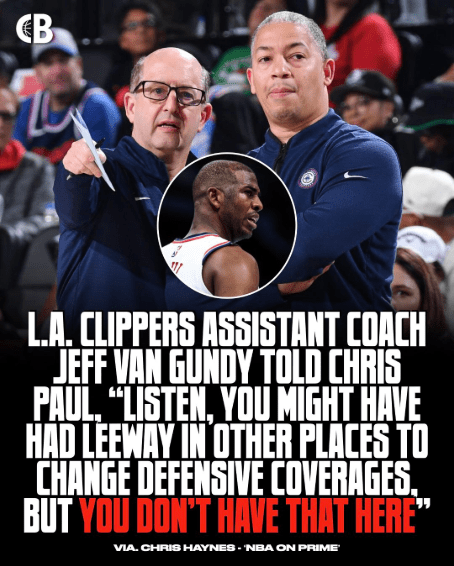
So when Kawhi struggled to stay attached to Klay around screens, and Paul made the call for a switch, he was doing what any veteran point guard would do. But in the Clippers’ internal framework especially with Jeff Van Gundy’s authoritative defensive system this improvisation was seen as stepping over a boundary rather than offering help. And that, according to multiple insiders, created visible tension on the bench, in the huddle, and eventually behind closed doors.
Jeff Van Gundy’s Intervention: A Flashpoint Moment That Defined the Season
Van Gundy’s message to CP3 wasn’t just blunt it was symbolic. The Clippers hired Van Gundy to bring order to a team that had long struggled with consistency, accountability, and on court discipline. For years, critics said the Clippers were talented but unpredictable, with too many quiet personalities and no loud locker-room enforcer to push them. Van Gundy was brought in to fill that leadership gap.
But leadership means establishing authority, and authority sometimes means confronting the biggest voices in the room. Van Gundy’s sharp statement “You don’t have that leeway here.” was a clear attempt to re-establish the chain of command. But in doing so, he challenged the identity of a player who built his entire career on reading and reacting. Chris Paul has commanded locker rooms from New Orleans to Los Angeles to Phoenix to Golden State. He has shaped defensive schemes, controlled offensive tempo, and molded rosters to fit his blueprint. To suddenly have his decision making minimized or restricted was not something he would take lightly.
The tone of Van Gundy’s comment also mattered. It wasn’t collaborative or strategic it was disciplinary. And to a veteran of Paul’s stature, it signaled a lack of respect, trust, or value. Teammates reportedly felt the shift in the air instantly. Some believed the coaching staff was asserting control too aggressively. Others felt Paul was overstepping. But everyone knew this: the relationship had been damaged in a way that would be difficult to repair.
Sent Home: How a Collection of Tensions Finally Reached an Unavoidable Breaking Point
The Clippers’ decision to send Chris Paul home stunned the NBA world. Veteran stars are rarely removed from the team unless something has gone deeply wrong behind the scenes. According to reports, this confrontation, along with several previous incidents, pushed the Clippers to a crossroads. It wasn’t just the defensive switch. It wasn’t just the comment from Van Gundy. It was a buildup of issues disagreements over coverages, chemistry conflicts, questions about roles, and simmering frustrations that had been quietly growing throughout the season.
Some within the organization felt Paul brought too much friction. Others believed the team was suppressing the leadership of the smartest basketball mind on the roster. But regardless of viewpoint, everyone recognized that the situation had become unsustainable. The heated exchange with Van Gundy was simply the spark that ignited the explosion.
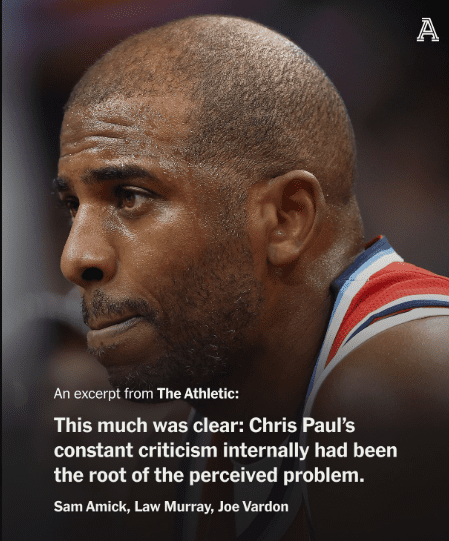
The timing also added a painful irony. The Clippers had just suffered a disappointing loss. The team was exhausted, reportedly stuck for nearly six hours at the Miami airport the previous day due to mechanical delays. Fatigue, frustration, and emotional strain were already at a breaking point. When tensions peaked, there was no patience left in the room to cool them down.
So the Clippers made the call: Chris Paul would step away from the team. And just like that, a partnership that once looked like a bold reunion between coach and former star turned into yet another chapter in the Clippers’ long history of unmet expectations and internal turbulence.
What This Means for the Clippers Going Forward and How the NBA Is Reacting
The reaction around the league was instant, dramatic, and divided. Some players privately voiced support for Chris Paul, saying a veteran of his caliber deserves respect and a voice. Others said coaches must be allowed to set structure and no player, no matter how experienced, should override that structure in the moment.
For the Clippers, the fallout is massive. Kawhi Leonard now faces questions about leadership and adaptability. Jeff Van Gundy faces questions about approach and communication. Tyronn Lue faces questions about control and player relationships. The entire organization faces questions about stability, chemistry, and whether their long-chased championship window is closing faster than expected.
Many fans also wondered whether there was already tension brewing beneath the surface tension worsened by Paul’s desire to finish his career with the Clippers, which now appears complicated at best and unlikely at worst. The franchise wanted structure. Paul wanted autonomy. And in the end, neither side got what they wanted.
This incident also reshapes the Clippers’ identity. A team once built on quiet confidence has now become the center of a storyline filled with confrontation, ego clashes, and leadership disputes. The entire situation has become a cautionary tale about mixing strong personalities, rigid systems, and high expectations in a pressure-cooker environment.
Conclusion: A Moment That Will Define the Season and Possibly Every Career Involved
This story may appear on the surface like a simple disagreement about defense, but in reality, it is a portrait of a franchise at a crossroads. It is about leadership who holds it, who shares it, and who is allowed to exercise it. It is about respect between coaches and players, between veterans and systems, between stars and role clarity. And above all, it is about identity whether the Clippers can reconcile their ambitions with the reality of their internal dynamics.
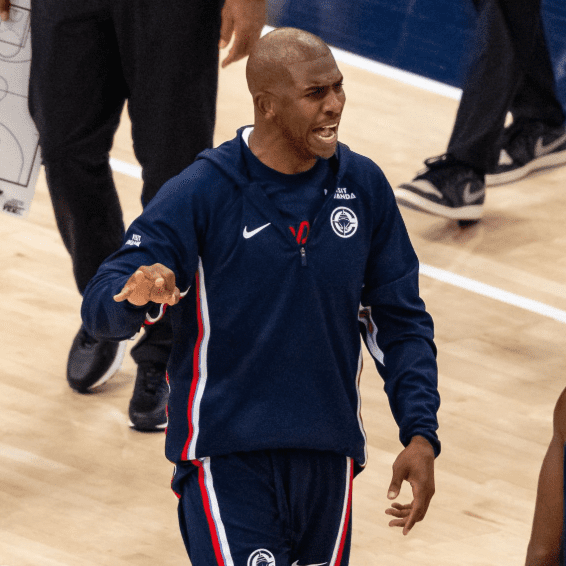
Chris Paul’s departure is not merely a roster decision. It is a seismic moment that exposes every fracture the organization has tried to hide. And as the NBA watches closely, one thing is clear: this is only the beginning of a much larger story.