DIGGS’ NIGHTMARE:
The image was perfect. Just months ago, Stefon Diggs stood at a podium, draped in the royal blue and silver of the New England Patriots, beaming as he held up his new jersey. The blockbuster trade from Buffalo was hailed as a masterstroke the lethal weapon quarterback Drake Maye desperately needed to resurrect the NFL’s most storied franchise. Diggs talked about legacy, about winning, about a fresh start.
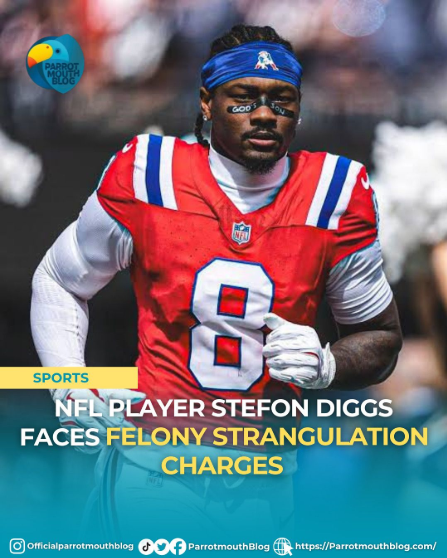
That fresh start has now exploded into a horrifying nightmare. According to multiple law enforcement reports, Stefon Diggs, the four time Pro Bowl wide receiver, has been charged with felony strangulation in Massachusetts. The charge, a severe felony that carries the potential for significant prison time, stems from a domestic incident alleged to have occurred early Tuesday morning at his residence in the Boston suburbs.
In the chilling hours that followed, the machinery of crisis management lurched into motion. Diggs’ high powered legal team, led by renowned attorney Alan Jackson, issued a terse statement proclaiming his client’s innocence and vowing to “vigorously defend against these baseless allegations.” Minutes later, the New England Patriots organization released its own carefully worded statement, acknowledging the “serious allegations” and stating they are “closely monitoring the legal process” while having “no further comment at this time.”
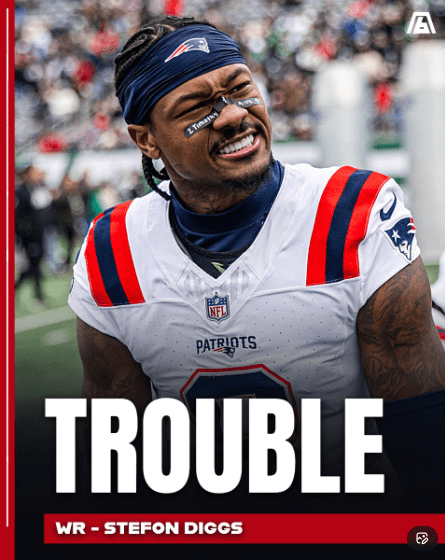
But the silence from Foxborough is deafening. The Patriots, a franchise already reeling from a dismal 5-11 season and now embroiled in the most serious off-field crisis since the Aaron Hernandez murder trial, are facing an existential threat to their fragile rebuild. A superstar acquisition, meant to be the cornerstone of their future, now faces the very real possibility of never playing another down for the team.
HOW DID IT COME TO THIS? AND WHAT HAPPENS TO A $100 MILLION FRANCHISE WHEN ITS BRIGHTEST STAR IS ACCUSED OF A VIOLENT FELONY? This is no longer a story about football. This is a story about the shocking collapse of a career, the terrifying weight of criminal allegations, and a team that may have just seen its future strangled in an instant.
“BASELESS ALLEGATIONS”: DECODING THE LEGAL BATTLE AHEAD
The charge of felony strangulation or suffocation under Massachusetts law (Chapter 265, Section 15D) is among the most serious in the domestic violence statute. It is not a simple assault charge. It alleges an act that “impedes the normal breathing or circulation of blood by applying substantial pressure on the throat or neck.”
Conviction on such a charge can result in up to five years in state prison, or up to two-and-a-half years in a house of correction and a fine of up to $5,000. The legal standard is high, but so are the stakes. This charge alone will trigger an immediate investigation by the NFL under its Personal Conduct Policy, which operates independently of the courts.
Diggs’ attorney, Alan Jackson, is a legal heavyweight known for defending high profile clients. His statement was a classic first strike: deny, discredit, and delay. “Mr. Diggs is innocent of these charges,” Jackson stated. “We have faith that once all the facts are presented, he will be fully exonerated. We will not be trying this case in the media.”
This language is a fortress. “Baseless allegations” attacks the credibility of the accuser. “Faith in the facts” positions Diggs as the wronged party waiting for truth to prevail. The vow not to try the case in the media is a directive to the public and likely to Diggs himself to stay silent, as any public comment can be used against him.
The immediate legal steps are procedural but critical. Diggs will be arraigned, where the charges will be formally read. His legal team will likely argue for minimal bail, given his stature and lack of a prior criminal record. They will then begin the arduous process of discovery, examining police reports, 911 call logs, medical records (if any), and witness statements. Their goal will be to find inconsistencies, challenge the evidence, or potentially negotiate a plea to a far lesser charge to avoid a trial and the public spectacle that would accompany it.
But the court of public opinion is already in session. And in that arena, the damage is already catastrophic.
THE PATRIOTS’ IMPOSSIBLE CALCULUS: FOOTBALL, MORALITY, AND A $100 MILLION PROBLEM
Inside the halls of Gillette Stadium, a state of emergency has been declared. The Patriots’ statement was a masterpiece of corporate neutrality, but it belies sheer panic. The organization is trapped in a vise, squeezed between moral obligation, competitive necessity, and financial calamity.
Let’s examine the cold, hard financials of this disaster: The Patriots traded a first-round pick (No. 22 overall) to the Buffalo Bills to acquire Diggs. They then immediately signed him to a four-year, $104 million contract extension, with $62 million in guaranteed money. For the 2025 season, Diggs carries a $31 million cap hit. He is the highest-paid player on the team.
The NFL’s Personal Conduct Policy gives Commissioner Roger Goodell broad power to place a player on the Commissioner’s Exempt List, effectively a paid administrative leave, while the legal process plays out. The Patriots cannot cut Diggs without absorbing a historic dead money salary cap penalty that would cripple their roster building for years. Trading him is impossible; no team will touch this contract or this liability.

Their options are a horrifying menu of lose lose scenarios:
- Keep Him Active: A public relations firestorm, a locker room distraction of nuclear proportions, and the potential for league intervention.
- Release Him: Swallow over $40 million in dead cap space, torpedoing the team’s finances and admitting a historic franchise mistake.
- Hope for a Quick Resolution: A fantasy. These cases take months, if not years. The 2025 season will be over long before a trial concludes.
The human element in the locker room is just as fraught. What do teammates say to him? How does head coach Jerod Mayo, a first year coach trying to establish a culture, address this? The Patriots spent all offseason selling a new era of accountability and unity. One criminal complaint has vaporized that narrative.
This isn’t just a player in trouble. This is an institution’s worst nightmare a max investment, face of the franchise player accused of a violent felony before he even plays a meaningful down for them. The Aaron Hernandez ghosts, which the organization has spent a decade trying to exorcise, are now screaming back to life.
A PATTERN OF VOLATILITY? CONNECTING THE DOTS IN DIGGS’ PAST
For those who have followed Diggs’ career, the news is shocking but perhaps not entirely surprising. While he has no prior criminal record, his tenure in the NFL has been marked by intense emotional outbursts and public friction.
In Buffalo, the relationship deteriorated into a slow motion public breakup. There were the infamous sideline blowups with quarterback Josh Allen, captured by cameras for the world to see. There was his mysterious, unexcused absence from the first day of mandatory minicamp in 2024, which Bills GM Brandon Beane called “very concerning.” There were the cryptic social media posts, the cleared-out locker, and the growing sense that his intense, often negative energy was becoming untenable.
The Patriots, in their desperation for a star, viewed this as competitive fire. They believed a change of scenery, a massive contract, and the weight of the Patriots’ legacy would channel that intensity positively. They bet $104 million that the problems in Buffalo were about Josh Allen, Sean McDermott, or the Buffalo environment not about Stefon Diggs himself.
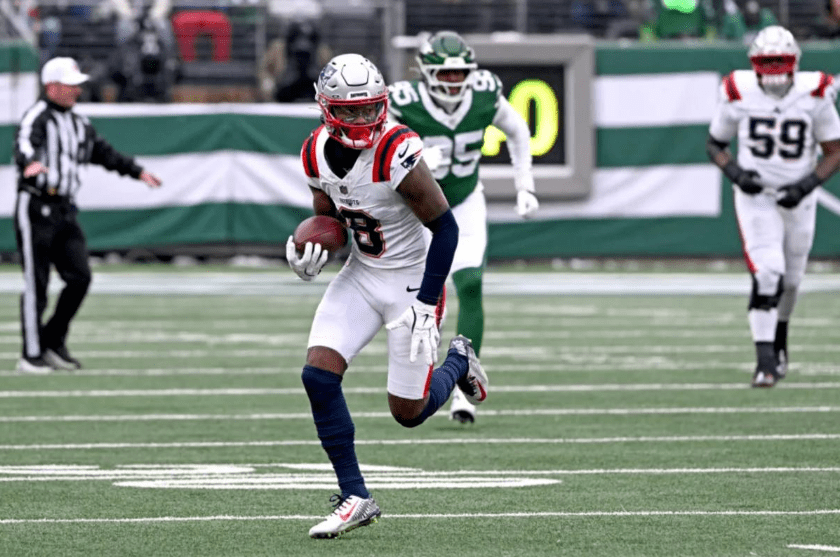
This felony charge suggests they may have bet wrong in the most catastrophic way imaginable. The “competitive fire” that manifests as yelling on a sideline is a universe apart from the alleged criminal violence of domestic strangulation. But it forces a re examination of his entire behavioral pattern: is this an isolated, horrific incident, or the terrifying escalation of a long-simmering volatility that teams chose to ignore for the sake of touchdowns?
The NFL has a dismal history of handling domestic violence cases, from Ray Rice to Deshaun Watson. The league will be under immense pressure to act swiftly and decisively, regardless of the legal presumption of innocence. Diggs may find himself on the exempt list within days, becoming a $31 million spectator.
THE FALLOUT: RUINED LEGACIES AND A FRANCHISE IN FLAMES
The collateral damage is vast and still unfolding.
For Stefon Diggs, this charge threatens everything. At 31 years old, he was in the late prime of a Hall of Fame caliber career. A conviction would not only mean prison time but an almost certain lifetime ban from the NFL. Even if he is exonerated, the stain is permanent. His marketability is zero. His reputation is shattered. The “fresh start” is now a forever cautionary tale.
For the New England Patriots, this is a franchise-altering catastrophe. The Drake Maye era, which was supposed to be ushered in with a top receiver, is now shrouded in this scandal. The team’s rebuild is set back indefinitely. The fanbase is horrified and disillusioned. Owner Robert Kraft, who prides himself on the Patriots’ “brand” and community standing, is facing a crisis that makes Deflategate look like a parking ticket.
For the victim and the family involved, there is only trauma a private horror now exposed to the glaring lights of a national scandal. Their lives are changed forever.
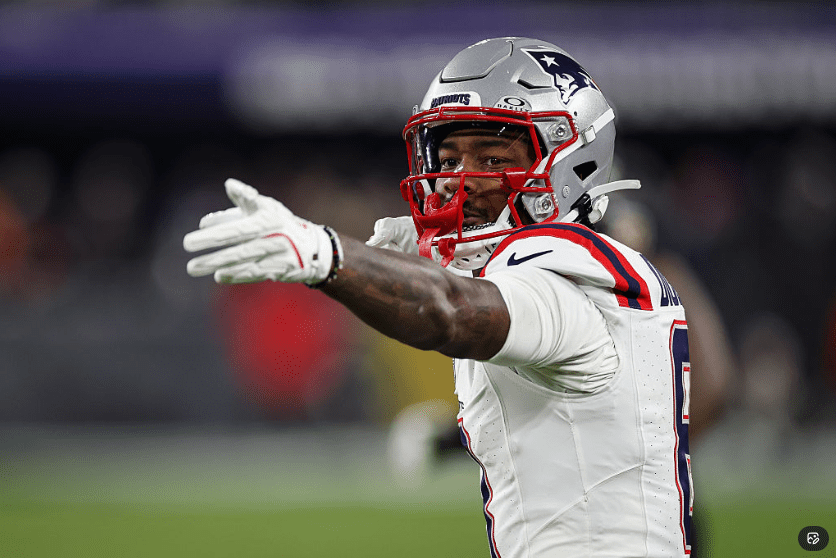
Two statements were released today. One from a lawyer. One from a team. But neither could contain the explosion that has just rocked the NFL. A season hasn’t even begun, yet it may already be over for the New England Patriots. They didn’t just acquire a wide receiver. They acquired a ticking time bomb that has now detonated in the heart of their franchise.
The legal process will grind on. The NFL will investigate. But some wounds never heal. Some mistakes can’t be undone.
Can any team ever justify investing franchise-altering resources in a player with a history of volatile behavior, or does the pursuit of talent always blind organizations to the red flags until it’s too late?