THE POST THAT BECAME THE PREGAME SHOW
The Miami Heat were in Denver. The narrative was set: a tough road test against the defending champions, a chance to measure themselves against Nikola Jokić, a pivotal early-season game. The basketball world was tuned in for tip-off. But hours before the ball went up, a different kind of tip-off happened. It didn’t happen on a court.
It happened on a timeline. Adult film star and social media provocateur Celina Powell fired a tweet into the digital ecosystem that would instantly reroute all conversation. “Basketball games are more fun when you f**d the player before the game lol gooo #2,” she wrote. A follow-up made the target clearer, referencing a specific sexual act and stating, “All I’m saying is my throat the reason the heat will beat the nuggets tomorrow yall lol.”
The player in question, by the clear reference to jersey number #2, was Miami Heat guard Terry Rozier. Instantly, the entire framing of the night evaporated. The game was no longer about Jokic vs. Bam, or Murray vs. Herro. It was now, irrevocably, about a viral claim and the shadow it cast.

The basketball became secondary. Rozier’s 15 points, 4 assists, and 3 rebounds in the eventual 135-122 loss weren’t just stats; they were evidence in a public trial that had begun without a judge, jury, or any semblance of facts. The social media reaction was a firestorm of memes, jokes, moral outrage, and instant psychoanalysis. “No wonder they lost!”
“His head wasn’t in the game!” “She’s just clout chasing!” “Why is this even news?” The game hadn’t even started, and the story was already written: a tale of distraction, lack of focus, and the perils of fame. This is the modern NBA scandal: not a leaked tape or a police report, but a single, unverified post that travels faster than truth and lands with the impact of a sledgehammer on a player’s reputation.
THE CELINA POWELL PLAYBOOK: A FAMILIAR, VIRAL CYCLONE
To understand why this post detonated with such force, you have to understand the source. Celina Powell is not a random person. She is a veteran of the viral allegation industry. Her name is synonymous with a specific, recurring plotline in the drama of professional sports: the public entanglement with an athlete, followed by a media blitz, followed by denial, followed by a fade into the background until the next target emerges.
She has a documented history of making claims about relationships with high-profile athletes across the NFL and NBA, often using social media as her primary megaphone. She doesn’t go through agents or publicists; she goes direct-to-consumer, to the fans.
This history creates a predictable, almost cynical, reaction cycle. For the public, it’s a familiar dance:
- The Bomb: A provocative, often graphic, claim is made on social media.
- The Inferno: The post goes viral. Fans, media outlets, and gossip blogs pick it up. The athlete’s name trends.
- The Debate: The world splits into factions. Team “She’s a Clout Chaser” vs. Team “Where There’s Smoke, There’s Fire” vs. Team “This is None of Our Business.”
- The Aftermath: The athlete either denies it, stays silent, or issues a generic statement through a lawyer. The story lacks traditional evidence (photos, messages) to “prove” it in a conventional sense, but also lacks a definitive rebuttal that satisfies the public.
- The Fade: A new scandal emerges, and the cycle resets.

Powell’s method bypasses all traditional gatekeepers. There is no press conference, no carefully worded statement from a team PR rep. It is raw, unfiltered, and designed for maximum engagement in the economy of attention. Whether the claims are true or false becomes almost irrelevant to the immediate impact. The impact is the distraction. The impact is the stain on the player’s professional focus. The impact is the meme that lives forever. In the Rozier case, the playbook executed perfectly.
The bomb dropped. The inferno ignited. And Terry Rozier, preparing for a game against the Denver Nuggets, was suddenly defending a part of his life that had nothing to do with basketball, in a court of public opinion that has no rules of evidence.
THE “DISTRACTION” NARRATIVE: WHEN FANS BECOME COACHES AND PSYCHOLOGISTS
The most immediate and damning consequence of a post like this is the instant birth of the “distraction” narrative. The moment Powell’s tweet went live, a segment of the fanbase and inevitably, some talking heads immediately connected it to Rozier’s upcoming performance.
The logic is crude but powerful: if this claim is true, his mind couldn’t possibly have been on basketball. He was physically or emotionally depleted. His focus was compromised. Therefore, if he plays poorly, this is the reason. If the team loses, this is the reason.
This narrative is incredibly seductive and equally toxic. It reduces the complex, high-pressure reality of professional sports to a simple morality play: purity leads to victory, impurity leads to defeat. It ignores a million other factors—the quality of the opponent (the defending champs), the difficulty of playing in Denver’s altitude, the strategic matchups, simple variance.
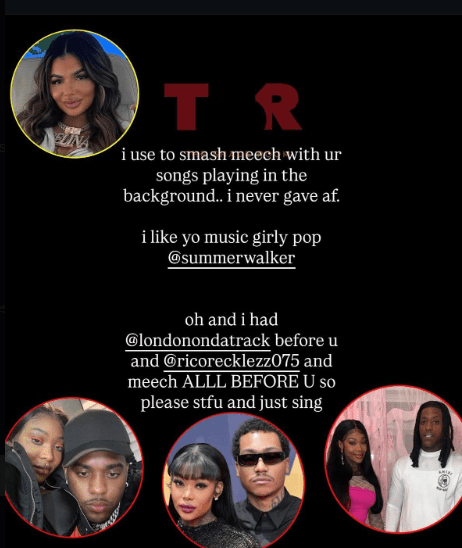
It allows fans to play armchair psychologist and coach, diagnosing a player’s mental state from thousands of miles away based on a tweet they didn’t write. When the Heat lost, the “I told you so” crowd was already primed. Rozier’s 15 points weren’t seen as a decent contribution in a losing effort on the road; they were seen as proof of a distracted mind.
His plus/minus, his defensive rotations, every missed shot was filtered through the lens of the pre-game scandal. This is the unfair burden placed on the athlete: they are now playing two games simultaneously one on the court against the Nuggets, and one in the public sphere against a narrative of unprofessionalism.
THE IMPOSSIBLE POSITION OF THE MODERN ATHLETE: DENY, IGNORE, OR ENGAGE?
So, what is Terry Rozier, or any athlete in this position, supposed to do? He is thrust into a no-win scenario with only bad options.
Option 1: The Public Denial. He could issue a statement: “These claims are completely false and defamatory.” This seems straightforward. But in the social media age, a denial often doesn’t extinguish the fire; it adds oxygen. It legitimizes the story as something worthy of a formal response.
It leads to follow-up questions, demands for evidence of the denial, and endless cycles of “he said, she said.” It pulls him further into the drama he wants to escape. It also, unfairly, forces him to address the most intimate parts of his private life in public to protect his professional reputation.
Option 2: The Silent Treatment. He can say nothing. He can block out the noise, focus on basketball, and let it fade. This is the approach often recommended by teams and agents. But silence is interpretable. To the public, silence can be read as guilt, as avoidance, or as arrogance.
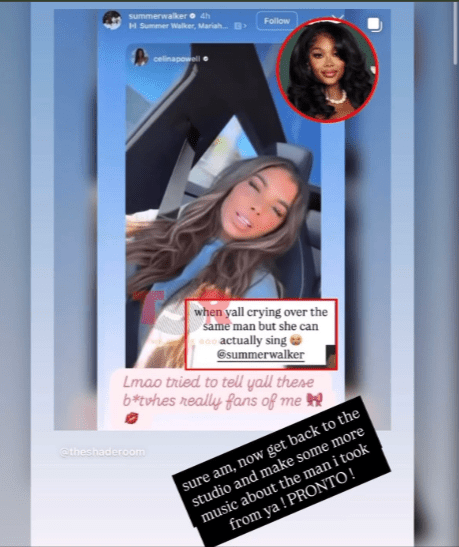
It does nothing to stop the meme machine or the gossip blogs. It leaves the narrative entirely in the hands of the accuser and the online mob. For a player’s mental health, the weight of silent scrutiny can be heavier than the heat of a public fight.
Option 3: The Legal Threat. He could have his lawyers send a cease-and-desist or threaten a defamation lawsuit. This is a nuclear option that is costly, time-consuming, and again, draws more attention to the story. It also enters a complex legal battlefield where “truth” is a defense, and the discovery process could force even more private details into the open.
THE TEAM DYNAMICS: A LOCKER ROOM POLLUTED BY OUTSIDE NOISE
The fallout doesn’t stop with one player. It seeps into the locker room, a place built on trust, focus, and collective purpose. When a teammate is at the center of a viral scandal, it creates an unspoken tension. Do players joke about it to break the ice? Do they offer private support? Do they ignore it completely? The coaching staff now has to manage not just game strategy, but the psychological state of a player under a bizarre and intense form of public scrutiny.
For the Miami Heat, an organization with a famously strong “culture” built on discipline and professionalism, this was an unwelcome intrusion. The Heat pride themselves on being a “noise-cancelling” team. But some noise is too loud to cancel. It forces the PR staff into overdrive, fielding calls from reporters they’d rather not take. It becomes a topic in pre-game meetings, if only to say, “Ignore it, focus on the game.”
THE BIGGER PICTURE: THIS IS THE NEW NORMAL FOR FAME
The Terry Rozier story is not an anomaly. It is a case study in the new normal of fame in the digital age. The barrier to entry for impacting a celebrity’s narrative is zero. Anyone with a phone and a following can launch a claim that will ricochet around the world in minutes.
Traditional media, in its scramble for clicks, often becomes an amplifier rather than a filter, reporting on the allegation as a story in itself. The lines between journalism, gossip, and social media manipulation are irreparably blurred.
For the NBA, this presents a unique challenge. The league sells its players as heroes, as role models, as characters in a global drama. But the same connectivity that builds their brands also makes them hyper-vulnerable to attacks that have nothing to do with their athletic skill.

The league’s personal conduct policies are designed for tangible misconduct arrests, fights, failed tests. They are not equipped for the nebulous, legally murky world of unsubstantiated social media allegations. The damage is done in the court of public opinion long before any league office could possibly intervene.
This environment forces a brutal calculation on players. Your professional success opens you up to a level of intrusive, unregulated scrutiny that can weaponize your private life against your public career at any moment. Your value to your team can be undermined by a tweet from someone you may or may not know.
FINAL VERDICT: THE GAME WAS LOST, BUT THE NARRATIVE WAS STOLEN
The Denver Nuggets beat the Miami Heat 135-122 on the court that night. But in the arena of public perception, a different contest was already over by tip-off. The real victory wasn’t secured by Nikola Jokić’s triple-double or Jamal Murray’s scoring. The victory belonged to the power of a narrative unverified, messy, and human to overshadow the sport itself.
The story of that game is no longer about basketball. It’s about the uncomfortable, inextricable link between an athlete’s private life and their public performance. It’s about the speed at which rumors become reality, and the lasting damage of a distraction that can’t be guarded.
Terry Rozier will have other games, other seasons. But this episode stands as a monument to a new kind of pressure in professional sports: the pressure of knowing that your career, your focus, and your reputation can be put on trial by the world at any moment, for reasons that have nothing to do with how you play the game. And in that trial, there are no rules, no defense, and no true verdict only the endless, echoing noise of the crowd.