“‘No Shade, But the Blacker the Berry…’ Angel Reese’s One-Line Clapback That Exposed America’s Beauty Double Standards and Shook Sports Culture to Its Core”
Angel Reese did not raise her voice. She did not rant. She did not write a thread explaining herself. She did not tag anyone or name names. Instead, with a single sentence that carried decades of cultural weight, Reese turned a lazy internet comparison into one of the most revealing moments in modern sports discourse.
“No shade, but the blacker the berry, the sweeter the juice.”
In an era where athletes are coached to sanitize their personalities and celebrities are trained to deflect uncomfortable conversations, Reese did the opposite. She spoke plainly, confidently, and without apology. What followed was not just debate, but exposure exposure of how deeply beauty standards, race, desirability, and media framing are still entangled in sports and entertainment.
The comparison to Sydney Sweeney was never really about either woman. It was about why the comparison existed at all.
HOW A VIRAL COMPARISON REVEALED AN OLD PROBLEM IN A NEW ERA
The internet thrives on shortcuts. Comparisons are its favorite language. Instead of understanding people on their own terms, social media reduces them to equivalents. When Angel Reese began appearing more frequently in fashion campaigns, lifestyle content, and viral conversations beyond basketball, the algorithm did what it always does: it searched for a familiar frame.
Sydney Sweeney became that frame.

Sweeney, a Hollywood actress whose appearance is constantly discussed online, represents a very specific, very traditional standard of beauty that has long dominated mainstream attention. By tying Reese to that image, some believed they were offering a compliment. Others saw it as harmless fun. But beneath the surface, the implication was unmistakable.
It suggested that Reese’s visibility required translation.
That her appeal needed validation through resemblance.
And that is where the line was crossed.
ANGEL REESE’S RESPONSE WASN’T AN ATTACK IT WAS A CORRECTION
What made Reese’s response so powerful is that it did not punch downward or sideways. It punched through the conversation entirely. Her words weren’t about Sydney Sweeney. They weren’t even about comparison. They were about ownership.
By invoking a phrase rooted in Black cultural pride, Reese reminded everyone that beauty is not universal in one direction. It is not hierarchical. And it does not need approval from historically dominant standards to be real.
Her tone mattered just as much as her words. There was no anger. No defensiveness. Just certainty.
That certainty is what unsettled people.
WHY CONFIDENT BLACK WOMEN STILL MAKE PEOPLE UNCOMFORTABLE
Angel Reese exists in a space that has always been policed differently. Confidence in women is tolerated when it is palatable. Celebrated when it is non-threatening. But when confidence is paired with Blackness, visibility, and independence, the reaction changes.
Reese has been called arrogant for celebrating wins, emotional for expressing passion, divisive for refusing to shrink herself. These criticisms follow a familiar pattern that predates social media by generations.
Her clapback disrupted that pattern.

She didn’t soften her message. She didn’t over-explain it. She didn’t add disclaimers. That refusal to cater is precisely why the response resonated so deeply and why it angered others.
THE DOUBLE STANDARD BETWEEN PRAISE AND PERMISSION
One of the most uncomfortable truths revealed by this moment is how often Black women are praised conditionally. Their beauty is acknowledged when it aligns closely enough with Eurocentric norms. Their confidence is accepted when it does not challenge comfort.
Angel Reese rejected those conditions.
By doing so, she forced the conversation out of its safe lane. People who were used to passive acceptance were suddenly confronted with active self-definition. That shift is jarring, especially for audiences unaccustomed to being challenged by athletes.
WHY THIS MOMENT TRANSCENDS SPORTS ENTIRELY
This was not just a basketball story. It was not even just a celebrity story. It was a cultural checkpoint. Reese’s response arrived at a time when athletes are no longer just performers, but symbols, brands, and voices.

Young fans, particularly young Black women, saw someone who looked like them refuse to dilute herself for validation. Others saw a challenge to assumptions they hadn’t realized they carried.
That is why the reaction was so intense.
ANGEL REESE’S BRAND WASN’T DAMAGED IT WAS SOLIDIFIED
Contrary to predictable backlash narratives, Reese’s response did not hurt her image. It clarified it. Brands do not invest in authenticity accidentally. Audiences do not connect with uncertainty.
Reese’s confidence is not a liability. It is her leverage.
In a media landscape desperate for real personality, her willingness to stand firmly in who she is separates her from those who perform relatability instead of living it.
THE INTERNET’S REACTION SAID MORE THAN THE QUOTE EVER COULD
Supporters called it iconic. Critics called it unnecessary. Neutral observers tried to flatten it into drama. But every reaction served the same purpose: amplification.
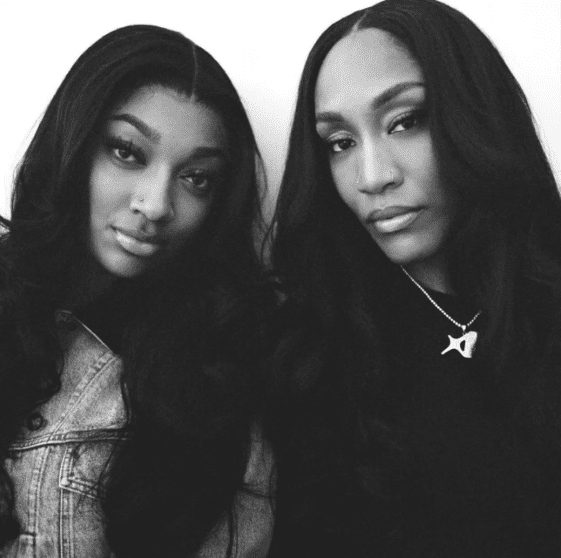
The louder the debate became, the clearer Reese’s point was proven. The discomfort was not about the words. It was about what they exposed.
THE LEGACY ANGEL REESE IS QUIETLY BUILDING
Angel Reese is not just playing a game. She is navigating a space where representation, economics, and perception collide. Every response she gives becomes part of a larger story one about agency, identity, and refusal.
Years from now, this moment will not be remembered as a clapback. It will be remembered as a line drawn.
FINAL WORD: ANGEL REESE DOES NOT NEED COMPARISON TO BE ICONIC
Angel Reese is not the “next” anyone. She is not an alternative version of someone else. She is not a derivative success story.
She is the standard in her own lane.
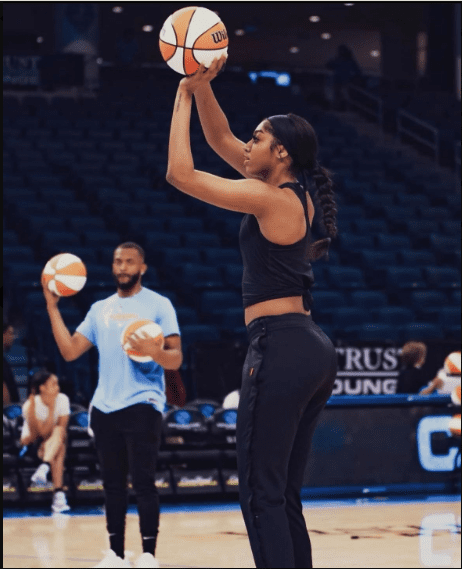
And with one calm, culturally loaded sentence, she reminded the world that some people don’t need permission to define themselves.
They already know who they are.