A FRANCHISE STAR’S BLUNT REALITY CHECK EXPOSES MINNESOTA’S DEEPEST FLAW
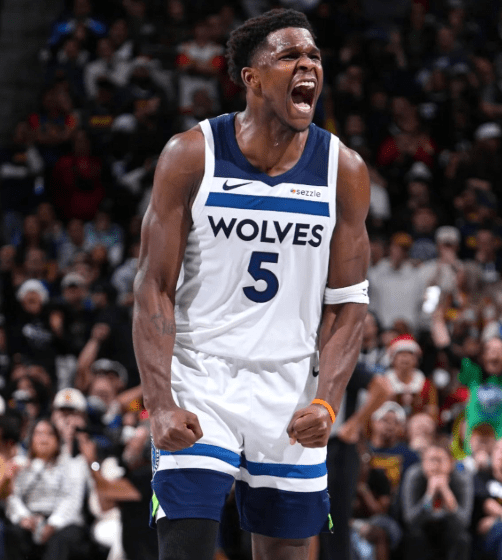
The boos at the Target Center on Saturday night weren’t just loud; they were deafening, deserved, and damning. The Minnesota Timberwolves, a team with championship aspirations, had just been thoroughly outplayed and embarrassed on their home floor by a Brooklyn Nets squad that entered the night with a dismal 9-19 record. The final score, a 123-107 shellacking, told only part of the story. The real narrative unfolded in the post-game interview room, where franchise cornerstone Anthony Edwards didn’t just face the music he conducted the orchestra of criticism himself.
“We got boo’d and s* by the fans today,”** Edwards stated, his frustration palpable. “I’m with the fans, I would have boo’d us too, but yeah, lack of energy. I don’t know what’s going on, I guess this is just Timberwolves basketball.”
With those jarringly honest words, Edwards held up a mirror to his team and didn’t like the reflection. It was more than a comment on one bad game; it was a scathing indictment of a maddening pattern that threatens to derail a season of immense promise. This wasn’t a star making excuses. This was a leader issuing a public cry for help, and the entire NBA was listening.

WHY WOULD A SUPERSTAR PUBLICLY AGREE WITH FANS BOOING HIS OWN TEAM? The answer reveals a painful truth about a talented squad stuck in a cycle of complacency, and a young leader tired of giving the same old answers after the same old letdowns.
THE UNRAVELING: HOW A CONTENDER FELL APART AGAINST A LOTTERY TEAM
The loss to the Nets wasn’t a case of a hot shooting night by an opponent. It was a systematic breakdown in every facet of the game that Minnesota is supposed to pride itself on. The Timberwolves, who led 63-62 at halftime, were completely blindsided in the third quarter. The Nets exploded for 36 points while holding Minnesota to just 23, turning a close game into a decisive rout.
The statistics from the collapse are a horror show for a team built on defense and physicality:
- Paint Annihilation: The Nets outscored the Wolves 66-46 in the paint, a staggering margin that speaks to a complete lack of interior resistance.
- Shooting Gallery: Brooklyn shot a scorching 54.8% from the field, while Minnesota managed just 44.6%.
- Rebounding Deficit: The Wolves were also out rebounded 39-34, losing the effort battle on the glass.
Head coach Chris Finch didn’t mince words in his assessment, specifically calling out the defensive effort of four time Defensive Player of the Year Rudy Gobert. “We didn’t play with physicality… Rudy was too far down the floor. We gave them too much of a runway,” Finch said. The Nets, led by Cam Thomas’s 30 point return from injury, took that runway and flew straight to the rim, unimpeded.

THE CONTEXT MAKES THE LOSS EVEN MORE GALLING. This wasn’t a tired team at the end of a long road trip. Just 24 hours earlier, the Wolves had played an overtime thriller against the Denver Nuggets, losing 142-138 in a game where Edwards dropped 44 points in a heroic effort. To follow that competitive fire with such a flat, lifeless performance is the very definition of the inconsistency that drives fans and their best player crazy.
“THIS IS JUST TIMBERWOLVES BASKETBALL”: THE SIN OF INCONSISTENCY
Edwards’ post game quote cuts deep because it echoes a frustrating franchise history, but it also highlights a very current, very real problem for this specific roster. This is a team that, just one week prior, beat the defending champion Oklahoma City Thunder. They have the talent to compete with the league’s best, as proven in their overtime battle with Denver.
Yet, they have repeatedly shown a baffling ability to play down to the level of inferior competition. Local analysis has noted that despite a strong record, the Wolves’ achievements this season “simply haven’t been that admirable,” often playing with a “collective mindset that permits mediocrity”. They have feasted on a soft early schedule, but as one reporter noted, their “gaudy but inconclusive won lost record won’t be legitimized, or exposed, until the parade of cupcakes… gives way to more formidable opposition”.
THE WOLVES ARE STUCK IN A DANGEROUS CYCLE:
- Play up to elite competition (see: Thunder, Nuggets).
- Play with lackadaisical energy against lesser teams (see: Nets, Kings).
- Express frustration and vow to change.
- Repeat.
Edwards himself seems trapped in this loop. “Man, I don’t know, it be the same answers every time. I don’t know, we got to change something. I don’t know what it is,” he lamented after the Nets loss. This isn’t a leader with a plan; it’s a superstar admitting he’s out of solutions, and that might be the most alarming signal of all for Minnesota’s front office.
Coach Finch delivered the perfect rebuttal to his star’s confusion: “Acknowledging you have a problem is certainly the first… But if you’re really self aware, you’ll do something about it.” The question now is whether this team possesses that level of self awareness.
THE ROAD AHEAD: RECKONING OR RUIN?
The Timberwolves stand at a critical juncture. At 20-12, their record is still strong, but their reputation is fraying. Edwards’ very public airing of grievances has thrown down a gauntlet within his own locker room. This moment will either forge a tougher, more consistent unit or expose irreparable cracks in their foundation.
The schedule offers no refuge. The team embarks on a four game road trip, and the gauntlet of tough opponents they’ve avoided is now directly ahead. There will be no more “cupcakes” to feast on. Every night will demand the “readiness, intensity and focus” that has been so elusive.
If the effort and energy don’t change, the roster might. The NBA trade deadline is February 5th, and as one report bluntly stated, “If the Timberwolves can’t find an answer to the lack of energy described by Edwards soon, the team could potentially look to shake up the roster.” The core of Edwards, Karl Anthony Towns, and Rudy Gobert has had multiple seasons to prove it can work. Patience in Minnesota is we aring thin.
Anthony Edwards took the unusual and brave step of validating his fans’ anger. He stood with them instead of against them. But agreement is not a solution. Leadership requires turning that shared frustration into tangible change on the court.

The “Ant” era in Minnesota was supposed to be about climbing to the top of the NBA mountain. Right now, his most famous quote is an admission that his team is still stuck in the same old valley. The path they choose next will define their season, and perhaps, Edwards’ legacy in the Twin Cities.
Can Anthony Edwards transform from the spokesperson of the problem into the architect of the solution, or is “Timberwolves basketball” a fate even he cannot change?