FROM ZERO TO VILLAIN: THE UNSTOPPABLE, UNLOVABLE, AND UNAVOIDABLE RISE OF DRAYMOND GREEN
HOW HATE BECAME HIS GREATEST WEAPON
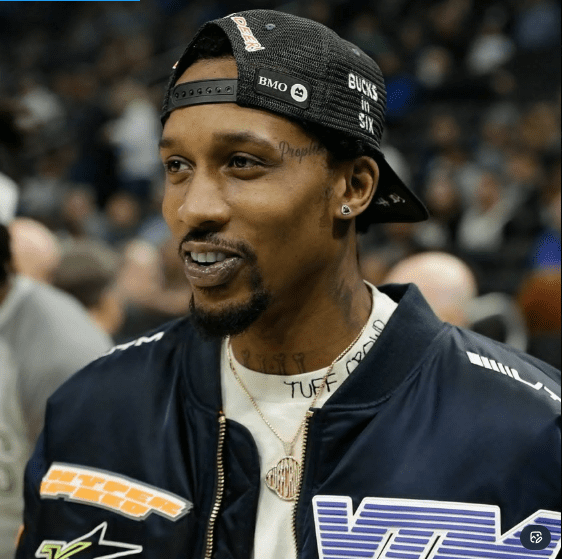
The declaration was designed to detonate. On the Gil’s Arena podcast, former NBA guard Brandon Jennings leaned into the microphone, surrounded by skeptical ex-players, and unleashed the take he knew would ignite a firestorm. “Draymond Green is better than Dennis Rodman.” The reaction was immediate. Kenyon Martin and Rashad McCants erupted. Voices raised. Fingers pointed. The classic, unwinnable barbershop debate was on.
But this argument wasn’t really about Rodman.
It was about the man whose name was invoked to start the fight. The man who, for over a decade, has perfected the art of being the center of attention, even especially when he’s not in the room. The clip wasn’t a basketball analysis; it was a testament to Draymond Green’s inescapable presence in the NBA’s cultural bloodstream. In that moment, Jennings wasn’t comparing two defenders. He was pouring gasoline on the perpetual flame that is Draymond’s career.
This is why Draymond always ends up in the middle of chaos. He doesn’t stumble into controversy. He courts it. He engineers it. A podcast argument here. A practice punch there. A stomp, a chokehold, a screamed obscenity at a referee each incident is another log on the fire, ensuring the spotlight never dares to wander too far. The basketball world claims fatigue. They say they’re sick of his antics. Yet, they stop. They watch. They dissect. They argue. They click. Every single time.
Draymond Green has accomplished the unthinkable: he has weaponized his own villainy, transforming universal disdain into undeniable relevance. He is the player you love to hate, the teammate you’d kill for, the analyst who might snap, and the provocateur who guarantees drama. In an entertainment league desperate for characters, he is the most compelling, frustrating, and captivating one of his generation.
BUT HOW DID A SECOND-ROUND PICK WHO DOESN’T SCORE BECOME THE MOST TALKED-ABOUT, DEBATED, AND REVILED PLAYER OF HIS ERA? This isn’t a story about stats or championships. It’s a story about identity, perception, and the brutal calculus of modern fame. It’s the story of how Draymond Green realized that in the 21st-century NBA, being hated is far more powerful than being ignored.
THE BLUEPRINT: FORGING A MONSTER FROM REJECTION
People forget how Draymond became this guy. His origin story is written in slights and snubs, the kindling for a rage that would later fuel a dynasty.
He arrived at Michigan State as an overweight, undersized tweener—too slow for a wing, too small for a post. His game was built on sheer will, basketball IQ, and a motor that never quit. He was the heart of Tom Izzo’s program, a leader who outworked everyone. Yet, the NBA draft is a cold, clinical process that values prototypes over passion. In the 2012 Draft, teams saw a 6’6″ forward without a clear position or elite athleticism. They heard the questions: “What is he?”
Thirty-four names were called before his. Thirty-four players deemed to have more potential, more polish, more promise. The Golden State Warriors selected him 35th overall, a compensatory pick at the top of the second round. That moment the humiliation of the green room, the silent phone, the long walk of shame didn’t break Draymond Green. It built him. It provided the foundational narrative of disrespect that he would weaponize for the next thirteen years.
In Golden State, he found a perfect ecosystem for his unique pathologies. He wasn’t joining a superteam; he was joining a young, losing franchise with a sharpshooting backcourt in Stephen Curry and Klay Thompson. They needed a defender. A enforcer. Someone to do the dirty work. Draymond didn’t just accept the role; he expanded it into an entire identity.
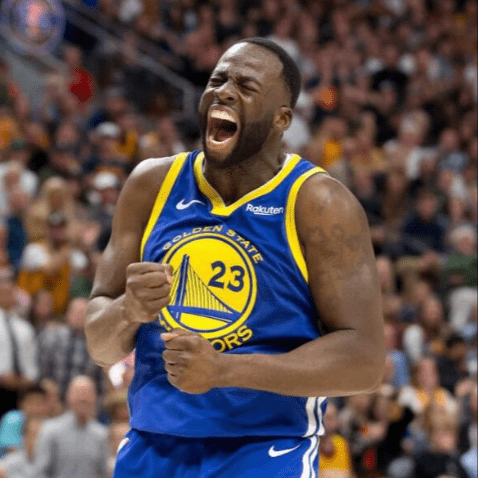
His value was never in the box score; it was in the chaos he orchestrated. He guarded all five positions. He directed traffic. He took charges. He started confrontations to fire up his team. The Warriors’ beautiful, free-flowing “Strength in Numbers” offense was built on a foundation of Draymond’s controlled violence. He was the grit in the machine, the dirty engine that made the sports car go.
But with success came a target. As the Warriors rose from playoff hopeful to championship juggernaut, Draymond’s antics once seen as passionate were reframed as dirty, unprofessional, and toxic. The league took notice. Fans of 29 other teams took notice. He was no longer just an intense player; he was the villain of the NBA’s new golden team.
THE CATALOG OF CHAOS: A TIMELINE OF TROUBLE
To understand Draymond’s hold on the league’s attention, you must review his greatest hits. This isn’t a list of accomplishments; it’s a ledger of incidents, a chronicle of self-inflicted wounds that somehow always made him stronger.
The Infamous Kick (2016): The moment that cemented his villain status. In the Western Conference Finals against the Oklahoma City Thunder, Draymond, on the ground, swung his leg and connected with Steven Adams’ groin. It was labeled a “kicking motion.” The league suspended him for Game 5 of the NBA Finals, a decision many believe cost the Warriors the championship and their 73-win season. The legacy? He became Public Enemy No. 1, a “dirty” player for all time.
The Punch Heard ‘Round The World (2022): During a preseason practice, Draymond sucker-punched teammate Jordan Poole in the face. The video leaked. It was ugly, violent, and indefensible. The Warriors faced a choice: side with the volatile veteran or the promising young star. They chose Draymond, trading Poole that summer. The message was clear: even at his most destructive, his value to the franchise’s core was irreplaceable. The incident didn’t diminish his power; it confirmed it.
The Stomp (2023): In a playoff series against the Sacramento Kings, Draymond stomped on the chest of Domantas Sabonis, who was on the ground. He was ejected and suspended. He offered a half-hearted apology laced with justification. The cycle repeated: outrage, suspension, return, victory. The Warriors won the series. His actions had consequences, but never the ultimate consequence: irrelevance.
The Chokehold (2023): Just months later, he put Minnesota Timberwolves center Rudy Gobert in a headlock during an in-game skirmish. Another suspension. Another round of debates about his place in the league. Another moment where all anyone could talk about was Draymond Green.
This catalog is not a list of regrets; it is a portfolio. Each entry is a data point proving his theory: bad publicity is still publicity. While other players work on their jump shot, Draymond works on his notoriety. He understands that in the social media age, a viral moment of controversy has more cultural shelf life than a 30-point game. He is always one outburst away from dominating the news cycle for a week. And he is utterly fearless of the backlash.
THE DICHOTOMY: WHY HE’S LOVED INSIDE, HATED EVERYWHERE ELSE
The most fascinating part of the Draymond paradox is the stark divide in how he is perceived. To the outside world, he is a toxic, dirty, loudmouthed bully. Inside the Warriors’ ecosystem, he is revered as the spiritual leader, the defensive genius, the heart and soul.
His teammates don’t just tolerate him; they champion him. Stephen Curry, the most beloved player in the league, calls him the “ultimate competitor” and his “favorite teammate.” Klay Thompson credits him for the team’s defensive identity. Steve Kerr, who has been on the receiving end of Draymond’s volcanic sideline eruptions, calls him one of the smartest players he’s ever coached. Andrew Wiggins and Jonathan Kuminga have spoken about his mentorship.
This isn’t cognitive dissonance. It’s a calculated trade-off. His teammates accept the technicals, the suspensions, and the media firestorms because they have seen, up close, what he provides. They see the hours of film study. They hear the defensive coverages he calls before the opponent even runs the play. They feel the intensity he brings to every practice, which raises the level of competition. They know that his confrontational style, while messy, is directed outward to protect the circle. He is their shield and their sword.
For the Warriors’ front office, Draymond represents the ultimate “intangibles” bet. They have paid him over $150 million in career earnings because they believe his value transcends the traditional metrics. They believe his basketball IQ, leadership, and defensive versatility are the glue that holds their championship core together. Even after the Poole punch, they gave him a four-year, $100 million contract. The message was unequivocal: your chaos is a price we are willing to pay for your genius.
This internal loyalty fuels his external bravado. He knows he is protected. He knows his organization has chosen him, repeatedly, over more conventionally talented players. This security gives him the freedom to be his most unrestrained, inflammatory self. He doesn’t have to be likable; he has to be effective. And his team has defined effectiveness as winning, no matter the drama required to get there.
THE RODMAN COMPARISON: A MIRROR HELD UP TO TWO ERAS
Brandon Jennings’ provocation works because the comparison is superficially apt but fundamentally flawed. Draymond and Rodman are spiritual cousins in disruption, but their methods and impacts are products of vastly different eras.
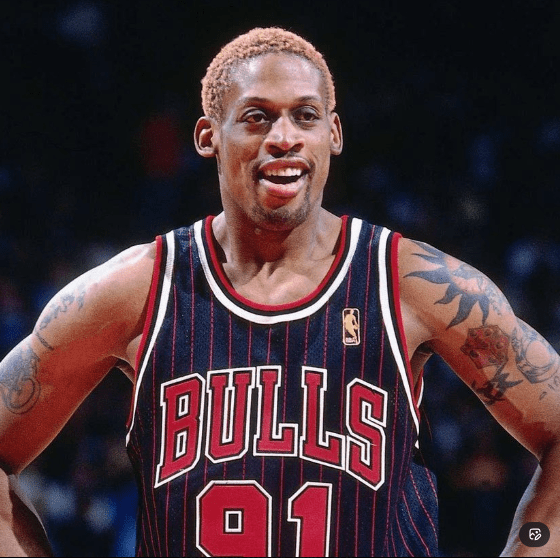
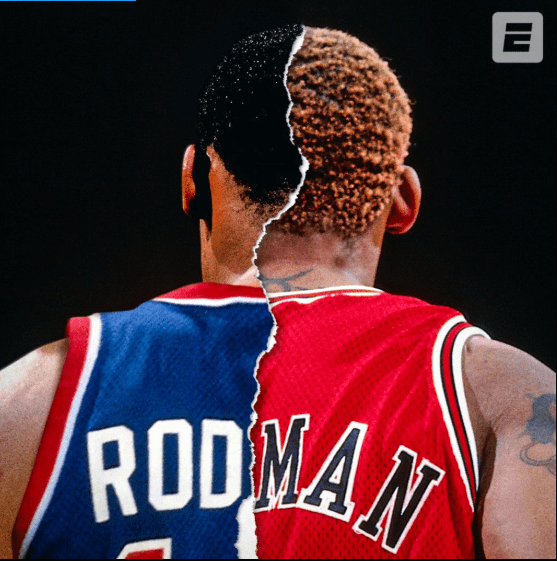
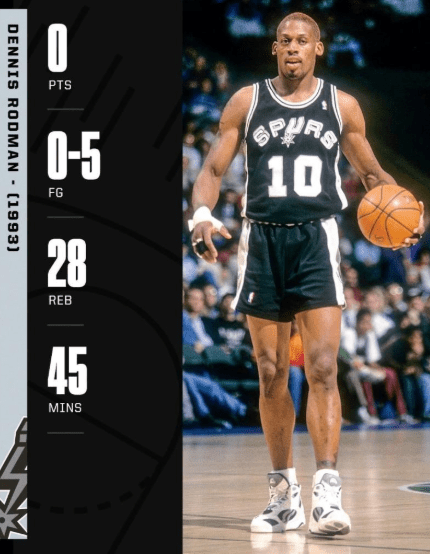
On the surface, they are both defensive savants, rebounders, and champions who thrived as third or fourth options on dynastic teams. They are both loud, flamboyant, and made their personalities as much a part of their brand as their play. Rodman dyed his hair and wore wedding dresses; Draymond hosts a podcast and screams at referees. Both were/are considered “toxic” by their detractors and “misunderstood geniuses” by their supporters.
But here is the critical divergence: Rodman’s chaos was external to the game. His antics were off-court spectacles—the Dennis Rodman Show that happened to include basketball. His rebellions were against dress codes, media obligations, and league decorum. On the court, he was a singular, focused force: perhaps the greatest rebounding and positional defender ever. His game was pure, almost artistic in its specialization.
Draymond’s chaos is internal to the game. It is his game. His value is not just in rebounding or defense; it is in the orchestration of chaos. He is a defensive play-caller, an offensive initiator, and an emotional thermostat. His outbursts aren’t separate from his performance; they are a tactical tool to disrupt opponents, energize teammates, and manipulate officials. He doesn’t just break the rules; he manipulates their edges to gain an advantage.
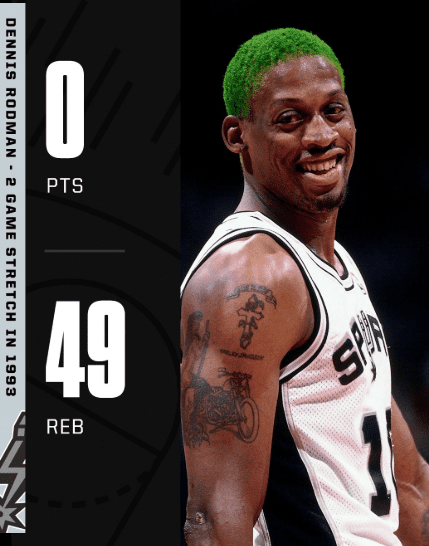
Furthermore, Rodman was a sideshow to the main event of Jordan’s Bulls. Draymond is central to the narrative of Curry’s Warriors. He is not a distraction from the dynasty; he is a pillar of it. His podcast, his suspensions, his fights they are not separate from the Warriors’ story; they are integral chapters. He has leveraged the 24/7 media cycle and the podcasting boom in a way Rodman never could, turning his perspective and his controversies into a parallel media empire.
Jennings’ argument that Draymond is better because he “plays on both sides of the floor” misses the point. It tries to fit Draymond into a conventional box. But Draymond’s greatness, like his infamy, lies in defying boxes. He isn’t better than Rodman at Rodman’s game. He invented a different game entirely: the game of total, chaotic, influential control.
THE PODCAST PARADOX: FEEDING THE BEAST YOU BECAME
In perhaps his most brilliant modern maneuver, Draymond didn’t just tolerate the media narrative around him he co-opted it. He launched The Draymond Green Show, a podcast where he dissects the very league he constantly disrupts.
This is a masterstroke of reputation management. It allows him to control the story. After a suspension, he doesn’t wait for ESPN to frame it. He goes on his own show and explains his “side,” often with a mix of apology, justification, and deflection. He interviews commissioners, rivals, and legends, positioning himself not as an outlaw, but as a respected elder statesman with a platform.
The podcast simultaneously softens and sharpens his image. It shows a thoughtful, articulate, basketball intelligent side that his on court persona obscures. Yet, it also provides a direct channel for his provocations. He can call out players, question coaches, and stir new debates without waiting for a microphone in a locker room. It is controversy on demand.
This creates a dizzying feedback loop. He does something controversial on the court > it becomes national news > he addresses it on his podcast > the podcast clips become news > which keeps him in the headlines > which reinforces his relevance > which empowers his next on-court action. He is both the actor and the critic, the arsonist and the fire chief.
The Brandon Jennings debate is a product of this very ecosystem. A former player, on a rival podcast, uses Draymond’s name to generate clicks and conversation. Draymond doesn’t have to respond. The debate itself is a form of tribute, proof that his name is the ultimate commodity in the hot-take economy. He has transcended being a player; he is a topic, a perpetual motion machine of discourse.
THE LEGACY: HALL OF FAMER OR CAUTIONARY TALE?
As his career enters its twilight, the question remains: what is Draymond Green’s ultimate legacy? Will he be remembered as a Hall of Fame visionary who revolutionized the power forward position and won four championships? Or as a talented but troubled star whose volatility ultimately limited his and his team’s potential?
The Hall of Fame argument is strong. Four-time NBA champion. Defensive Player of the Year. Four-time All-Star. Arguably the best defensive player of his generation. The primary defensive anchor and emotional leader of a modern dynasty. His basketball IQ and passing revolutionized the “point-forward” role for a big man. His resume, on paper, is impeccable.
The cautionary tale argument is equally compelling. He is the most suspended player of his era for on-court conduct. His violence cost his team a championship in 2016. His punch may have altered the franchise’s future by forcing out Jordan Poole. His technical fouls and ejections have routinely put his team at a competitive disadvantage. He is a case study in how unchecked emotion can undermine transcendent talent.
But perhaps both arguments are wrong because they try to separate the man from his methods. Draymond Green’s legacy will be singular and indivisible. You cannot have the defensive genius without the stomps. You cannot have the passionate leader without the punch. You cannot have the championship glue without the technical fouls. His volatility and his brilliance are two sides of the same coin, forged in the second round of the 2012 draft.
He will be remembered as the NBA’s ultimate provocateur-genius. A player who understood that in an attention economy, the worst fate is to be ignored. He courted hate, mastered controversy, and weaponized his own flaws to cement a legacy of undeniable impact. He forced the basketball world to pay attention to him on his terms, redefining what value looks like in the process.
The Brandon Jennings debate will fade. New controversies will emerge. But the pattern is set. As long as Draymond Green is breathing, he will find a way to be the conversation. Not by scoring 40 points, but by kicking, punching, stomping, choking, screaming, and podcasting his way into the center of the room. He built a career on chaos. And in the end, chaos will be his monument.
When a player’s greatest skill is making the entire basketball world stop and watch his worst behavior, who truly holds the power the league that suspends him, or the star who knows the suspension will only make his return more must see TV?