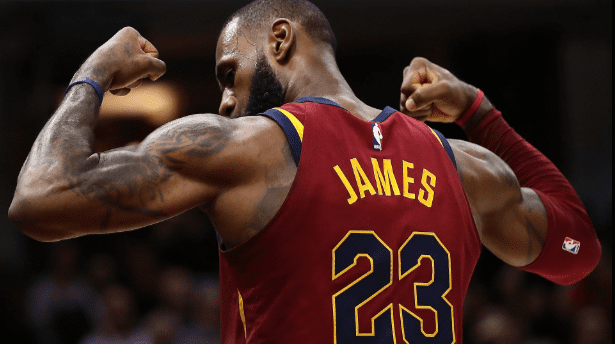
LeBron James Is Joining Fast & Furious, and It’s Not a Cameo It’s a Takeover
The seismic tremors you felt shaking the pop culture landscape were not an earthquake. They were the sound of a billion-dollar franchise shifting its tectonic plates, re engineering its very DNA, and announcing to the world that the rules of blockbuster filmmaking are, once again, being rewritten in real time.
In a move that blurs the lines between sports royalty and cinematic iconography, Vin Diesel has confirmed the unthinkable, the inevitable, the utterly audacious: LeBron James, the living legend, four-time NBA champion, and global cultural titan, is officially joining the Fast & Furious franchise.

This is not a whisper from the rumor mill, not a speculative fan-casting dream. This is concrete, engine-growling fact. Diesel, the saga’s patriarch and producer, has declared the next sequel is in active development, and the script is now being constructed around LeBron James. Let that sink in.
The narrative architecture of the most successful car based action series in history is being retrofitted to accommodate the gravitational pull of King James himself. This isn’t a cameo. This is a coronation.LeBron is being handed the keys to a Toretto charged war machine and thrown headlong into the high octane chaos alongside Diesel and Jason Statham.

The implications of this crossover are so vast, so volatile, and so laden with potential that they threaten to redefine not just the future of Fast & Furious, but the very mechanics of Hollywood stardom, franchise building, and athletic transcendence.
We are witnessing the birth of a new era, one where the family doesn’t just race for pink slips it recruits from the pantheon of global gods.The announcement, delivered with Diesel’s characteristic gravity on his social media platforms, was a masterclass in hype generation.

It was a short video, heavy with the bass-thump of a familiar engine, featuring Diesel in what appears to be a production office, speaking directly to the camera with the solemnity of a general preparing for war. “We’ve been building this family for over twenty years,” he intoned, his voice a low rumble.
“And sometimes, to keep the family strong, you need to welcome new legends. The next chapter… it’s the biggest one yet. And I couldn’t be more proud to say that we’re building it with my brother, LeBron James. He’s not just stopping by. He’s part of the mission.”

The post was tagged with the official Fast & Furious accounts and LeBron’s, and within minutes, the digital universe imploded. The confluence of these two mega-fandoms the relentless, gear-shifting devotees of Dominic Toretto’s crew and the global, multigenerational army of LeBron James supporters created a social media supernova.
Trending topics were dominated not by politics or other celebrity news, but by a singular, burning question: What does LeBron James in a Fast & Furious movie actually look like? The answer lies not in a simple plot summary, but in a deep, analytical excavation of legacy, branding, physicality, and the unquenchable thirst for cinematic spectacle in the 2020s. This is more than a casting announcement. It is a cultural thesis statement.
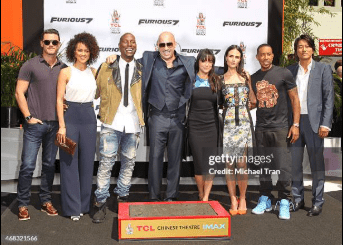
To comprehend the magnitude of this moment, one must first deconstruct the two monolithic entities now being fused together. The Fast & Furious franchise is a unique anomaly in Hollywood history. What began in 2001 as a modest, gritty point break knockoff about underground street racing has, through a combination of sheer audacity, relentless escalation, and a foundational mantra of “family,” evolved into a postmodern mythos.
Its internal logic long ago shed the shackles of physics, narrative plausibility, and even mortality. Cars launch between skyscrapers. They parachute from cargo planes. They drag bank vaults through city streets and drive into outer space.

The crew has fought super soldiers, cyber-terrorists, and rogue special forces units. They are not mere criminals or heroes; they are a superhero team whose power sets are defined by automotive engineering, martial prowess, and an unbreakable loyalty code. The franchise operates on a rule of cool so absolute that it has become its own genre.
It is a celebration of excess, of multicultural unity, and of beating impossible odds through a combination of nitro boosts and heartfelt speeches about the importance of the people sitting in your passenger seat. Its box office returns—spanning over $7 billion globally prove that this formula is not just successful, but spiritually resonant for audiences worldwide. It is the ultimate popcorn catharsis.

Enter LeBron Raymone James. At this stage in his monumental career, he exists beyond the confines of his sport. He is a corporation, a media mogul, a social activist, an educational philanthropist, and one of the most recognizable human beings on the planet. His athletic achievements are the stuff of legend, placing him firmly in the “Greatest of All Time” conversation.
But his forays into entertainment have been equally strategic and impactful. His production company, SpringHill Company, has become a powerhouse, producing critically acclaimed projects like Space Jam: A New Legacy, the Oscar-nominated Judas and the Black Messiah, and the hit drama Survivor’s Remorse. His acting role in the 2015 comedy Trainwreck was met with genuine praise, showcasing a natural, self-deprecating charisma that translated seamlessly to the screen.
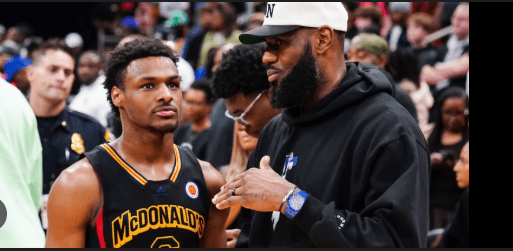
LeBron understands narrative, branding, and audience expectation at a doctoral level. He does not make moves; he executes calculated, legacy defining strategies. Joining Fast & Furious is not a lark or a vanity project. It is a deliberate step into the center of a global cultural force, a chance to merge his physical brand of heroic excellence with cinema’s most bombastic celebration of it.
He is not coming to play a basketball player. He is coming to be an action hero, to stand shoulder-to-shoulder with Diesel’s Dom and Statham’s Shaw, men whose on-screen personas are built on a foundation of implacable toughness. This is a test, a challenge, and an expansion all at once.

The immediate question, then, is narrative integration. How does one insert LeBron James, with all his real-world baggage and iconography, into the already-overstuffed, reality defying world of Fast & Furious? The genius or madness of the franchise is that it has a pre built narrative device for this very purpose: the ever-expanding concept of “family.”
The script, which Diesel confirms is being built around LeBron, will likely use a version of this timeless trope. Speculation runs rampant, but several compelling, franchise-friendly theories emerge. Perhaps LeBron plays a former special operations operative or an intelligence asset whose unique skill set a combination of strategic genius, preternatural athleticism, and leadership is required for a mission so dire that even Dom Toretto’s crew is outmatched.

His character could be the brother of a fallen member of the family, a link to a past mission gone wrong, now requiring his involvement to settle the score. Given the franchise’s recent pivot towards a more global, almost Mission: Impossible scale of espionage, LeBron could be a rogue agent from a rival agency, one who initially clashes with Dom’s methods but ultimately earns his respect through shared sacrifice on the battlefield.
The potential for a dynamic with Jason Statham’s Deckard Shaw is particularly tantalizing. Shaw is the consummate professional killer, all ruthless efficiency and dry British wit. LeBron’s character could be his physical and intellectual equal, creating a thrilling rivalry turned partnership built on mutual, grudging admiration. Their fight scenes alone would be worth the price of admission a ballet of brute force and technical precision.

Furthermore, the franchise has never shied away from meta-commentary or playing with an actor’s public persona. Dwayne “The Rock” Johnson’s Luke Hobbs was essentially his wrestling persona translated to law enforcement. John Cena’s Jakob Toretto played on his “never give up” WWE ethos. LeBron’s role will undoubtedly incorporate elements of his real-life mythos: the leader, the strategist, the man who carries the weight of expectation and delivers under the brightest lights. Imagine a scene where, in the midst of a chaotic planning session, Roman Pearce (Tyrese Gibson) is cracking jokes about the impossibility of their task.
LeBron’s character, calm and focused, might simply look at the schematics and say, with the quiet certainty of a man who has engineered 27-point comebacks in the NBA Finals, “I’ve seen worse odds. Let’s break it down.” The legitimacy he brings is unimpeachable. When LeBron James looks like he can handle himself in a fight, audiences will believe it because, in a very real sense, he can
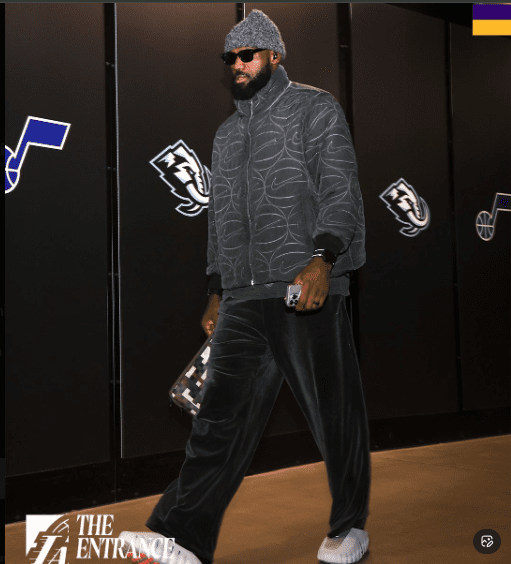
His physical preparation for the role will be its own spectacle, a transformation from elite athlete to full-tilt action star that will be documented across social media, creating a relentless pre release marketing campaign. The training montages will be real. The commitment will be absolute. This authenticity is the secret sauce that can elevate a Fast & Furious film from thrilling absurdity to something approaching mythological grandeur.
Financially and culturally, the move is a stroke of predatory genius. The Fast & Furious franchise, while still monstrously profitable, faces the inevitable challenge of climax. The main saga is building towards its final acts with Fast X: Part 2 (or Fast 11). Introducing a star of LeBron’s magnitude is the ultimate life extension event. It guarantees a box office infusion from demographics that may have drifted.