The Purple and Gold Civil War: How Byron Scott’s Revelation of the Kobe-LeBron Divide in L.A. Exposes the Deep, Tribal Schism at the Heart of Sports Fandom and the Impossible Burden of Legacy in a City That Worships Ghosts
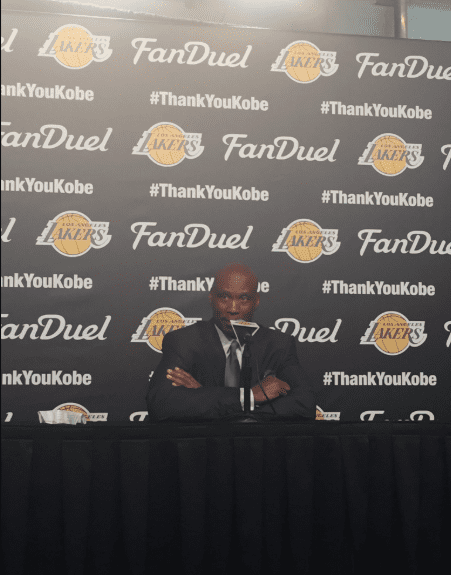
The statement comes not from a hot-take artist, but from a man woven into the very fabric of the franchise. Byron Scott, a Showtime Laker, a champion, a former coach, and a living bridge between eras, looks out at the fanbase he has known for four decades and diagnoses a spiritual sickness. “It’s kinda weird here in L.A. If you love Kobe, you’re not a LeBron fan.” He presents it not as an opinion, but as an observed fact of the city’s ecosystem. His tone is one of bewildered, weary logic: “I don’t know why you can’t be both.” But in the hallowed, haunted halls of Lakerland, the answer is as clear as the 16 championship banners hanging from the rafters. This is not about basketball ability; it is about theology.
Kobe Bryant and LeBron James represent two opposing, irreconcilable doctrines of greatness, two paths to basketball salvation that split the Laker faithful into warring sects. To embrace one fully is, in the eyes of the devout, to commit heresy against the other. Byron Scott’s confusion is the confusion of an outsider to this new faith, a man from a time when the Lakers’ identity was a monolith (Showtime) or a clear succession (West to Kareem to Magic). He doesn’t understand that in the 21st century, the franchise has become a church with two messiahs, and the congregation is bitterly divided over which one’s teachings represent the true gospel. This divide is not a minor fan debate; it is the central, defining tension of the post-Kobe Lakers era. It is a battle for the soul of what it means to be a Laker. Is it the Mamba’s ruthless, obsessive, win-at-all-costs isolationism, born in the shadow of Jerry West and forged in the fire of Phil Jackson?
To understand the depth of this schism, one must first understand that for a generation of Lakers fans, Kobe Bryant was not a player; he was an element of the city. He arrived as a boy and died as a myth, his entire adult life lived in the relentless glare of Los Angeles. His flaws were public, his triumphs were cathartic, his pain was shared. He embodied a specific, Angeleno pathology of greatness: the beautiful, tortured artist, the relentless grinder, the man who spoke Italian, won Oscars, and treated every regular-season game in Sacramento like a Game 7.
His connection to the city was organic, osmotic, and total. He was adopted, and he adopted it back. LeBron James arrived differently. He was a planned invasion. The greatest free agent in sports history, at the height of his powers, chose Los Angeles as the strategic endpoint of his career a place to build his media empire, raise his family, and chase the ghost of Kobe (and Jordan) in the uniform of the league’s most glamorous franchise. His greatness was never in doubt, but his Laker-ness was a transaction.
He did not grow up in the culture; he imported his own. This fundamental difference in origin story fuels the divide. Kobe fans see LeBron as a brilliant tenant renting the house that Kobe built. LeBron fans see Kobe loyalists as stubborn sentimentalists refusing to acknowledge the superior artist now residing in their home. Byron Scott, from the Showtime era of communal joy, can’t fathom why fans wouldn’t simply appreciate both unprecedented talents.
But he misses the emotional truth: for the Kobe devout, embracing LeBron feels like betraying a fallen brother. For LeBron advocates, the persistent resistance feels like ingratitude toward a living king who delivered a championship. It’s not about logic. It’s about love, loss, and the unbearable weight of a legacy that feels too sacred to share.
1. The Doctrinal Divide: Mamba Mentality vs. The King’s Calculus
The core of the fan conflict is a clash of basketball philosophies so profound they amount to different religions.
The Church of Kobe (The Religion of the Process):
- Core Tenet: Obsessive, individual mastery. Greatness is forged in the hidden hours, in the “Mamba Mentality” of relentless, almost pathological work. The game is a personal test of will.
- Manifestation on Court: The isolation masterpiece. The difficult, contested fadeaway. The “I’ll do it myself” ethos. Victory is proven through overcoming personal struggle and forcing your will upon the game.
- Relationship to Teammates: Teammates are acolytes and foils. They are there to support the central mission, to be elevated by his gravity, or to be cast aside if they don’t meet the standard. The hierarchy is clear and vertical.
- View of LeBron: Sees his style as calculating, manipulative, and lacking in killer instinct. The pass in crucial moments is a failure of responsibility, not unselfishness.
The Church of LeBron (The Religion of the Outcome):
- Core Tenet: Omnipotent, collective optimization. Greatness is measured in elevating everyone, in making the statistically correct play every time. The game is a puzzle to be solved.
- Manifestation on Court: The triple double as art form. The pass to the open man. The chase down block. Victory is proven through intellect, efficiency, and controlling all facets of the game.
- Relationship to Teammates: Teammates are assets and amplifiers. His genius is making role players stars and stars legends. The hierarchy is fluid and circular, with him at the center as the engine and distributor.
- View of Kobe: Sees his style as inefficient, stubborn, and wasteful. The difficult shot is a failure of vision, not a display of guts.
These doctrines cannot be reconciled. To believe fully in one is to reject the moral basketball framework of the other. A Kobe fan sees a LeBron pass as weakness. A LeBron fan sees a Kobe shot as selfishness. Byron Scott wonders why they can’t both be appreciated, but he’s asking a Baptist to appreciate the beauty of the Quran. The texts are written in different languages.
2. The Ghost in the Arena: Kobe as the Unseen Standard
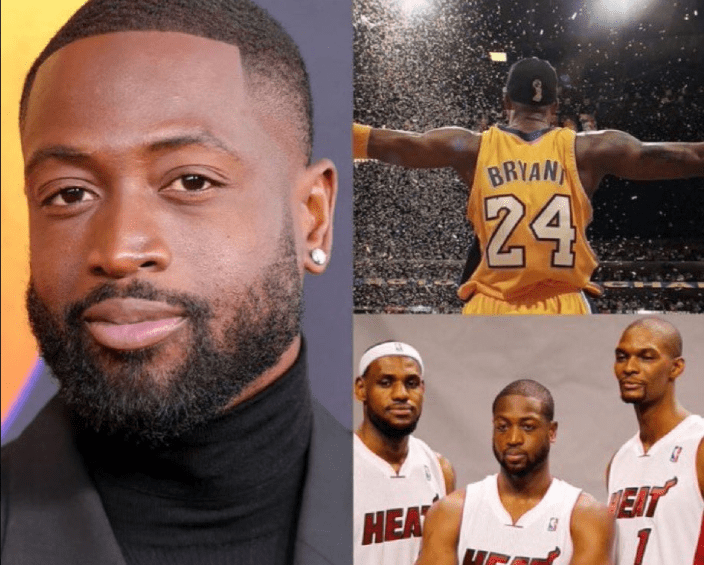
LeBron James does not merely play for the Lakers; he plays in the long, dark shadow of Kobe Bryant’s afterlife. His every achievement is measured against a memory that grows more perfect and more powerful with time.
Kobe’s tragic death did something extraordinary: it froze his legacy in amber and sanctified it. He is no longer a retired player with flaws and failures; he is a saint. Critiquing him is blasphemy. Moving on from him feels like abandonment.
This creates an impossible bar for LeBron. His 2020 championship in the Orlando bubble was a masterful achievement, but for some, it lacked the mythic resonance of Kobe’s five titles, won in the crucible of traditional playoffs and with iconic moments (like the 81 point game or the duel with the Celtics).
Furthermore, LeBron’s legacy is global and migratory (Cleveland, Miami, L.A.). Kobe’s legacy is monogamously L.A.. Every LeBron accomplishment is added to a ledger that belongs to the world. Every Kobe accomplishment is deposited directly into the city’s emotional bank account.
LeBron isn’t just competing with Kobe the player; he’s competing with Kobe the idea the idea of undying loyalty, of city-as-identity, of a greatness that was born, bred, and buried in purple and gold. You can surpass statistics, but how do you surpass a ghost who has become the patron saint of the city?

The lingering fan resistance is, in part, a refusal to let the ghost be surpassed. Accepting LeBron as the greater Laker feels, to the devout, like letting go of Kobe all over again. It’s easier to keep them in opposition, because that keeps Kobe’ flame alive.
3. The “Relevance” Paradox: LeBron the Savior vs. LeBron the Mercenary
Byron Scott and the article point to LeBron’s undeniable impact: “LeBron made the Lakers relevant again.” This is objectively true. After the dismal post Kobe years, LeBron’s arrival instantly returned the franchise to championship contention and the global spotlight.
But in the twisted logic of this civil war, that very fact is used as a weapon against him.
To the Kobe loyalist, the Lakers’ irrelevance after 2016 was a necessary purgatory, a period of mourning and rebuilding that was the honest cost of two decades of glory. LeBron’s arrival was a shortcut, a corporate merger that skipped the organic rebuild. He didn’t suffer through the bad years; he arrived as the savior when the timing was right for his brand.
Kobe’s relevance was endemic. He was relevant because he was a Laker. LeBron’s relevance is autonomous. The Lakers are relevant because LeBron is there. This subtle difference is everything.
It frames LeBron as a mercenary superstar using the Lakers’ stage for his own legacy project, rather than a homegrown legend whose legacy is inseparable from the team’s. His greatness is undeniable, but his narrative ownership of the Lakers is perpetually contested.
4. The Statistical Tapestry vs. The Mythic Tapestry
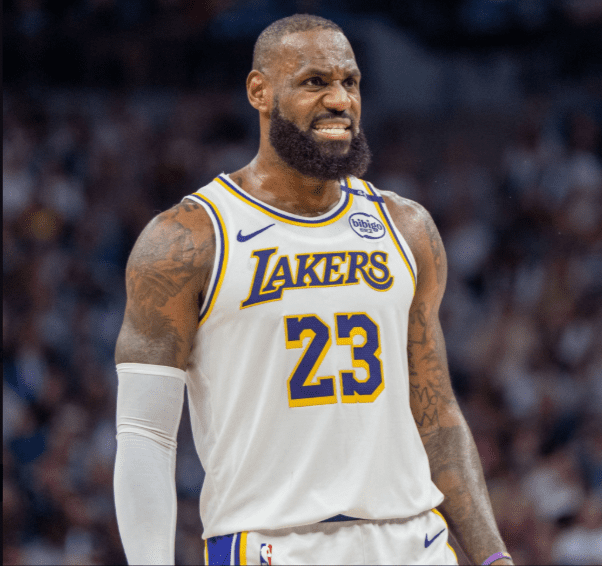
The article lays out LeBron’s staggering Lakers resume: a title, a Finals MVP, breaking the scoring record, top 10 in franchise scoring, etc. This is the statistical tapestry of his greatness a rational, fact based argument for his legendary status.
Kobe’s argument resides in the mythic tapestry. It’s not just the five rings; it’s the story of the three-peat with Shaq, the vindication of the two titles after Shaq, the blood feud with the Celtics, the 60 point farewell. His legacy is a series of iconic, cinematic episodes.
Fandom is not rational; it is emotional and narrative driven. Numbers persuade the mind, but stories capture the heart. LeBron’s Lakers story, while impressive, lacks the classic, three act Hollywood structure of Kobe’s. It’s more of a brilliant, ongoing limited series.
For older fans who lived through Kobe’s entire epic the teenage phenom, the fallen hero after Colorado, the redemption, the final act LeBron’s tenure can feel like a spinoff series, even if it’s incredibly well made. They’re emotionally invested in the original franchise.
Byron Scott, as a player from the pre social media, narrative saturated 80s, may underestimate how much modern fandom is about consuming and identifying with a story. The Kobe story is complete, tragic, and perfect. The LeBron story is still being written, and for some, it will always feel like it’s being written on borrowed parchment.
5. The Generational Fault Line: It’s Not Just Loyalty, It’s Identity
This divide is also a generational fault line.
The Kobe Generation (fans now ~25-45) came of age with him. His struggles mirrored their adolescent angst; his triumphs were their triumphs. His loyalty to L.A. mirrored their own civic pride. To them, Kobe is inextricably linked to their own identity.
The LeBron Generation (younger fans, and fans who prioritize transcendent talent over parochial loyalty) sees a broader basketball universe. They grew up with LeBron as a global constant. They appreciate his all-around genius and see team hopping as modern player empowerment. They find the old-head Kobe loyalty tribal and irrational.
Byron Scott, belonging to the even older Magic/Kareem generation, is looking at this from a third perspective: that of a pure basketball appreciator. He can’t understand why the younger generations are so sectarian. But for the Kobe generation, it’s not sectarianism; it’s self definition. Letting go of Kobe as the ultimate Laker feels like letting go of a piece of their own youth.
6. The Verdict: A House Divided, But a Kingdom Endures
Byron Scott is right in his basketball assessment: LeBron James is one of the greatest to ever do it, and his Lakers tenure is Hall of Fame worthy. He is also right in his plea: you should be able to appreciate both.
But he is wrong in his diagnosis of the fan resistance as mere “weirdness.” It is a deep, emotionally coherent response to seismic shifts in how a legendary franchise is owned, both literally and spiritually.
The Lakers are not just a team; they are a dynastic family with violent successions. The transition from Magic to Kobe was messy but seen as a passing of the torch. The transition from Kobe to LeBron was not a succession; it was an acquisition. The king did not anoint an heir; the board of directors hired a new CEO.
The fan divide is the inevitable result. The Kobe faction are the traditionalists, holding to the old faith, worshipping the local saint. The LeBron faction are the modernists, embracing a new, globalized gospel of efficiency and legacy-building.