Hometown Hero vs. Global Icon: Draymond Green Sparks Chicago’s Ultimate Debate
In the world of professional basketball, comparing a six-time champion widely considered the game’s greatest to a former MVP whose prime was tragically cut short would normally be dismissed as heresy.
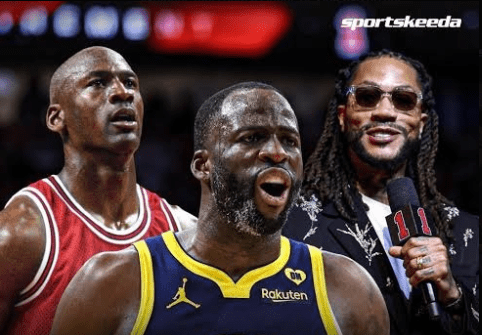
Yet, when Golden State Warriors forward Draymond Green speaks, the NBA world listens, even when his takes are designed to provoke. On January 24, 2026, moments after the Chicago Bulls retired Derrick Rose’s No. 1 jersey in a ceremony at the United Center.
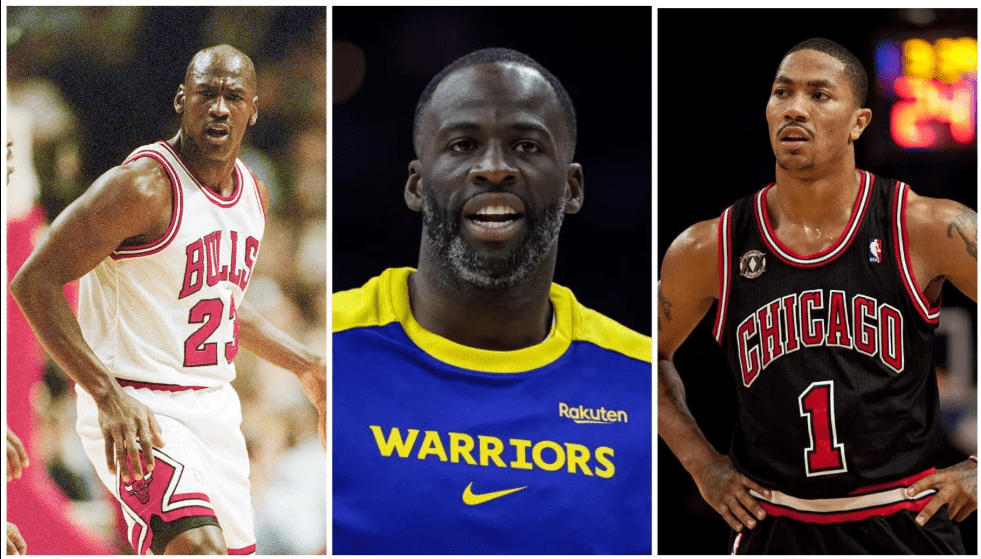
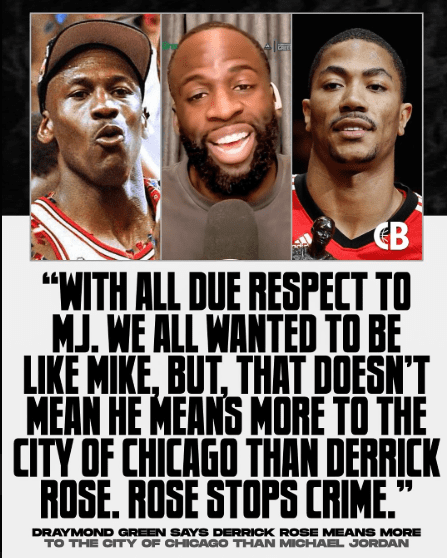
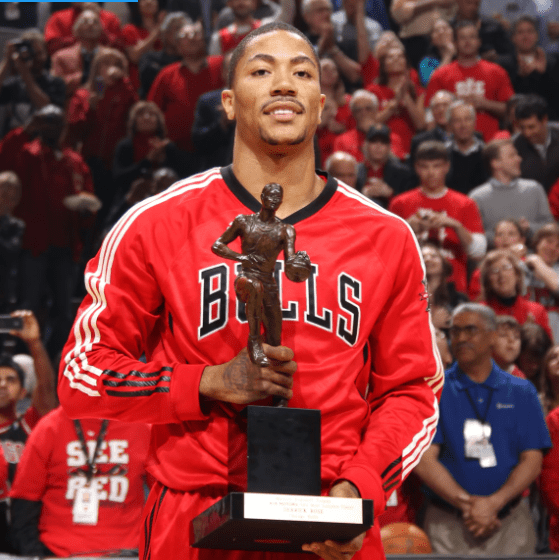
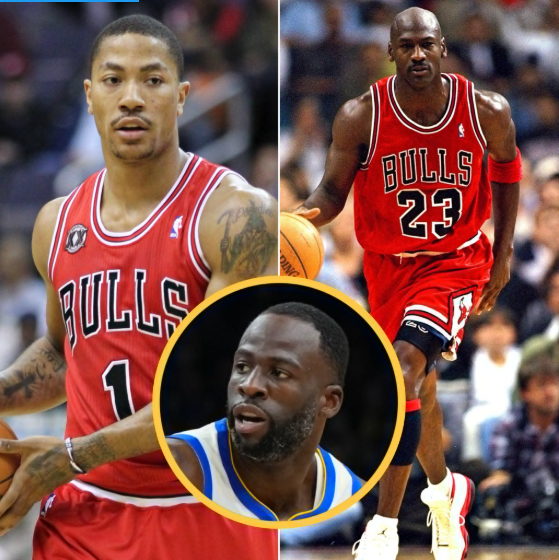
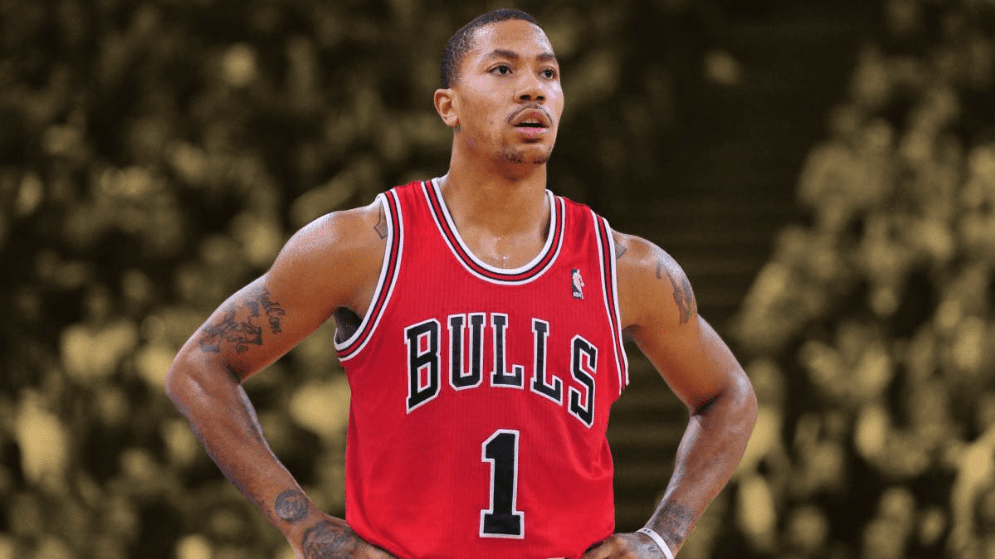
His core argument was stunning in its simplicity and audacity. He argued that the player who means more to the city of Chicago is not the globally worshipped Michael Jordan, but the hometown kid from Englewood, Derrick Rose.
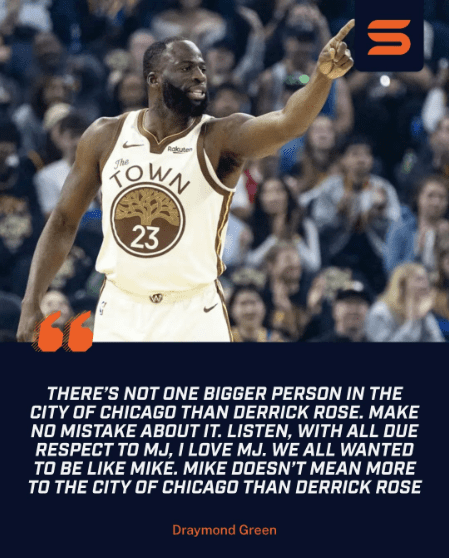
“There’s not one bigger person in the city of Chicago than Derrick Rose. Make no mistake about it,” Green declared on The Draymond Green Show. “D-Rose is everything to the city of Chicago.
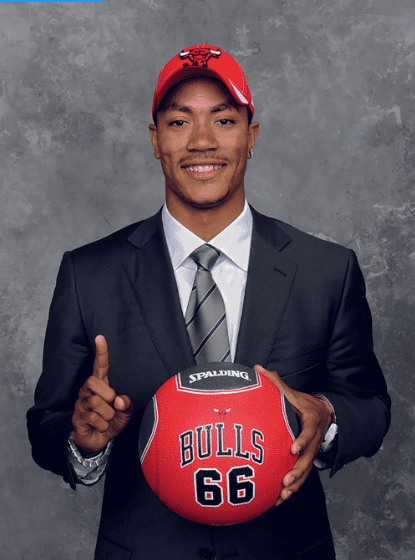
The Case for Derrick Rose: The Hometown Heartbeat
Draymond Green’s argument isn’t built on a tally of trophies where Jordan’s six championships are untouchable but on identity, representation, and a unique emotional connection.
| The Hometown Kid Factor | The “Saving” of the Franchise | The Unique Bond |
|---|---|---|
| Rose was born and bred on Chicago’s South Side. To many residents, especially in neighborhoods like Englewood, he wasn’t just a superstar they watched on TV; he was living proof that one of their own could make it to the very top. A local fan, Craig V. Johnson Sr., captured this sentiment online, stating, “D Rose is one of us. He definitely means more to us than MJ… Derrick Rose played just like every kid in this city on the playground.” | Green emphasized that Rose arrived when the Bulls were struggling in the “post-Jordan wilderness.” Drafted first overall in 2008, he revived a franchise that had not reached the Eastern Conference Finals since 1998. By the 2010-11 season, he became the youngest MVP in league history at age 22 and led the Bulls back to the conference finals. “He came and saved the franchise,” Green argued. | Green suggested Rose’s status is unique because of his deep community ties, like opening a local business and his ability to move through the city. The love for him is rooted in shared struggle and local pride. “To fans in the South Side, Rose wasn’t just a superstar, he was proof that one of their own could conquer the world,” one analysis noted. |
The Case for Michael Jordan: The Global Standard
To many outside Chicago, and even to countless fans within it, Green’s take seems unthinkable. The argument for Jordan is not just about championships; it’s about transforming a city, a team, and the entire sport into a global cultural force.
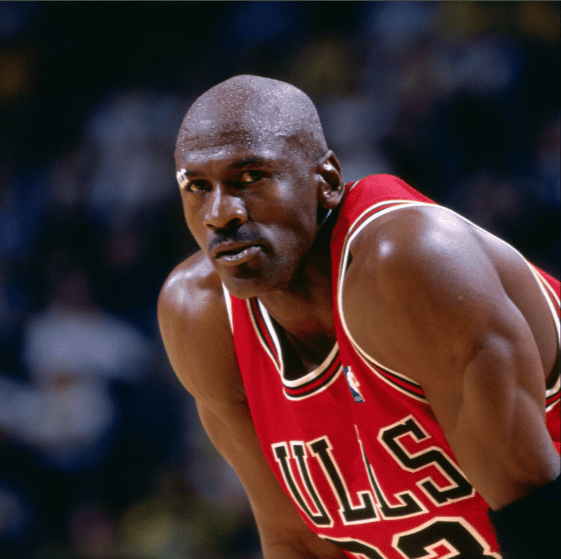
Michael Jordan didn’t just play for Chicago; he made Chicago the epicenter of the sports world for nearly a decade. He delivered six championships, created the ” dynasty, and elevated the Bulls from a franchise to a global brand.
His statue outside the United Center is a permanent landmark, a testament to an era of undisputed dominance. His legacy is one of perfected greatness, a standard against which all others are measured. As one online commenter noted, “Look around the Chicago Stadium..
The City’s Response: A Divided but Unified Love
The reaction to Green’s comments, particularly on social media, revealed a fascinating divide, often along generational and experiential lines.
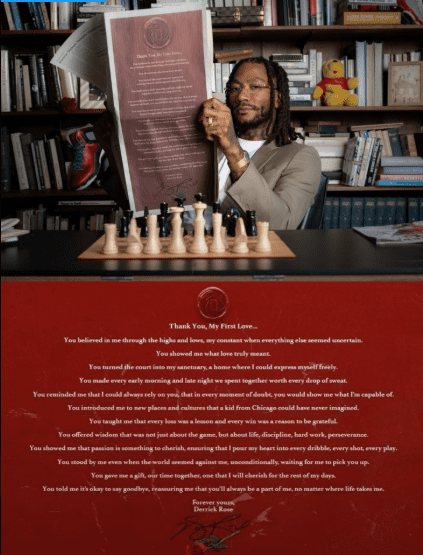
The most poignant perspective may have come from within the Bulls family itself. In a symbolic full-circle moment, Michael Jordan himself offered his public congratulations to Derrick Rose on his jersey retirement.
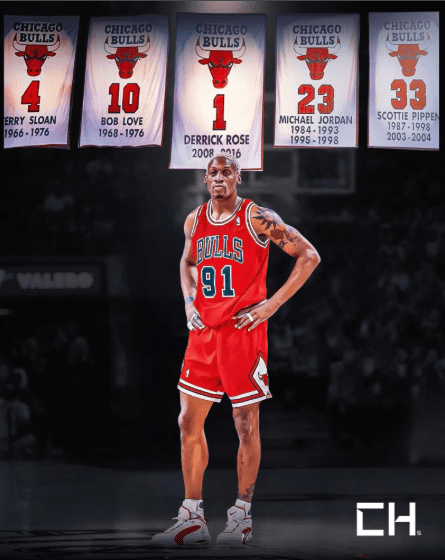
The post honoring Rose described him as the “hometown kid” who “carried an entire city on his back,” a recognition from the ultimate Bull that Rose’s journey held its own unique and powerful meaning.
Do you have a strong opinion on whether a hometown hero or a global champion means more to a city’s identity? What other sports debates hinge on this same clash of values?