The Unfathomable Final Score: How a Florida NFL Argument Became a Family Annihilation
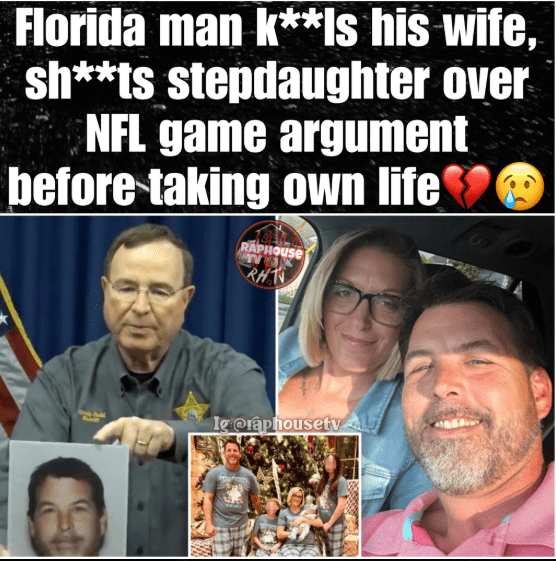
In a quiet Florida home on what should have been a typical Sunday of football, snacks, and casual rivalry, a domestic scene shattered into unimaginable horror. According to authorities, a violent argument erupted between a husband and wife, its spark not a deep seated marital grievance, but the fleeting, emotional tide of a professional football game. Fueled by alcohol and rage, the dispute escalated beyond shouting. The man retrieved a firearm, and in a sequence of actions that defies comprehension, he shot and killed his wife, wounded his adult stepdaughter, and fled the scene.
The couple’s young children, present in the home, were physically unharmed but now bear the invisible, lifelong wounds of witnessing the unthinkable. Hours later, the man was found by police; he had turned the gun on himself, ending his own life. In the span of a single afternoon, a family was obliterated, not by accident or illness, but by a catastrophic failure of human restraint, where the transient passion of a spectator sport became the trigger for permanent, senseless violence. This tragedy is more than a crime statistic; it is a chilling, extreme case study in the dangerous alchemy of toxic fandom, readily available firearms, and the volatile potential of the American living room on game day.
Beyond the Headline: Deconstructing a Perfect Storm of Risk
To dismiss this as merely an “argument over a game” is to miss the complex, layered crisis that preceded the gunfire. The report outlines a perfect and preventable storm of risk factors that converged with deadly force:

- The Catalyst: Emotional Investment in a Controlled Outcome. NFL fandom, for some, transcends entertainment and becomes a core component of identity. A loss, a bad call, or a taunt can feel like a personal attack, triggering disproportionate anger and a loss of perspective. The game becomes a proxy battlefield for pre existing frustrations.
- The Accelerant: Alcohol. Authorities confirmed the man had been drinking. Alcohol is a well documented disinhibitor, impairing judgment, amplifying aggression, and dismantling the emotional brakes that prevent violent escalation. It transforms heated debates into combustible confrontations.
- The Weapon: Access to a Lethal Weapon. The central, horrifying factor was the immediate availability of a firearm during a moment of peak, alcohol fueled rage. The argument, however violent, might have resulted in bruises, broken objects, or a temporary separation. The presence of a gun transformed a domestic dispute into a potential homicide within seconds.
- The Environment: The “Sanctuary” of Home. Unlike a public sports bar where bystanders or staff might intervene, the home can be an isolated pressure cooker. There are no bouncers, no friends to pull you aside. Disputes fester and explode without external checks.
This tragedy demonstrates that it is never “just about the game.” The game was the match. The alcohol was the fuel. The gun was the explosive. The home was the enclosed space where the blast occurred. Each element was necessary for the catastrophe.
The Ripple of Trauma: Survivors Left in the Rubble
The immediate toll two lives ended, one physically wounded is only the beginning of the story. The trauma radiates outward, creating concentric circles of lifelong devastation.

- The Wounded Stepdaughter: Surviving a gunshot wound is a physical and psychological ordeal that will involve painful recovery, medical trauma, and the haunting memory of the violence. She also carries the guilt and anguish of being a survivor when her mother was not.
- The Young Children: The couple’s children, who were present but unharmed, are now orphans who witnessed their father murder their mother. The psychological impact is incalculable. They will grapple with complex trauma, betrayal, fear, and a shattered sense of safety and love. Their entire understanding of family, trust, and the world has been violently rewritten.
- Extended Family and Community: Grandparents, siblings, friends, and neighbors are left to mourn multiple losses while trying to support the shattered survivors. The community is left asking terrifying questions about how such violence could simmer next door.
This single, impulsive act did not end with a suicide; it sentenced an entire family network to a lifetime of grief, therapy, and grappling with a senseless void.
A Cultural Mirror: Toxic Fandom and the Normalization of Rage
While an extreme outlier, this event holds up a dark mirror to a broader sports culture that often glorifies and normalizes excessive fan rage. We celebrate the “die hard” fan. Broadcasts highlight furious sideline reactions. Social media is a cauldron of hyperbolic, hate fueled rhetoric directed at players, coaches, and other fans after a loss. The line between passionate support and unhealthy obsession is constantly blurred.
This tragedy forces a uncomfortable question: in a culture that often winks at sports-related anger as “part of the game,” how do we better identify and address when that passion metastasizes into something dangerous? It highlights the need for public conversations about emotional regulation, the recognition of unhealthy fan behavior, and the responsibility of sports leagues and media to promote not just rivalry, but perspective. The message should be clear: it is okay to care deeply about your team. It is never okay to let that care destroy your life or the lives of those around you.
The Unavoidable Policy Question: Lethal Means and Moments of Crisis
This case will inevitably, and rightly, reignite debates about firearm access and domestic violence. Numerous studies show a direct correlation between the presence of a firearm in a domestic violence situation and the likelihood of a homicide. A moment of blind rage, which might otherwise result in a shove or a slammed door, becomes fatal when a gun is within arm’s reach.
This tragedy is a stark argument for measures like extreme risk protection orders (ERPOs or “red flag” laws), which allow family or law enforcement to petition a court to temporarily remove firearms from an individual shown to be a danger to themselves or others. Had this man’s escalating behavior been recognized as a threat, such an intervention might have prevented this outcome. It underscores the critical need for safe storage laws and a cultural shift toward treating firearm access with the gravity it demands, especially in households where stress, substance use, or mental health struggles are present.
A Call for Awareness, Not Just Grief
Mourning this family is necessary, but insufficient. Their story must serve as a horrific cautionary tale. It is a call for individuals to honestly assess their own relationship with sports, alcohol, and anger. It is a plea for friends and family to intervene when they see fandom turning toxic or dangerous. It is an argument for communities to support resources for conflict resolution, substance abuse, and mental health.

The final score of that Florida NFL game is irrelevant. The only score that matters is the one etched in tragedy: a family destroyed, survivors scarred, and a community left to wonder how a shared pastime could possibly lead to such an irrevocable, senseless end. The goal now must be to ensure this unspeakable event becomes a catalyst for awareness and prevention, so that no other family ever has to learn that some arguments have no winners, only victims.