The post-fight interview is a sacred ritual of combat sports, a space for warriors to narrate their pain in real-time. On a blood-slicked canvas, Jake Paul, the YouTube provocateur-turned-prizefighter, stood with his face a grotesque mask of his new reality. His jaw, shattered in two places by the concussive force of a professional heavyweight’s fist, hung at a sickening angle.
Through the distortion, a mangled, wet, almost incomprehensible voice emerged. He did not concede. He did not show weakness. He issued a challenge. To the world, it looked like the defiant last gasp of a defeated man. In the internal logic of Jake Paul, it was the opening salvo of his next campaign. The diagnosis was severe: a double mandibular fracture, requiring emergency surgery to implant two titanium plates, the extraction of multiple teeth, and a mandatory liquid diet that would reduce the most talkative man in sports to sipping broth. The physical cost was staggering.
Yet, before the anesthesia had fully worn off, before the first nutrient shake was consumed, Jake Paul’s team was scripting the comeback. His target? Not a convalescent period, not a softer opponent, but Saúl “Canelo” Álvarez, the pound-for-pound king, the Mexican icon, the living definition of boxing legitimacy. This was not a non-sequitur. It was the most calculated move of his career. Jake Paul did not suffer a broken jaw; he acquired a plot device. In the brutal theater where he has built his empire, a catastrophic injury is not an ending it is the ultimate season finale cliffhanger, and the call-out is the trailer for the next record-breaking pay-per-view. The broken bone is merely a new piece of lore, a martyr’s wound to be monetized in his relentless, blood-soaked quest to force the boxing world to accept him as its savior, its villain, and its undisputed paymaster.
To understand the cold calculus behind calling out Canelo from a hospital gurney, one must first diagnose the unique illness Jake Paul perceives in modern boxing. In his view, the sport is a dinosaur choked by its own tradition, run by parasitic promoters who leech from athletes, protected by a gatekeeping elite that dismisses outsiders, and starving for the digital-native audience he commands. His entire boxing project has been a hostile takeover bid. He didn’t seek to climb the rankings; he sought to hack the sport’s revenue model. He used his pre-built audience of millions to guarantee massive pay-per-view buys, offering faded MMA stars and fellow influencers life-changing paydays to step into his ring.
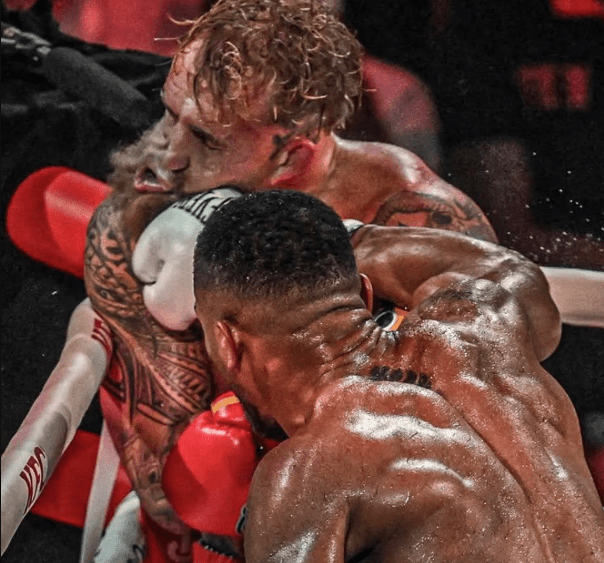
Each knockout was not just a victory; it was a demonstration of his market power. He was proving that the “Jake Paul fight” was a more lucrative event than 99% of traditional boxing matches. But there was a ceiling. The gatekeepers—the sanctioning bodies, the legacy media, the purist fans still dismissed him as a “YouTuber.” They pointed to his carefully curated opposition. To shatter that ceiling, he needed what every revolutionary needs: a martyrdom narrative. A loss to a real boxer, if framed correctly, could be more valuable than a win over another influencer. But a loss coupled with a horrific, visually dramatic injury? That was narrative gold. The broken jaw is the ultimate “proof of authenticity.” It is a receipt written in bone, incontrovertible evidence that he stepped into the real fire. No one can accuse him of playing patty-cake now.
His face is quite literally reconstructed with the sport’s hardware. The titanium plates aren’t just medical devices; they are trophies of credibility, permanently fused to his skeleton. By calling out Canelo the most respected, fearsome, and financially successful boxer on the planet from the depths of this injury, Paul performs a breathtaking act of narrative jiu-jitsu. He transforms his greatest physical defeat into his greatest promotional asset. The message is clear: You broke my jaw, but you only made me louder. You think this stops me? I want the best you have, and I want him now. It’s a performance of such staggering audacity that it forces the entire sport to pay attention. He is no longer just fighting boxers; he is fighting the very concept of his own limit.
The Anatomy of the “Content Injury”: From Setback to Story Arc
In the ecosystem of influencer boxing, every element is content. A Jake Paul training camp is a docuseries. A press conference is a scripted drama. The fight itself is the season finale. Therefore, a major injury cannot be merely a medical event; it must be folded into the ongoing narrative. The broken jaw operates on multiple levels of this story engine.
Level 1: The Visual Testament. The imagery is potent and viral. The off-angle jaw, the swollen face, the CT scans showing the clean breaks these are not private medical records. They are shareable assets. They provide visceral, undeniable proof of the stakes he is now playing for. For an audience raised on video game health bars, this is a real-life representation of damage taken. It creates empathy, shock, and morbid fascination, all of which drive engagement.
Level 2: The Suffering Montage. The liquid diet, the wired-shut mouth, the painful recovery this becomes fodder for “day-in-the-life” vlogs. Paul can document the hardship, showing his resilience. The humility of sipping a smoothie while talking about fighting Canelo creates a powerful dissonance that is incredibly compelling. It’s the ultimate “underdog in recovery” footage, even though he is a multi-millionaire calling out a legend.
Level 3: The Legitimacy Token. In the credibility economy of combat sports, scar tissue is currency. Fighters are respected for the wars they’ve survived. By publicizing this injury and the drastic surgery required, Paul is accelerating his accumulation of this currency. He is buying, with his own pain, the respect that would normally take a decade of grueling club fights to earn. The titanium plates are his purple heart, and he is making sure every fan and critic sees the medal ceremony.
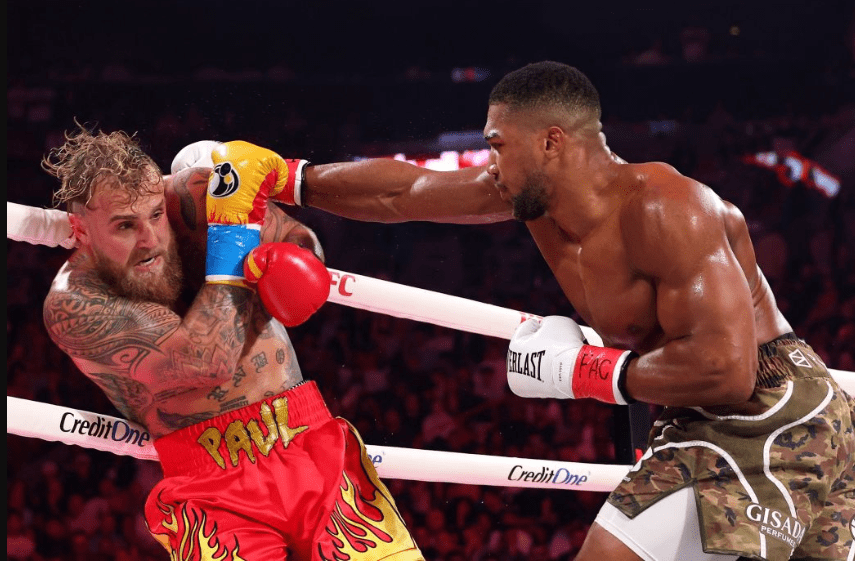
The call-out to Canelo is the narrative payoff to this three-act structure of injury. It’s the moment where the protagonist, at his lowest physical point, declares his loftiest ambition. It ensures the story isn’t “Jake Paul gets hurt and disappears.” The story becomes “Jake Paul gets destroyed, rebuilds himself with metal, and immediately challenges the god of the sport.” It’s a comic-book plot, and he is both the writer and the star.
The Canelo Gambit: Why the Mexican King is the Only Target That Makes Sense
Calling out Canelo Álvarez is not a random act of bravado. It is a strategically perfect, if ludicrously ambitious, move. Canelo represents the absolute apex of everything Jake Paul supposedly disrespects but desperately needs: undisputed skill, traditional respect, and global sporting legitimacy.
From a narrative perspective, Canelo is the final boss. He is universally acknowledged as one of the best technical boxers of his generation. He has fought and beaten legends. He is a hero to millions. For Paul, a fight with Canelo is the ultimate shortcut. Winning is almost unimaginable, but that’s not entirely the point. The point is the transaction. By merely sharing a ring with Canelo, Paul would achieve several objectives:
- The Ultimate Legitimization Stamp: Sharing a promotion with Canelo, even as a massive underdog, would force the boxing establishment to treat Paul as a “real” boxer, if only for one night. It would be the industry’s implicit, if grudging, endorsement.
- The Financial Supernova: A Canelo-Paul fight would be, without hyperbole, one of the biggest financial events in boxing history. It would merge Canelo’s massive traditional fanbase with Paul’s entire digital empire, creating a pay-per-view buy rate that could shatter records. The purse for Paul would be astronomical, dwarfing anything he’s made before.
- The Lose-Win Scenario: Even in a loss a likely and brutal one Paul wins. He would be able to say he shared the ring with the best. His “valiant effort” against Canelo would become the centerpiece of his legacy, a story he could tell forever. The broken jaw from a previous fight only makes this narrative richer: “I fought with a metal jaw against the best in the world.”
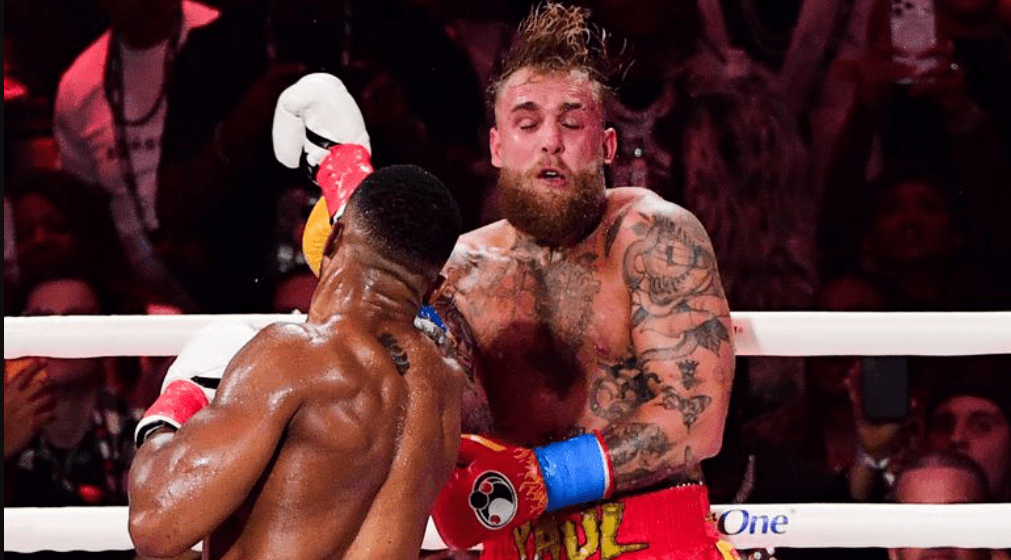
The call-out from the hospital is designed to make the proposition seem insane, which in turn makes it irresistible as a news story. It frames Paul not as a calculated businessman, but as a reckless, fearless warrior obsessed with the greatest challenge. This persona is far more marketable than a savvy negotiator.
The Liquid Diet Livestream: Performance of Resilience in the Digital Age
The mandated liquid diet is not a private hardship; it is a public performance of sacrifice. In the days following his surgery, Jake Paul will undoubtedly turn his recovery into content. We will see videos of him blending steak, struggling to drink, and lamenting his hunger. This serves a crucial purpose: it humanizes the brand.
For all his villainous posturing, Paul understands that his audience needs to see vulnerability to stay connected. The liquid diet arc shows the price of the game. It makes the Canelo call-out seem even more insane and therefore more captivating. Is he sipping a protein shake one day and calling out a destroyer the next? The juxtaposition is pure narrative fuel. It transforms him from an invincible heel into a damaged but determined protagonist, a archetype with much broader appeal. This performance is a new evolution in athlete marketing. The injury rehab is no longer a behind-the-scenes process; it is a central plotline in the real-time documentary of his career.
The Surgeon’s Role: Titanium as a Plot Point
The insertion of two titanium plates is a profound detail. Titanium is strong, lightweight, and permanent. It is the material of aerospace engineering and elite prosthetics. By having it implanted in his face, Paul is undergoing a literal cyborg transformation. This is not just repair; it is an upgrade.
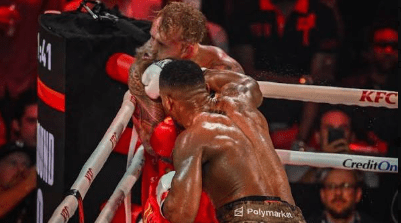
The plates become a permanent part of his story. They will set off metal detectors. They will be referenced in every future pre-fight package. They are a physical manifestation of his commitment and a shield against future criticism. “He has a glass jaw,” detractors might say. His retort is built into his anatomy: “My jaw is literally reinforced with aerospace metal.” The surgeon, in this narrative, is not just a doctor but a myth-maker, a mechanic rebuilding the hero for his next quest. The medical procedure is seamlessly integrated into the fighting lore.
The Verdict: The Broken Jaw as the Pinnacle of the Paul Playbook
Jake Paul’s broken jaw is not a tragedy; it is the pinnacle of his disruptive playbook to date. He has taken the worst possible outcome in a fight a devastating, career-altering injury and, within hours, leveraged it to pitch the biggest fight imaginable.
This moment crystallizes his entire philosophy: in the attention economy, all data is usable, and all pain is monetizable. A normal athlete sees a broken jaw as a setback. Jake Paul sees it as a marketing budget spent, an investment in credibility that must immediately be leveraged for a return. The call-out to Canelo is that leveraged buy.
He is demonstrating that he controls the narrative, regardless of the physical outcome. He lost the fight, but he is winning the next news cycle. He is injured, but he is setting the agenda. The boxing world may scoff at the audacity of calling out Canelo from a hospital bed, but they are talking about it. They are forced to engage with his timeline, his terms, his spectacle.