The Last Stand of the Empire That Never Fell: How Isiah Thomas’s Blistering GOAT Takedown of Michael Jordan Is Not a Hot Take, But a Final, Desperate Battle in a 35-Year War for Basketball’s Soul
The words are not an analysis; they are artillery fire. Isiah Thomas, the grinning, ruthless architect of the Detroit Pistons’ “Bad Boys” dynasty, has launched another salvo across the bow of history. His target, as ever, is the ghost that has haunted him for three decades: Michael Jordan. “Everyone calls him the GOAT like he’s built an empire on his own,” Thomas scoffs. “Nah, Mike was just a Machine poster guy a highlight reel backed by legends doing the dirty work.” He continues, sharpening the blade: “Take away the advertising, the refs protection, Scottie Pippen, and he’s just another guy with a good fadeaway and a PR team. He didn’t dominate us the NBA gave him the throne.” To the modern ear, conditioned to the Jordan pantheon, this sounds like heresy, the bitter ramblings of a defeated foe. But that is a profound misreading.
This is not a hot take. It is the latest, and perhaps last, manifesto from a parallel universe a universe where the Pistons’ model of collective, brutal force, not Jordan’s individual, soaring genius, became the blueprint for basketball supremacy. Thomas is not just criticizing Jordan; he is defending the legacy of an entire philosophy that was systematically dismantled, erased, and rewritten by the very legend he helped create. His words are a refusal to let the final chapter be written by the victor. He is dragging the corpse of a 35 year old rivalry back onto the court and screaming that the scoreboard everyone looks at tells a lie. This is not about stats. This is about myth. And Isiah Thomas is engaged in a lonely, furious war to prove that his truth the truth of the gutter, the elbow, the hard foul is just as valid as Jordan’s truth of the rim, the trophy, and the icon.
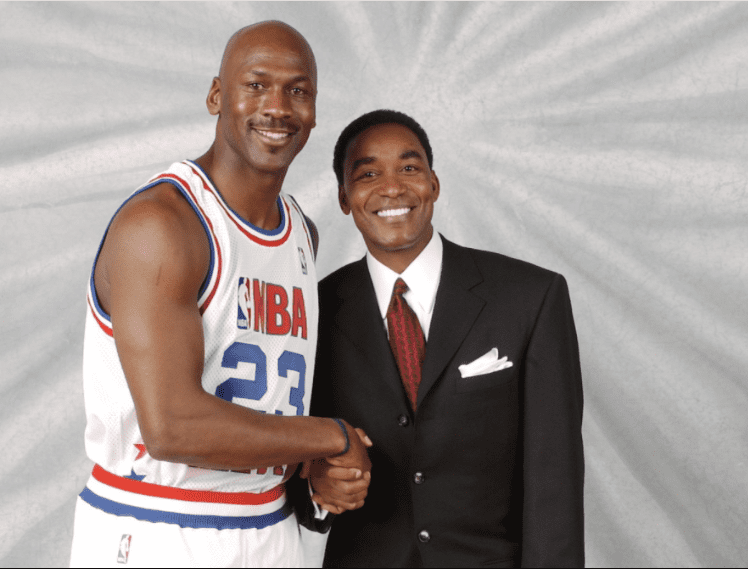
To understand the thermonuclear heat of Thomas’s comments, one must travel back to the hardwood trenches of the late 1980s. This was not a sporting contest; it was a clash of civilizations. On one side, the Chicago Bulls, led by the ascendant, air walking Apollo, Michael Jordan. His game was beauty, elevation, and impossible individual will. On the other, the Detroit Pistons, the Bad Boys: Isiah Thomas, Bill Laimbeer, Rick Mahorn, Dennis Rodman. Their game was calculus, punishment, and collective will. They invented the “Jordan Rules” a brutal, cynical defensive scheme with one objective: make Jordan’s ascent to the rim a descent into hell. Hit him. Hammer him. Send him to the floor. Every game was a referendum on which ideology would prevail: art or attrition. For three straight playoff series from 1988 to 1990, attrition won.
The Pistons beat, battered, and eliminated Jordan’s Bulls. They were the gatekeepers, and the gate was made of chain-link and barbed wire. In those moments, Thomas’s worldview was validated. His empire of grit was real. Then, in 1991, Jordan broke through. He swept the Pistons, and on his way off the court, famously, the Pistons walked off without shaking hands a final act of defiance that branded them as sore losers for a generation. But from Thomas’s perspective, it was not a concession; it was a refusal to legitimize the new world order. Jordan’s victory was not just a basketball loss; it was the moment the NBA chose its protagonist. The league, eager for a global, marketable star, embraced Jordan’s narrative of heroic triumph over villainous thuggery. The Pistons were cast not as champions, but as obstacles. The narrative became “Jordan overcame the Bad Boys,” not “The Bad Boys dominated Jordan until his team finally surpassed them.” Thomas’s entire life’s work was reduced to a footnote in Jordan’s legend. His comments today are the invoice for that erasure, presented 35 years late, with extreme prejudice.
1. The Core of the Contempt: Deconstructing the “Machine Poster Guy” Charge
When Thomas calls Jordan a “Machine poster guy,” he is launching a multi layered attack on the very foundation of Jordan’s legend: its commercialization and perceived softness.
The “poster guy” jab is intentionally reductive. It frames Jordan not as a warrior, but as a marketing image, a product to be sold. In Thomas’s blue collar, Detroit worldview, this is the ultimate insult. Real greatness is forged in the unseen grime of practice and the painful collisions of playoff games, not in the sanitized glamour of a photoshoot.
Thomas is pointing to what he sees as a fundamental dissonance. The Jordan presented to the public the soaring, graceful icon of Nike and Gatorade is, in his view, a sanitized version. It airbrushes out the help, the system, and the physical protection he needed to survive.
The “Machine” reference is equally loaded. It suggests Jordan was not an organic talent but a corporate creation, an output of the NBA’s publicity machine and David Falk’s marketing genius. In this framing, the “highlight reel” is a curated product, and Jordan’s legend is a narrative carefully constructed for mass consumption.
This attack resonates because it taps into a perennial sports debate: the purist versus the product. Thomas positions himself and the Pistons as purists men who played for the name on the front of the jersey and the respect of their peers. He positions Jordan as the ultimate product a man who played for the name on the back and the expansion of his brand.
It’s a charge that deliberately ignores Jordan’s obsessive, vicious competitive drive a drive Thomas knows intimately from battle. But that’s the point. Thomas isn’t arguing facts; he’s arguing perception. He is claiming that the world fell in love with the poster, not the painter, and in doing so, misunderstood the true nature of the game.
2. The Scaffolding of a God: The “Pippen and Protection” Argument
Thomas’s most substantive basketball argument is his claim that Jordan’s throne was built on two critical forms of support: the transcendent talent of Scottie Pippen and a protective officiating shield.
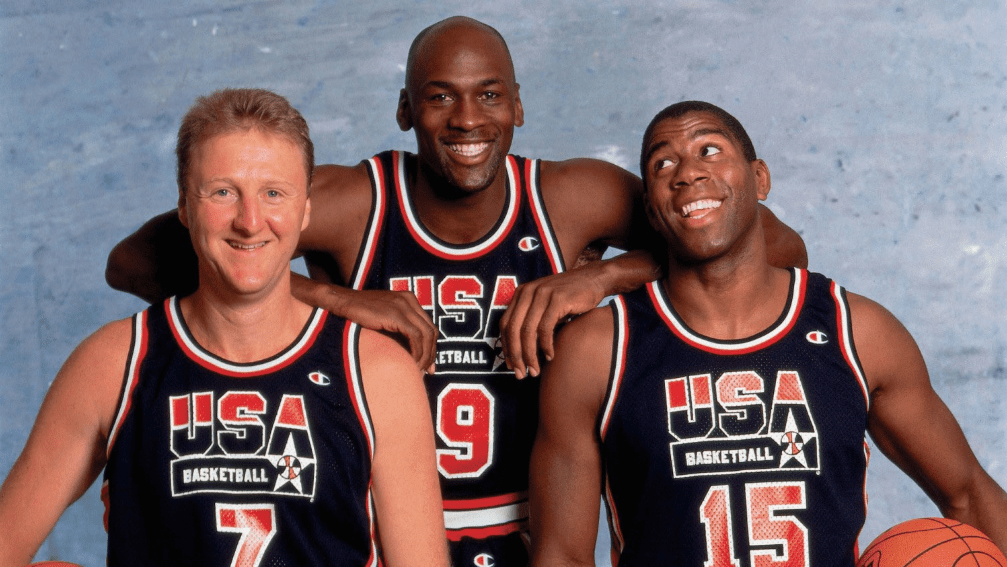
The Scottie Pippen point is the most legitimate and enduring critique from Jordan’s rivals. For the first three years of Jordan’s career, he was a scoring champion and a spectacle, but his teams were first round exits. The arrival and development of Pippen a 6’8” defensive savant and brilliant playmaker changed everything.
Pippen was the ultimate force multiplier. He shouldered the playmaking load, guarded the opponent’s best wing, and provided a second, unstoppable offensive weapon. Thomas’s argument is simple: take Pippen away, and Jordan is another elite scorer struggling to carry a team to the pinnacle, like Dominique Wilkins or Bernard King.
The “refs protection” charge is the most incendiary. It alleges that the NBA, recognizing its golden goose, instructed officials to call games in a way that sheltered Jordan from the Pistons’ physical style. The “Jordan Rules” were predicated on fouls that were not called.
In Thomas’s view, when the league finally decided it was Jordan’s time, the whistles changed. The hard fouls that once went unflagged began to be called, dismantling the Pistons’ primary weapon. This wasn’t basketball evolution; it was league intervention.
Combined, these points form Thomas’s core thesis: Jordan did not “overcome” the Pistons through sheer will; he was lifted over them by a Hall of Fame teammate and a rule enforcement shift that neutered their defense. His greatness was not solitary; it was scaffolded.

This argument allows Thomas to reframe his own losses. They weren’t defeats by a better man; they were defeats by a better supported system. The Pistons didn’t lose to Jordan; they lost to Jordan and the NBA’s chosen narrative.
3. The Empire of Grit: What Thomas Believes He Built (And Lost)
To fully comprehend Thomas’s fury, you must understand what he believes was stolen from him. He didn’t just lose basketball games; he lost the historical argument for his entire basketball philosophy.
The Bad Boys Pistons were a masterpiece of collective identity. They had no single player who could match Jordan’s athleticism or Bird’s shooting or Magic’s flair. What they had was a perfectly synchronized system of intimidation, defense, and shared offensive burden.
They won back to back championships in 1989 and 1990 by proving that five men operating as one ruthless unit could beat a team with a singular, transcendent talent. This was their empire: an empire built on sweat, blood, and the principle that the whole was greater than the sum of its parts.
Jordan’ eventual triumph did not just crown a new champion; it invalidated their blueprint. The NBA’s future belonged to the superstar centric model. The league marketed individuals, not systems. The Pistons’ style was legislated against, labeled “ugly,” and left in the past.
Thomas sees himself as the king of a razed kingdom. His championships are remembered with an asterisk of thuggery, while Jordan’s are celebrated as pure triumph. His legacy is that of a villain, while Jordan’s is that of a hero.
His comments, then, are a last ditch effort to reclaim his empire’s legitimacy. By attacking the foundations of Jordan’s myth, he is trying to resurrect the validity of his own. If Jordan was a product, then the Pistons were authentic. If Jordan needed help and protection, then the Pistons’ victories were pure.

He is fighting for the history books to record that there was another, equally valid way to win at the highest level a way his team mastered, and a way that was deliberately destroyed to make room for a new god.
4. The Unhealed Wound: The Handshake That Never Was
The psychological core of this feud is fossilized in a single, infamous moment: the 1991 Eastern Conference Finals walk off.
After being swept by the Bulls, the Pistons, led by Thomas, walked off the court at the Chicago Stadium before the final buzzer, famously snubbing the traditional handshake with the victors.
This act was immediately framed as the ultimate display of poor sportsmanship, cementing the Pistons’ villainous reputation. For Jordan, it was a final proof of their lack of class. For Thomas, it was something else entirely a principled refusal to bow.
In Thomas’s telling, the walk off was a response to a season of perceived disrespect from the Bulls, particularly Jordan. To shake hands would have been to perform a ritual of sportsmanship he felt had been shattered by the bitter, physical nature of the rivalry.
That moment never healed. It sits between these men like a landmine. Every time Thomas diminishes Jordan’s achievements, he is, in part, justifying that walk off. He is saying, “We did not acknowledge you then because you were not worthy of our respect, and you are not worthy of the GOAT title now.”
The refusal to concede is Thomas’s entire brand. Conceding the GOAT debate would be the final, ultimate handshake a recognition that Jordan was not just the victor in their battles, but the superior basketball entity. Thomas would rather burn the entire conversation down than offer that concession.
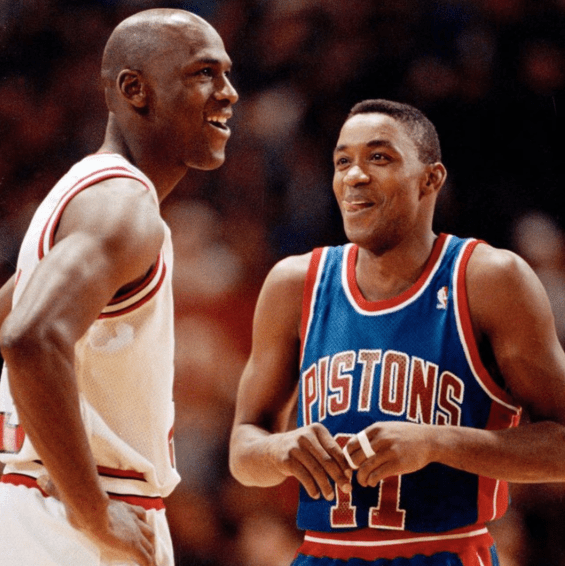
This transforms his comments from mere opinion into continuous warfare. The 1991 series never ended for Isiah Thomas. He is still fighting it, press conference by press conference, interview by interview.
5. The Modern Echo: Why This 80s Feud Feels Relevant Today
Thomas’s broadside lands in a modern sports landscape uniquely primed to receive it. We now live in the era of legacy analytics and narrative dissection.
The “ring culture” argument is central to modern GOAT debates. Thomas’s “Pippen” point is a precursor to today’s endless debates about superteams and help. Was LeBron’s path harder? Did Kareem have better teammates? Thomas was making the “help” argument before Twitter existed.
Furthermore, today’s fans are deeply skeptical of institutional narratives. The idea that a league would protect its biggest star for financial reasons is no longer a conspiracy theory; it’s a commonly accepted facet of sports business analysis. Thomas’s “refs protection” charge finds fertile ground in this cynicism.
In the era of The Last Dance, which heavily featured the Pistons as Jordan’s crucible, Thomas sees his side of the story once again being told by the victor. His comments are a direct rebuttal to that documentary’s narrative, an attempt to provide the director’s commentary for the villains.
He is also speaking to a growing contingent that questions untouchable legends. Just as some now scrutinize Babe Ruth’s era or Bill Russell’s competition, Thomas is inviting people to scrutinize the ecosystem around Jordan’s greatness.

In this light, Thomas isn’t a relic; he’s a proto podcaster. He is doing what a thousand sports talk shows do daily: challenging established hierarchy, picking at the threads of a legend, and arguing for context over mythology.
6. The Verdict: The Unwinnable War for a Crown He Never Wanted
In the final analysis, Isiah Thomas cannot win this war. The cultural verdict is in. Michael Jordan is the GOAT in the global imagination. But to frame Thomas’s fight as a loss is to misunderstand his objective.
He is not trying to convince the world that he, Isiah Thomas, is the GOAT. He is trying to convince the world that the title itself is a flawed construct, built as much on marketing and narrative as on basketball.
His mission is to complicate the statue. He wants people, when they look at the flawless marble figure of Jordan’s career, to see the cracks he believes are there: the supporting cast, the league’s hand, the moments of failure his own team provided.
He fights so that when people say “Jordan dominated,” a footnote appears: “But for three years, Isiah Thomas’s Detroit Pistons owned him, and they believe they would have owned him longer if the rules had stayed the same.”
Thomas knows he cannot dethrone the king. So his strategy is to tarnish the throne. He is the permanent opposition, the enduring critic, the man who ensures that the story of Michael Jordan’s perfection is never told without the accompanying snarl of Detroit defiance.
His legacy is inextricably tied to Jordan’s, not as a foil, but as a counter theologian. Jordan’s church preaches individual divine right. Thomas’s church preaches the gritty gospel of the collective. He will spend the rest of his life giving sermons from that pulpit, knowing full well most of the congregation left for the megachurch down the road decades ago. But he’ll keep preaching. Because for Isiah Thomas, the fight is the legacy. And that is a war he has no intention of ever ending.
