From Courtroom Ledgers to Instagram Outrage: How a $10,000 Child Support Increase Demand Ignites a Firestorm Over Parental Duty, Financial Fairness, and the Impossible Price Tag of an NBA Star’s Legacy
The world of professional basketball is a theater of multimillion dollar contracts, endorsements that dwarf the GDP of small nations, and lifestyles curated for maximal public consumption. Yet, behind the highlight reels and designer courtside fits exists a parallel, often shrouded universe of private legal battles, where the stakes are measured not in championship rings, but in monthly bank transfers and custodial agreements.
The latest seismic tremor from this hidden front arrived not via a press release from a powerhouse agency, but through the viral, unforgiving lens of social media. A post from the account “NBA Tracker” detonated across platforms, alleging that Jimmy Butler’s “baby mama” is taking the Miami Heat star back to court, claiming his current $55,000 monthly child support payment is insufficient and demanding an additional $10,000. The counterpunch, as presented in the same breathless update, was equally stark: Butler’s legal team reportedly argues the children’s mother “is unemployed and refuses to seek employment.”
In an instant, a complex family law proceeding was reduced to a digital firing squad a 280 character Rorschach test for public morality, gender politics, and our deepest biases about wealth, work, and parental responsibility. This is not merely a gossip item about a basketball player’s personal life. It is a fissure that exposes the profound, often contradictory tensions that arise when the boundless finances of modern athletic royalty collide with the intimate, legally codified realities of raising children. The $65,000 question is not just about money; it’s about value, fairness, and the impossible calculus of providing a “lifestyle” for offspring when one parent’s lifestyle exists in the stratosphere.
To comprehend the gravity of this demand, one must first grasp the financial planet on which Jimmy Butler orbits. Butler, 35, is in the penultimate year of a maximum contract extension with the Miami Heat worth approximately $184 million over four years. His annual salary for the 2024-25 season is a staggering $48.8 million. A simple mathematical breakdown reveals the context: the requested $65,000 per month in child support translates to $780,000 annually.

This sum, while astronomical to 99.9% of the global population, represents about 1.6% of Butler’s pre-tax yearly earnings from his NBA salary alone. It does not account for his substantial off court income, which includes endorsement deals with brands like Jordan Brand, Ruffles, and Mate tea, along with his burgeoning coffee venture, Bigface Coffee. By the cold metrics of high net worth child support formulas, which are typically based on a percentage of parental income and the “reasonable needs” of the child, the figure is not an automatic outlier.
States like California, where many athletes establish residence, employ guidelines that can see support orders reach levels that support a multi millionaire’s lifestyle for the child, based on the principle that a child is entitled to benefit from the standard of living of both parents. The legal battle, therefore, is not over survival, but over definition: what constitutes a reasonable expenditure for a child when one parent’s idea of “reasonable” includes private jets, oceanfront estates, and seven figure watches?
The mother’s claim of insufficiency, juxtaposed against Butler’s legal team’s assertion of voluntary unemployment, sets the stage for a classic, high stakes family law drama. The core of her argument likely hinges on the concept of “needs of the child” as pegged to the father’s extraordinary means. This could encompass a dizzying array of expenses: ultra premium healthcare and security; tuition for the world’s most elite private schools (potentially spanning from pre K through postgraduate studies);
travel costs for the children to maintain a relationship with their father during his grueling NBA schedule, which would logically entail first class or private flights and luxury accommodations; housing in a neighborhood commensurate with safety, privacy, and the social circles they inhabit; and provisions for extracurricular activities, tutoring, and other enrichments befitting the offspring of an international celebrity. In this rarefied air, a nanny or full time domestic staff is not a luxury but a logistical necessity. The $55,000 may, in her legal filing, be portrayed as inadequate to fund this holistic, gilded ecosystem for the children to truly share in their father’s life.
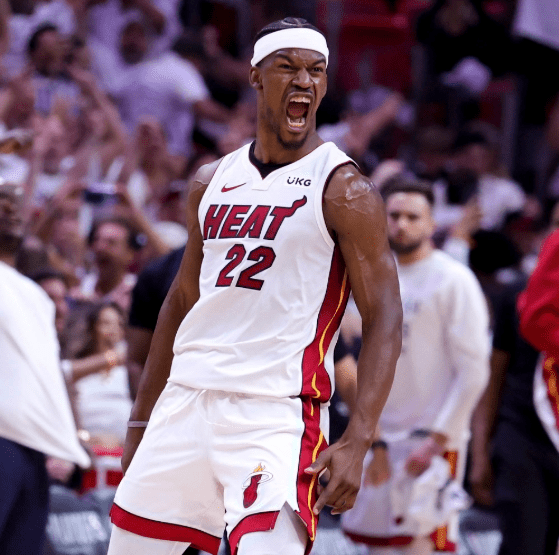
Butler’s legal retort, as summarized in the social media post, strikes at a different, more universally resonant principle: parental contribution and effort. The claim that the mother “is unemployed and refuses to seek employment” is a strategic cannon shot. In family courts, a parent’s earning capacity, not just their current income, is a critical factor. A judge can “impute” income to a parent deemed to be voluntarily underemployed. Butler’s team is likely framing the request for an increase as an attempt to subsidize the mother’s lifestyle, not the children’s needs, arguing that she has a duty to contribute financially to her children’s upbringing according to her own capacity.
This argument seeks to tap into a powerful cultural narrative about personal responsibility, potentially painting the mother as seeking a perpetual, no strings attached stipend from the fruit of Butler’s labor. It reframes the narrative from “What do the children deserve?” to “What is the mother obligated to do?” The emotional resonance of this angle with the public is undeniable, as seen in the fiery, divided comments on the original post.
The case unfolds against a sprawling backdrop of Jimmy Butler’s intricate personal history. Butler is a father to at least two children from previous relationships. His first child, a daughter, was born in 2014 from a relationship that ended prior to his NBA stardom. The mother in the current lawsuit appears to be related to a second, more recent child. Butler has been famously private about his children, shielding them almost entirely from public view a stark contrast to other NBA stars who integrate their families into their brand.
This privacy makes the public legal dispute all the more jarring. Furthermore, Butler’s own origin story as a child who was famously told by his mother at age 13, “I don’t like the look of you. You gotta go,” and who found refuge with different families, adds a layer of profound, almost novelistic depth. His lifelong search for belonging, family, and loyalty is the bedrock of his public persona. This legal conflict, centering on the financial architecture of his own family, represents a painful irony that cannot be lost on him or his close observers. It is the ultimate test of how he builds and protects the family unit he himself was denied.
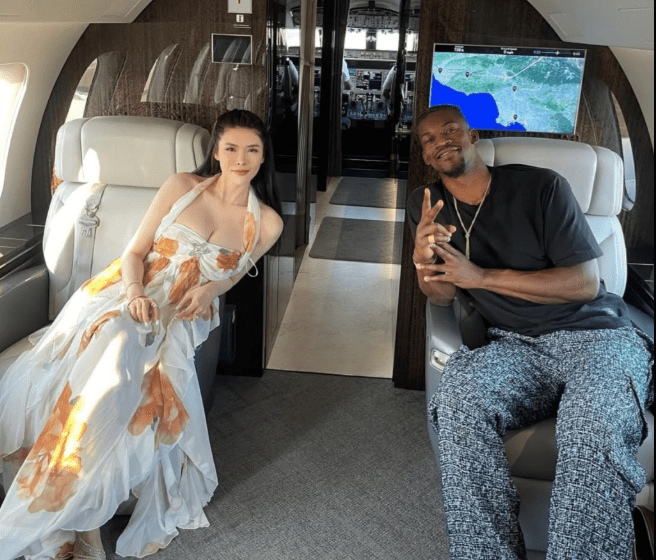
The social media reaction to the “NBA Tracker” post serves as a real-time cultural autopsy. The comments section is a warzone of entrenched positions. One faction views the mother’s request as the epitome of greed, arguing that $55,000 per month is more than any child could possibly need and framing the mother as a “gold digger” exploiting the system. The other faction defends her, pointing out that Butler’s wealth is so vast that the sum is a rounding error, and that ensuring his children have a trust fund, world class education, and lifelong security is a basic paternal duty, not an indulgence.
This debate mirrors larger societal conflicts about child support, gender, and wealth redistribution. It also highlights the unique absurdity of applying normal frameworks to billionaire adjacent incomes. The public is forced to wrestle with questions it is unequipped to answer: Is any amount of money “enough” for a child? At what point does support for a child become de facto support for the other parent? And what is the ethical obligation of a parent whose income exists in a realm beyond ordinary human comprehension?
Legally, the outcome will hinge on forensic examination. Butler’s attorneys will demand a detailed accounting of how every dollar of the current $55,000 is spent, and will likely hire forensic accountants to challenge the necessity of proposed new expenses. They will subpoena records related to the mother’s job search (or lack thereof), her educational background, and her own assets.
Her legal team will counter with expert testimony on the actual cost of raising a child in the exclusive enclaves where NBA stars live, and will delve deep into Butler’s full financial portfolio to establish his true ability to pay. The judge’s ruling will set a precedent, not just for Butler, but for the growing cohort of athletes and entertainers facing similar disputes. It will be a declarative statement on how the law views the intersection of extreme wealth and fundamental parental obligation.

Beyond the legal and financial mechanics, this battle speaks to the existential dilemma of the ultra wealthy parent. How does one instill values like hard work, humility, and grit in children whose very allowance could fund a small business? Butler, whose identity is built on being “the hardest worker in the room,” a player forged in adversity, must reconcile that with providing a life of potentially limitless ease for his children. The child support number is, in a crude sense, the quantitative expression of that struggle. It is the annual premium on attempting to give his children everything he never had, while hoping it doesn’t deprive them of the struggle that made him who he is.
In the final analysis, the headline grabbing figure of $65,000 is merely the surface tremor. The real quake is happening beneath, in the clash of two irreconcilable American ideals: the right of a child to benefit from a parent’s success, and the principle of individual responsibility. Jimmy Butler’s courtroom is just the most expensive arena in which this eternal conflict is being played out. The final buzzer won’t sound with a judge’s gavel; it will echo in the life lessons his children absorb, and in the public’s forever shifting judgment on what a father especially a father who is a god of the modern pantheon truly owes.