The Gatekeeper’s Howl: How Chris “Mad Dog” Russo’s Fury Over the Knicks’ NBA Cup Celebration Is a Last Stand Against the Modern, Manufactured Joy He Can No Longer Control or Comprehend
The voice is a familiar blast of static from a bygone era voice that sounds like sports radio filtered through a subway grate. Chris “Mad Dog” Russo, the high priest of old school sports sanctimony, has heard the celebrations echoing from Madison Square Garden and seen the glee on the faces of Knicks fans. His response is not analysis; it is a primal scream of disgust. “This is stupid. This is not authentic,” he seethes, his incredulity aimed at the very idea that a fanbase could find unbridled joy in their team winning the NBA Cup. He invokes the ghosts of glory past Walt Frazier, Willis Reed, Red Holzman implying they are spinning in their graves at the sight of a “fabricated event” being celebrated. He points to the first round playoff exits of past Cup winners as proof of its emptiness. For Russo, this is a moral and intellectual failing.
He is not just critiquing a tournament; he is declaring a state of emergency in the soul of sports. In his worldview, joy must be earned through a specific, grueling, traditional crucible. Anything else is heresy. But his blistering rant is more than just a hot take; it is a naked, terrified reaction to a fundamental power shift he cannot stop. The fans, the players, and the league itself have moved on. They have decided that joy does not need his permission. They have created a new occasion for passion, and in doing so, they have exposed Russo not as a guardian of tradition, but as a gatekeeper mourning the loss of his gates. The Knicks’ celebration of the NBA Cup isn’t just about basketball. It is a declaration of independence from the tyranny of a single, sanctioned narrative for happiness. And Mad Dog Russo’s fury is the sound of that tyranny realizing it has lost its throne.
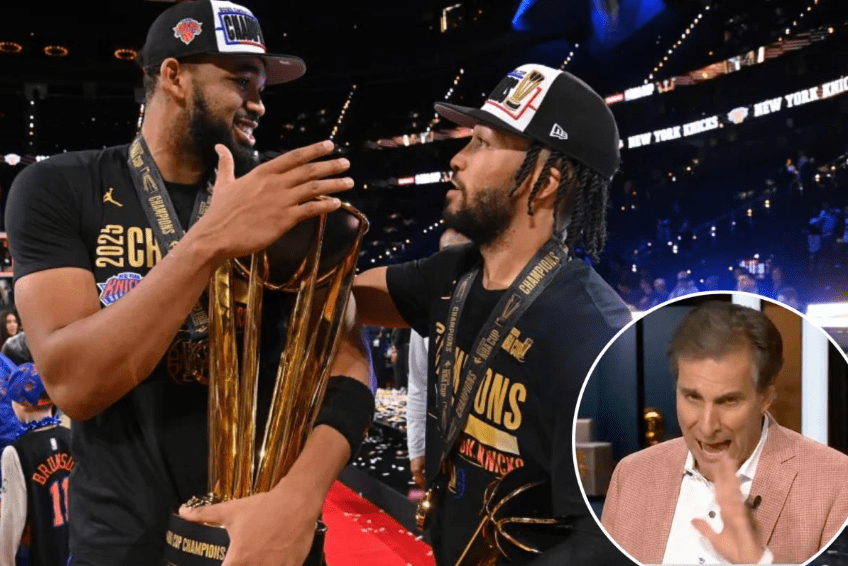
To understand the depth of Russo’s rage, one must first understand the theology of traditionalism he preaches. In this religion, there is only one true sacrament: the Larry O’Brien Trophy. The path to it is a sacred, six month marathon of 82 games and four playoff rounds. Every other achievement is either a stepping stone to this peak or a meaningless distraction. The NBA Cup, a shiny new invention with a compact, high stakes format, is the ultimate blasphemy. It offers a shortcut to catharsis, a condensed version of the playoff experience with its own trophy, its own MVP, and its own pile of cash for the players. It creates a second peak in the middle of the valley of the regular season. To Russo, this is not innovation; it is adulteration. It dilutes the purity of the struggle. His argument that past winners faltered in the “real” playoffs is central to this dogma it “proves” the Cup is a fraud, a plastic crown that melts under the true heat of May and June.
But this argument deliberately misses the point. The fans celebrating in the streets of New York are not comparing the NBA Cup banner to the 1973 championship banner. They are not saying it is equal. They are saying it is fun. And in Russo’s purist worldview, fun that is not directly tethered to the ultimate prize is illegitimate, a sign of a fanbase with diminished standards. He mistakes their capacity for layered joy for a failure of discernment. In reality, the Knicks’ decision to not hang a banner is the ultimate proof of their own discernment.
1. The Theology of “Authenticity”: What Mad Dog Really Worships
Chris Russo’s core charge is that the NBA Cup is “inauthentic.” This is the most loaded word in his arsenal, and deconstructing it reveals his entire philosophical framework.
For Russo, “authentic” sports glory is tied to historical lineage and proven difficulty. The NBA championship is authentic because Dr. J chased it, because Magic and Bird fought for it, because Jordan wept on the floor holding it. Its value is certified by decades of blood, sweat, and tears.
The NBA Cup has no ghosts. It has no legacy. It was created in a boardroom, not organically grown on the court over decades. This, to the traditionalist, makes it inherently hollow a corporate product masquerading as sporting achievement.
Russo’s authenticity is also tied to endurance. The “real” champion is the team that survives the marathon. The Cup winner only has to sprint a few specific nights. In his mind, this makes it a test of a different, lesser skill set hot streaks and luck rather than sustained excellence.
Furthermore, his authenticity is exclusive. There can only be one true champion per year. The introduction of a second trophy creates a confusing, multi tiered hierarchy that dilutes the singular focus he believes should define a sport’s pinnacle.
When he says the celebrations make a “mockery” of the 1970 and 1973 titles, he is defending this exclusive pantheon. He fears that if we celebrate this, we cheapen that. Joy, in his view, is a finite resource that must be spent only on the most legitimate achievements.
His rage, therefore, is conservative panic. He sees a new, vibrant tradition being born before his eyes, and his instinct is to burn it down to protect the sanctity of the old ones. He cannot conceive that both can exist in the same ecosystem.
2. The Fan Revolt: Why Knicks Faithful Have Every Right to Celebrate
The target of Russo’s ire is not the league or the players, but the Knicks fans themselves. This is where his argument completely fractures against the hard reality of fandom.
For the long-suffering Knicks faithful, joy has been a scarce commodity for a quarter century. Since 2000: no Finals appearances, constant front office chaos, and a parade of false prophets. The 2023 run to the Eastern Conference Finals was a sudden, glorious shock.
The NBA Cup provided something new: a guaranteed moment of triumph. In a single elimination tournament, they got to see their team win a final, cut down nets, and lift a trophy. This is an experience their franchise has not provided since 1973.
Russo’s claim that this “means absolutely nothing in the big picture” is a profound misunderstanding of why fans invest. The “big picture” is often bleak. Fans live in the small pictures: the clutch shot, the winning streak, the bragging rights for a week.
The $500,000 per player incentive Russo scoffs at is a huge deal to the end of bench players and staffers for whom that sum is life changing. The fans understand this. They are celebrating for those players, too.
Most importantly, the fans are not confused. They know it’s not a championship. Their celebration is not a substitution for Title hunger; it is an addition to their emotional calendar. It’s a festival in the middle of the grind.
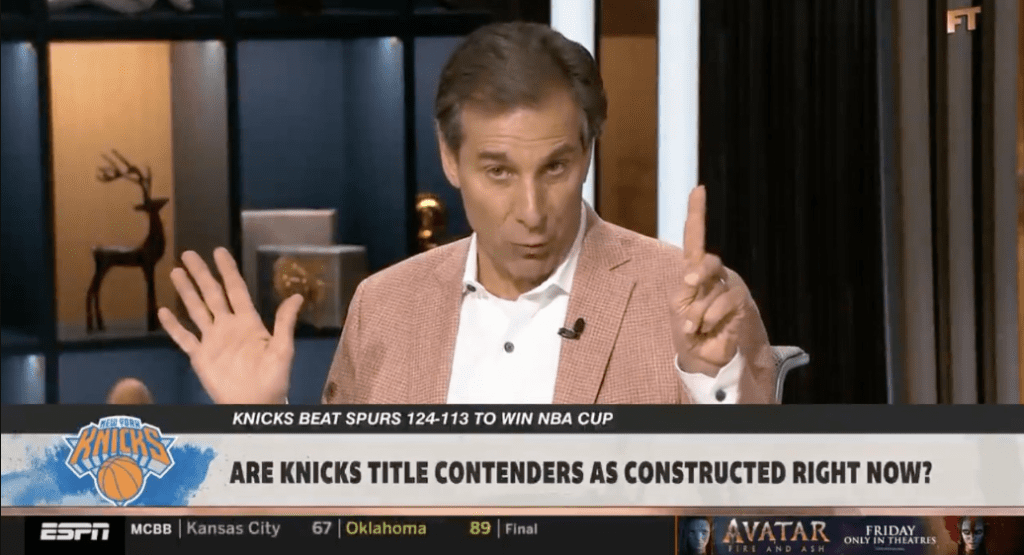
By telling them their joy is stupid, Russo is committing the cardinal sin of sports commentary: condescending to the very people whose passion pays his salary. He is policing their happiness, and they are responding by turning up the volume on their party, proving that authenticity is defined by genuine emotion, not by his personal rulebook.
3. The Stephen A. Smith Divide: A Battle for the Soul of Sports Media
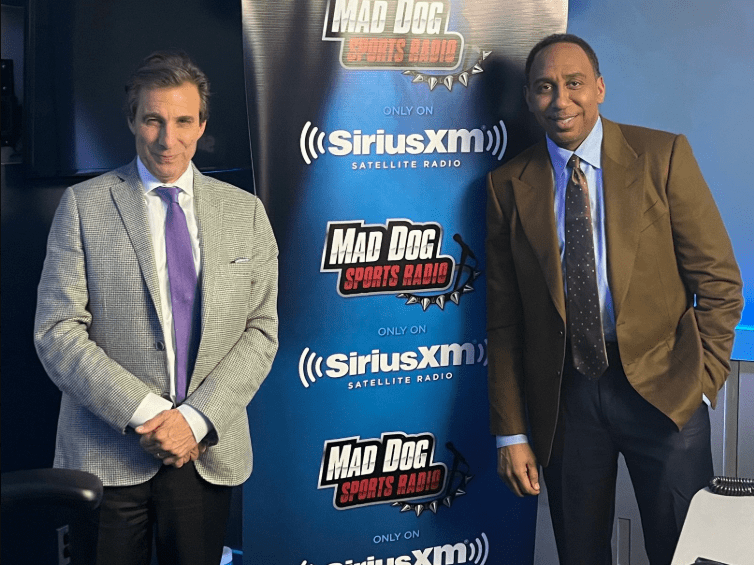
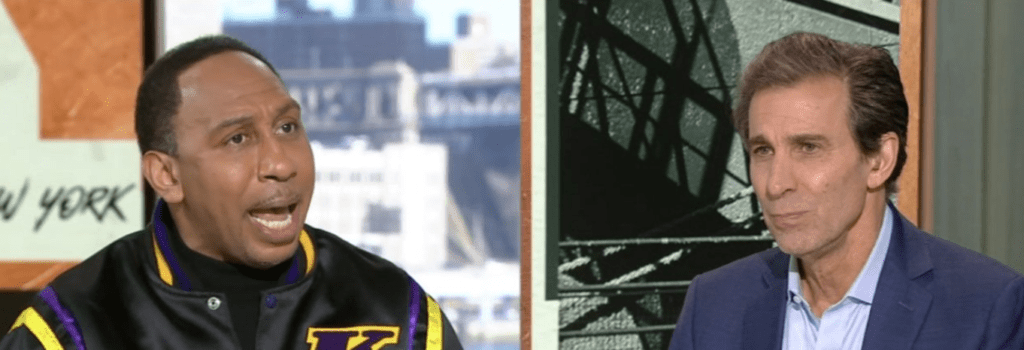
Russo specifically positions his outrage against the enthusiasm of his colleague, Stephen A. Smith. This is not incidental; it is a symbolic clash of media eras and philosophies.
Stephen A. Smith represents the modern, reactionary, emotion first model of sports media. He rides the wave of the moment. If the fans are hyped, he gets hyped. He validates the crowd’s energy. He understands that sports are, at their core, entertainment.
Russo represents the curmudgeonly, tradition first, perspective heavy model. He is the scold, the historian, the reminder of “the way things should be.” His role is to be the brake on the hype train.
When Russo says he is “flabbergasted” by Stephen A.’s excitement, he is exposing this fault line. Stephen A. is speaking the language of the 2025 fan, who lives in a world of immediate gratification and micro narratives. The NBA Cup is a perfect micro narrative.
Russo is speaking the language of the 1975 fan, for whom the season was a slow build to a singular climax. Their debate is a proxy war for what sports media should be: a cheerleader for fan emotion or a stern professor of context.
The audience’s allegiance in this war is clear. They largely side with Stephen A.’s celebration. They don’t want their party rained on. In attacking Stephen A., Russo is really attacking the audience’s right to define what matters to them, and he is losing that battle decisively.
4. The Victor Wembanyama Red Herring: A Flawed Litmus Test
A key pillar of Russo’s argument is that the Spurs’ Victor Wembanyama “only played 20 minutes” in the final, implying the Spurs didn’t care, thus invalidating the Knicks’ win.
This is a critical misunderstanding of both strategy and the tournament’s design. Minutes restrictions for young superstars, especially in a compacted schedule with tournament games, are standard load management protocol.
The Spurs’ decision likely reflects their long-term priority (protecting their franchise cornerstone) over the short term prize (the Cup). It does not mean the game itself was meaningless. The other nine players on the court for San Antonio were undoubtedly playing to win $200,000 and a trophy.
Using Wembanyama’s minutes as a litmus test for “authenticity” is deeply flawed. By that logic, any game where a star is injured or rested is “inauthentic.” It ignores the competitive reality of an 82 game season and the reality that for the vast majority of players on that floor, the game mattered immensely.
Russo uses this fact as a gotcha, but it ultimately backfires. It shows he is judging the event by a purist’s ideal where all stars play unlimited minutes in all games, a fantasy that has not existed in the NBA for over a decade. He is critiquing the 2025 tournament for not conforming to a 1985 standard of player usage.
5. The Banner Decision: The Knicks’ Wise, Nuanced Reality Check
The most fascinating twist in this saga is the reported decision by the Knicks organization to not hang an NBA Cup banner in Madison Square Garden.
This decision completely undercuts Russo’s entire premise. It proves the team and its fans are not, in fact, conflating this trophy with their historic championships. They understand the hierarchy perfectly.
The decision is a masterstroke of symbolic messaging. It says, “We enjoyed this win. We cherish the moment and the money. But we know the real goal. This is not the banner we are here to hang.”
It simultaneously validates the fans’ celebration (the moment was real and fun) and validates Russo’s ultimate point (it is not the ultimate achievement). It allows for layered thinking: you can enjoy the appetizer without confusing it for the main course.
This nuance is what Russo’s rant cannot accommodate. His world is binary: either you treat it like a title (and are stupid) or you dismiss it entirely (and are authentic). The Knicks, by celebrating wildly and then declining the banner, have chosen a third, more mature path: embrace the joy of the present while keeping your eyes on the greater prize of the future.
It is the organization telling Mad Dog, “We hear you. But you don’t get to tell our fans not to smile.”
6. The Real Stakes: It’s Not About a Cup, It’s About Control
Beneath the rhetoric about authenticity and history, the core conflict is about control over narrative and emotion.
Chris Russo represents an old guard that believes it has the authority to designate what is and isn’t worthy of sports passion. The league, the players, and the fans have now collectively seized that authority for themselves.
The NBA created the Cup to manufacture meaning in the regular season. The players compete fiercely for it because of the money and the competitive itch. The fans celebrate it because it provides a novel, concentrated dose of the feelings they crave.
Russo’s rant is the last gasp of a worldview that says, “You will care about what I tell you to care about, in the way I tell you to care about it.” The modern sports ecosystem has democratized caring. Fans will find meaning and joy where they choose.
The NBA Cup’s ultimate success or failure won’t be judged by whether past winners won the real title. It will be judged by whether it continues to produce the moments, memories, and money that keep players engaged and fans entertained in December.
Russo is fighting for a singular, austere sports calendar with one emotional peak. The league and its fans have voted for a calendar with multiple peaks, recognizing that in a crowded entertainment landscape, more joy is not the enemy of true glory it’s the fuel for it.
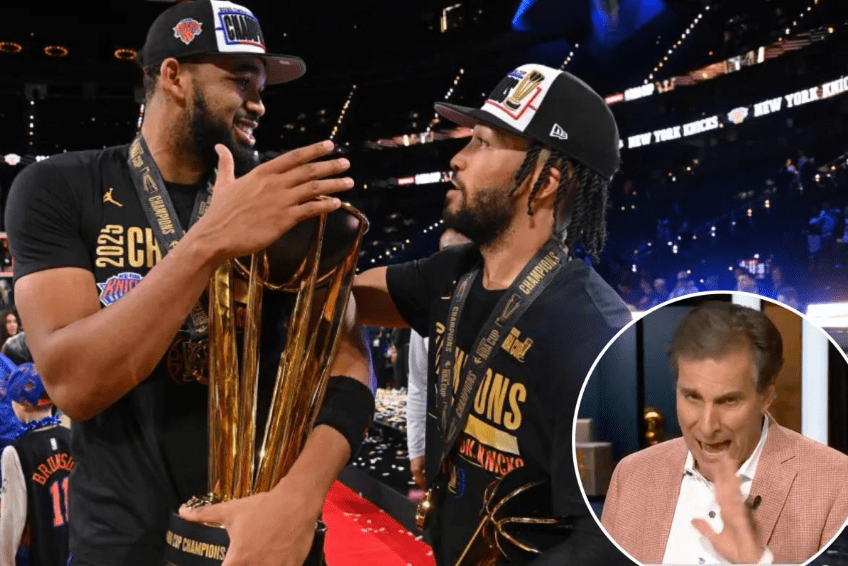
Mad Dog can bark all he wants. But in Las Vegas, and in New York, they’re still playing the tape of Jalen Brunson lifting the trophy, and the fans are still cheering. In the end, the sound of that joy will always drown out the howls of a gatekeeper standing at an open gate, wondering why everyone stopped listening to him.