“‘Chet’s Soft, Just Like You’ How Rashad McCants’ Explosive Response to Dirk Nowitzki Over Victor Wembanyama Is Igniting the NBA’s Most Heated Young Star Debate”
The Sparks Fly Before the NBA Cup Semifinals
Tensions in the NBA often flare before the tip-off, but rarely do pregame interviews ignite a firestorm that transcends the usual speculation about matchups and stats. That was precisely the scene last Saturday as the San Antonio Spurs prepared to face the Oklahoma City Thunder in the NBA Cup semifinals. Victor Wembanyama, the French phenom redefining what it means to be a modern big man, was asked about his rivalry with Chet Holmgren by reporter Taylor Rooks. In response, Wembanyama pivoted the conversation, highlighting Shai Gilgeous-Alexander’s impact rather than directly praising Holmgren. The subtle deflection, innocuous to most observers, triggered a wave of commentary from one of the league’s most respected yet traditional voices, Dirk Nowitzki. Nowitzki, who has long been associated with grace, calm, and measured responses, did not hold back in criticizing Wembanyama for what he perceived as a lack of respect toward Holmgren. This, in turn, prompted former NBA guard Rashad McCants to step in and call out Nowitzki, sparking a debate that intertwined questions of respect, motivation, and generational differences in the league.
McCants’ rebuke was striking in its directness. “Chet’s soft, just like you,” he said, reducing Nowitzki’s criticism to a personal attack on his former rival’s toughness rather than an objective evaluation of Wembanyama’s conduct. The comment was met with immediate shock from fans and analysts, who rarely witness public confrontations involving legends and former players conducted in such a forthright manner. Yet beneath the surface, McCants’ words reflected a deeper discussion about the changing nature of player dynamics in the NBA. Younger stars, he implied, operate under a different set of pressures and motivations, and Wembanyama’s competitive fire should not be misconstrued as disrespect but celebrated as the hunger of a rising talent eager to carve his place in league history. McCants’ response forced analysts to reconsider the lens through which Wembanyama’s comments were being viewed, framing them not as a slight against Holmgren but as evidence of the Frenchman’s drive and confidence.
The History of Wembanyama and Holmgren: Rivalry Forged in Youth
The rivalry between Victor Wembanyama and Chet Holmgren has deep roots that extend back long before their NBA careers intersected. Their first significant clash occurred at the 2021 FIBA U-19 World Cup, where Holmgren’s team claimed gold while Wembanyama showcased glimpses of the brilliance that would define his professional ascent. At that stage, the rivalry was framed largely around international prestige, but it quickly became apparent that both players would carry these early experiences into the NBA. When Wembanyama won the 2024 Rookie of the Year award, it marked a pivotal moment, signaling that he could compete at the highest levels even when Holmgren had already begun accumulating professional accolades. Holmgren’s Thunder capturing the 2025 NBA title further complicated the narrative, giving him an early championship advantage over Wembanyama, and establishing a dynamic that the league would watch with intense curiosity: the young phenom chasing not only personal milestones but also the validation of competing successfully against a peer who had already tasted ultimate success.
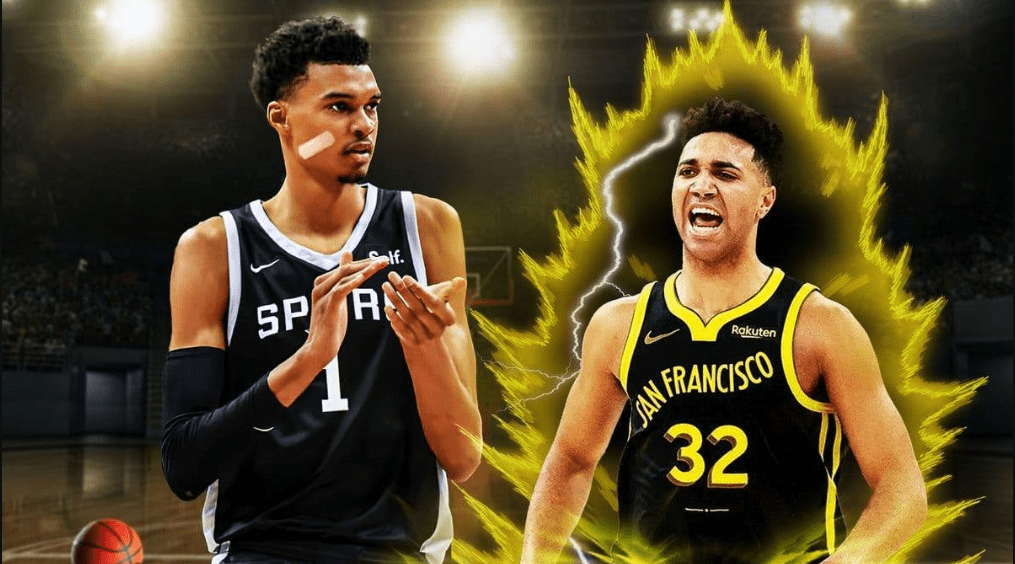
This background is essential to understanding the tension present in Wembanyama’s pregame statements. By praising Shai Gilgeous Alexander, he was not dismissing Holmgren’s accomplishments but rather acknowledging the specific context in which he perceives his own growth and challenges. McCants’ defense of Wembanyama hinges on this nuanced understanding. For him, and many others who have watched the French star develop, the perceived slight was a misinterpretation by observers unfamiliar with the psychological and strategic considerations of elite competition. By emphasizing SGA’s influence, Wembanyama was effectively highlighting the benchmark of excellence he seeks to surpass, a hallmark of a competitor oriented toward continuous improvement rather than pandering to traditional expectations of deference.
Dirk Nowitzki’s Perspective: Tradition Meets Modern NBA Sensibilities
Dirk Nowitzki’s criticism of Wembanyama was rooted in his own understanding of respect and protocol, honed over a career in which he navigated the delicate balance between dominance and diplomacy. Nowitzki’s perspective is informed by his experience facing the NBA’s elite for over two decades, where acknowledgment and respect were as critical as statistical performance. To him, Wembanyama’s comments seemed to sidestep the established narrative of Chet Holmgren as a worthy opponent, reducing a storied rivalry to an indirect comparison that prioritized self promotion over homage. On the NBA on Prime studio show, Nowitzki stressed that Wembanyama’s remarks carried a tone of dismissal, which, in his view, was “too swaggy” for the context. His criticism was less about questioning the French star’s skill and more about enforcing a cultural expectation that rising talents honor their contemporaries and predecessors alike.
The response also reveals a broader generational divide within the league. Veteran players like Nowitzki often emphasize decorum, public acknowledgment, and ritualized respect, viewing these gestures as integral to sustaining the culture of professionalism in the NBA. Younger players, conversely, navigate an environment saturated with media, social platforms, and immediate scrutiny, where calculated deflections, selective praise, and performance driven narratives are standard practice. This divergence in perspectives is central to understanding why McCants framed Nowitzki as “soft” in his retort. For McCants, Wembanyama’s approach reflects competitive intelligence and psychological strategy rather than disrespect. The critique of Nowitzki, therefore, is less personal than it appears on the surface; it is an argument about adapting to the evolution of the league’s interpersonal and competitive norms.
Wembanyama’s Motivation: Championship Hunger and Psychological Warfare
Victor Wembanyama’s competitive psyche has been a subject of intrigue since his earliest days in organized basketball. Analysts, including ESPN’s Marc Spears, have suggested that Wembanyama’s motivation is closely tied to observing Holmgren’s success. Spears relayed that within the San Antonio Spurs organization, Wembanyama’s drive is fueled by a desire to reclaim supremacy over Holmgren, who has already secured a championship ring. This framing positions Wembanyama’s comments not as a slight but as a strategic expression of his internal goals and competitive edge. By emphasizing SGA rather than Holmgren, Wembanyama subtly communicates that he measures his own progress against the pinnacle of performance, reinforcing the notion that elite athletes prioritize personal growth and measurable outcomes over obligatory acknowledgment.
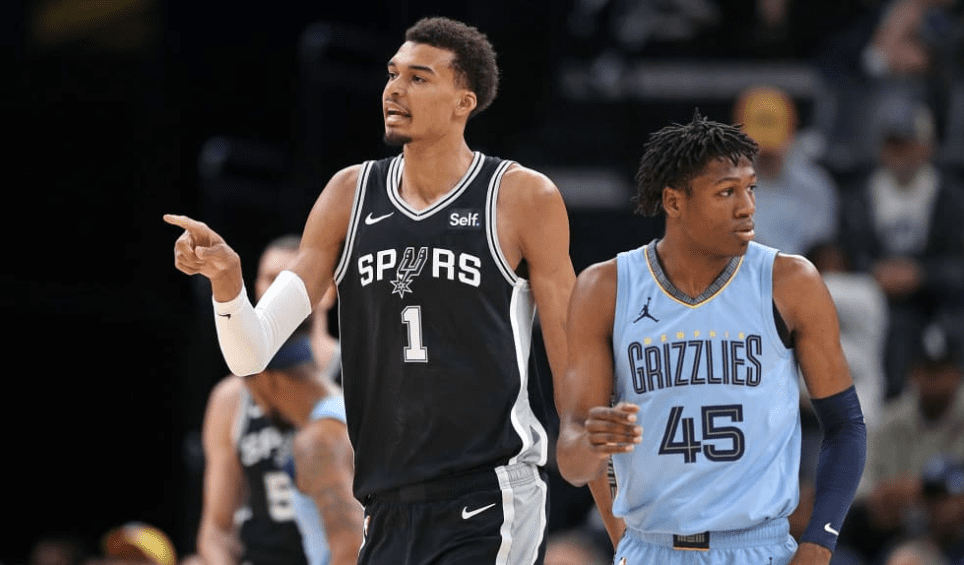
This psychological layer is crucial to understanding the implications of the NBA Cup semifinal result, in which Wembanyama’s Spurs ended the Thunder’s 16-game winning streak. The victory was more than just a win; it was a statement that Wembanyama can translate motivation into tangible outcomes. While media narratives often focus on the spectacle of a rivalry, the underlying significance lies in Wembanyama’s ability to channel previous frustrations, competitive benchmarks, and personal accountability into team success. This aligns with historical patterns among great players, where rivalry serves as both inspiration and performance catalyst, not merely as a source of controversy.
The Broader Debate: Respect, Rivalry, and the Modern NBA
The McCants Nowitzki Wembanyama exchange is emblematic of a wider debate in the NBA regarding respect, rivalry, and generational transition. At one level, it is a clash between traditionalist values, which prioritize formal acknowledgment and public deference, and modern strategies, which emphasize psychological preparedness, media literacy, and performance-driven narratives. At another level, it highlights the challenge faced by rising stars in navigating a league where every comment is scrutinized and historical comparisons dominate public discourse. In this context, Wembanyama’s measured statements, coupled with McCants’ aggressive defense, illuminate the pressures confronting young phenoms as they attempt to balance competitive intensity with media representation.
Furthermore, the episode reflects a fundamental truth about the NBA: respect is not a unilateral concept but a negotiated one. Each generation redefines its standards for acknowledging talent, rivalry, and personal achievement. McCants’ critique of Nowitzki underscores that even widely celebrated legends are subject to reinterpretation when new frameworks of performance and psychology emerge. Wembanyama, in this scenario, is both participant and catalyst, provoking conversations that examine the evolving nature of professional conduct, competitive mindset, and inter-player dynamics.
Looking Forward: What This Means for the NBA and Future Matchups
As the Spurs and Thunder continue their regular-season schedule, the ramifications of this exchange will extend far beyond the initial comments. Wembanyama’s performance, both on and off the court, will be scrutinized for indications of growth, maturity, and competitive adaptation. Each subsequent matchup with Holmgren offers the opportunity to contextualize his earlier statements within a broader narrative of rivalry and resilience. Analysts and fans alike will be watching closely to see if Wembanyama maintains the balance between individual brilliance, team success, and respect for his contemporaries.
The McCants intervention adds another layer of complexity, highlighting that narratives in the NBA are not solely constructed by stars or legends but also by former players, commentators, and media figures who shape public interpretation. This dynamic interplay ensures that the league’s evolving culture is continuously negotiated, contested, and celebrated, reflecting the ongoing tension between history, innovation, and the personal motivations of its participants. In the end, what began as a seemingly minor pregame comment has evolved into a multi-faceted debate about the meaning of respect, the nature of rivalry, and the strategies that define success in the modern NBA.