Byron Scott Drops a Jaw‑Dropping Reality Check on Victor Wembanyama: Why the NBA’s Unicorn Talent Might Face the Same Injury Fate as Sampson and Yao and What It Means for the Spurs’ Future
Victor Wembanyama entered the NBA with a level of hype that few rookies, if any, have ever experienced. Standing at an astonishing 7 feet 7 inches with the ball‑handling skills of a point guard and the shooting range of a wing, Wemby represents a combination of size, skill, and versatility that has virtually no precedent in the league. Fans, analysts, and former players have all marveled at his physical gifts, and rightfully so. When he is healthy and on the court, his impact is immediate shifting defensive schemes, creating mismatches on offense, altering shots inside, and spacing the floor with his perimeter game.
Yet even as the Spurs’ franchise cornerstone dazzles crowds and commands headlines, a shadow looms over his trajectory. Legendary NBA champion and coach Byron Scott recently offered a stark and sobering perspective: the very physical attributes that make Wembanyama remarkable might also be the reason he struggles to stay healthy. As Scott pointed out, history contains cautionary examples of players blessed with rare size and mobility who found their bodies unable to withstand the relentless grind of the NBA. The comparison to past “unicorns” such as Ralph Sampson and Yao Ming raises profound questions about the sustainability of Wemby’s career at the highest level.
This is not an indictment of Wembanyama’s talent far from it. It is a realistic assessment rooted in the physical demands of professional basketball and the anatomical vulnerabilities of players with extreme size. Wembanyama has already encountered injury setbacks, including a calf issue this season that has sidelined him indefinitely and deep vein thrombosis that limited him to 46 games in a previous year. For a player whose game relies on extraordinary mobility and perimeter involvement, these disruptions are not trivial inconveniences. They are serious warning signs ones that Byron Scott and other basketball minds are watching closely.
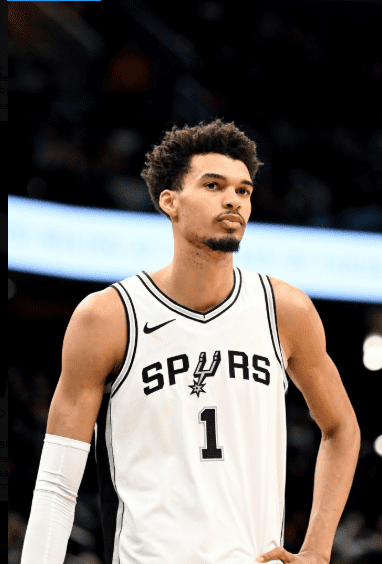
As the NBA continues to evolve toward positionless basketball and perimeter versatility, players like Wembanyama are both the future and a reminder of the sport’s physical realities. The following sections explore the layers of this conversation: the injury risks inherent to Wembanyama’s body type, the historical precedents, the strategic implications for the Spurs, and the broader debate about longevity and health in the NBA.
THE UNICORN PHENOMENON: REDEFINING NORMAL IN THE NBA
In the lexicon of modern basketball, the term “unicorn” has been applied to players whose combination of size and skill break traditional molds. From Kristaps Porzingis to Joel Embiid to Giannis Antetokounmpo, fans and commentators have used the descriptor to convey rarity and intrigue. Yet among these athletes, Victor Wembanyama represents the purest embodiment of that mythical comparison. Unlike others who fit a part of the “unicorn” profile, Wembanyama’s physical and technical attributes are simultaneously extreme and complementary a rare synergy of height, wingspan, ball control, shooting range, defensive instincts, and movement fluency.
When fully functional, he commands attention on every possession: ball handling that defies his size, ability to shoot from beyond the arc, and the capacity to drop in rebounds or block shots with equal ease. Wembanyama’s skill set allows the Spurs to implement schemes that blur traditional positional definitions. He can initiate offense from the top of the key, push transition as a secondary ball handler, step out to hit threes, and discourage any opponent from entering the paint. This versatility places him among the rarest talents in NBA history.
It is precisely this combination that fuels the optimism surrounding Wembanyama’s potential legacy. Fans see him as a generational star capable of leading the Spurs to sustained success, challenging league powerhouses, and perhaps even contending for multiple championships. NBA scouting lore is filled with hyped prospects who never lived up to the billing, but Wembanyama’s early performance suggests that his abilities are not merely hype They are reality.
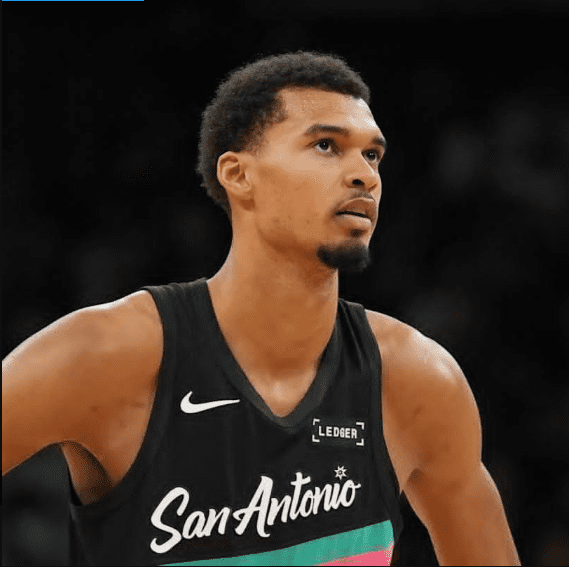
Yet the term “unicorn,” while flattering, also carries a double meaning. In mythology, unicorns are beautiful and rare but fragile. They represent anomalies delicate creatures that capture attention precisely because they defy expectation. In Wembanyama’s case, his body is a physical outlier, and such outliers historically struggle with the sustained physical demands of professional basketball.
INJURY HISTORY SO FAR: A CAUTIOUS START TO A BRIGHT CAREER
Wembanyama’s NBA journey has been breathtaking in its highlights and sobering in its physical interruptions. Early in the season, he showcased dominant averages including 26.2 points, 12.9 rebounds, 4.0 assists, 1.1 steals, and 3.6 blocks per game which hinted at a transformative presence in the league. These numbers reflect a player whose impact is felt on both ends of the court, capable of controlling a game in ways few have ever done.
Yet as the season progressed, a calf injury forced Wembanyama out of action indefinitely, disrupting San Antonio’s rhythm and thrusting the injury question into the center of his narrative. This setback was reminiscent of last season’s struggle with deep vein thrombosis, which limited him to 46 games. Already the pattern raised eyebrows: elite performance followed by untimely absences due to non contact, structural vulnerabilities rather than acute trauma.
Byron Scott, reflecting on these developments, expressed that the recurring injuries may not be random but symptomatic of the physical toll Wembanyama’s body endures simply to move at the level he does. When a player of his height engages in high level perimeter play, pounding the court, moving laterally, and creating space against defenders who are increasingly quicker and stronger, it places extraordinary stress on muscles, tendons, ligaments, and joints that were never built for such sustained athleticism.
This narrative isn’t just hypothetical. The NBA has a long history of players with rare size encountering significant injury barriers. Ralph Sampson, once lauded as the next unstoppable big man, saw his career derailed by persistent physical issues. Yao Ming, a dominant big man whose presence was felt globally, saw his journey cut short by recurring foot and leg injuries. Wembanyama’s struggles thus far echo these cautionary tales and raise uncomfortable questions about his long‑term durability.
BYRON SCOTT’S WARNING: WHY SIZE COULD BE WEMBANAYAMA’S BIGGEST OBSTACLE
Scott’s assessment is ultimately grounded in a compassionate but honest evaluation of physical demands at the highest level of basketball. He noted that Wembanyama’s size and length, which make him so unique, also make him susceptible to “weird injuries” ones that are not typical for players of average height and build. These are injuries rooted not in poor conditioning but in pure biology. In essence, the taller and more linear your body is, the more your leverage points become stress concentrations when exposed to high‑speed, high‑force movement.
“You 7’5″. I mean, St, he going to have a whole lot of weird injuries,” Scott remarked. “And I think this is going to be the thing that’s going to plague him for his whole career because of his size and his length and everything.”
What Scott is alluding to isn’t just the occasional strain or calf issue; it’s the prospect of recurring, unpredictable physical setbacks simply because Wembanyama must make his body do things it was never optimized to do. Long forearms. Long legs. Extra leverage. These traits help him block shots that other players can’t reach, but they also make him vulnerable to torque and strain that don’t typically appear in shorter, stockier athletes.
Scott compared Wembanyama to earlier giants like Sampson and Yao, both of whom played with extraordinary skill but whose careers were significantly shortened or compromised by recurring physical limitations. Sampson’s once‑promising career was overshadowed by injuries that robbed him of the consistency and longevity expected of a potential all time great. Yao Ming, beloved worldwide, retired earlier than anticipated due to chronic foot and leg injuries that simply would not heal under the weight and strain of NBA competition.
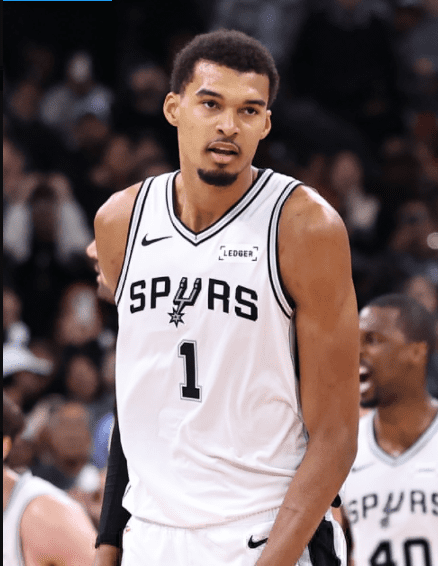
In making this comparison, Scott emphasized that talent alone cannot rewrite the laws of physics. A body that is so large, so lean, and so reliant on perimeter mobility will always face enormous demands just to remain healthy.
WHERE ARE THESE INJURIES COMING FROM? MOBILITY VS STRUCTURAL LIMITS
One of the more puzzling aspects of Wembanyama’s injury pattern is its occurrence despite the way he plays. Wemby does not play like a traditional big who absorbs heavy physical contact on every possession. Instead, he often operates from the perimeter, handles the ball in open space, and avoids sustained banging in the post. That should, in theory, reduce the typical wear and tear seen in centers who battle night after night inside the paint.
Yet his injuries keep appearing.
This paradox has left analysts including Byron Scott and Olden Polynice scratching their heads and searching for deeper explanations. If Wembanyama’s injuries were simply collision based, they might appear random and situational. But the pattern suggests something more intrinsic: structural stresses related to the unique way his body is forced to move within a professional basketball tempo.
Scott acknowledged that Wembanyama spends hours refining his body, training with experts, and even traveling internationally to prepare physically and mentally for the NBA grind. He trained with monks in China and studied with legendary big man Hakeem Olajuwon, trying to optimize everything from movement fluidity to balance, posture, and strength. Yet the injuries persist.
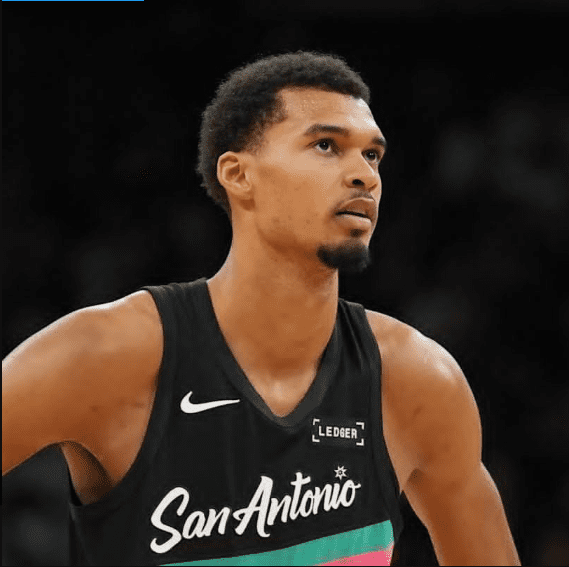
This has led to a growing realization among veteran observers that the problem might not be correctable entirely through training that the issue lies in the physics of his body, not in preparation or effort.
THE SPURS’ CHALLENGE: NAVIGATING GREAT TALENT WITH INJURY UNCERTAINTY
For San Antonio, Wembanyama represents not just a franchise centerpiece but a generational phenomenon a player whose presence transforms lineups, rotations, and strategic possibilities. At full strength, the Spurs become a team opponents must game plan around every night. His shot‑blocking changes the calculus of paint penetration. His shooting extends defenses to the three‑point line. His passing opens new offensive looks.
But the Achilles’ heel for San Antonio is not the opposition it is consistency. A player who misses significant stretches due to injury cannot anchor a team’s identity. The Spurs must reconcile their dependence on Victor’s presence with the reality that he may not be available on every night, every week, or across multiple seasons.
This balancing act affects:
- Rotation planning
- Load management decisions
- Offensive and defensive schemes
- Long‑term player development
- Contract considerations
- Championship aspirations
The Spurs have already faced the consequences of his absence this season, losing cohesion and struggling to maintain momentum when Wembanyama is out. Coaches must adjust baseset plays. Teammates must compensate in ways that can disrupt established chemistry. Younger players are thrust into roles they may not be prepared to handle consistently.

Perhaps the most challenging aspect for the Spurs’ front office is managing expectations. The franchise and fans know the talent is real but they also know that a single injury can set back progress significantly. The difference between a 50 win season and a sub‑.500 season may hinge on his availability. And for a young team still searching for playoff identity, that risk weighs heavily.
INJURY RISK AND MODERN NBA PHYSICS
In today’s NBA, athleticism is off the charts. Players run faster, jump higher, and move sideways more explosively than in any previous era. Defenders like Wembanyama are pulled into roles that demand elite perimeter agility, defensive rotations, and recovery speed. These demands place unique forces on bodies that are already under tremendous strain.
Modern NBA training emphasizes injury prevention more than ever before. Teams invest in biomechanics, load‑management protocols, and muscle activation programs designed to keep players active throughout the season. Frequent rest protocols, advanced recovery chambers, and individual conditioning specialists are now standard across the league.
Even so, the injuries that plague tall, lean big men like Wembanyama are often not tied to collision or impact. They arise from the sheer physics of moving long levers under load. Every jump, sprint, cut, and pivot produces torque that must be absorbed by tendons and connective tissue. When those structures are stretched across massive joints and extended limb lengths, the body’s margin for error shrinks.
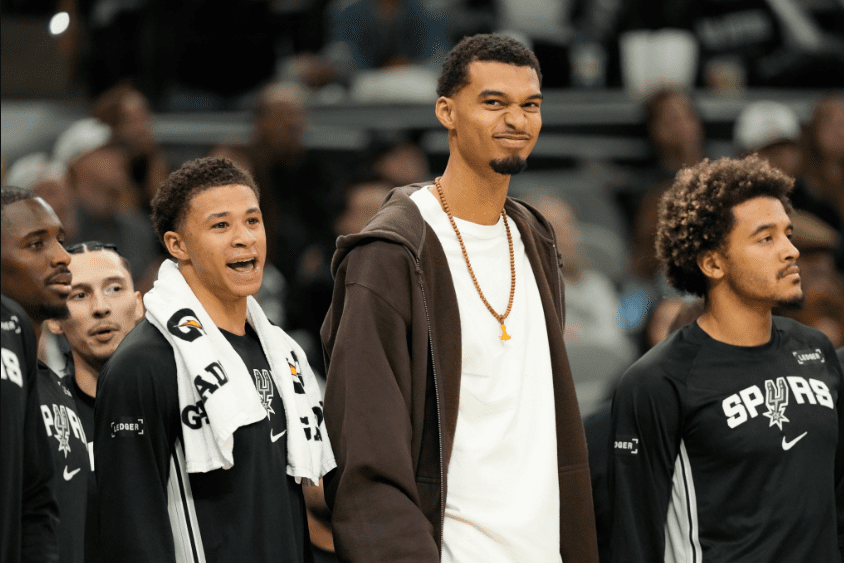
This is not conjecture but consequence. When limbs are longer, forces generated during acceleration and deceleration travel further, producing more torque and extending the recovery time required for muscular micro tears. Even with advanced conditioning, the biological realities of Wembanyama’s body may make him susceptible to recurrent injuries.
HISTORICAL PRECEDENTS: LESSONS FROM SAMSON, SAMPSON, AND YAO
History offers sobering comparisons.
Ralph Sampson entered the NBA as a dominant big man with mobility and skill that seemed ahead of his time. At 7 feet tall with perimeter movement, Sampson redefined expectations for big men until injuries undermined his consistency. Despite immense talent, chronic physical issues derailed what many believed could have been a Hall of Fame career.
Yao Ming stood at 7’6″ and performed at an elite level, bridging NBA marketing, global popularity, and on court dominance. Yet his career was continually disrupted by foot and leg injuries that forced him to miss games repeatedly and eventually to retire earlier than expected.
Both players demonstrate that extreme size combined with the demands of professional basketball can produce a precarious physical existence. Wembanyama, at 7’7″ and with athletic expectations unmatched by nearly any historical counterpart, inevitably draws comparisons to those who came before him not because of a lack of talent, but because their physical stories illustrate the unpredictable nature of longevity in elite sports.
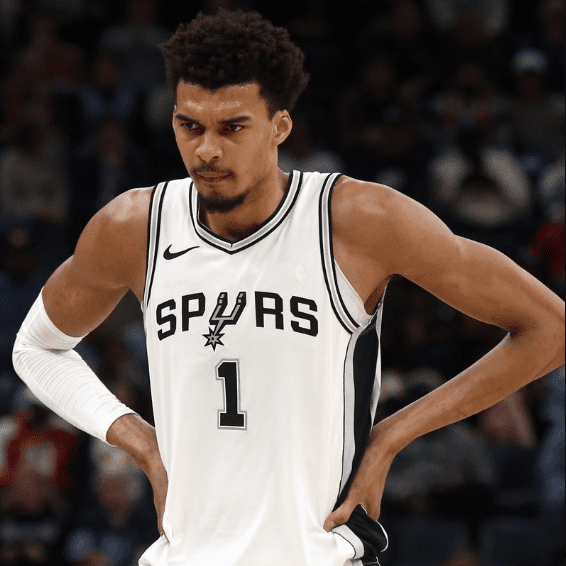
These historical patterns are not determinations, but they are instructive. They remind fans, teammates, coaches, and medical staff that while talent can be cultivated and improved, the biological and mechanical realities of the human body have limits that even the best training cannot fully overcome.
THE FUTURE AWAITS: WILL WEMBANAYAMA REWRITE HISTORY OR FOLLOW IT?
The ultimate question remains: can Victor Wembanyama overcome the injury challenges that Byron Scott and others have predicted?
There are reasons for both optimism and caution.
Reasons for Optimism
Wembanyama understands his body better than most. He has access to world class training resources, medical professionals, and recovery technologies. His dedication to studying the game suggests he will adapt his approach to longevity. The modern NBA is also better at managing player loads, preventing injuries, and providing individualized care that did not exist in earlier eras.
Furthermore, sheer talent cannot be discounted. Wembanyama’s performance when healthy is so transformative that opponents constantly shift defensive schemes just to contain him. No matter how his body is managed, his ability to fundamentally affect games remains unprecedented.
Reasons for Caution
Even the best preparations cannot erase physics. Wembanyama’s size will always generate forces on his musculoskeletal system that are greater than average players. There will always be a risk of soft tissue strain, calf issues, foot complications, and other biomechanical stresses resulting from his movement patterns.
Historical parallels to Sampson and Yao are not exact matches, but they are strong reminders that elite performance and long term health are sometimes at odds especially for players with extraordinary physical gifts.
The key, ultimately, will be balance:
maintaining peak physical conditioning
avoiding unnecessary physical stress
prioritizing recovery
and adapting his game to evolving physical demands
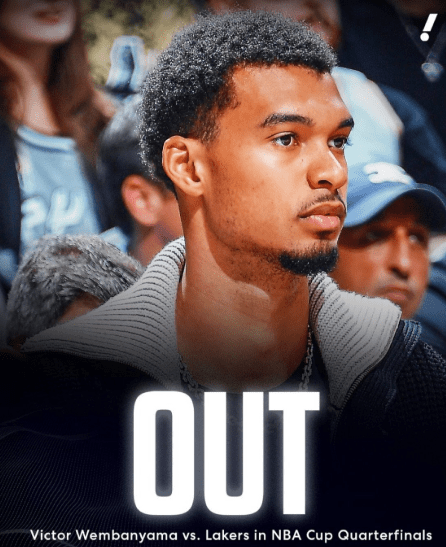
If Wembanyama can achieve that balance, history may treat him differently than past giants. If not, his story could become another case study in how talent alone cannot overcome the structural limits of the human body.
CONCLUSION: A LEGEND IN THE MAKING, BUT NOT WITHOUT HURDLES
Victor Wembanyama’s journey is one of the most captivating stories in modern sports. His blend of size, skill, and versatility is virtually unmatched in NBA history. Fans and analysts alike see the future in his game a future that promises to reshape how basketball is played at the highest level.
But Byron Scott’s warning echoes a deeper truth: the very attributes that make Wembanyama spectacular may also make him susceptible to the kind of physical challenges that have plagued other tall, mobile big men throughout history.
This is not a prediction of doom. Rather, it is a reminder that greatness is multifaceted. Ability must be paired with health, consistency, adaptation, and longevity. Fans can celebrate his brilliance today while recognizing that the path to sustained excellence is never guaranteed especially for someone who defies biological norms in almost every way.
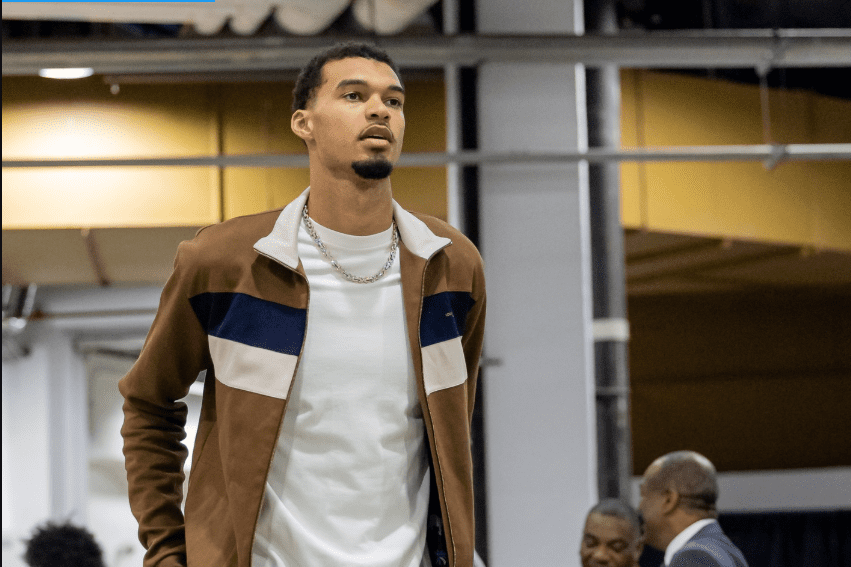
Wembanyama has already proven he can change games. Whether he will change the narrative about the durability of unicorn talents remains one of the most compelling questions in basketball today one that will be answered not just in numbers, but in days on the court, nights in rehab, moments of strength, and memories of resilience.
The world will be watching every step of the way.