BLOCKBUSTER CHAINS REACTION
The NBA landscape is a powder keg, and the fuse is lit in Atlanta. The Hawks, stuck in mediocrity at 15-19, are desperate. The Dallas Mavericks, trying to chart a course in the post-Luka Dončić era, are open for business. And at the center of it all stands Anthony Davis the injury-plagued, transcendentally talented big man whose future could trigger a domino effect of unprecedented proportions.
According to league sources, the Hawks have held direct communication with the Mavericks about trading for Davis. They are so determined that they are reportedly willing to include 2024’s first overall pick, Zaccharie Risacher, in a deal. The Mavericks are listening. But in the high-stakes poker of the modern NBA, a simple two team swap is for amateurs. Why stop at two when you can involve five?
A hypothetical, league-shaking five team mega deal is now swirling in the rumor mill, a transaction so complex it requires a flowchart to follow. It would see Anthony Davis and Zach LaVine head to Atlanta, Trae Young and Jonathan Kuminga land in Sacramento, Domantas Sabonis join Dallas, Nic Claxton return to Golden State, and the Brooklyn Nets stockpile future assets.
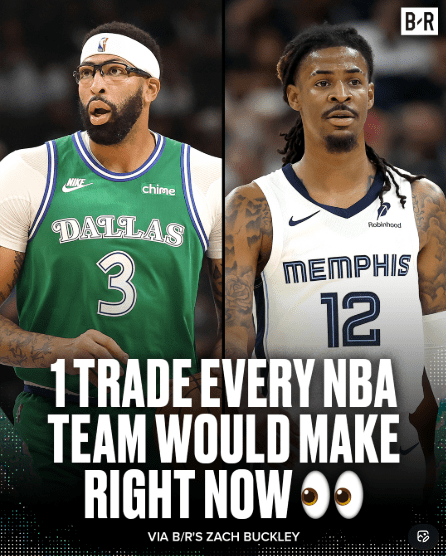
This isn’t just a trade. It’s a controlled detonation designed to solve five different franchises’ existential crises in one fell swoop. We’re talking about five All Stars, a No. 1 overall pick, and a cascade of draft capital all changing addresses before the February 5th deadline.
BUT IS THIS MASSIVE, FIVE TEAM GAMBLE A MASTERSTROKE OF TEAM BUILDING GENIUS, OR A RECIPE FOR UNPRECEDENTED FRANCHISE CHAOS? The mechanics are mind bending, the motivations are desperate, and the implications could redefine the league’s power structure for the next half decade. Buckle up.
ATLANTA’S DESPERATION PLAY: BETTING THE HOUSE ON ANTHONY DAVIS’ BONES
The Atlanta Hawks are tired of the treadmill. Despite adding Kristaps Porziņģis last offseason, they find themselves in the familiar, frustrating territory of the play in tournament. Their young core of Jalen Johnson, Dyson Daniels, and Onyeka Okongwu is ready to win now. The problem? The Trae Young era has hit a ceiling.
Trading for Anthony Davis is the ultimate high risk, high reward gamble to break the cycle. Davis, when healthy, is a Top 10 player and a defensive anchor who can single handedly elevate a team’s ceiling. Pairing his two way dominance with the athleticism of Johnson and Okongwu would create one of the most fearsome frontcourts in the East.
But the Hawks aren’t just betting on Davis’ talent; they’re betting on his health. Since arriving in Dallas, his availability has been a constant issue. To acquire him, Atlanta must part with their most valuable asset for the future: Zaccharie Risacher, the prized rookie they drafted just seven months ago. They would also likely send out the expiring contracts of Porziņģis and Luke Kennard, plus a valuable 2026 first-round pick swap from Cleveland.
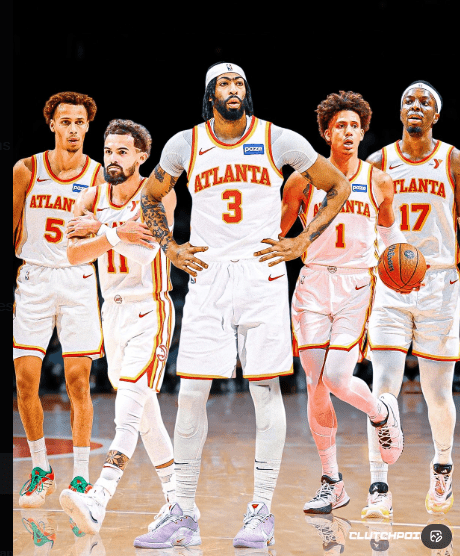
This move forces their hand on Trae Young. A core of Young, Davis, and Johnson would instantly catapult the Hawks into the second apron of the luxury tax, crippling their financial flexibility. As one source framed it, acquiring Davis would “very likely signal the end of Young’s tenure in Atlanta.” The proposed five-team framework solves this by shipping Young to Sacramento and bringing back Zach LaVine a dynamic scorer on a similar contract, but one who may fit better as an off ball threat next to Daniels and Johnson.
The Hawks’ new starting five could be: Dyson Daniels, Zach LaVine, Jalen Johnson, Anthony Davis, Onyeka Okongwu. That is a terrifying blend of defense, athleticism, and shot-making. But it’s a house of cards built on Davis’ notoriously fragile frame. If he gets hurt, Atlanta has traded its future for a hospital bill.
DALLAS’ STRATEGIC RETREAT: CUTTING LOSSES AND BUILDING AROUND COOPER FLAGG
From the Dallas Mavericks’ perspective, the Anthony Davis experiment has been a disappointment. Acquired as the centerpiece of the Luka Dončić trade, Davis has been brilliant when on the floor but rarely available. With rookie sensation Cooper Flagg now the unquestioned face of the franchise and Kyrie Irving needing a specific type of teammate, moving Davis for a more reliable star and future assets is a logical pivot.
The proposed deal nets them Domantas Sabonis, Zaccharie Risacher, and draft capital. This is a masterful recovery of value. Sabonis is the exact kind of player who thrives next to a ball-dominant guard like Kyrie Irving. He’s a perennial All star, a walking double-double, and one of the best passing big men in NBA history. He doesn’t need plays called for him to impact the game, which is perfect for Irving and the developing Flagg.
Sabonis is also durable and under a reasonable contract through 2028. He provides the stability Davis never could. Adding Risacher, a 6’10” forward with star potential, gives them a second elite young building block alongside Flagg. The draft picks (including a potential high 2026 first via Cleveland) provide ammunition for future moves.
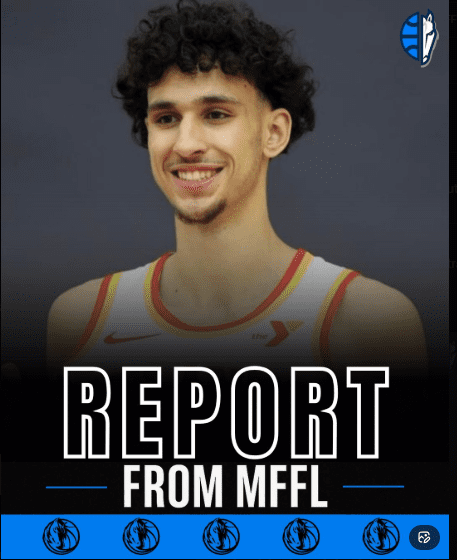
This trade is Dallas admitting the Davis acquisition was a mistake and executing a swift, strategic course correction. They exchange an unreliable superstar for a reliable All Star, a blue chip prospect, and flexibility. It positions them to be competitive immediately with Irving, Sabonis, and Flagg, while setting up a dynamic young core (Flagg, Risacher, Dereck Lively II) for the next decade. For a front office under fire after the Dončić trade, it’s a potential redemption arc.
SACRAMENTO’S RECALIBRATION: THE TRAE YOUNG GAMBLE AND THE KUMINGA PRIZE
The Sacramento Kings are stuck. The Domantas Sabonis De’Aaron Fox duo has hit its competitive limit. They need a shake up. Entering the five team deal allows them to execute two major goals: move on from the Zach LaVine experiment and acquire Jonathan Kuminga, a player they have coveted for over a year.
The centerpiece for them is Trae Young. Yes, his fit with De’Aaron Fox is questionable defensively, but Young’s elite playmaking and scoring could unlock a new dimension for Keegan Murray and others. More importantly, Young’s contract ($48.9 million player option for 2026-27) is essentially a massive expiring deal next season. It gives them a year to evaluate the fit and maintain future cap flexibility if it fails.
The real prize for Sacramento is Jonathan Kuminga. The explosive Warriors forward is exactly the type of athletic, two way wing they lack. Pairing him with Keegan Murray would give them one of the most promising young forward duos in the league. They also offload Sabonis’ long term money and LaVine’s hefty contract, giving them a cleaner financial slate.
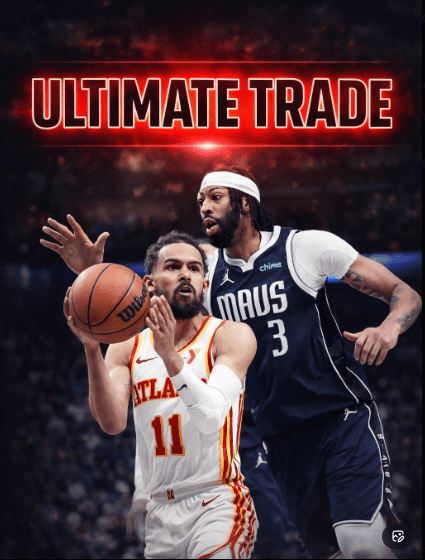
Sacramento’s potential new core: Trae Young, De’Aaron Fox, Jonathan Kuminga, Keegan Murray, and Kristaps Porziņģis (on an expiring deal). It’s an offensive juggernaut with serious defensive questions. But it’s undeniably exciting and represents a bold new direction. If it flops, Young and Porziņģis come off the books in 2027, freeing up a max slot to try again.
GOLDEN STATE’S LAST DANCE: BRINGING BACK KLAY AND FINDING A CENTER
The Golden State Warriors have one overarching goal: maximize the final championship window of the Stephen Curry-Draymond Green era. This deal lets them address their two most glaring needs in a single move.
First, they finally land a true, defensive minded center in Nic Claxton. Claxton is an elite rim protector, switchable defender, and lob threat the perfect modern center to anchor their defense and finish plays created by Curry and Green. He is the piece they’ve been missing since the decline of Andrew Bogut and the departure of James Wiseman.
Second, they facilitate the emotional return of Klay Thompson. The Warriors’ legendary core has openly pined for a reunion. Bringing Klay back into the fold, even in a likely reduced role, is a powerful emotional and cultural move for a franchise clinging to its dynasty identity. Adding defensive guard Keon Ellis provides more backcourt depth.
To make it happen, they part with Jonathan Kuminga a difficult but necessary cost. Kuminga needs a larger role to develop, a role Golden State can’t provide while chasing titles. Converting him into Claxton and the nostalgia of Klay is a win-now move that makes perfect sense for their timeline. It’s a clear signal: the Warriors are all-in on one last ride with their historic core, and they’re finally getting the center to make it possible.
BROOKLYN’S ASSET PLAY: THE QUIET WINNERS OF THE CHAOS
The Brooklyn Nets, under General Manager Sean Marks, are masters of the asset game. They are not ready to contend but are perfectly positioned to act as a facilitator for contending teams desperate to make complex finances work.
In this deal, they acquire Moses Moody, Trayce Jackson Davis, Buddy Hield, and a future first round pick from Golden State (2027, top 8 protected). Their cost? Nic Claxton, a very good player on an expiring contract who doesn’t fit their long term, non contending timeline.
This is a classic “sell high” move. Claxton will command a significant salary this offseason. Rather than overpay him, Brooklyn flips him for a promising young wing in Moody, a energetic young big in Jackson Davis, a tradeable expiring contract in Hield, and a valuable future first round pick. They deepen their pool of young talent and add a draft asset without taking on any long term money.
The Nets remain flexible, continue their rebuild around Mikal Bridges and their own draft picks, and stockpile more trade ammunition for the next superstar who becomes available. In a blockbuster full of big names and big risks, Brooklyn plays it smart, patient, and comes out richer for the future.

THE VERDICT: A BEAUTIFUL, TERRIFYING, AND PLAUSIBLE CHAOS
This five-team monster trade is a thing of beauty for NBA theorists. It solves real problems for all five teams involved:
- Atlanta gets its superstar and a new direction.
- Dallas gets stability, a co-star for Irving, and a future with Flagg.
- Sacramento gets its coveted wing and a flashy new backcourt experiment.
- Golden State gets its center and a nostalgic reunion.
- Brooklyn gets assets for the future.
The obstacles, however, are Herculean. The medical reviews alone would be a nightmare (Davis, Porziņģis, Sabonis coming off a meniscus tear). The financial matching is incredibly complex. Getting five ownership groups and front offices to agree on such a massive, interdependent deal before the February 5th deadline borders on fantasy.
Yet, the seeds are real. The Hawks Davis talks are confirmed. The Kings’ interest in Kuminga is longstanding. The Warriors’ need for a center and affection for Klay is documented. The Nets’ willingness to facilitate is known.
This trade is the logical, extreme endpoint of the current NBA a league where star movement is constant, financial pressures are immense, and teams are increasingly willing to make bold, franchise altering gambles to escape mediocrity. It might not happen in this exact form, but the forces pushing these teams toward a seismic deal are undeniably real.
One thing is certain: if a transaction remotely close to this occurs, the NBA will never be the same. The February deadline wouldn’t just have a winner; it would have a nuclear architect.