The debate has dominated NBA conversations for nearly a decade. In one corner, Nikola Jokic, the three-time MVP and transcendent offensive engine. In the other, Joel Embiid, the physically imposing, two way force and former MVP.
But what if the argument was settled years ago?
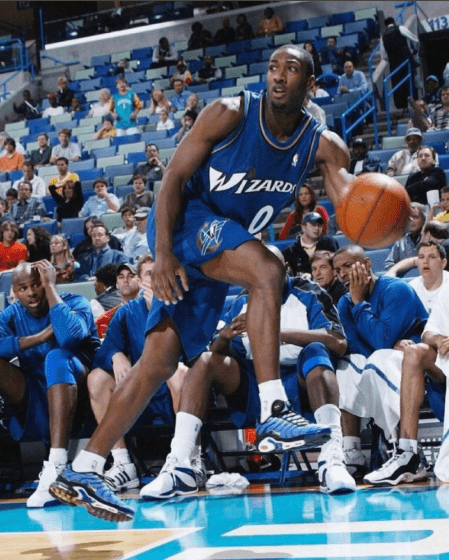
On a recent episode of his podcast, former NBA star Gilbert Arenas stoked the flames of this eternal rivalry by revisiting his past take, asserting that when it comes to pure, positional dominance, the answer is clear.
“The better player of the two in that position is Embiid. He’s more dominant,” Arenas declared, highlighting a distinction that cuts to the core of how we evaluate greatness.
This isn’t just about who is the better all around player in 2025. It’s a statement about archetypes, about the very definition of a center, and about the delicate balance between peak ability and sustained excellence. As Arenas himself suggests, Embiid’s career risks being judged by his injuries rather than his generational talent.

So, who is right? Is Embiid the more dominant force, or has Jokic’s historic consistency rendered the question obsolete?
THE CASE FOR DOMINANCE: EMBID’S UNMATCHED PEAK AND DEFENSIVE IMPACT
Arenas’ argument hinges on a traditional view of the center position: rim protection, physical scoring, and two way intimidation. By that measure, when healthy, few in NBA history can match Joel Embiid’s sheer force.
When Embiid steps on the court, he dictates the terms of engagement on both ends.
Offensively, he is a nightmare matchup, capable of scoring from the post, the mid-range, and beyond the three point line. Defensively, he is the anchor of the Philadelphia 76ers, a former Defensive Player of the Year candidate who can single handedly shut down the paint. This season, he remains a formidable defender, averaging 1.3 blocks per game in limited action.
His impact on opposing centers is the very definition of dominance. In matchups this season, centers facing Embiid are held to 44.3% shooting from the field, a significant drop from their typical efficiency. He doesn’t just outplay his counterpart; he often completely neutralizes them.

But here’s the catch that Arenas himself acknowledges: “He’s just never healthy anymore”.
Embiid’s career has been a story of breathtaking peaks interrupted by frustrating valleys. This season, he’s averaging 21.8 points and 6.5 rebounds in just 27 minutes per game, numbers that reflect both his talent and his ongoing battle to stay on the court. The NBA’s new 65 game minimum rule for awards has already cost him an MVP and, as Arenas laments, threatens to unfairly warp his historical legacy.
The question isn’t about Embiid’s ability at his best. It’s about how rarely the basketball world gets to see it.
THE CASE FOR GREATNESS: JOKIC’S HISTORIC CONSISTENCY AND REINVENTION OF THE POSITION
If Embiid represents the pinnacle of the traditional center, Nikola Jokic has spent a decade inventing an entirely new one. His greatness isn’t measured in pure dominance, but in historic, unprecedented production that elevates an entire franchise.
Jokic isn’t just having a great season; he’s authoring chapters in the NBA record books on a weekly basis.
In the last three games alone, he became the first player in league history to record 110+ points, 40+ rebounds, and 40+ assists in a three game span. This stretch included a 56 point, 16 rebound, 15 assist masterpiece on Christmas Day the first ever 55-15-15 game.
The numbers for the 2025-26 season are simply video game statistics:
- 29.9 points, 12.4 rebounds, 11.1 assists per game.
- Shooting 60.4% from the field and 44.0% from three-point range.
- He leads the entire NBA in assists and is on pace for his third straight season averaging a triple-double.
| Metric | Nikola Jokic (2025-26) | Joel Embiid (2025-26) | The Edge |
|---|---|---|---|
| Points Per Game | 29.9 | 21.8 | Jokic |
| Rebounds Per Game | 12.4 | 6.5 | Jokic |
| Assists Per Game | 11.1 | 2.8 | Jokic |
| Field Goal % | 60.4% | 44.3% | Jokic |
| True Shooting % | 71.4% | 55.9% | Jokic |
| Team Record | 24-10 (1st in West) | 16-14 (6th in East) | Jokic |
Beyond the stats, Jokic has redefined what is possible from the center position.
He recently passed the legendary Kareem Abdul Jabbar to become the all time leader in assists by a center, achieving the feat in less than half the games. He is the ultimate offensive system, a player whose passing genius makes everyone around him better and has already delivered a championship to Denver.
His value is reflected in the most important stat of all: winning. The Nuggets, powered by Jokic, hold the best record in the Western Conference. His durability and consistency are not just footnotes; they are the foundation of his team’s success and his growing claim as an all-time great.
THE LEGACY LENS: HOW WILL HISTORY REMEMBER THEM?
Gilbert Arenas framed his argument with a poignant observation about legacy. He believes Embiid, due to injuries and the NBA’s award rules, “is not going to be put into history fairly”.
This is the heart of the debate. Is legacy built on undeniable peak talent or on realized, trophy winning accomplishments?
Jokic’s resume is already stacking up: 3 MVPs, 1 NBA Championship, 1 Finals MVP, and a claim as the greatest passing big man ever. He is the steel-built engine that never stops.
Embiid’s path is more complicated. As Arenas noted, if judged solely on his game at its peak, “Embiid would be considered the second coming of Shaq”. But his path to multiple championships and a Top 10 all time status is currently blocked by his own physical limitations and the relentless excellence of his rival.
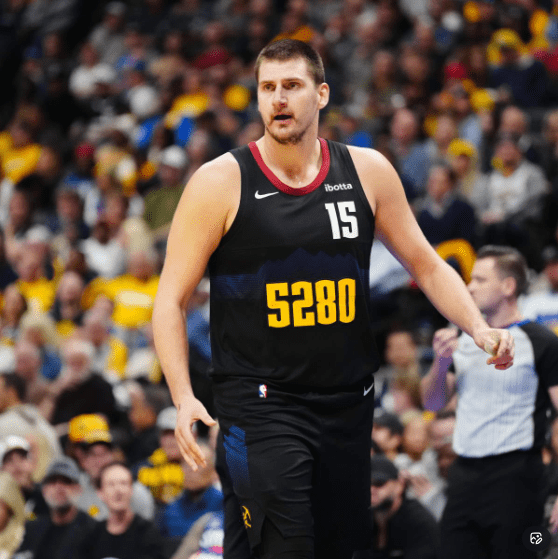
In the end, Arenas may have identified the central tension perfectly. Embiid, when available, can be the more physically dominant force at the center position. But Jokic, through his otherworldly skill, historic production, and iron clad reliability, has become the more impactful and accomplished basketball player.
The debate will rage on as long as both are playing. But with each historic triple double and each game missed to injury, the scale continues to tip in one undeniable direction.
Who do you believe defines the modern center: the dominant force or the historic orchestrator?