It’s the end of an era in Atlanta.
In the quiet of a closed practice facility, after the media has left and the squeak of sneakers has faded, that’s when a decision becomes real. It’s not in the leaked reports, the pundit debates, or the flashing red “BREAKING” banners on television.
It’s in the shared, unspoken understanding between a player, his agents, and the organization that the story you’ve been writing together the one that spanned eight seasons, countless highlights, and a run to the precipice of the Finals is reaching its final paragraph. For Trae Young and the Atlanta Hawks, that understanding has arrived. They are now, officially and collaboratively, working on a trade.
This is not a sudden fracture or a dramatic fallout. It is something more emotionally complex: a mutual acknowledgment that an era has run its course, and that the city’s basketball identity is ready for a new author.

The feeling in Atlanta is not one of anger or betrayal. It is the heavy, reflective quiet of turning a page on a long and significant chapter. It’s the realization that the player who, for nearly a decade, was the Hawks whose face graced every billboard, whose audacious logo-distance shots defined the team’s daring spirit is preparing to walk out of the frame.
This moment is not about the mechanics of the trade, the salary cap implications, or the potential return. It’s about the emotional geography of a city and a franchise, and the profound, unsettling question that hangs in the air as one era ends: What does Atlanta become without him?
The Player and the Place: A City Forged in Ice and Fire
To understand the weight of this departure, you must first understand the bond that was forged. When Trae Young arrived in 2018, the Hawks were adrift. He didn’t just become a star; he became a gravitational force.
He was the 5’1″ high school phenom who never stopped believing he belonged among giants, and he played with a chip that a city like Atlanta often overlooked in the national sports conversation could instinctively recognize and embrace.
His game was a declaration. The deep, disrespectful logo threes. The feathery floaters in a forest of giants. The no-look darts to corners only he could see. He played with a swagger that wasn’t just confidence; it was a narrative weapon. He didn’t just want to win; he wanted to embarrass the establishment.
In the 2021 playoffs, he took that mentality and weaponized it for an entire city, leading a young, unexpected Hawks team on a cathartic run to the Eastern Conference Finals. He shushed Madison Square Garden. He ended the Philadelphia 76ers’ season with a floater in the final second. In those moments, he wasn’t just Trae Young; he was Atlanta’s avatar of audacity.
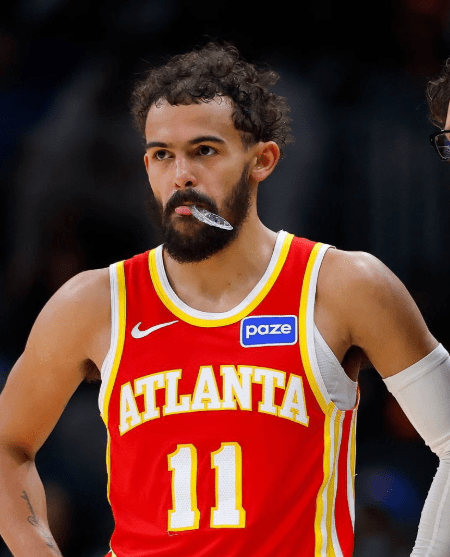
The statistics are a monument to his impact: the franchise’s all-time leader in assists and three-pointers, a four-time All-Star, an All-NBA selection. But his legacy is etched deeper than record books.
It’s in the emotional currency of a fanbase. He made the Hawks matter, night after night, in a way they hadn’t for years. He gave the city a superstar who was unequivocally, thrillingly theirs. The bond was visceral, built on a shared identity of being underestimated and proving everyone wrong.
The Cracks in the Foundation: The Unavoidable Data of Separation
All profound relationships exist in a delicate balance, and the foundation of this one began to show a quiet, persistent stress fracture. The signs were not in loud arguments or public dissatisfaction, but in a cold, accumulating data set that became impossible for the organization to ignore.
The central, uncomfortable truth is this: in recent seasons, the Atlanta Hawks have consistently been a better basketball team when Trae Young is not on the floor. The numbers are stark and form a narrative of their own:
- This Season (2025-26): With Young: 2-8. Without Young: 15-12.
- The Broader Trend: Over the past three seasons, the Hawks are 60-80 with Young and 33-28 without him.
This split transcends typical “injury absence” analysis. It speaks to a fundamental shift in identity. With Young, the Hawks were an engine built around a single, brilliant piston. The entire offensive ecosystem depended on his creation, his magnetism, his decisions. Without him, a different team emerged: one that moved the ball with faster, more democratic rhythm, defended with greater collective intensity (allowing nearly 10 fewer points per game), and played with a cohesion that had often been elusive.
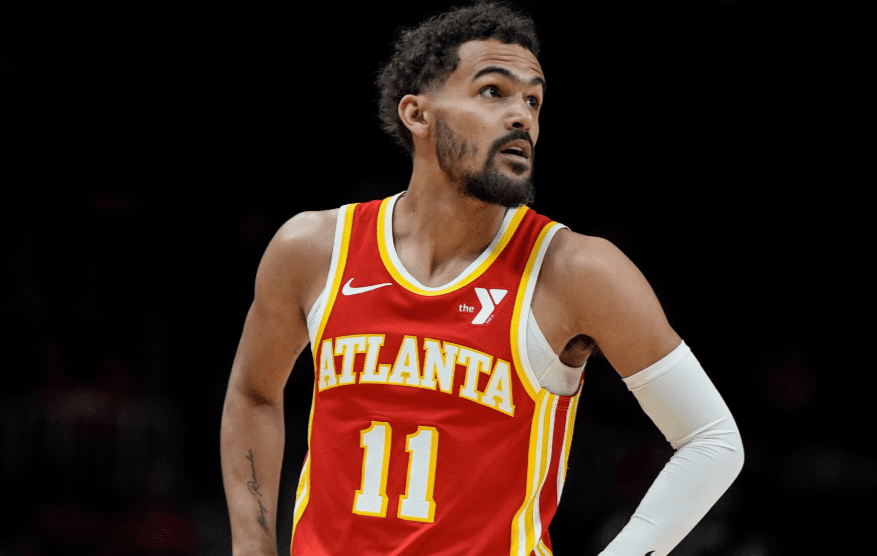
The Hawks didn’t just survive during Young’s absences; they discovered a version of themselves that, by the cold calculus of wins and losses, functioned more effectively. This created an impossible emotional equation. How does a franchise reconcile its heart the beloved superstar who put it back on the map with evidence suggesting its future success might lie in a different direction?
The Heir Apparent: Jalen Johnson and the Weight of Inheritance
Into this vacuum of identity stepped not a savior, but a successor. Jalen Johnson’s rise is not the story of a player usurping a throne. It is the quieter, more profound story of inheritance.
For years, Johnson was the tantalizing prospect, the athletic forward with flashes of all-around brilliance. This season, with increased opportunity and responsibility in Young’s absence, those flashes have coalesced into a steady, superstar light.
Johnson represents a different basketball archetype. At 6’9″, he is a point-forward who initiates offense through size and vision, not just dribble penetration. He defends multiple positions, rebounds at an elite level, and facilitates without needing to dominate the ball. His game is expansive, connective, and built for the modern NBA’s positionless ideal.
In him, the Hawks’ front office sees not just a star, but a cornerstone around whom a new, more balanced, and defensively capable contender can be built. League insiders now widely presume Johnson to be “untouchable” in any trade discussion, the unequivocal face of the franchise’s next phase.
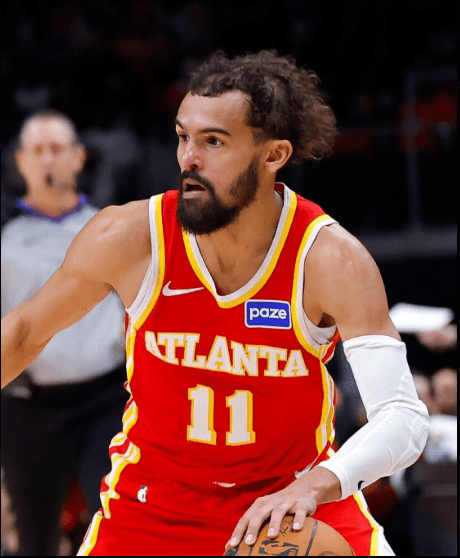
The transition, then, is not a replacement of like-for-like talent. It is a philosophical pivot. The Hawks are choosing to hand the keys not to another singular offensive engine, but to a versatile conductor who can orchestrate a fuller, more harmonious roster.
This is the emotional core of the shift: Atlanta is not just moving on from a player; it is consciously choosing a new basketball identity.
The Unresolved Calculus: What Is Fair Farewell?
This is where the emotional narrative collides with the pragmatic, and where the “unfinished” feeling truly takes root. The Hawks and Trae Young are working together, a sign of respect for their shared history. But the question that haunts this transition is not if he will be traded, but for what? And what constitutes a fair return for an era?
The market for Young is complicated. He is a 27-year-old, four-time All-Star and one of the most gifted playmakers in the world. Yet, the same on/off splits that spurred Atlanta’s decision also dampen his league-wide value, as do his substantial contract and defensive limitations in a playoff setting.
Potential destinations like the Washington Wizards or Miami Heat are discussed, but often in frameworks that involve absorbing his salary for financial flexibility, not necessarily sending back blue-chip talent. A report even indicated a team like the Sacramento Kings, long rumored as a fit, has “no interest”.

This creates a poignant tension. The Hawks may not receive a return that matches the emotional value Young provided to the city. The trade might bring back role players, draft capital, or financial relief assets for the Jalen Johnson era rather than another headline star. This is the often-unspoken cost of a philosophical reset: the tangible return can feel abstract compared to the singular talent walking out the door.
Atlanta’s New Dawn: A City Redefining Itself
So, what does Atlanta become?
It becomes a team built around Jalen Johnson’s two way versatility and unselfishness. It becomes a team where the offense flows through the hands of Johnson, the defensive tenacity of Dyson Daniels, the inside presence of Onyeka Okongwu, and the scoring punch of Nickeil Alexander-Walker.
This future is undeniably promising. It is young, athletic, and brimming with potential. But it is also undefined. It lacks the proven, gravitational star power of Trae Young. It is a bet on collective growth over individual brilliance, on a new system over a known quantity.
The ending of the Trae Young era in Atlanta does not offer neat closure. It offers a bittersweet clarity. The chapter is closing because the story needed a new direction. The city will always love the player who made it believe again, who gave it a swaggering identity. But love, in the ruthless calculus of competitive sports, is sometimes not enough to build a champion.
The keys have been handed over. The page is turning. The arena will one day roar for a new set of heroes. But in the quiet moments before that new story truly begins, a question will linger, a ghost of a magnificent, frustrating, unforgettable era: What does Atlanta become without him? The only answer is the one they are now committed to writing, together, without him.