“He came back to where it once ended.”
The contract was a single page. Standard boilerplate, the kind generated by league software and signed a hundred times a season. It laid out the terms: one year, guaranteed, $2.7 million. But as Isaiah Thomas placed his signature on the line the familiar looping I, the decisive the sterile document ceased to be a transaction. The ink dried not just on paper, but on a wound eight years old.
This was not a signing. It was the closing of a physical distance, a return to a set of GPS coordinates that had, for so long, represented the site of his highest peak and his most catastrophic fall. Boston. The city that believed in a 5-foot-9 giant, the franchise that traded him when he was broken, the arena whose parquet floor still held the ghost of his scream.
There was no press conference fanfare, no staged jersey hold-up. The news broke in the digital ether, a transaction logged in the league’s database. But for Thomas, the moment of validation was private, quiet, and impossibly heavy. It carried the weight of a thousand G League bus rides, of empty gym shots long after practice ended, of the humbling silence of being unwanted.
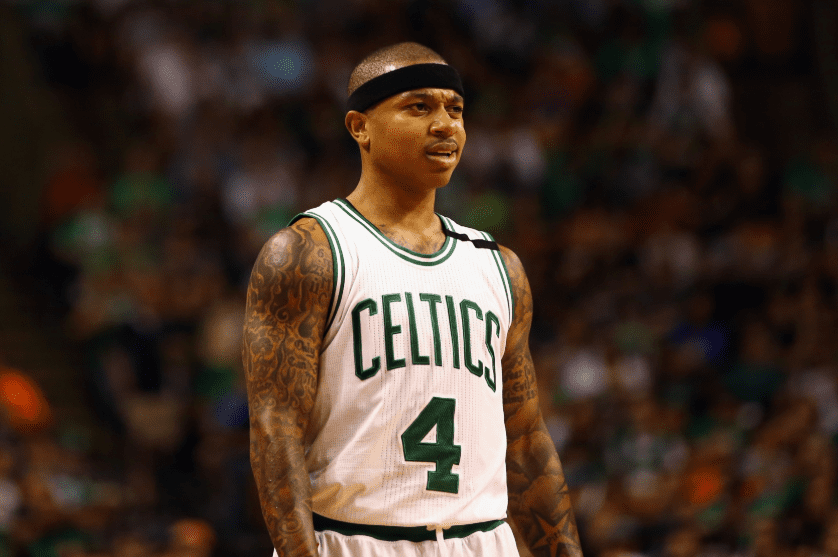
The $2.7 million was not a salary; it was a receipt. Proof of purchase for every ounce of pride he had swallowed, every setback he had absorbed, every whispered doubt he had used as fuel. He was coming back. Not as a conquering hero, but as a man returning to the scene of the accident, determined to prove the story didn’t end there.
Part I: The Kingdom of the Fourth Quarter
To understand the gravity of the return, you must first understand what Boston was. It wasn’t just a team. From 2015 to 2017, the TD Garden transformed into a secular cathedral, and its high priest was a 5-foot-9 point guard wearing number 4. Isaiah Thomas didn’t just play for Boston; he performed a weekly exorcism of doubt.
He averaged 28.9 points in the 2016-17 season, finishing fifth in MVP voting. The city didn’t just cheer for him; it recognized itself in him the undersized overachiever, the one who had to work harder, fight dirtier, want it more.
The emotional contract with the city was written in blood, sweat, and tragedy. The peak of this covenant came during the 2017 playoffs. On the eve of their first-round series, Thomas’s younger sister, Chyna, died in a car accident. Gripped by unimaginable grief, he played.

In Game 1, he scored 33 points through tears. “Basketball is basically his sanctuary,” teammate Amir Johnson said at the time. “His getaway”. The city’s embrace became a tangible, roaring thing. At his first home game back, “it felt like the whole crowd was his family,” one fan recalled.
He dropped 42 points in a win. He played with a fractured mouth, losing a tooth and requiring dental surgery after an elbow, then returned to score 33 more. He wasn’t just a basketball player; he was a vessel for collective catharsis. He was theirs, and they were his.
This period is crystallized in a simple fan artifact: a handwritten note given to Thomas at a Boston restaurant. It speaks not of stats, but of feeling: “a special place in my heart occupied by a 5’9 giant… Those were some of the best times I’ve had as a C’s fan”. This was the emotional territory a kingdom built on pure, unadulterated belief. It was real, and it was fragile.
Part II: The Fall and the Fracture
The collapse was both sudden and agonizingly slow. Its origin was a single, brutal moment on March 15, 2017. Driving for a layup against Minnesota, Thomas collided with Karl-Anthony Towns and was buried under a pile of bodies, with the 7-foot Towns landing directly on his back. He popped up, kept playing. The team called it a right knee bone bruise. He missed two games, then returned to finish the season, dragging the Celtics to the Eastern Conference Finals.
But the diagnosis was wrong. The injury was not in his knee. It was a right femoral-acetabular impingement with a labral tear in his hip a degenerative, complex joint injury. The cartilage cushion was torn; the ball and socket of his hip were grinding bone on bone. For a player whose game was built on nitro-booster agility, cutting, and exploding off that right leg, it was a catastrophic failure.
Yet, he played on. He aggravated it again in the playoffs. He shot 28% through six quarters of the Conference Finals before finally, grimly, sitting down at halftime of Game 2. The announcement was final: he would miss the remainder of the postseason.
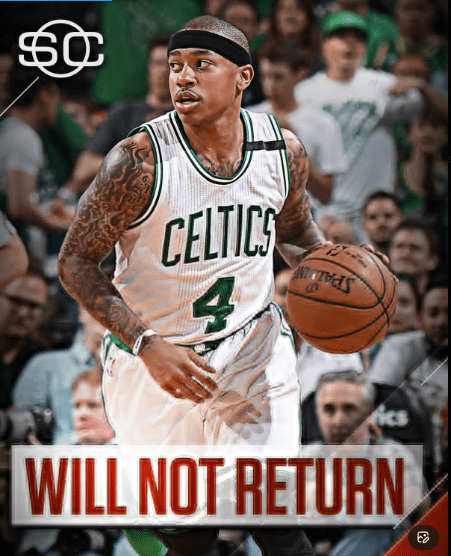
The betrayal was not in the injury, but in the aftermath. That summer, as Thomas opted for rehab over surgery, the Celtics’ front office made a cold, calculating basketball decision. They traded the injured king of the Fourth Quarter, the heart of their team, to the Cleveland Cavaliers in a blockbuster deal for Kyrie Irving. The emotional contract was nullified by a business one.
The fallout was visceral for the faithful. One family, on vacation in Maui, landed and were informed of the trade while wearing their Thomas jerseys. “Here we all are Crying!! first time in paradise… What a sad sad day,” the fan wrote. Another recalled Thomas at a summer camp, tears in his eyes, apologizing for getting hurt and vowing to bring a championship to Boston. He was traded weeks later. The kingdom wasn’t just conquered; it was abandoned by its own architects.
Table: The Dueling Realities of the Boston Peak (2016-2017)
| The Emotional Reality (The Kingdom) | The Physical & Business Reality (The Fault Lines) |
|---|---|
| The “5’9 giant” & Fourth Quarter King | Undersized frame placing immense stress on joints. |
| City as family after sister’s death. | A labral tear misdiagnosed as a knee bruise. |
| MVP-caliber stats (28.9 PPG, 5th in voting). | Degenerative hip condition (FAI) worsening with play. |
| Unbreakable covenant with fans. | A business decision leading to a seismic trade. |
Part III: The Wilderness and the Whisper
What followed was a professional purgatory. The hip injury shadowed him to Cleveland, to Los Angeles, to Denver, to Washington. He eventually had the surgery the “rim trimming” and labral repair but the league had moved on. The Isaiah Thomas who needed the ball, who orchestrated the offense, was a luxury teams no longer believed his body could sustain.
His stat line became a biography of resilience and rejection: 12 NBA seasons, 10 different teams. He spent 23 months entirely out of the league. The comeback path led to the humbling asphalt of the G League. In 2024, at 35, he signed with the Salt Lake City Stars. Not for nostalgia, but for survival.
And there, in the minors, the whisper returned. He averaged 33 points in four games, draining 25 three-pointers. The production forced a call-up to the Phoenix Suns, a 10-day contract, then a rest-of-season deal. It was a footnote in the Suns’ season six brief appearances but a seismic line in his own story: He made it back.
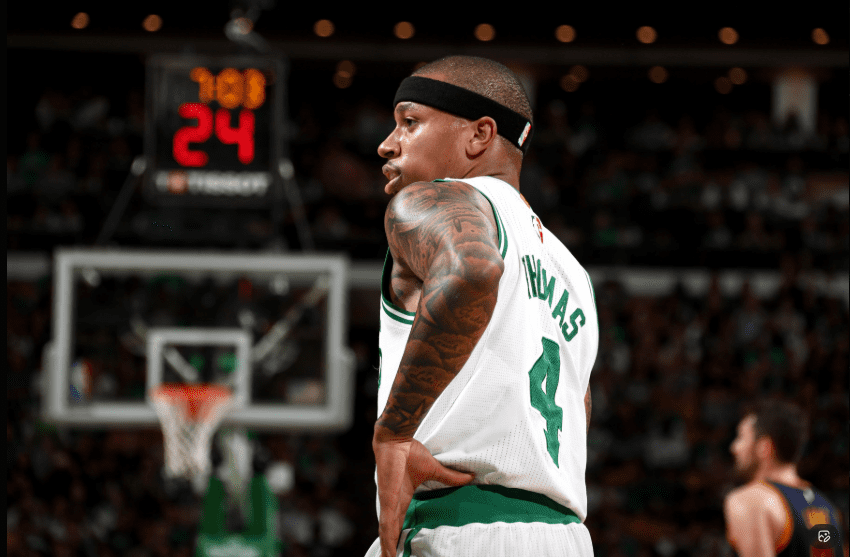
But back to where? The NBA was not the destination. Boston was. Every G League game, every shot in an empty gym, was propelled by an unresolved gravitational pull to the one place that represented both everything he had achieved and everything he had lost.
Part IV: The Return Validation, Not Victory
And so, the one-year, $2.7 million deal. The number is telling. It’s not a minimum contract; it’s a gesture of respect, an acknowledgment that he is more than a camp body. It is validation. It is the Celtics, the very institution that cut him loose, formally stating: We see you. We remember. This chapter was not finished.
But what is this return, truly? It is not 2017. He will not be the offensive focal point. He will likely mentor, provide microwave scoring off the bench, and be a living testament to resilience in the locker room. The emotional question hangs in the air, thicker than any arena smoke: Is this closure, or is it another test?
Is it closure a chance for the fans to properly say thank you, for him to hear the roar one more time in green, to leave on his own terms? Or is it a test a final, cruel proof that the body can no longer answer the call of the heart, that the kingdom cannot be re-entered, only viewed from a distance?
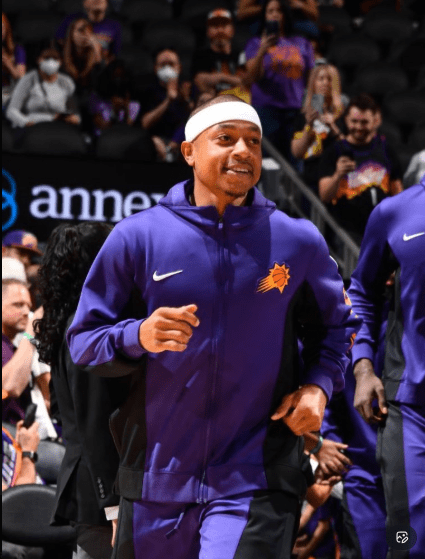
The beauty, and the tension, lies in the ambiguity. For Thomas, putting on that jersey again will be an act of profound emotional reconciliation. He is not returning to reclaim a throne. He is returning to reconcile with a ghost the ghost of the player he was, on the court where he was both made and unmade.
When he checks into that first game at TD Garden, the ovation will be deafening. It will be for the past. But the moment the ball is inbounded, the present will take over. Every cut, every shot, every defensive rotation will be measured against the memory.