WHEN A “HISTORIC” OFFER ISN’T ENOUGH
The WNBA’s latest proposal to its players represents the single largest financial leap in the league’s 29 year history. A $1 million guaranteed base salary for its biggest stars. An average salary projected to smash past $500,000. A salary cap exploding from $1.5 million to $5 million. For a league where the “supermax” was just $249,244 last season, this is a monumental offer.
But when you’re Angel Reese, a generational talent who has already built a $9.4 million brand empire entirely off the court, it sounds like an insult.
“We don’t want pocket change,” Reese declared, responding to the league’s proposal. “We want real NBA money”. With that battle cry, the Chicago Sky star has become the defiant face of a players’ union that is poised to reject the league’s latest offer, a negotiation deadlock that has forced a six-week extension of talks until January 9, 2026.
This isn’t just about salaries. It’s a fundamental clash over value, revenue, and the future of a league experiencing unprecedented growth. The players see soaring popularity and new media deals and demand a direct share. The league points to continued financial losses reportedly $50 million in 2025 and pleads for a sustainable path forward. The result is a high stakes standoff where the very definition of “fair pay” is being rewritten in real time.
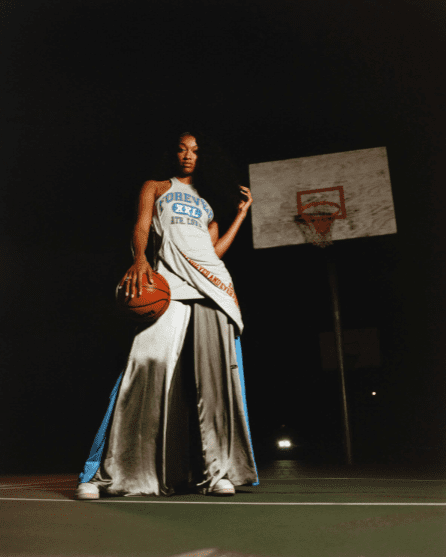
WHY ARE THE PLAYERS SAYING NO TO A $1 MILLION SALARY? The answer lies in a toxic mix of mathematical skepticism, lost benefits, and a generation of athletes who have learned their worth extends far beyond the hardwood.
THE DEVIL IN THE DOLLARS: WHY THE UNION IS CALLING “FOUL” ON THE LEAGUE’S MATH
On the surface, the WNBA’s offer seems straightforward: more money for everyone. But sources close to the players’ union reveal deep seated distrust and confusion over the league’s calculations, calling the entire proposal into question.
The core of the dispute is a simple equation that, according to the union, simply doesn’t add up.
The league projects an average salary of over $500,000. However, with a team salary cap set at $5 million and 11 or 12 players on a roster, the math appears impossible. “The average salary is $500,000 but the cap is 5 million? That doesn’t really make sense,” a source told the Sports Business Journal. “I mean, $500,000 times 12 is not 5 million”.
| Financial Point of Contention | The League’s Position | The Players’ Skepticism |
|---|---|---|
| Average Salary vs. Cap | The $500k+ average includes post season revenue sharing money paid outside the cap. | The math is inconsistent and the true in cap salary average would be much lower. |
| Revenue Share Projections | Projections are based on anticipated business growth. | Past projections have been “inconsistent,” creating distrust. |
| Value of Incremental Raises | Moving from an $800k max base to $1M is a significant “advance”. | The jump from a previous $1.1M total comp offer to $1.2M is too small. |
The players’ skepticism doesn’t stop at the salary cap. They were also reportedly blindsided when the league’s proposal removed the housing benefit currently provided to players. While the league may view higher salaries as compensation enough, players see it as taking away a crucial financial safety net, especially for those not on max deals.

These aren’t minor details. They are fundamental cracks in the proposal’s foundation. As one source framed it, the differences are often “semantics,” but semantics matter when trust has eroded. The players have long demanded a system like the NBA’s where the salary cap is directly tied to league revenue. They believe the current offer, with its confusing projections, fails to deliver true, transparent revenue sharing.
THE ANGEL REESE EFFECT: WHEN YOUR BRAND IS WORTH 125X YOUR SALARY
To understand the players’ defiant stance, look no further than Angel Reese. Her story is the ultimate case study in modern athlete valuation and the reason “pocket change” rhetoric resonates so powerfully.
Reese’s WNBA contract is a standard rookie scale deal: four years, $324,383. In 2025, she will earn a base salary of $74,909. She has been blunt about its inadequacy, stating in a 2024 live stream, “The WNBA don’t pay my bills at all. I don’t even think that pays one of my bills. Literally”.
Yet, in 2025, Forbes estimates Reese earned a staggering $9.4 million. This places her among the world’s highest paid women athletes. Her income comes from a brand empire that includes:
- Signature Product Lines: A sold out Reebok sneaker (the Angel Reese 1) and a collaboration with Reese’s Pieces.
- Major Endorsements: Deals with Amazon, Beats by Dre, PlayStation, Cash App, McDonald’s, Calvin Klein, Coach, and Wingstop.
- High profile Appearances: Walking in the Victoria’s Secret Fashion Show and gracing the cover of the WNBA edition of NBA 2K26.
- Equity Opportunities: A spot in the Unrivaled 3 on 3 league, which offers a six figure salary and an ownership stake.

For Reese and her peers, the WNBA salary is no longer the primary measure of their worth; it’s the platform that enables their real wealth. The league’s $1 million offer, while a massive percentage increase, still pales in comparison to the value these players generate for the league and themselves elsewhere. When Reese demands “real NBA money,” she’s demanding the WNBA salary finally reflect a fraction of the economic value she knows she commands in the open market.
THE ROAD TO JANUARY 9: WHAT HAPPENS NOW?
With the deadline extended to January 9, 2026, both sides have a narrow window to bridge a significant gap. The path to a deal is fraught, but possible.
The players’ core demand is clear: a true, transparent revenue sharing model. They want the mathematical ambiguity removed and a guarantee that as the league’s new media deals and sponsorship dollars roll in, their paychecks grow proportionally. The removal of the housing benefit is also a likely point of fierce negotiation.
For the league, the challenge is balancing growth with sustainability. The reported $50 million loss in 2025 is a real constraint. Their proposal to tie future cap growth to revenue is a direct response to player demands, but the lack of clarity has poisoned the well. The WNBA must find a way to structure a deal that feels genuinely equitable to the players while ensuring the long term health of the franchises.
The stakes could not be higher. A failure to reach an agreement risks a work stoppage, which would catastrophically stall the incredible momentum the league has built. The WNBA is at a cultural and commercial zenith, driven by stars like Reese, Caitlin Clark, and A’ja Wilson. A lockout or strike would squander that goodwill in an instant.
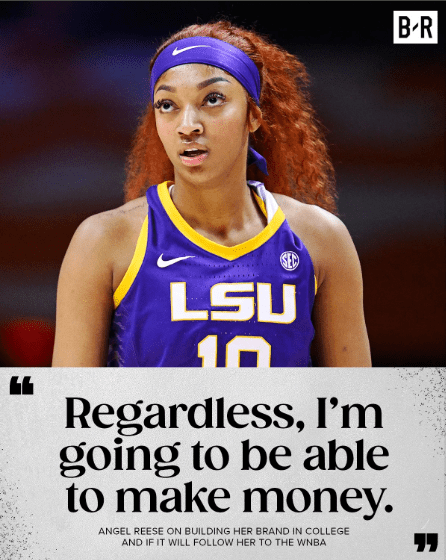
Angel Reese’s rejection is more than a soundbite. It is the manifesto of a new era. These players are not just athletes; they are CEOs of their own global brands. They know their value, and they are done waiting for the WNBA to catch up.
The question is no longer if players deserve to be paid more. The question the league must answer by January 9 is: What is the true price of progress, and are they finally willing to pay it?